Google’s Health Ecosystem Consolidation Continues as Nest Hub Sleep Sensing Prepares for Migration to Google Health

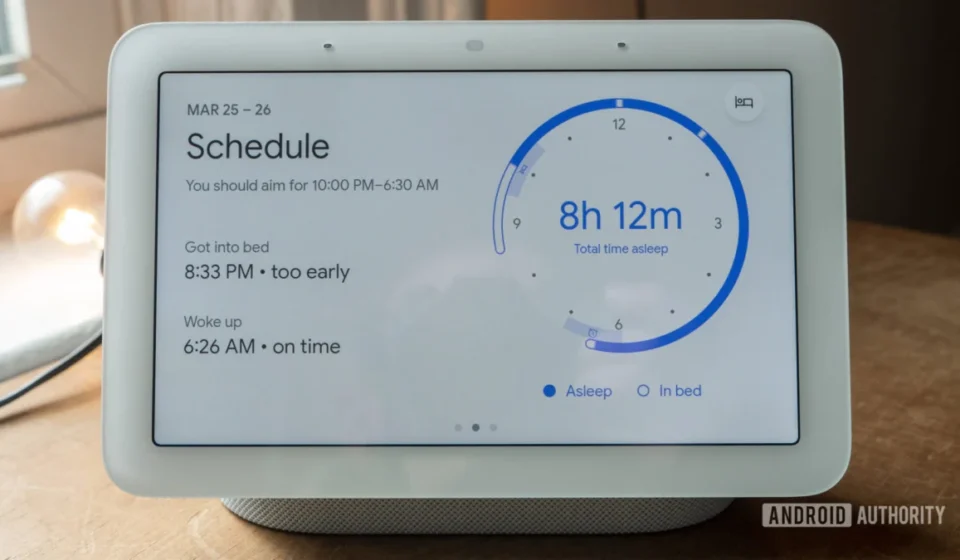
The strategic re-alignment of Google’s diverse health and fitness services under a singular, unified platform, Google Health, is progressing steadily, with the latest indications pointing towards the integration of the second-generation Nest Hub’s advanced Sleep Sensing feature. For much of the current year, Google has been diligently working to consolidate various disparate health-related offerings, including the venerable Google Fit and the recently acquired Fitbit ecosystem, into this new, overarching health application. However, a notable exception has been the Nest Hub’s unique sleep tracking capabilities, which have until now remained tethered to the outgoing Google Fit infrastructure. Recent textual discoveries within the Google Home application strongly suggest that this operational silo is on the cusp of dissolution, paving the way for a more integrated and comprehensive user experience.
The specific findings, initially brought to light by 9to5Google, involve updated text strings embedded within version 4.23 of the Google Home application. These newly introduced lines of text provide explicit explanations regarding "how your Nest Hub works with Google Health," marking a pivotal shift in Google’s internal messaging. Crucially, this updated wording predominantly replaces previous references that linked the Nest Hub’s sleep functionality to Google Fit. This linguistic substitution is a clear harbinger, signaling that the smart display’s sophisticated sleep data collection and analysis will, in the near future, be managed and presented through the nascent Google Health platform. This move is not merely a technical migration; it represents a significant step in Google’s broader strategy to establish a holistic and user-centric health data ecosystem, designed to offer a consolidated view of an individual’s wellness journey.
The Road to Google Health: A Strategic Overhaul
Google’s journey into the health and fitness technology space has been characterized by a multi-pronged approach, featuring both organic development and strategic acquisitions. The company initially launched Google Fit in 2014, positioning it as a foundational platform for tracking physical activity and health metrics across Android devices and Wear OS smartwatches. While Google Fit served its purpose as an activity aggregator, its ecosystem remained somewhat fragmented, often requiring users to interact with multiple applications or services for a complete picture of their health.
A pivotal moment in Google’s health strategy arrived with the announcement in November 2019 of its intent to acquire Fitbit, a pioneering company in the wearables and health tracking market. The acquisition, valued at approximately $2.1 billion, faced significant regulatory scrutiny, particularly concerning data privacy and competitive implications, but was ultimately completed in January 2021. This strategic move was not merely about integrating hardware; it was about bringing Fitbit’s extensive expertise in health metrics, its established user base, and its robust software platform into the Google fold. The long-term vision articulated by Google was to leverage Fitbit’s capabilities to accelerate innovation in wearables and to create a more comprehensive health and fitness experience for its users.
The emergence of Google Health can be viewed as the natural evolution of this strategy. Rather than maintaining disparate applications like Google Fit and the Fitbit app, Google recognized the imperative to consolidate. This consolidation addresses user pain points related to data fragmentation and provides a more seamless, integrated experience. The initial phases of this transition have already seen the Fitbit app being largely superseded by Google Health for new users and device setups. Furthermore, Google has publicly announced its intentions to facilitate the migration of existing Google Fit user data into the Google Health platform later this year, ensuring continuity and preventing data loss for its long-standing users. The impending integration of Nest Hub’s Sleep Sensing feature is therefore not an isolated event but a consistent, logical progression within this overarching strategic roadmap, aiming to unify all health-related data points under one comprehensive digital roof.
Unpacking the Nest Hub’s Sleep Sensing Technology
The second-generation Nest Hub, introduced in March 2021, distinguished itself from its predecessors and competitors through the inclusion of a revolutionary feature: Sleep Sensing. This technology leverages Google’s innovative Soli radar sensor, a miniature radar chip capable of detecting sub-millimeter motions, to monitor an individual’s sleep without the need for wearable devices, cameras, or microphones actively recording audio throughout the night.
The Soli radar operates by emitting low-power radio waves and analyzing the reflections to discern movement and breathing patterns. When positioned on a bedside table, the Nest Hub’s Sleep Sensing feature can accurately track a range of vital sleep metrics. These include an individual’s sleep stages (light, deep, REM), the precise times they fall asleep and wake up, and their breathing rate throughout the night. The non-contact nature of the Soli sensor offers a significant advantage in terms of user comfort and privacy, as it eliminates the need to wear a device to bed or to have a camera pointed at one’s sleeping area.
Beyond the Soli radar, the Nest Hub incorporates a suite of other sensors to provide a holistic understanding of the sleep environment. Its integrated microphone, for instance, is capable of detecting sound events such as coughing and snoring, which can be indicators of sleep disturbances or underlying health conditions. Complementary sensors monitor changes in ambient light and room temperature, factors known to significantly impact sleep quality. By correlating these environmental data points with physiological metrics, the Nest Hub can offer more nuanced insights into sleep patterns and suggest potential improvements to the sleep environment.
A critical aspect of the Nest Hub’s Sleep Sensing feature, and one that Google has consistently emphasized, is its commitment to user privacy. Google explicitly states that the data collected by the device, including movement, breathing, and sound events, is processed locally on the device itself. This local processing minimizes the amount of raw, sensitive data that needs to be transmitted to Google’s cloud servers, enhancing user confidence in the security and privacy of their health information. The aggregated and anonymized insights are then presented to the user, offering actionable feedback on their sleep health.
The Significance of the Google Home App Update
The discovery of updated text strings in version 4.23 of the Google Home app is more than a mere technical footnote; it is a definitive signal of an impending functional migration. The previous wording explicitly linked the Nest Hub’s sleep data to Google Fit, directing users to that application for their sleep summaries and detailed analyses. The new text, however, clearly articulates "how your Nest Hub works with Google Health," directly substituting Google Fit with Google Health in the context of data management and presentation.
This update within the Google Home app, which serves as the central control hub for Google’s smart home ecosystem, signifies the advanced stage of this integration project. App string updates often precede public announcements or feature rollouts, indicating that the underlying infrastructure and software development work are nearing completion. The explicit nature of the new text leaves little room for ambiguity, confirming Google’s intention to channel all Nest Hub Sleep Sensing data through the Google Health platform.
Furthermore, the updated text provides crucial details about how this integration will function. It notes that Google Health will commence tracking sleep information once the Nest Hub detects that the user is in bed. This automatic initiation and cessation of tracking are central to the hands-free nature of the Sleep Sensing feature. Importantly, the new text also touches upon data sharing, stating that "other services connected to Google Health may be able to access sound-event data, depending on your settings." This clause underscores Google’s commitment to user control over their sensitive health data, allowing individuals to manage permissions for third-party applications or other Google services that might wish to integrate with their holistic health profile. This level of granular control is paramount in building and maintaining user trust in a platform that handles highly personal information.
Implications for Users: A Unified Health Experience
The migration of Nest Hub’s Sleep Sensing data to Google Health holds several profound implications for users, primarily centered around the promise of a more unified, comprehensive, and intuitive health experience.
Firstly, the most immediate benefit for users will be the consolidation of health data. Instead of having sleep metrics reside in Google Fit while activity data might be in Google Health (or the legacy Fitbit app), all relevant health information will be accessible from a single application. This eliminates the need to navigate between multiple apps to gain a complete picture of one’s wellness, streamlining the user experience significantly. Imagine reviewing your sleep patterns, daily step count, heart rate variability, and workout summaries all within one consistent interface.
Secondly, this integration fosters a holistic view of personal health. When sleep data is combined with other metrics such as daily activity levels, heart rate, stress levels (if tracked by other compatible devices), and nutrition information, Google Health has the potential to offer more sophisticated and actionable insights. For example, a user might observe correlations between poor sleep quality and reduced physical activity the following day, or how late-night meals impact their sleep stages. This interconnected data can empower users to make more informed decisions about their lifestyle choices.
Thirdly, the migration process itself will be crucial. Google has already indicated plans for Google Fit users to migrate their data to Google Health. This commitment suggests that existing sleep data collected by the Nest Hub under Google Fit will likely be transferable, ensuring continuity for users who have been tracking their sleep for an extended period. This data preservation is vital for trend analysis and for maintaining the historical context of a user’s health journey.
Finally, the unified platform could pave the way for enhanced analytics and personalized recommendations. With a broader and deeper dataset, Google Health’s underlying algorithms, potentially leveraging advanced machine learning, could identify more subtle patterns, detect potential health issues earlier, and provide more tailored advice. For instance, combining sleep quality with activity levels and stress indicators might allow Google Health to suggest personalized recovery strategies or adjustments to daily routines to optimize overall well-being. The potential for more intelligent, context-aware insights grows exponentially with the breadth of integrated data.
Strategic Benefits for Google: Ecosystem Consolidation
For Google, the integration of Nest Hub’s Sleep Sensing into Google Health represents a significant strategic victory, reinforcing its position across multiple interconnected markets: smart homes, wearables, and digital health.
Firstly, it further strengthens Google’s ecosystem. By bringing a popular and unique feature like non-contact sleep tracking under the Google Health umbrella, Google makes its entire suite of devices and services more cohesive and attractive. This consolidation encourages users to invest further in Google’s ecosystem, from Android smartphones and Wear OS watches to Nest smart home devices, knowing that all their health data will converge in one central, Google-managed location. This "stickiness" is invaluable in today’s competitive tech landscape.
Secondly, it enhances Google’s competitive edge against rivals such as Apple and Samsung. Apple Health serves as the central repository for health data from iPhones, Apple Watches, and connected third-party devices, while Samsung Health performs a similar role within the Samsung ecosystem. By creating a robust, feature-rich Google Health, Google directly competes for mindshare and market share in the rapidly expanding digital health sector. A unified platform, especially one incorporating unique features like Soli-powered sleep tracking, presents a compelling alternative for consumers.
Thirdly, while direct monetization of sensitive health data is ethically fraught and heavily regulated, a stronger, more integrated health ecosystem can lead to indirect economic benefits. Increased user engagement with Google Health can drive higher sales of Google’s hardware (Nest Hubs, Pixel phones, future Pixel Watches with Fitbit integration) and potentially increase subscriptions to related services. A thriving health platform can also attract developers to build innovative health-related applications, further enriching Google’s overall software ecosystem.
Finally, the consolidation provides Google with a clearer, more consistent data architecture for future innovation. With all health data flowing into a single platform, Google’s engineers and researchers can more efficiently develop new features, improve existing algorithms, and explore advanced applications of AI and machine learning in health, all while maintaining strict privacy protocols. This streamlined approach fosters agility and accelerates the pace of technological advancement in digital health.
Privacy and Data Security: Paramount Concerns
The handling of sensitive health data, especially in a digital context, invariably raises significant privacy and security concerns. Google is acutely aware of these challenges, particularly given the regulatory landscape (e.g., HIPAA in the US, GDPR in Europe) and consumer expectations. Its strategy for Google Health, and specifically the integration of Nest Hub’s Sleep Sensing, appears to be built on several key privacy tenets.
As previously noted, Google emphasizes that the raw sleep data collected by the Nest Hub’s Soli radar is processed locally on the device. This "on-device processing" minimizes the transmission of raw, identifiable physiological data to cloud servers, significantly reducing potential privacy risks. Only aggregated insights or anonymized data, if necessary for specific services, would typically be transmitted.
Furthermore, the new text strings explicitly mention that "other services connected to Google Health may be able to access sound-event data, depending on your settings." This highlights Google’s commitment to user control and granular permissions. Users are expected to have the ability to review and manage which third-party applications or even other Google services can access specific categories of their health data. This opt-in approach is crucial for building trust, ensuring that users retain agency over their most personal information.
Google’s broader privacy policy, which underpins all its services, dictates strict protocols for data collection, storage, and usage. For health data, these protocols are typically even more stringent, often involving strong encryption, restricted access, and clear data retention policies. The company has a vested interest in maintaining a reputation for data security, especially in a domain as sensitive as personal health. Any breach or misuse of health data could severely erode user trust and incur significant regulatory penalties. Therefore, the integration into Google Health is expected to adhere to the highest standards of data security, leveraging Google’s robust cloud infrastructure and cybersecurity expertise.
The Competitive Landscape and Future Trajectory
The digital health market is fiercely competitive, with major tech players vying for dominance. Apple’s HealthKit and Fitness+ ecosystem, deeply integrated with the Apple Watch and iPhone, offers a comprehensive suite of health and fitness tracking capabilities, often emphasizing privacy and a seamless user experience. Samsung Health, similarly, provides a robust platform for Galaxy device users. Beyond these tech giants, numerous specialized health apps, wearable manufacturers, and even traditional healthcare providers are entering the digital health space, creating a dynamic and innovative environment.
Google Health’s strategy, particularly with the inclusion of non-contact sleep sensing from the Nest Hub, aims to differentiate itself by offering unique features and a broad, cross-device compatibility across the Android ecosystem. The ability to track sleep passively, without a wearable, is a distinct advantage that resonates with users who find wearables uncomfortable during sleep.
Looking ahead, the successful consolidation of Nest Hub’s Sleep Sensing into Google Health opens doors for several future developments. Google could explore integrating other health-related data streams from various sources, such as smart scales, blood pressure monitors, or even potentially, with user consent, data from electronic health records (EHRs) in partnership with healthcare providers. The platform could evolve to offer more advanced predictive analytics, identifying health risks proactively, or integrating with telehealth services.
The long-term vision for Google Health likely involves creating an intelligent, personalized health companion that not only tracks data but also provides meaningful insights, guidance, and potentially even facilitates interventions in a user-friendly and privacy-preserving manner. The integration of Nest Hub’s Sleep Sensing is a critical step in building this foundation, underscoring Google’s commitment to becoming a central player in the evolving landscape of digital health and wellness.
In conclusion, the impending migration of Nest Hub’s Sleep Sensing feature to Google Health is a testament to Google’s unwavering commitment to building a unified, comprehensive, and user-centric health ecosystem. This move not only streamlines the user experience by centralizing health data but also strategically positions Google to compete more effectively in the burgeoning digital health market. As Google Health continues to evolve, incorporating diverse data sources and leveraging advanced analytics, it promises to empower users with unprecedented insights into their well-being, all while navigating the critical imperatives of privacy and data security.