How Caraway Used Influencer Marketing to Make Cookware a Lifestyle Purchase

The transformation of household utilities into high-status lifestyle symbols has become a hallmark of the modern direct-to-consumer (D2C) era, yet few brands have executed this pivot as effectively as Caraway. Since its market entry in 2019, the New York-based cookware company has systematically dismantled the traditional perception of pots and pans as mere functional tools, repositioning them as essential elements of interior design and personal wellness. Through a sophisticated multi-tiered influencer marketing strategy, Caraway has successfully leveraged digital aesthetics and social proof to dominate a category previously characterized by legacy brands and utilitarian marketing.
The Genesis of a Design-Forward Kitchen
Before Caraway’s emergence, the cookware market was largely bifurcated. On one end were the heritage brands like Le Creuset and All-Clad, which emphasized professional-grade durability and culinary pedigree. On the other were mass-market, non-stick brands found in big-box retailers, often criticized for their use of "forever chemicals" like PTFE (Teflon). Caraway identified a significant "white space" between these two extremes: a demand for cookware that was non-toxic, easy to clean, and, crucially, beautiful enough to be displayed on a stovetop rather than hidden in a cabinet.
Founded by Jordan Nathan, a former executive at the crowdfunding platform Launchpad, Caraway launched with a singular focus on ceramic-coated aluminum. The brand’s initial value proposition was rooted in health—eliminating PFAS, PFOA, lead, and cadmium—but its primary vehicle for growth was its visual identity. By treating kitchenware as a fashion-adjacent category, Caraway tapped into the "shelfie" culture of Instagram and the aspirational domesticity of Pinterest.
A Chronology of Strategic Growth (2019–2026)
The trajectory of Caraway’s market dominance can be traced through several pivotal phases of development and expansion.
2019: The Launch and "Seeding" Phase
Caraway entered the market with a $5.3 million seed round and a highly curated product line: a four-piece cookware set. Instead of traditional television or print advertising, the brand focused on "product seeding." Thousands of sets were sent to micro-influencers in the home decor, wellness, and organization niches. The goal was not immediate sales but the creation of a ubiquitous digital presence.
2020–2021: The Pandemic Catalyst
The global pandemic served as an unexpected accelerant. As millions of consumers were confined to their homes, interest in home cooking and kitchen aesthetics surged. Caraway capitalized on this by ramping up its affiliate marketing programs. By partnering with food bloggers and lifestyle creators who were producing "quarantine cooking" content, the brand saw a reported 20-fold increase in sales during its first full year.
2022–2023: Category Expansion and Retail Integration
Recognizing the limitations of being a "pan-only" company, Caraway expanded into bakeware, tea kettles, and food storage. Each launch followed the same influencer-first playbook. Simultaneously, the brand moved into physical retail, securing partnerships with Crate & Barrel, Target, and Nordstrom. These partnerships validated the brand’s "lifestyle" status, moving it from the digital screen to the premium retail shelf.
2024–2026: The Era of Sustainability and Personalization
By 2026, Caraway had solidified its position as a market leader. The focus shifted toward long-term sustainability and limited-edition color collaborations. Collaborations with high-profile interior designers and "clean-living" celebrities allowed the brand to maintain its premium pricing while fending off lower-priced "dupes" that had begun to flood the market.
The Influencer Marketing Playbook: Aesthetics and Organization
Caraway’s success is not merely the result of spending; it is the result of specific content strategies that resonated with a millennial and Gen Z audience.
1. The "Aesthetic" Kitchen
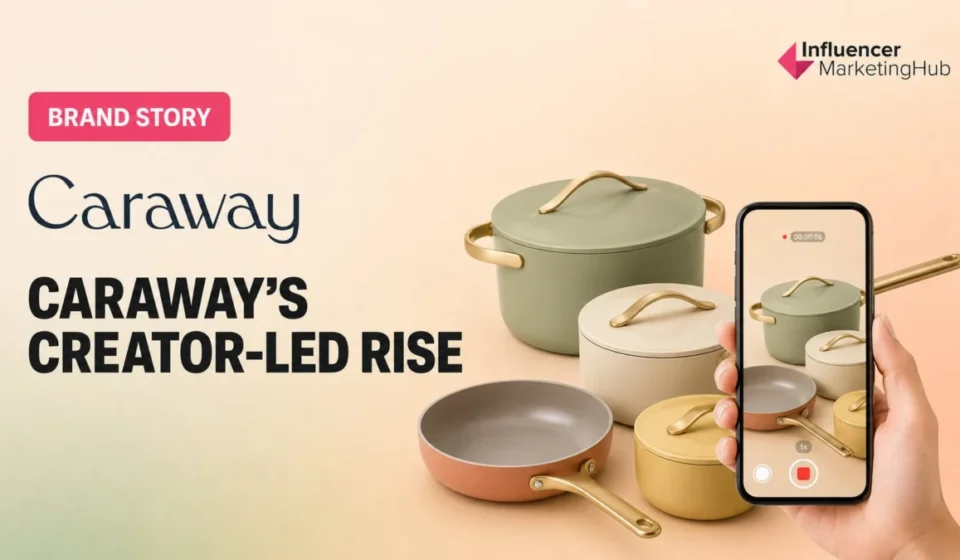
The brand’s choice of colors—terracotta, sage, marigold, and navy—was a deliberate departure from the stainless steel and black non-stick pans of the past. Influencers were encouraged to film "day-in-the-life" content where the cookware sat prominently on the stove. This transformed the product from a tool into a piece of decor. Marketing analysts note that Caraway was one of the first brands to treat a frying pan as a "background asset" that signaled a certain level of taste and socioeconomic status.
2. The Solution to "Cabinet Chaos"
A unique aspect of Caraway’s marketing was the emphasis on its magnetic storage racks and canvas lid holders. In the influencer world, "organization porn" (highly stylized videos of tidying and arranging) is a massive sub-genre. By including custom storage solutions with every set, Caraway gave influencers a secondary "hook" for content. This addressed a common consumer pain point—cluttered cabinets—while providing visually satisfying content for platforms like TikTok.
3. The Wellness Narrative
By partnering with "clean-living" influencers and nutritionists, Caraway framed its ceramic coating as a health choice. This "health-conscious" positioning allowed the brand to justify a higher price point (roughly $395 to $595 for a full set) by aligning with the broader wellness movement, which views the home environment as a factor in overall longevity and safety.
Supporting Data and Market Impact
Industry data highlights the efficacy of this lifestyle-centric approach. According to market research reports from 2025, the D2C cookware segment grew at an annual rate of 15%, significantly outpacing the 3% growth of the traditional housewares market. Caraway’s engagement rates on social media platforms consistently hovered between 3% and 5%, nearly double the industry average for home goods.
Furthermore, a 2026 consumer sentiment survey revealed that 64% of Caraway purchasers cited "design and color" as their primary reason for purchase, followed by "non-toxic materials" at 58%. Only 22% cited "cooking performance" as the top factor, illustrating the brand’s success in moving the goalposts of the category from utility to identity.
The "Caraway Effect" has also forced legacy competitors to adapt. Brands like Le Creuset have increased their focus on digital storytelling, while mass-market players like T-fal have launched "aesthetic" lines to compete for the younger demographic.
Analysis of Implications: The Future of Household Commodities
The Caraway case study offers several critical insights into the future of consumer goods:
- The Death of the "Hidden" Utility: As the home becomes the primary backdrop for social media content, no item is too mundane to be redesigned. From laundry detergent (Blueland) to air purifiers (Molekule), the "Caraway model" of turning a utility into a lifestyle purchase is being replicated across every room in the house.
- The Power of Vertical Integration in Content: Caraway did not just sell a product; it sold a "look." By controlling the aesthetic through strict influencer guidelines and high-quality assets, they ensured that every piece of user-generated content (UGC) reinforced the brand’s premium positioning.
- The Transition from D2C to Omnichannel: Caraway’s journey suggests that while influencer marketing is the best way to build a brand in the 2020s, retail presence remains essential for scaling. The brand used digital hype to demand favorable terms from retailers like Target, proving that a strong digital community is a brand’s greatest leverage in the physical world.
Conclusion
How Caraway used influencer marketing to make cookware a lifestyle purchase serves as a definitive blueprint for brand building in the digital age. By identifying the intersection of health, design, and organization, the company successfully convinced a generation of consumers that their choice of a sauté pan was a reflection of their personal values and aesthetic sensibilities. As the brand continues to expand into new categories, its legacy remains its ability to find beauty in the mundane and profit in the "Instagrammable" kitchen. The success of Caraway signals a permanent shift in the housewares industry, where the story behind the product is now just as important as the product itself.