
Qualcomm’s Fragmented Snapdragon 8 Gen 5 Series: A Deep Dive into Performance, Thermals, and OEM Strategies

The Snapdragon 8 series, Qualcomm’s flagship line of smartphone processors, has long been synonymous with unparalleled performance, cutting-edge connectivity, advanced camera capabilities, and sophisticated AI features. However, the landscape of this elite family underwent significant diversification in late 2025 and throughout 2026, leading to a complex array of Gen 5 chips before the anticipated arrival of the Snapdragon 8 Elite Gen 6 series. This proliferation has prompted a critical examination of these variants, revealing distinct performance profiles and strategic choices made by device manufacturers. Recent comprehensive testing of devices featuring these diverse Gen 5 iterations — including the Snapdragon 8 Elite Gen 5, Snapdragon 8 Elite Gen 5 for Galaxy, Snapdragon 8 Elite Gen 5V, and the standard Snapdragon 8 Gen 5 — has uncovered intriguing results that underscore the nuanced interplay between raw silicon power, OEM optimization, and thermal management.
The Evolving Snapdragon Landscape: A Chronology of Fragmentation
Qualcomm’s strategy for its top-tier mobile System-on-Chips (SoCs) has historically involved a primary flagship release, often followed by mid-cycle refinements or specialized versions. The Gen 5 era, however, saw an accelerated and more pronounced fragmentation. The initial rollout commenced in late 2025 with the introduction of the Snapdragon 8 Elite Gen 5, quickly followed by the Snapdragon 8 Gen 5. This foundational duo set the stage for the high-performance Android devices of the coming year.
As 2026 progressed, Qualcomm deepened its segmentation. The Snapdragon 8 Elite Gen 5 for Galaxy emerged as a bespoke solution for Samsung’s flagship devices, offering an overclocked variant tailored to the Galaxy ecosystem. Concurrently, the Snapdragon 8 Elite Gen 5V was introduced, appearing in devices like the Redmi K100 Pro and, notably, the POCO F9 Pro. This "V" variant hinted at a more specialized or perhaps subtly adjusted profile compared to the original Elite. This multi-pronged release strategy meant that by the time devices like the Samsung Galaxy S26 Ultra, POCO F9 Ultra, POCO F9 Pro, and OnePlus 15R hit the market, consumers were faced with a spectrum of "Snapdragon 8 Gen 5" experiences, each carrying distinct characteristics. The introduction of these specialized chips, particularly the "for Galaxy" and "V" versions, marks a strategic pivot by Qualcomm to cater to specific OEM requirements and market segments, potentially leading to greater differentiation but also increased complexity for consumers.
Dissecting the Snapdragon 8 Gen 5 Lineup: Architectural Differences
Understanding the benchmark results necessitates a clear grasp of the architectural distinctions among these Gen 5 chips. Each variant, while sharing a common heritage, possesses subtle yet significant modifications that influence its performance envelope.

- Snapdragon 8 Elite Gen 5: This chip represents the mainstream flagship offering available to most Android OEMs. Featured prominently in devices like the POCO F9 Ultra, it boasts an octa-core Oryon CPU, with its prime core reaching a robust 4.6GHz. The accompanying Adreno GPU is described as powerful, featuring three compute slices, indicative of substantial graphical processing capabilities. This variant is built on a 3nm TSMC manufacturing process, a testament to its advanced efficiency and performance potential.
- Snapdragon 8 Elite Gen 5 for Galaxy: Exclusively designed for Samsung’s high-end devices, such as the Galaxy S26 Ultra, this version is essentially an overclocked iteration of the standard 8 Elite Gen 5. Its Prime CPU core clocks in at an impressive 4.74GHz, offering a ~140MHz speed bump over its non-Galaxy counterpart. While the GPU architecture is largely similar, the sustained higher clock speeds across the CPU cores are designed to deliver a marginal, yet noticeable, performance edge for Samsung’s flagships. Qualcomm’s practice of offering "Leading Version" chips to other OEMs in limited quantities later in the year hints at the strategic importance of these specialized variants.
- Snapdragon 8 Elite Gen 5V: Found in devices like the POCO F9 Pro, the "V" variant of the 8 Elite Gen 5 is characterized as a subtly downgraded version. While maintaining the same 4.6GHz CPU clock speed and the advanced 3nm TSMC design as the full 8 Elite Gen 5, its Adreno GPU is notably configured with only two compute slices, compared to the three in the standard Elite version. This reduction strongly suggests a deliberate trade-off, likely aimed at achieving a different power/performance balance or cost-effectiveness, impacting peak graphical output.
- Snapdragon 8 Gen 5: Positioned at the base of this hierarchy, the standard Snapdragon 8 Gen 5, as seen in the OnePlus 15R, lacks the "Elite" branding for a reason. Its CPU, while also an Oryon design, is clocked significantly lower, peaking at 3.8GHz. Furthermore, its Adreno GPU also features only two compute slices, similar to the 8 Elite Gen 5V, but crucially, it lacks the high-performance memory attached to the 8 Elite Gen 5’s GPU. These combined factors indicate a substantial theoretical graphical disadvantage and a more conservative CPU performance profile compared to its "Elite" brethren.
Methodology: Rigorous Benchmarking for Real-World Insights
To objectively assess the performance discrepancies across these varied Snapdragon 8 Gen 5 chips, a standardized benchmarking suite was employed. For CPU performance, GeekBench 6 was utilized, providing both single-core and multi-core scores that reflect general processing power relevant for everyday tasks, app responsiveness, and intensive computations. For evaluating graphics performance and, critically, sustained thermal behavior, 3DMark’s Wild Life Stress Test and Wild Life Extreme Stress Test were chosen. These benchmarks simulate demanding gaming loads over extended periods, providing insights into a device’s ability to maintain performance without throttling due to heat, a crucial factor for mobile gamers and power users. The tests were conducted across four key devices: the Samsung Galaxy S26 Ultra (Snapdragon 8 Elite Gen 5 for Galaxy), POCO F9 Ultra (Snapdragon 8 Elite Gen 5), POCO F9 Pro (Snapdragon 8 Elite Gen 5V), and the OnePlus 15R (Snapdragon 8 Gen 5). Each device was reset, allowed to cool, and run under controlled conditions to minimize external variables.
CPU Performance: Samsung’s Overclocked Edge Dominates
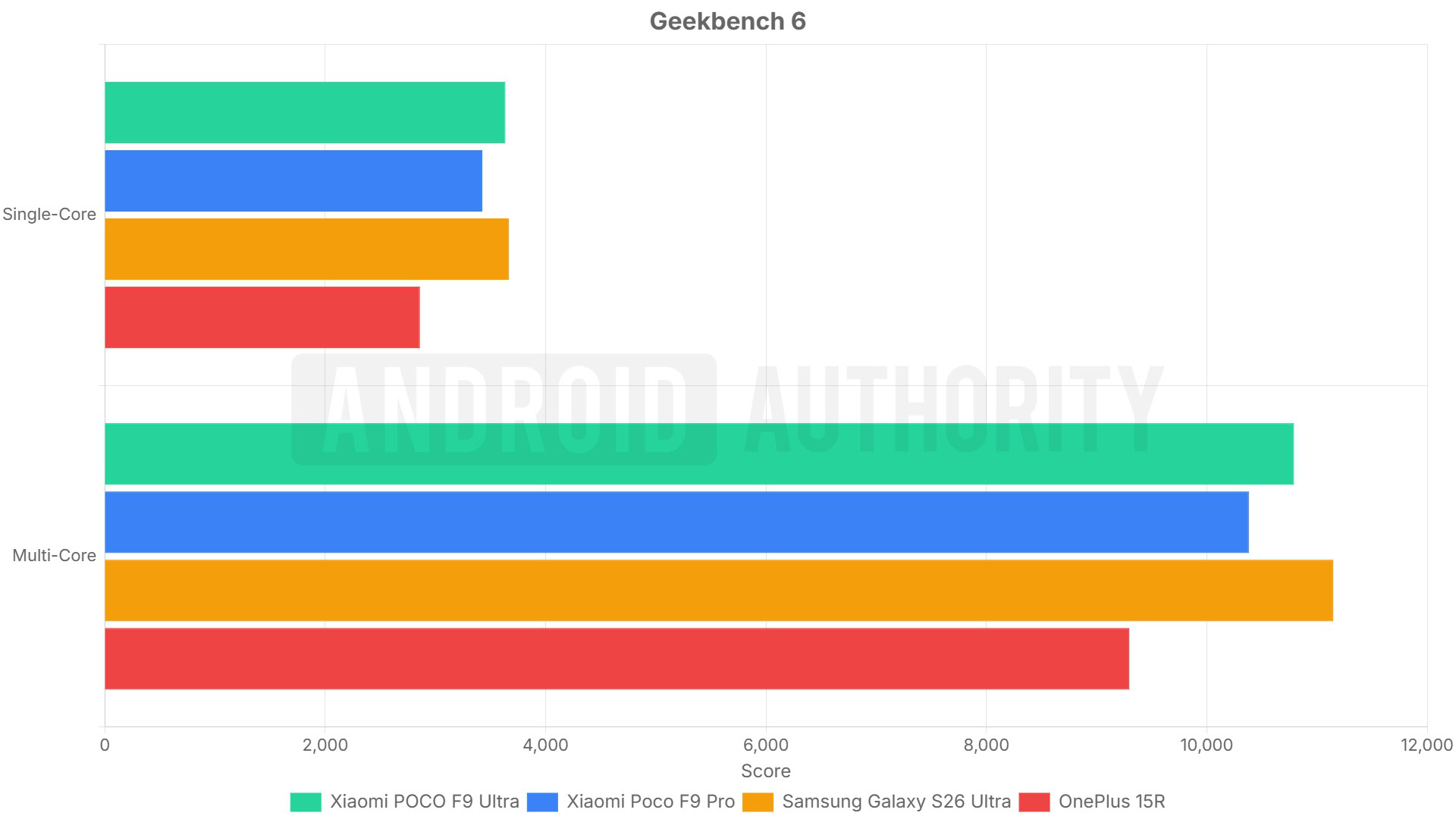
In the realm of raw CPU power, the benchmark results from GeekBench 6 painted a largely predictable picture, yet with an interesting twist. The Samsung Galaxy S26 Ultra, powered by the Snapdragon 8 Elite Gen 5 for Galaxy, consistently emerged as the frontrunner in both single-core and multi-core CPU performance. This outcome is directly attributable to its overclocked Prime CPU cores, which operate at approximately 140MHz faster than the cores in the standard Snapdragon 8 Elite Gen 5 and 8 Elite Gen 5V. While the single-core victory was narrow, reflecting the incremental clock speed advantage, the gap widened considerably in the multi-core test, demonstrating the cumulative benefit of Samsung’s access to a higher-frequency, optimized chipset. For users engaged in CPU-intensive tasks such as demanding video editing, complex data processing, or running unoptimized AI models locally on their device, this marginal advantage could translate into slightly faster processing times and a smoother experience.
Conversely, the OnePlus 15R, equipped with the standard Snapdragon 8 Gen 5, predictably lagged behind all other contenders in both GeekBench 6 metrics. Its lower CPU clock speeds across the board, peaking at 3.8GHz compared to the 4.6GHz and 4.74GHz of the Elite variants, established it as the least powerful in terms of raw CPU throughput within this specific comparison.
The most unexpected revelation, however, came from the POCO F9 Pro, featuring the Snapdragon 8 Elite Gen 5V. Despite Qualcomm’s assertion that this processor shared the same CPU clock speed and core count as the full-fledged 8 Elite Gen 5, the POCO F9 Pro ranked a noticeable third, behind both the Galaxy S26 Ultra and the POCO F9 Ultra. This discrepancy suggests two primary possibilities: either the Snapdragon 8 Elite Gen 5V incorporates a smaller CPU cache, impacting performance, or, more plausibly, POCO implemented more conservative software tuning on the Pro model compared to the Ultra. OEMs often make such decisions to balance performance with battery life or thermal management, even if it means not pushing the chip to its theoretical maximum.
GPU Performance and Thermal Management: A Delicate Balance of Power and Heat
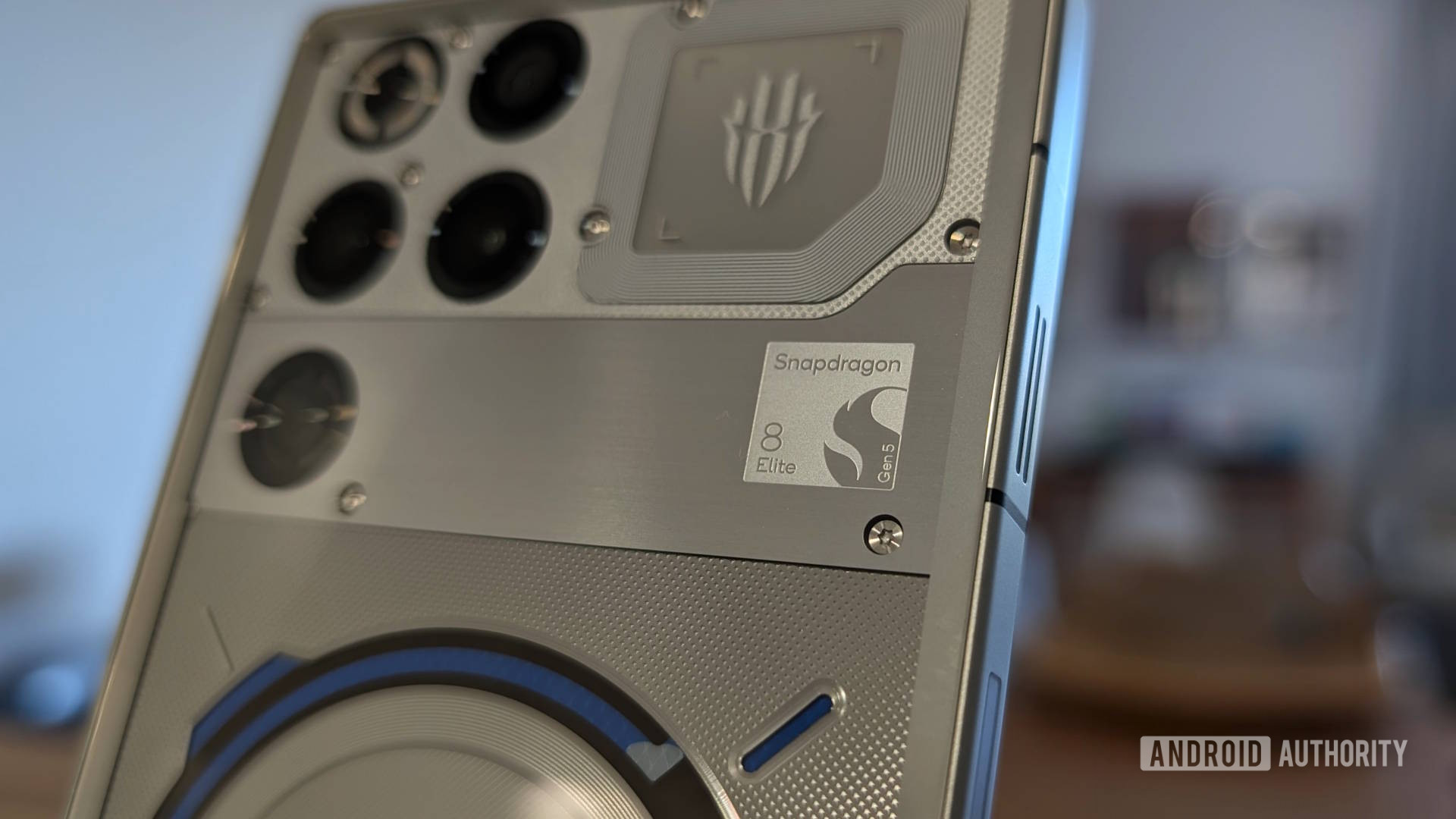
The GPU stress tests, specifically 3DMark’s Wild Life and Wild Life Extreme, revealed a complex trade-off between sustained performance and thermal efficiency, underscoring the critical role of OEM engineering in optimizing chip behavior. While synthetic benchmarks don’t perfectly mirror real-world gaming, they are invaluable for identifying how devices handle prolonged, intensive graphical loads.
The POCO F9 Pro, equipped with the Snapdragon 8 Elite Gen 5V, achieved the highest stability ratings across both Wild Life and Wild Life Extreme tests, maintaining approximately 76-77% of its peak performance. This means that while it might not have started with the highest absolute score, it demonstrated remarkable consistency, finishing ahead of the Galaxy S26 Ultra by the end of the extended test. The POCO F9 Ultra, featuring the standard Snapdragon 8 Elite Gen 5, also showed strong stability at 69-70%. These results indicate that POCO’s devices, despite potential CPU tuning variations, are designed to deliver consistent graphical performance under duress.
However, this sustained performance came at a significant thermal cost. The POCO F9 Ultra recorded the highest temperatures, averaging 44-45 degrees Celsius and peaking at an alarming 52 degrees Celsius. The POCO F9 Pro was only marginally better, with average temperatures of 43 degrees Celsius and peaks of 50 degrees Celsius. Such elevated temperatures not only make the device uncomfortable to hold during prolonged gaming sessions but can also negatively impact long-term battery health and overall component longevity.
The Samsung Galaxy S26 Ultra, with its overclocked Snapdragon 8 Elite Gen 5 for Galaxy, presented a different profile. It maintained 53-54% stability, a noticeable drop compared to the POCO phones. While it started with higher initial scores in both tests, its performance degraded more significantly over time, ultimately finishing behind the POCO F9 Pro. This performance dip, however, correlated directly with superior thermal management. The Galaxy S26 Ultra achieved an average temperature of 41 degrees Celsius across both tests, with a peak of only 44 degrees Celsius. This suggests a deliberate strategy by Samsung to prioritize user comfort and device longevity by implementing more aggressive thermal throttling, allowing performance to dip rather than letting the device overheat excessively.
The OnePlus 15R, featuring the standard Snapdragon 8 Gen 5, consistently placed last in raw GPU performance during the stress tests. However, it demonstrated commendable stability at 64-65%, meaning it lost less performance proportionally than the Samsung device over time. Crucially, the OnePlus 15R emerged as the undisputed champion in thermal efficiency. It recorded average temperatures of a remarkably cool 34-35 degrees Celsius, with a peak temperature of only 41 degrees Celsius. This makes the OnePlus 15R, despite its lower peak performance, the most comfortable device to hold during extended gaming or other demanding graphical tasks. For casual to mid-tier mobile gamers or users engaging in prolonged emulation of platforms like PS2 or Nintendo Switch, the balance of acceptable performance and excellent thermal comfort could make it an ideal choice.
OEM Strategies and Design Philosophy: Balancing Power, Heat, and User Experience
The divergent benchmark results illuminate the distinct philosophies adopted by smartphone manufacturers when integrating these powerful chipsets. Samsung, with its "Elite Gen 5 for Galaxy," clearly aims for peak performance, leveraging its exclusive access to an overclocked variant. However, its thermal management strategy suggests a preference for a more balanced user experience, throttling performance to prevent excessive heat build-up. This approach aligns with Samsung’s broader market appeal, catering to a wide range of users who expect premium performance without compromising comfort or device longevity.
POCO, on the other hand, particularly with the F9 Ultra and its Snapdragon 8 Elite Gen 5, appears to prioritize raw, sustained graphical output. The higher stability scores in GPU tests, despite the elevated temperatures, indicate a willingness to push the chip harder, potentially appealing to a niche of hardcore mobile gamers who value every frame per second above all else. The trade-off, however, is a significantly hotter device. The POCO F9 Pro’s intriguing CPU results also suggest that even within a single brand, different tuning strategies can be employed, perhaps to differentiate models or to optimize for specific market price points.
OnePlus, with its 15R and the standard Snapdragon 8 Gen 5, takes a markedly different approach. While its chip is the least powerful in terms of raw benchmarks, the company’s thermal engineering has resulted in a device that remains exceptionally cool under load. This suggests a design philosophy that values user comfort and sustained, comfortable gaming sessions over absolute peak performance. For a device that might be positioned slightly below the ultra-premium segment, this balance could be a significant selling point, offering a premium-feeling experience without the discomfort of overheating.
Implications for Consumers and the Mobile Ecosystem
The findings from this extensive testing carry significant implications for consumers and the broader mobile ecosystem. For the average user, the distinctions between the various "Snapdragon 8 Gen 5" chips might seem academic. All these processors offer more than enough power for daily tasks, social media, web browsing, and even most casual games. However, for power users, mobile gamers, and those engaged in creative or demanding applications, these nuances are critical.
- For Performance Enthusiasts: The Samsung Galaxy S26 Ultra, with its "for Galaxy" chip, remains the CPU performance king, making it ideal for those who demand the fastest possible processing for productivity and bleeding-edge applications. For raw, sustained GPU power, the POCO F9 Ultra might appeal, provided users are willing to contend with higher device temperatures.
- For Gamers Prioritizing Comfort: The OnePlus 15R presents a compelling case. Its ability to remain significantly cooler than its rivals, even under load, ensures a much more comfortable gaming experience, making it a strong contender for those who engage in extended mobile gaming sessions but don’t necessarily need the absolute highest frame rates achievable.
- Market Segmentation: Qualcomm’s strategy of fragmenting its flagship series allows OEMs greater flexibility in designing devices for specific market segments. This can lead to more tailored products, but also creates confusion for consumers trying to navigate a complex array of similar-sounding chips.
- OEM Differentiation: The benchmarks highlight how crucial OEM optimization is. Even with the same core silicon, different cooling solutions, software tuning, and power profiles can drastically alter the user experience. This emphasizes that buying a phone is not just about the chip inside, but also about how the manufacturer has chosen to implement and manage that chip.
Looking Ahead: The Snapdragon 8 Elite Gen 6 and Beyond
As the industry moves towards the next generation of mobile silicon, with the impending arrival of the Snapdragon 8 Elite Gen 6 series, the lessons learned from the Gen 5 fragmentation will undoubtedly inform future developments. Qualcomm will likely continue its strategy of offering specialized variants to key partners, while OEMs will continue to refine their thermal management and software tuning to extract the best possible balance of performance, efficiency, and user comfort. The era of a single, monolithic flagship chip appears to be over, replaced by a more nuanced ecosystem where performance is not just about raw benchmarks, but also about the intricate engineering choices that bring that power to the user’s hand. The current Gen 5 series serves as a clear illustration that in the pursuit of mobile supremacy, the answer to "which one is best" is increasingly "it depends on what you value most."