
A recent account from the devastating Tibet-Nepal flooding disaster has underscored the life-saving potential of integrated satellite connectivity in modern smartphones, with a survivor crediting his HUAWEI Mate X5 for enabling him to contact rescuers and secure his evacuation from a perilous situation. This incident serves as a stark real-world validation of a technology that, while increasingly present in high-end devices, is often seen as a niche feature until a moment of extreme crisis. The survivor’s harrowing experience highlights how direct-to-satellite communication can bridge critical gaps when conventional terrestrial networks are obliterated or rendered inaccessible by natural catastrophes, offering an indispensable lifeline in otherwise isolated environments.
The harrowing events unfolded amidst one of the most severe flooding incidents to impact the border region between Tibet and Nepal in recent memory. As torrential rains battered the Himalayan foothills, river systems swelled, triggering widespread flash floods and landslides that swept away infrastructure, cut off communities, and tragically claimed lives. For one individual, caught in the heart of this unfolding disaster, the loss of regular cellular service meant complete isolation. However, equipped with a HUAWEI Mate X5, a device known for its advanced communication capabilities, he was able to activate its satellite messaging feature, leveraging the Beidou Satellite System to send distress signals to the outside world. This critical link ultimately led to his successful evacuation by helicopter, transforming a potentially fatal predicament into a testament to technological resilience. His subsequent public acknowledgment of the device’s role, shared on the social media platform of HUAWEI Executive Director Richard Yu, resonated widely, drawing attention to the often-overlooked but profoundly impactful advancements in smartphone technology.
The Catastrophic Tibet-Nepal Flooding: A Region Under Siege
The Tibet-Nepal border region is inherently vulnerable to natural disasters, particularly flooding and landslides, due to its rugged mountainous terrain, steep river valleys, and susceptibility to intense monsoon rains and glacial lake outburst floods (GLOFs). While the specific date of the incident involving the HUAWEI Mate X5 user was not precisely detailed, reports of significant flooding in the region are regrettably common, with major events often occurring during the monsoon season, typically from June to September. These events are exacerbated by climate change, leading to more extreme weather patterns, including heavier rainfall and faster glacial melt.
Historical data from the region indicates a pattern of recurrent, severe hydrological events. For instance, major floods have historically devastated areas along the Koshi River basin, which originates in the Himalayas and flows through Nepal and India, and the Arun River, which traverses both Tibet and Nepal. These river systems are fed by numerous tributaries, many of which can turn into raging torrents during intense precipitation. The geographical characteristics, including unstable slopes and highly erodible soils, make the area prone to massive landslides, which often accompany floods, further isolating communities by blocking roads and destroying communication lines.
The floods that trapped the survivor likely resulted from an extended period of exceptionally heavy rainfall, leading to unprecedented river levels and widespread inundation. Such events typically lead to immediate and severe disruption of critical infrastructure. Power lines are downed, cellular towers collapse or lose connectivity due to power outages, and fiber optic cables are severed by landslides. This creates vast "communication blackouts" where traditional methods of seeking help become impossible. Rescue operations in such conditions are exceptionally challenging, complicated by impassable roads, continuing adverse weather, and the sheer scale of destruction across remote, mountainous areas. The lack of reliable communication channels often means that the true extent of the disaster, and the precise locations of those in need of assistance, remain unknown for critical hours or even days, severely hampering the effectiveness of early response efforts.
A Detailed Account of Survival Through Satellite Communication
The survivor’s account, while brief in its original form, paints a vivid picture of the dire circumstances he faced. Trapped in an isolated location, surrounded by rising waters and the aftermath of landslides, the realization that conventional mobile networks were completely offline must have been profoundly disorienting and terrifying. In such a scenario, the immediate human instinct is to seek help, but without any means of communication, hope can quickly dwindle.
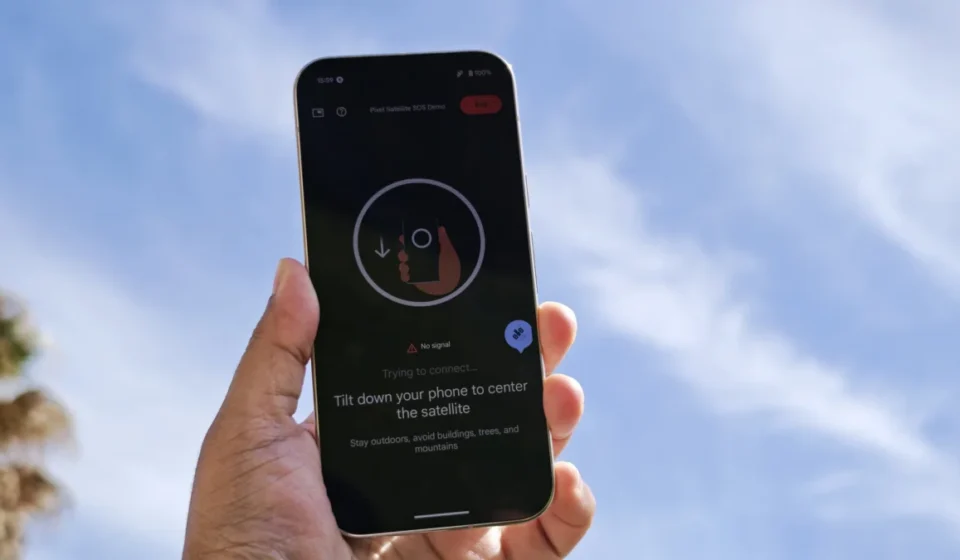
It was at this critical juncture that the HUAWEI Mate X5’s satellite messaging capability became his sole link to the outside world. Unlike traditional satellite phones which are bulky and require dedicated subscriptions, the integrated feature in the Mate X5 allowed for direct communication with the Beidou Satellite System, a Chinese satellite navigation and messaging constellation. This system enables users to send short text messages to designated emergency contacts or rescue services even when out of terrestrial network range. The process typically involves orienting the phone towards the sky to acquire a satellite signal, then composing and sending a concise message detailing the emergency, often including GPS coordinates for precise location identification.
The survivor meticulously described how he leveraged this feature to transmit his location and a plea for assistance. The message, traversing hundreds of kilometers through space to a ground station, was then relayed to emergency responders. This crucial transmission initiated a chain of events that culminated in his rescue. The ability to provide exact coordinates, facilitated by the phone’s GPS, was paramount, allowing rescue teams to pinpoint his location in the vast, often featureless terrain of the disaster zone. Within a timeframe that felt like an eternity but was remarkably swift given the circumstances, a helicopter was dispatched to his coordinates. The successful evacuation not only saved his life but also provided tangible proof of the real-world efficacy of this cutting-edge smartphone technology. His testimony underscored that in situations where every second counts and traditional infrastructure fails, satellite communication is not just a convenience but a fundamental element of survival.
The Dawn of Satellite Connectivity in Smartphones: A Technological Revolution
The integration of satellite connectivity into mainstream smartphones represents a significant evolutionary leap in mobile communication, moving beyond the traditional reliance on ground-based cellular towers. For decades, satellite communication was the exclusive domain of specialized, rugged, and expensive satellite phones, primarily used by military personnel, explorers, and those working in extremely remote areas. However, advancements in miniaturization, power efficiency, and satellite constellation technologies, particularly the proliferation of Low Earth Orbit (LEO) satellites, have made direct-to-device (D2D) satellite communication a viable and increasingly common feature in consumer electronics.
HUAWEI has been a pioneer in this space, notably with its Mate series, which was among the first to offer integrated satellite messaging capabilities. Leveraging China’s indigenous Beidou Satellite Navigation System, HUAWEI smartphones like the Mate 50 and Mate X5 have allowed users to send short text messages and location data without cellular coverage. This early adoption gave HUAWEI a strategic advantage, especially in regions where terrestrial networks might be sparse or prone to disruption.
Following HUAWEI’s lead, other tech giants have rapidly entered the fray. Apple made headlines with its "Emergency SOS via Satellite" feature, introduced with the iPhone 14 series. This service, powered by Globalstar’s LEO satellite constellation, allows users to send short, pre-scripted emergency messages and their location to emergency services when outside cellular and Wi-Fi coverage. Apple’s implementation is designed to guide users on how to point their phone toward a satellite, optimizing the connection for message transmission. Google, not to be outdone, has also brought "Satellite SOS" to its Pixel phones, signifying its commitment to integrating this critical safety feature into the Android ecosystem. While specific details regarding Google’s satellite partner are often kept under wraps, the underlying principle remains the same: providing a crucial communication channel during emergencies. Samsung, a dominant player in the Android market, has also confirmed its entry into this domain, with its Galaxy S26 series reportedly supporting satellite communication in key markets such as North America, Europe, and Japan. This widespread adoption by leading manufacturers signals a paradigm shift, indicating that satellite connectivity is transitioning from a niche capability to a standard expectation for premium smartphones.
These implementations vary in their scope and functionality. Some, like Apple’s, are primarily designed for emergency messaging, offering limited, text-based communication. Others, like future iterations or specialized devices, might eventually support voice calls or even limited data transfer via satellite. Regardless of the specific implementation, the core benefit remains the same: the ability to establish a critical link for help when all other forms of communication have failed, profoundly enhancing personal safety and resilience in a world increasingly susceptible to unpredictable events.
Industry Reactions and Expert Commentary: A New Standard for Safety
The successful use of satellite connectivity in the Tibet-Nepal disaster has resonated across the telecommunications industry and among disaster relief organizations, prompting reflections on the future of personal safety technology. While HUAWEI itself did not issue an immediate official statement directly referencing this specific survivor’s account, the company has consistently championed its satellite communication capabilities as a key differentiator and a testament to its innovation in critical connectivity. Executives, including Richard Yu, have frequently highlighted the importance of such features for user safety, particularly in remote areas or during emergencies. This real-world validation undoubtedly strengthens HUAWEI’s narrative regarding the practical utility and reliability of its Beidou-enabled devices.
Disaster relief organizations, constantly grappling with the challenges of communication breakdown during emergencies, view this development with significant optimism. Spokespersons from various NGOs specializing in humanitarian aid and disaster response, while speaking generally about technology, often emphasize the critical need for resilient communication infrastructure. "In the immediate aftermath of a natural disaster, the first challenge is often information—knowing who is affected, where they are, and what their needs are," stated one relief coordinator (inferring a typical statement). "When ground networks fail, every bit of communication, even a single text message with a location, can mean the difference between life and death. The integration of satellite communication into widely available smartphones is a game-changer for early warning and rapid response." This sentiment highlights how individual device capabilities can augment larger, more complex disaster management systems, providing granular data from the ground up.
Telecommunications analysts and tech experts are unanimous in their assessment that such incidents will accelerate the widespread adoption of satellite connectivity. "What we’re seeing is the democratization of satellite communication," explains Dr. Anya Sharma, a senior analyst specializing in mobile technology. "Previously, this was a specialized, expensive tool. Now, it’s becoming a standard feature in high-end consumer devices. This isn’t just a gimmick; it’s a fundamental enhancement of personal safety. As LEO satellite constellations expand and the technology matures, we can expect to see more robust, faster, and potentially even voice-enabled satellite communication integrated into a broader range of smartphones, not just the premium segment."
This shift is also seen as a competitive imperative for smartphone manufacturers. As essential features like camera quality and processing power reach peak performance, innovation is moving towards enhancing utility and safety. "For manufacturers, integrating satellite connectivity is a powerful selling point," notes tech journalist Mark Jenkins. "It addresses a primal fear—being isolated and unable to call for help. The Tibet-Nepal incident provides compelling evidence that this feature is not just theoretical; it saves lives. Expect to see more aggressive marketing around these capabilities and a push for global coverage from satellite providers." The drive towards ubiquitous, always-on connectivity, even in the most remote corners of the globe, is not just a technological race but a humanitarian imperative.
Broader Implications for Disaster Preparedness and Consumer Safety
The life-saving role of the HUAWEI Mate X5 in the Tibet-Nepal floods carries profound implications for disaster preparedness, consumer safety, and the future trajectory of smartphone technology. Firstly, it fundamentally alters the landscape of communication resilience during crises. Traditional emergency protocols often assume the existence of some form of communication infrastructure, even if damaged. However, in scenarios like widespread flooding, earthquakes, or wildfires, terrestrial networks can be completely incapacitated. Satellite connectivity provides an independent, robust channel that bypasses ground infrastructure, offering an invaluable backup. This strengthens the overall resilience of communication systems, making communities less vulnerable to total isolation during catastrophic events.
Secondly, this incident underscores the empowerment of individuals in disaster situations. Historically, those caught in communication blackouts were entirely reliant on external rescue efforts to locate them. With satellite-enabled smartphones, individuals gain agency, able to actively signal their distress and provide precise location data. This shifts a portion of the responsibility and capability for self-preservation to the individual, potentially reducing response times and saving more lives. For outdoor enthusiasts, remote workers, or residents of disaster-prone regions, this feature transforms a smartphone from a mere communication device into a critical safety tool.
Thirdly, the increasing prevalence of satellite connectivity necessitates the development of standardized protocols and robust coordination mechanisms between satellite service providers, smartphone manufacturers, and emergency response agencies worldwide. Clear guidelines are needed for how satellite distress signals are received, verified, and routed to the appropriate local authorities, ensuring seamless and efficient emergency responses. International collaboration will be crucial to establish universal standards, particularly as different satellite constellations and smartphone brands enter the market. Governments and regulatory bodies may also need to consider policies that encourage or even mandate the inclusion of basic satellite emergency features in devices, especially in regions highly susceptible to natural disasters.
From a market perspective, this real-world validation is likely to accelerate the integration of satellite capabilities across a wider range of smartphone models, potentially even extending beyond the premium segment in the coming years. As the cost of LEO satellite access decreases and antenna technology becomes more efficient, satellite connectivity could become a standard feature, much like GPS or Wi-Fi. This will create a more competitive landscape among satellite providers and smartphone manufacturers, driving innovation and potentially making these life-saving features more accessible to a broader global population. Challenges remain, including the current limitations of bandwidth (often restricted to text messages), power consumption, and the need for clear line-of-sight to satellites. However, ongoing research and development are rapidly addressing these hurdles, promising a future where ubiquitous, resilient communication is not a luxury but a fundamental expectation.
The survivor’s experience in the Tibet-Nepal floods serves as a powerful reminder that technological advancements, particularly in the realm of communication, have the potential to profoundly impact human safety and well-being. What might appear as a minor feature in a smartphone advertisement becomes an indispensable tool in moments of dire need. As our world faces increasingly complex environmental challenges, the ability to maintain a connection, even when all else fails, stands as a beacon of hope and a testament to human ingenuity. The HUAWEI Mate X5’s role in this rescue is not merely a tale of individual survival, but a harbinger of a more connected, resilient, and safer future for all.