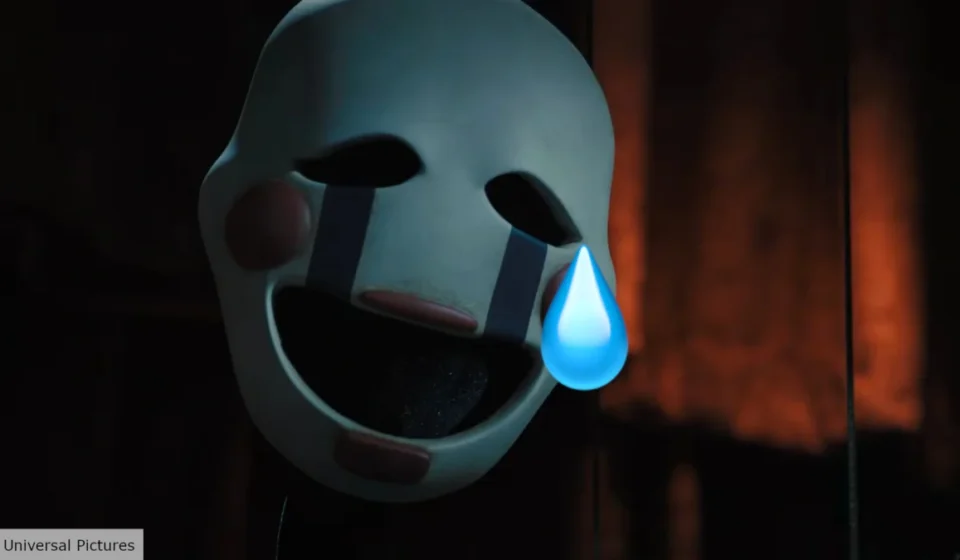
The Disappointment of FNAF 2: A Critical Look at the Sequel’s Narrative and Character Missteps

The annual resurgence of Five Nights at Freddy’s content, a hallmark of the spooky season, inevitably brings to the forefront the enduring popularity of the original game series. This year, however, the discussion is tinged with a significant undercurrent of dissatisfaction, particularly concerning the 2025 cinematic sequel, FNAF 2. While the initial film adaptation garnered a degree of appreciation, even with its perceived eccentricities, the follow-up has ignited considerable debate among fans, with a prominent point of contention being the perceived mishandling of a central character: the Puppet.
The trajectory of video game adaptations has long been fraught with challenges, and the Five Nights at Freddy’s franchise is no exception. While the 2023 film successfully navigated some of the intricate lore established by creator Scott Cawthon, blending elements from earlier games with characters from more recent installments like Vanessa, its sequel appears to have diverged significantly from the source material that resonated with its dedicated fanbase. This divergence, particularly in the portrayal of the Puppet, has left many feeling that a unique opportunity to honor the game’s narrative depth has been missed.
The Genesis of the Puppet and its Lore
Scott Cawthon’s Five Nights at Freddy’s 2, released in 2014, introduced a pivotal new animatronic that quickly became a fan favorite: the Puppet, also known as the Security Puppet or the Marionette. This character introduced a novel gameplay mechanic, requiring players to maintain the winding of its music box to prevent its terrifying approach. Beyond its in-game function, the Puppet’s narrative significance expanded dramatically in later installments through a series of cryptic minigames.
These minigames revealed the tragic backstory of the Puppet. Designed by Henry Emily, a business partner of the antagonist William Afton, the Puppet was intended to serve as a security measure. Its advanced facial recognition technology was meant to ensure no child left the premises unattended, a feature particularly poignant given Emily’s personal connection to his daughter, Charlotte. The narrative tragically unfolds with Afton’s murder of Charlotte outside the restaurant. The Puppet, in its attempt to reach and save her, malfunctions in the rain, leading to Charlotte’s soul possessing the animatronic.
A Shift in Motivation and Morality
Crucially, the lore established in the games paints the Puppet as a distinct entity. Unlike other possessed animatronics driven by raw rage and sorrow, the Puppet, imbued with Charlotte’s consciousness, retains a degree of her intelligence and moral compass. Its primary objective, as depicted in later games, is the protection of the other children murdered by Afton, with a clear distinction made between harming these innocent souls and targeting adults who obstruct its protective mission. This nuanced portrayal highlights Charlotte’s enduring humanity despite her traumatic experience.

The initial moments of the FNAF 2 film appear to acknowledge this complexity. Early scenes depict Charlotte’s character exhibiting protective instincts, notably by rescuing a boy from Afton at a party, only to tragically perish herself, seemingly in the arms of the Puppet. Her subsequent actions in the film initially align with her game counterpart’s refusal to harm children, suggesting a fidelity to the established lore that instilled hope among viewers.
However, this alignment proves to be short-lived. A significant narrative deviation occurs in the depiction of Charlotte’s demise. In the game, her death is a private tragedy. In the film, her murder is public, occurring in front of a crowd of adults who had previously ignored her warnings about Afton’s abductions. This public spectacle and the perceived inaction of the surrounding adults drastically alter Charlotte’s perceived motivation.
Consequences of Narrative Departure
The film’s alteration of Charlotte’s death has profound implications for the Puppet’s characterization and actions. Instead of a focused mission of protection driven by a desire for justice for her and the other child victims, the movie’s Puppet is depicted as indiscriminately targeting and killing adults, regardless of their involvement in her plight or interference with her objectives. This shift transforms the Puppet from a tragic figure with a moral imperative into a more generalized force of vengeance.
This broad-stroke approach to its violence has been criticized for diminishing the character’s sympathetic qualities and stripping away the narrative complexity that made her a compelling figure in the games. The subtle distinction between protecting the innocent and punishing the guilty, a cornerstone of the Puppet’s lore, appears to be largely abandoned in favor of a more visceral, less nuanced portrayal. This departure has led to a significant loss of character depth, which many fans found to be a compelling aspect of the original Five Nights at Freddy’s narrative.
Unexplained Abilities and Lore Inconsistencies
Beyond the alteration of the Puppet’s motivation, the FNAF 2 film introduces a series of unexplained abilities that further deviate from established lore and raise questions about the narrative’s internal consistency. The film depicts the Puppet possessing a range of powers, including broadcasting through the FazTalker system and exerting control over other animatronics. Most notably, the film suggests the Puppet can possess humans, imbuing them with a disturbing, clown-like makeup.
While the Five Nights at Freddy’s universe is inherently steeped in supernatural elements and often embraces the bizarre, these new abilities appear to lack a solid foundation within the established canon. The first film, praised for its adherence to the source material, laid a groundwork that, while fantastical, felt internally coherent. The introduction of these unexplained powers in the sequel, particularly the human possession, has been perceived by some as an attempt to inject "creepy factor" without sufficient narrative justification.

These supernatural manifestations seem to contradict the Puppet’s core purpose as established in the games: a protector of lost children, driven by a quest for justice. The arbitrary nature of these powers, as presented in the film, raises questions about their origin and function within the broader FNAF mythology. For fans who have invested years in understanding the intricate details of the FNAF lore, these new additions feel less like organic developments and more like narrative contrivances designed to shock or titillate. The personal impact of such changes is evident, with one fan noting a regret in dressing as the Puppet for Halloween prior to the film’s release, a testament to how the sequel’s interpretation has altered their perception of the character.
Missed Opportunities and Fan Discontent
The cumulative effect of these narrative choices in FNAF 2 has left many fans feeling that a significant opportunity has been squandered. The original Five Nights at Freddy’s game series, at its heart, explores themes of child neglect, trauma, and the enduring impact of tragedy. The Puppet’s story, in particular, offers a poignant exploration of a child’s spirit seeking justice and protection. The film sequel, by departing from this nuanced storytelling, appears to have prioritized sensationalism over thematic depth.
The broader implications of this narrative misstep extend to the franchise’s future. While the Five Nights at Freddy’s film series may not have been envisioned to achieve universal mainstream appeal, it had cultivated a dedicated following who appreciated its efforts to translate the games’ intricate lore to the screen. The perceived departure from this fidelity in FNAF 2 has understandably dampened enthusiasm. The question now lingers: will FNAF 3 be able to recapture the trust and excitement of the fanbase, or will it continue on a path that alienates those who have been the most ardent supporters of the franchise?
The critical reception and fan discourse surrounding FNAF 2 highlight a recurring challenge in adapting beloved media: the delicate balance between creative interpretation and fidelity to the source material. For a franchise as deeply entrenched in its lore as Five Nights at Freddy’s, a departure from established narratives, particularly concerning a character as central and complex as the Puppet, risks alienating the very audience that has propelled its success. The sequel’s narrative choices, from the altered motivation of Charlotte to the unexplained supernatural abilities, have generated significant disappointment, leaving a cloud of uncertainty over the future of the FNAF cinematic universe.