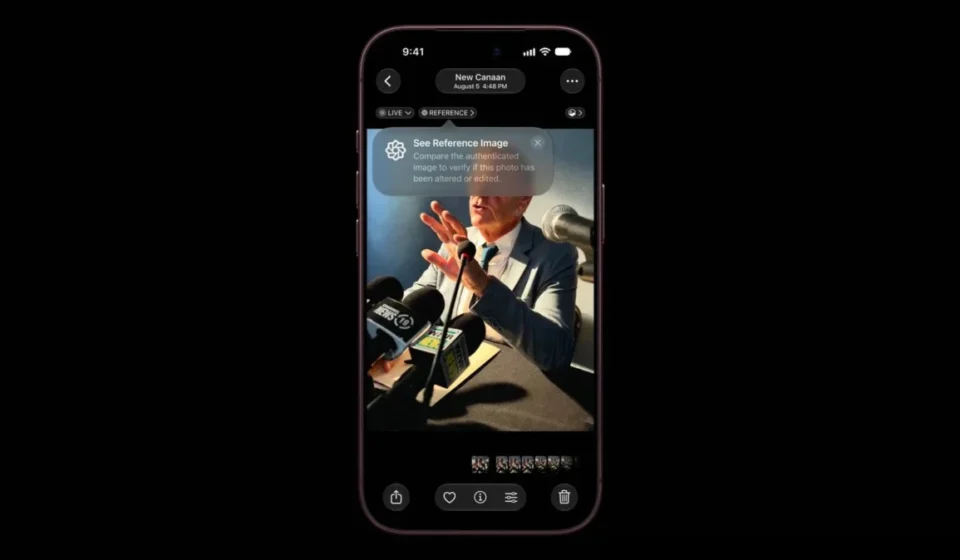
Apple Introduces ‘Reference Image’ on iPhone 18 Pro to Combat AI-Generated Content and Ensure Photographic Authenticity

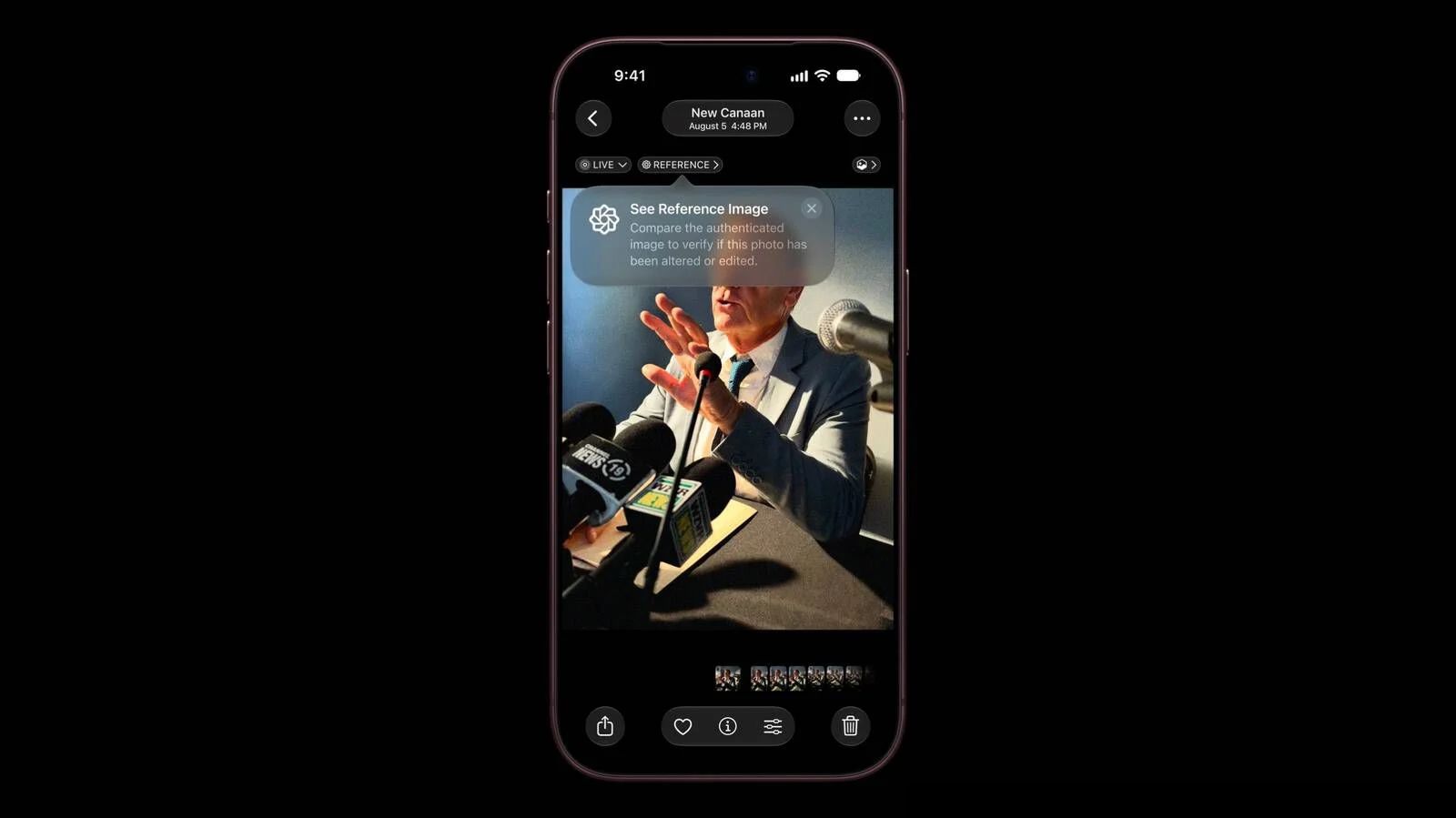
Apple has unveiled a groundbreaking new feature, "Apple Reference Image," integrated into its latest iPhone 18 Pro and iPhone 18 Pro Max models, designed to provide an unprecedented level of assurance for the authenticity of photographs. This innovative technology aims to combat the growing proliferation of AI-generated imagery by offering a verifiable method to confirm that a photo was indeed captured by an iPhone’s camera and has not been subsequently altered or synthetically created. Apple likens the system to a "digital film negative," a secure and immutable record that attests to the reality of the captured moment.
The announcement, made on Tuesday, September 15, 2026, by Juli Clover of MacRumors, details how Apple Reference Image operates at a fundamental hardware level. The company elaborated on the intricacies of this pioneering system in a comprehensive post on its Security Research blog, providing deep insights into its design and protective mechanisms. This initiative signifies Apple’s proactive stance in addressing the evolving landscape of digital media and the increasing challenges posed by sophisticated AI manipulation tools.
The Genesis of Verifiable Photography: A Response to the AI Era
The introduction of Apple Reference Image arrives at a critical juncture, as advancements in artificial intelligence have made it increasingly difficult to distinguish between genuine photographs and hyper-realistic AI-generated content. The ability to produce convincing, yet fabricated, images has raised significant concerns across various sectors, from journalism and law enforcement to personal security and historical documentation. In this context, Apple’s commitment to providing a tool that can cryptographically prove the origin and integrity of an image represents a significant step towards restoring trust in digital visual evidence.
This feature was first showcased with the launch of the iPhone 18 Pro and iPhone 18 Pro Max, marking a pivotal moment in smartphone camera technology. The underlying principle of Apple Reference Image is to embed an unalterable digital signature directly into the image data at the moment of capture. This approach contrasts with conventional methods where image authentication or verification occurs at later stages of the software processing pipeline, leaving them susceptible to tampering.
How Apple Reference Image Secures Photographic Integrity
At its core, Apple Reference Image leverages a specialized "reference mode" within the iPhone’s camera sensor. When activated, this mode instructs the sensor to cryptographically sign the pixel data immediately after it is acquired. Crucially, the sensor’s firmware is engineered to prevent any modification of this data once it has been signed. This direct hardware-level signing process is the cornerstone of the system’s security, ensuring that the initial data captured by the sensor remains pristine and uncompromised.
Apple’s technical documentation highlights a key vulnerability in existing authentication systems: their reliance on end-of-pipeline signing. This approach, the company argues, leaves images open to sophisticated "tampering attacks" where malicious actors could potentially alter the image after its initial processing but before its final verification. By contrast, Apple Reference Image creates a "secure digital negative" that is inherently protected from software-based compromises. This negative exists alongside the standard, editable photograph, offering a dual-layered approach to image integrity.
The secure digital negative is stored locally on the device and comprises not only the raw pixel data but also essential sensor metadata and cryptographic timestamps. These timestamps are not single points in time but rather include defined lower and upper bounds, adding another layer of precision and security.
The "Development" Process: Private Cloud Compute and Verifiable Rendering
When a user chooses to verify an image captured with Apple Reference Image, the secure digital negative is sent to Apple’s Private Cloud Compute environment. This is a critical step in the verification process, as it involves rendering the image in a secure, private, and auditable setting. The Private Cloud Compute infrastructure performs the necessary steps to translate the signed pixel data and metadata into a viewable image.
This process is designed to be transparent and verifiable, ensuring that the image displayed is a direct and unaltered representation of what the iPhone’s sensor captured. By offloading the rendering to a trusted and isolated cloud environment, Apple aims to eliminate any potential for local tampering or manipulation during the verification phase.
Robust Defenses Against Evolving Threats
Apple emphasizes that the Apple Reference Image system is engineered to withstand a wide array of sophisticated attacks. These include:
- Data Injection Attacks: Preventing unauthorized data from being inserted into the image stream.
- Compromised Operating Systems: Ensuring that even if the iPhone’s operating system is compromised, the integrity of the reference image data remains intact.
- Hardware Attacks: Designing the system to be resilient against potential physical intrusions or modifications to the device’s hardware.
- Cryptographic Attacks: Employing state-of-the-art cryptographic techniques to protect the digital signatures and timestamps.
Furthermore, Apple asserts that Apple Reference Image is the first image provenance system to incorporate "quantum-secure defenses." This forward-thinking approach acknowledges the potential future threat posed by quantum computing, which could render current encryption methods obsolete. By building in quantum-resistant security measures, Apple is positioning this feature as a long-term solution for verifiable digital photography.
In the unlikely event of a system breach or the detection of fraudulent activity, Apple has incorporated a revocation mechanism. Private Cloud Compute can calculate a confidence score for each image, and Apple retains the ability to revoke individual photos or even an entire sensor if evidence of widespread fraud is detected. This ensures accountability and allows for swift action to maintain the system’s trustworthiness.
Prioritizing Photographer Privacy and Confidentiality
A significant aspect of Apple Reference Image is its careful consideration of photographer privacy. The system is designed to avoid using explicit, public credentials for photographers, thus preventing the creation of easily linkable public profiles of their photographic activities. This approach ensures that the system doesn’t inadvertently expose sensitive information about who took what photos.
Moreover, Apple Reference Image prevents the public association between different photos taken by the same sensor. This means that while the authenticity of an individual image can be verified, the system does not create a public record that links a series of photos back to a specific camera or user, thereby protecting the confidentiality of the photographer’s work and personal life.
Crucially, Apple states that the confidentiality of the image itself is protected throughout the process, including from Apple itself. The secure nature of Private Cloud Compute and the end-to-end cryptographic protection are designed to ensure that even Apple cannot access or view the content of the images being verified, beyond what is necessary for the verification process itself.
Opt-In Feature and Technical Specifications
Apple Reference Image is an opt-in feature, meaning users must actively choose to enable it within their iPhone settings. This respects user autonomy and allows individuals to decide whether they require this enhanced level of photographic verification. Currently, the feature is limited to the Main camera sensor on the iPhone 18 Pro and iPhone 18 Pro Max. This focus on the primary camera likely stems from its extensive use and its critical role in capturing important moments.
The technical details underscore the sophistication of this implementation. By integrating this functionality directly into the sensor hardware and utilizing secure cloud processing, Apple is setting a new benchmark for what is possible in terms of digital image authenticity.
Broader Implications and Future of Digital Media
The introduction of Apple Reference Image has far-reaching implications for various industries and for society at large:
- Journalism: News organizations can use this feature to verify the authenticity of images submitted by sources or found online, enhancing the credibility of their reporting and combating disinformation campaigns.
- Legal and Law Enforcement: Courts and investigative bodies could potentially rely on reference images as irrefutable evidence, simplifying the process of authenticating visual documentation in legal proceedings.
- Social Media and Online Platforms: The technology could empower platforms to develop more robust tools for identifying and flagging AI-generated or manipulated content, fostering a more trustworthy online environment.
- Personal Use: Individuals can have greater confidence in the photos they share, knowing that they can be definitively proven to be authentic captures from their iPhone.
- Historical Preservation: Verifiable photographic records can ensure the accuracy and integrity of historical documentation for future generations.
While the initial implementation is confined to the main camera sensor, it is plausible that future iterations of this technology could be expanded to other camera lenses on the iPhone or even integrated into other Apple devices. The success of Apple Reference Image could also spur similar developments from other technology manufacturers, leading to a broader industry-wide shift towards verifiable digital media.
The company’s decision to delve into the technical underpinnings of this feature through its Security Research blog signals a commitment to transparency and a desire to educate the public and the broader tech community about the importance of image provenance. This move is likely to be met with considerable interest from cybersecurity experts, researchers, and consumers alike, as it directly addresses one of the most pressing digital challenges of our time.
In conclusion, Apple Reference Image represents a significant technological leap, offering a robust and privacy-conscious solution to the growing problem of AI-generated content. By embedding security at the hardware level and employing advanced cloud verification, Apple is not only enhancing the capabilities of its latest flagship devices but also contributing to a more trustworthy digital ecosystem. The "digital film negative" is poised to become a vital tool in preserving the integrity of visual evidence in an increasingly complex digital world.