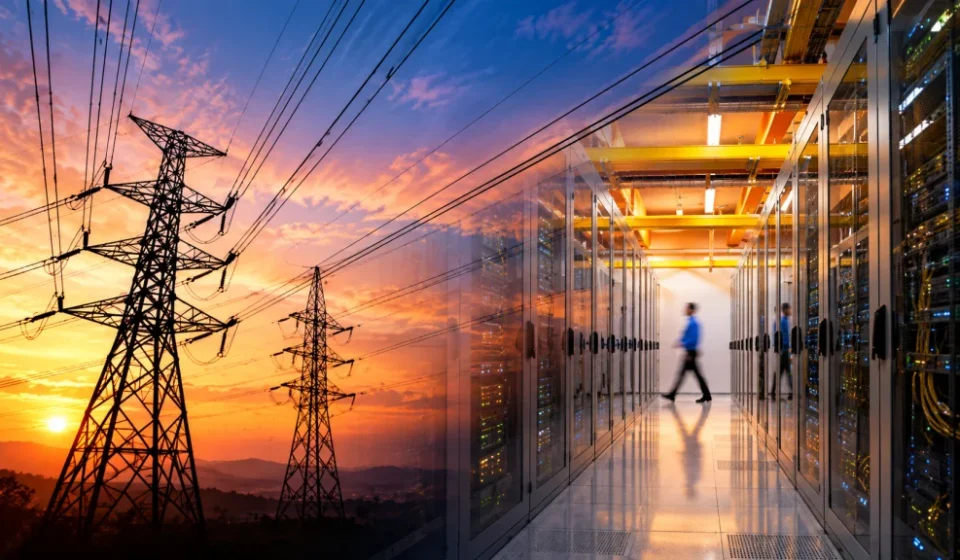
From Danger to Dividends The Historical Parallel Between the 19th Century Electrical Panic and the Modern AI Infrastructure Boom

The transition from a speculative technological novelty to an essential, regulated utility is often marked by moments of public crisis and subsequent infrastructure overhaul. In October 1889, lower Manhattan became the site of a tragedy that would fundamentally alter the trajectory of American electrification. Just before 1:00 p.m., John Feeks, a lineman for Western Union, ascended a 50-foot utility pole to remove "dead" or redundant telegraph wires. The pole was a chaotic nexus of competing currents, crowded with a mix of low-voltage communication lines and high-voltage alternating current (AC) power lines. While working near the top, Feeks inadvertently completed an electrical circuit. Witnesses, including a nearby fireman and dozens of pedestrians, watched in horror as his body stiffened and became entangled in the crossarms. The Ann Arbor Register later reported that "the current was completed," leaving Feeks suspended and lifeless before a crowd that grew into the thousands.
This singular event served as the catalyst for what historians now call the "Electric Wire Panic." In the late 1880s, the "War of Currents" between Thomas Edison’s direct current (DC) system and George Westinghouse’s alternating current (AC) system was at its peak. Edison, seeking to discredit his rival, frequently highlighted the dangers of AC power. The death of Feeks provided the public with a visceral, undeniable image of those dangers. Deputy Coroner Jenkins, who examined the scene, described it as the most "ghastly" incident he had ever witnessed, noting that it was impossible to determine if the initial shock killed Feeks instantly or if he suffered as the current continued to surge through him. The resulting public fury forced immediate political intervention. Mayor Hugh Grant, responding to the outcry and the demands of local newspapers, ordered the immediate removal of unsafe overhead wires. Although New York had previously passed legislation requiring wires to be moved underground, the Feeks tragedy transformed a bureaucratic suggestion into an urgent mandate, leading to the massive subterranean conduit system that still serves New York City today.
The Economic Aftermath of Technological Panic
While the 1889 panic initially appeared to be a threat to the future of electricity, it instead professionalized the industry and created a massive, enduring market for infrastructure development. The danger associated with the technology did not destroy its utility; rather, it necessitated a higher standard of construction and maintenance. Two years after the Feeks incident, in 1891, a traveling lineman named Henry Miller convened a meeting in St. Louis to found the National Brotherhood of Electrical Workers (now the IBEW). This move to organize and certify the workforce was a direct response to the hazardous conditions of the early electrical era.
From an investment perspective, the "panic" phase of 1889 was the moment when the real money moved from the speculative front-end of power generation to the essential back-end of grid stability. Today, the Bureau of Labor Statistics notes that electrical power-line installers and repairers earn a median annual wage of approximately $95,320—nearly double the median for all occupations. The lesson for modern observers is clear: when a transformative technology faces a public or regulatory backlash due to its inherent risks or resource demands, the value of the infrastructure required to solve those problems increases exponentially.
The Modern Parallel: Artificial Intelligence and the Infrastructure Bottleneck
In 2026, the artificial intelligence sector finds itself in a position strikingly similar to the electrical industry of the late 1880s. While the "War of Currents" has been replaced by the "War of Compute," the public and regulatory backlash is mounting. Concerns over AI’s energy consumption, its demand for land and water, and the societal implications of its rapid rollout have led to local moratoriums on data center construction and increased scrutiny of the tech giants. However, a look at the capital commitments suggests that, much like the 1880s, the demand is far too entrenched to be stopped by localized resistance.
Recent financial disclosures indicate that the capital flight from AI is not happening; instead, the capital is being rerouted. A leaked initial public offering (IPO) prospectus for Anthropic reportedly reveals approximately $518 billion in compute and infrastructure commitments. Significantly, 80% of these obligations are noncancelable or "take-or-pay" agreements stretching well into the 2030s. Similarly, OpenAI’s annualized revenue run rate is estimated to be approaching $70 billion, marking a 70% increase since the beginning of the third quarter of the previous year. These figures suggest that while the public may debate the safety or ethics of AI, the foundational "wiring" of the industry is being locked in at a scale never before seen in the technology sector.
The Blue-Collar Resurgence in the Digital Age
The AI boom is frequently characterized as a "white-collar" revolution, driven by software engineers and data scientists. However, the physical reality of building AI—the data centers, the cooling systems, and the massive power requirements—has triggered a massive "blue-collar" resurgence. This is where the 1889 parallel is most evident. Just as the danger of overhead wires created a high-value market for skilled linemen and underground conduit builders, the complexity of modern data centers is driving record demand for specialized trades.
Current labor market data shows that experienced electricians in the data center sector are now commanding salaries well north of $100,000. Job postings for welders and pipefitters have surged by 164% year-over-year. In many regions, a high school graduate entering a welding trade program can expect to earn between $65,000 and $75,000 almost immediately, with virtually unlimited opportunities for overtime. Unlike the internet boom of the late 1990s, which primarily rewarded those with advanced degrees in computer science, the AI infrastructure buildout is rewarding the physical builders of the grid.
Corporate Performance and the "Backlog" Boom
The financial health of infrastructure firms reflects this shift. Companies that specialize in the mechanical, electrical, and plumbing (MEP) systems for large-scale industrial projects are reporting record-breaking backlogs.
- EMCOR Group Inc. (EME): A leader in mechanical and electrical construction, EMCOR ended the second quarter of 2024 with record remaining performance obligations of $17.1 billion, representing a 44% increase year-over-year.
- Comfort Systems USA Inc. (FIX): Specializing in HVAC and electrical services for data centers, the company reported a record backlog of $14.1 billion, a 73% jump from the previous year.
- Quanta Services Inc. (PWR): As a primary contractor for the electrical power grid, Quanta is currently sitting on a $53.4 billion backlog as utilities struggle to upgrade the grid to handle AI-related loads.
Furthermore, the power generation side of the equation is seeing unprecedented growth. Bloom Energy Corp. (BE) recently topped $1 billion in quarterly revenue for the first time, a 166% increase, driven by the demand for on-site "microgrids" that allow data centers to operate independently of the strained public utility system. Caterpillar Inc. (CAT) has also emerged as a primary beneficiary, with its heavy-duty generators becoming a standard requirement for data center redundancy.
The Orbital Frontier: Solving the Terrestrial Constraint
As land, water, and local opposition become significant bottlenecks for AI growth on Earth, the industry is beginning to look toward the ultimate "underground conduit" equivalent: outer space. The "Electric Wire Panic" of 1889 was solved by moving wires where people couldn’t see them (underground). The AI infrastructure panic of the late 2020s may be solved by moving compute where there are no neighbors at all.
SpaceX’s recent successful Starship orbital flights have opened the door for what is being termed "orbital compute." Elon Musk has indicated that the first AI compute satellites, equipped with high-density Nvidia Corp. (NVDA) chips, are slated for launch in late 2027. Alphabet Inc. (Google) has also confirmed plans to send proprietary AI chips into orbit to test the feasibility of space-based data processing.
While Barclays estimates that orbital compute currently costs approximately three times as much as terrestrial building, the lack of regulatory hurdles, the abundance of solar energy, and the absence of cooling water requirements make it an increasingly attractive long-term play. This shift represents the next phase of the infrastructure cycle—a transition from the "builders" of Earth-bound data centers to the "builders" of the orbital supply chain.
Analytical Implications: Moving Beyond the Headlines
The historical lesson of the late 19th century is that the most sustainable wealth is rarely made by the people who dominate the headlines, but rather by the companies that provide the solutions to the problems those technologies create. In 1889, while Edison and Westinghouse fought a public war over current standards, the steadier fortunes were made by the companies that dug the trenches, manufactured the insulated cables, and supplied the steam engines that powered the dynamos.
Today, the headlines are dominated by the capabilities of new chatbots and the existential risks of AGI. However, the underlying economic reality is found in the order books of electrical contractors and the revenue run rates of distributed cloud networks like Akamai Technologies Inc. (AKAM), which recently signed an $11.6 billion deal with Anthropic.
The "asymmetric setup" in the current market lies in the infrastructure supply chain—the companies that build, launch, power, and connect the physical components of the digital age. Whether on the ground or in orbit, the demand for "wiring" the future remains the most consistent driver of economic value. Investors who focus solely on the "panic" of technological change may miss the fact that the very problems causing the panic are the ones that create the most valuable industries of the next century. Just as the tragedy of John Feeks forced a primitive electrical grid to grow into a sophisticated, professionalized utility, the current constraints on AI are forcing the development of a new, more robust infrastructure that will likely define the global economy for decades to come.