Market Breadth and Technical Signals: Analyzing the Nasdaq’s Recent Breakout and the Implications for Investor Strategy

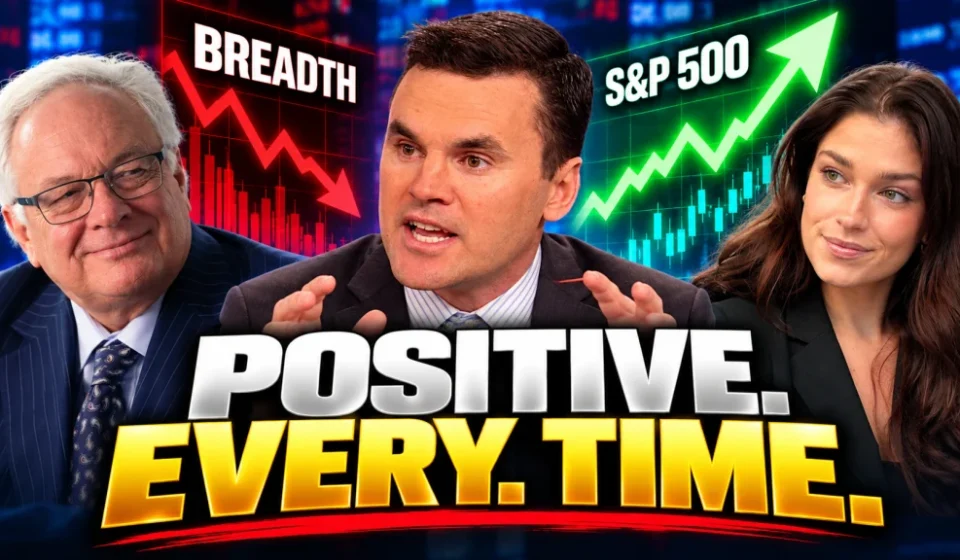
The equity markets in late 2026 are presenting a complex paradox for institutional and retail investors alike, as the S&P 500 maintains its position near record highs despite a notable deterioration in underlying market breadth. While headline indices suggest a robust bull market, a granular analysis of individual stock performance reveals a narrowing leadership profile that has historically signaled a pivotal juncture for capital allocation. This divergence was the primary focus of a recent technical analysis conducted by Louis Navellier, editor of Growth Investor, and Paul Hickey, co-founder of Bespoke Investment Group, who examined the historical precedents of the Nasdaq Composite’s latest technical "trigger" and the broader macroeconomic headwinds currently facing the equities market.
The Divergence of Market Indices and Breadth
In the final quarter of 2026, the S&P 500 has demonstrated remarkable resilience, frequently testing the upper bounds of its historical range. However, the internal mechanics of this advance are causing concern among technical analysts. Market breadth—a measure of how many individual stocks are participating in a market trend—has begun to flag. When an index rises while the majority of its constituent stocks remain stagnant or decline, it indicates that a small cohort of mega-cap equities is disproportionately driving the index’s performance.
Historically, periods of thinning breadth have often preceded increased volatility. According to data tracking the Advance-Decline (A/D) line, fewer than 40% of S&P 500 constituents are currently trading above their 50-day moving averages, even as the index itself hovers within 2% of its all-time high. This phenomenon suggests a "top-heavy" market where the failure of a few key leaders could result in a sharp correction for the broader index. Navellier and Hickey noted that while the S&P 500 tells a story of stability, the individual tickers within the index tell a story of caution and selective accumulation.
The Nasdaq Composite’s Rare Bullish Signal
A significant development in this environment occurred in late September 2026, when the tech-heavy Nasdaq Composite broke out to a new high. This move followed more than three-and-a-half months of lateral movement, characterized by high-frequency trading and indecision. Technical analysts often view such "meandering" periods as healthy consolidation phases where the market "digests" previous gains before attempting a fresh leg higher.
The breakout is particularly noteworthy because it triggered what technical researchers call a rare bullish signal. When an index clears a multi-month resistance level after a period of consolidation, it often indicates that institutional "dry powder" is finally being deployed back into growth-oriented sectors. Paul Hickey’s research at Bespoke Investment Group highlights that similar setups—where the Nasdaq hits a new high following at least 100 days of non-trending behavior—have historically yielded positive returns over the subsequent six-month period.
Historical Performance Following Consolidation Phases
To understand the probability of future gains, Hickey analyzed historical datasets dating back several decades. The data suggests that when the Nasdaq triggers this specific type of breakout, the immediate one-month outlook is often characterized by moderate volatility as the market tests the new support levels. However, the six-month outlook is statistically significant for its bullish bias.
In previous instances where the Nasdaq broke a three-month-plus consolidation period, the index saw an average gain of 8.4% over the following six months, outperforming the standard market average. These "breakout from base" scenarios suggest that the underlying momentum is strong enough to overcome the lack of breadth in the short term. However, the analysis also warns that if the breakout is not accompanied by an expansion in breadth—meaning more mid-cap and small-cap tech stocks joining the rally—the move may eventually stall.
The Impact of Rising Treasury Yields
The current market rally is facing a significant obstacle in the form of rising Treasury yields. As of late September 2026, the 10-year Treasury note has seen a steady climb, reflecting expectations of persistent inflation or a "higher-for-longer" interest rate environment from the Federal Reserve.
Rising yields typically pose a challenge for growth stocks, particularly those in the technology sector, as the present value of future earnings is discounted more heavily. This creates a fundamental friction: the Nasdaq is signaling a technical breakout, but the fixed-income market is signaling a tightening of financial conditions. Paul Hickey observed that for the current rally to remain sustainable, corporate earnings must grow at a pace that justifies higher valuations in the face of competitive yields from government bonds. If the 10-year yield moves significantly above key psychological thresholds, it could derail the momentum and force a rotation out of high-multiple growth stocks and into defensive sectors or cash.
Identifying "Triple Play" Stocks
Amidst the uncertainty of broad market breadth, Navellier and Hickey emphasized the importance of fundamental stock selection. They identified a specific category of equities known as "triple play" stocks. A triple play occurs when a company achieves three specific milestones in a single earnings report:
- An earnings-per-share (EPS) beat against analyst estimates.
- A revenue beat against analyst estimates.
- An upward revision of forward-looking guidance.
In a market where only a few stocks are driving the indices, these "triple play" companies represent the highest tier of institutional quality. They demonstrate that despite macroeconomic pressures, they possess the pricing power and operational efficiency to exceed expectations. Hickey pointed to two specific, unnamed "triple play" stocks currently on his radar that have managed to maintain positive price action even as the broader market’s participation narrowed. These stocks are viewed as potential "safe havens" within the growth sector, providing a combination of technical momentum and fundamental backing.
The Evolution of Retail Trading and Risk Management
The discussion also touched upon the changing landscape of retail participation in the 2026 market. Jonathan Rose, a veteran market maker with decades of experience at the CBOE and CME, has observed a shift in how individual traders approach high-volatility environments. Rose, who now provides daily analysis via Masters in Trading LIVE, noted that the current "narrow" market requires a more sophisticated set of tools than the broad-based "buy and hold" strategies of previous years.
Rose is preparing to host a "$10K to $100K Challenge," focusing on identifying high-probability signals that allow traders to capitalize on volatility with reduced risk. This educational initiative reflects a broader trend in the industry: as market dynamics become more fragmented and driven by algorithmic trading, individual investors are increasingly seeking institutional-grade methodologies to navigate the "noise" of the daily tickers. Rose’s approach emphasizes the use of bond futures and option volatility as leading indicators for equity movements, providing a more holistic view of the financial ecosystem.
Broader Impact and Market Implications
The current state of the market suggests that investors are entering a "stock picker’s" environment. The days of a "rising tide lifting all boats" appear to be on hiatus as the divergence between index price and market breadth widens. For the S&P 500 and Nasdaq to sustain their recent highs, several conditions likely need to be met:
- Breadth Expansion: A greater percentage of stocks must begin to trend above their 200-day moving averages to provide a foundation for the indices.
- Yield Stabilization: Treasury yields must find a range that does not aggressively compete with equity risk premiums.
- Earnings Consistency: The upcoming earnings season will be critical in determining if "triple play" stocks can continue to lead or if the narrowing leadership is a precursor to a broader earnings recession.
While the Nasdaq’s recent breakout provides a rare bullish signal based on historical data, the presence of rising yields and weakening breadth serves as a necessary counterbalance. Analysts suggest that the next six months will be a period of high dispersion, where the gap between the market’s winners and losers becomes even more pronounced.
In conclusion, the analysis provided by Navellier, Hickey, and Rose underscores a market at a crossroads. The technical indicators suggest further upside potential, yet the fundamental and macroeconomic backdrop demands a disciplined, data-driven approach to risk management. As the final quarter of 2026 unfolds, the ability to identify high-quality "triple play" stocks while monitoring the signals from the bond market will likely be the deciding factor in portfolio performance. The rare bullish signal from the Nasdaq offers hope for growth investors, but the lack of broad participation suggests that caution remains the prudent path forward.