

The current market environment is frequently characterized by what psychologists and economists call the "streetlight effect"—a cognitive bias where individuals search for answers where the light is brightest, rather than where the truth actually resides. For the modern investor, the "light" is the constant stream of headlines regarding central bank policy, employment reports, and consumer price indices. However, global macro investing experts, including Eric Fry, argue that the true drivers of future market leadership are the "Golden Rivets"—the critical, often unglamorous inputs and supply chain bottlenecks that determine whether trillion-dollar industries can successfully scale.
The Disconnect Between Headlines and Market Fundamentals
For much of the past two years, the narrative surrounding the equity markets has been dominated by the Federal Reserve. The financial media has meticulously tracked every utterance from Chairman Jerome Powell, debating whether the central bank will implement a "hawkish pause" or a "dovish cut." This relentless coverage presumes that interest rates are the sole arbiter of stock market performance. While monetary policy undoubtedly influences valuation multiples and borrowing costs, it does not dictate the physical availability of the resources required to build the future.
Markets may react to headlines in the short term, but they ultimately operate on the cold logic of supply and demand. When a critical component of a global megatrend becomes scarce, that scarcity can overwhelm the impact of interest rate fluctuations. Currently, the AI boom is entering a phase where software and algorithms—the most visible parts of the trend—are beginning to outpace the physical capacity of the world to support them. This creates a series of "choke points" where the companies providing the essential materials and infrastructure stand to gain significantly more than the high-profile software firms currently dominating the spotlight.
The Copper Crisis: The Physical Backbone of AI
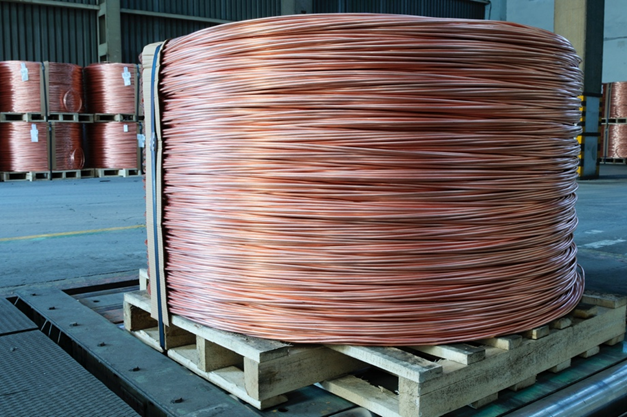
Perhaps the most significant "Golden Rivet" in the modern economy is copper. While often associated with "old economy" industrial production, copper is indispensable to the digital age. It is the primary conductor in the power grids, data centers, and renewable energy systems that make artificial intelligence possible.

According to data from S&P Global, annual global copper demand is projected to increase by approximately 50% by 2040. This surge is driven by a simultaneous push toward several copper-intensive technologies:
- AI Data Centers: These facilities require massive amounts of high-conductivity wiring and advanced cooling systems.
- Electric Vehicles (EVs): An EV typically requires two and a half times more copper than an internal combustion engine vehicle.
- Renewable Energy: Solar and wind power systems require significantly more copper per megawatt of capacity than traditional coal or gas-fired plants.
- Grid Modernization: To support the increased electrical load of an AI-driven society, global power grids require a massive overhaul of their transmission infrastructure.
Despite this accelerating demand, the supply side of the equation remains constrained. The copper mining industry has faced a decade of underinvestment, and few meaningful new deposits have been discovered or developed in recent years. Industry estimates suggest that to meet the projected demand over the next two decades, the world may need to mine as much copper as humanity has produced in the last 10,000 years combined. This structural deficit is already manifesting in the financial markets. The Global X Copper Miners ETF (COPX), while subject to periodic volatility, has maintained a long-term uptrend, consistently trading above its 200-day moving average—a key technical indicator of sustained momentum.
The Energy Imperative and Data Center Proliferation
Beyond raw materials, the sheer consumption of electricity has emerged as a primary bottleneck for the AI industry. Artificial intelligence is an energy-intensive endeavor; training a large language model requires exponentially more power than traditional computing tasks.
Goldman Sachs Research forecasts that global power demand from data centers will climb by 50% as early as 2027. Looking toward the end of the decade, some projections suggest a 165% increase in power requirements. This creates a twofold challenge: the generation of enough clean energy to satisfy corporate sustainability mandates and the physical transmission of that power to the locations where it is needed.
The companies sitting at the center of this bottleneck—utility providers, electrical equipment manufacturers, and specialized energy infrastructure firms—are becoming the new "must-own" assets for institutional investors. As the tech giants of Silicon Valley compete for limited grid capacity, the pricing power shifts from the consumers of energy to the providers and facilitators of it. This represents a fundamental "regime change" in the market, where capital begins to rotate away from the obvious software winners and into the firms managing the physical constraints of the era.

The Memory Chip Shortage and Semi-Conductor Realities
While NVIDIA has become the poster child for the AI chip boom, the focus is beginning to shift toward the components that surround the GPU. High Bandwidth Memory (HBM) chips have emerged as a critical shortage area. Without sufficient memory capacity, even the most advanced AI processors cannot function at full efficiency.
Major tech companies are currently engaged in a quiet but intense competition to secure long-term supply agreements for these specialized chips. Unlike software, which can be replicated at near-zero marginal cost, memory chips require multi-billion-dollar fabrication plants (fabs) and complex manufacturing processes that cannot be scaled overnight. The media’s focus on AI "chatbots" ignores the fact that the entire industry is currently beholden to a handful of manufacturers capable of producing these high-end hardware components.
Chronology of a Market Shift: The April 2026 Catalyst
The realization of these physical constraints is expected to reach a tipping point in the second quarter of 2026. A pivotal moment in this market evolution is scheduled for the final week of April 2026, when the "Magnificent Five"—Microsoft, Apple, Amazon, Meta, and Alphabet—are slated to report their quarterly earnings.
Historically, these reports have been evaluated based on user growth, cloud revenue, and advertising spend. However, analysts expect a shift in the narrative during this reporting cycle. For the first time, these industry leaders are likely to acknowledge the impact of physical limitations on their growth trajectories.
The anticipated timeline for this narrative shift includes:
- Early April 2026: Pre-earnings "whispers" regarding rising capital expenditures (CapEx) related to securing energy and raw material supplies.
- April 24–30, 2026: Earnings calls from the major tech players. Experts predict management teams will use careful language to describe "supply chain headwinds" and "infrastructure-related delays" in their AI deployment.
- May 2026 and Beyond: A broader market realization that the "unlimited growth" of AI is tethered to the "limited supply" of the physical world, leading to a significant rotation of capital into the companies that control those supplies.
Analysis of Implications: The Great Capital Rotation
The transition from a software-centric AI trade to a hardware-and-infrastructure trade has profound implications for portfolio construction. In the previous market regime, investors were rewarded for chasing the highest growth rates regardless of valuation. In the emerging regime, the premium will likely be placed on companies with tangible assets and defensible positions in the supply chain.
This "regime change" suggests that the next phase of the AI megatrend will be dominated by "choke point" companies. These are firms that may not produce an AI model themselves but provide the "Golden Rivets" without which the model cannot exist. This includes:
- Copper miners with existing, high-grade production capacity.
- Electrical grid equipment providers (transformers, switchgear, and high-voltage cables).
- Specialized semiconductor firms focused on memory and power management.
- Independent power producers capable of delivering reliable baseload energy to data centers.
Conclusion: Looking Beyond the Streetlight
The investment landscape of 2026 is being shaped by forces that are invisible to those looking only at interest rate charts and inflation data. The true story of the market is found in the widening gap between the digital ambitions of the world’s largest companies and the physical realities of the planet’s resource base.
As Eric Fry noted in his "FutureProof 2026" analysis, the most significant gains in the coming years will likely not come from the companies spending the most money, but from the companies supplying what no one else can easily replace. For the disciplined investor, the challenge is to move away from the "streetlight" of mainstream media coverage and into the less-traveled areas of the market where the real bottlenecks—and the real opportunities—are forming. Those who recognize this shift before the April 2026 earnings cycle may find themselves positioned to benefit from one of the most significant capital rotations in recent financial history. The biggest story in the market is no longer about what AI can do; it is about what the world can provide to make AI possible.