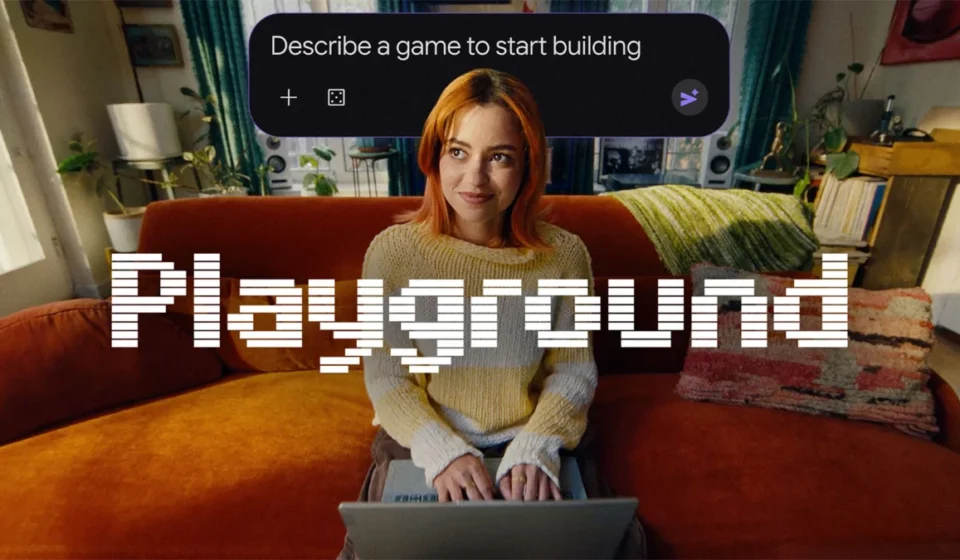
Google Launches ‘Playground’ AI Experiment: Democratizing Game Development Through Natural Language

Mountain View, CA – In a significant move poised to redefine accessibility in game creation, Google has officially unveiled "Playground," an innovative AI experiment designed to empower individuals to transform their game concepts into playable demos using intuitive natural language prompts. This initiative marks a crucial step in Google’s broader strategy to democratize complex creative processes through artificial intelligence, allowing aspiring developers and casual enthusiasts alike to bypass traditional barriers of coding, 3D modeling, and extensive technical expertise.
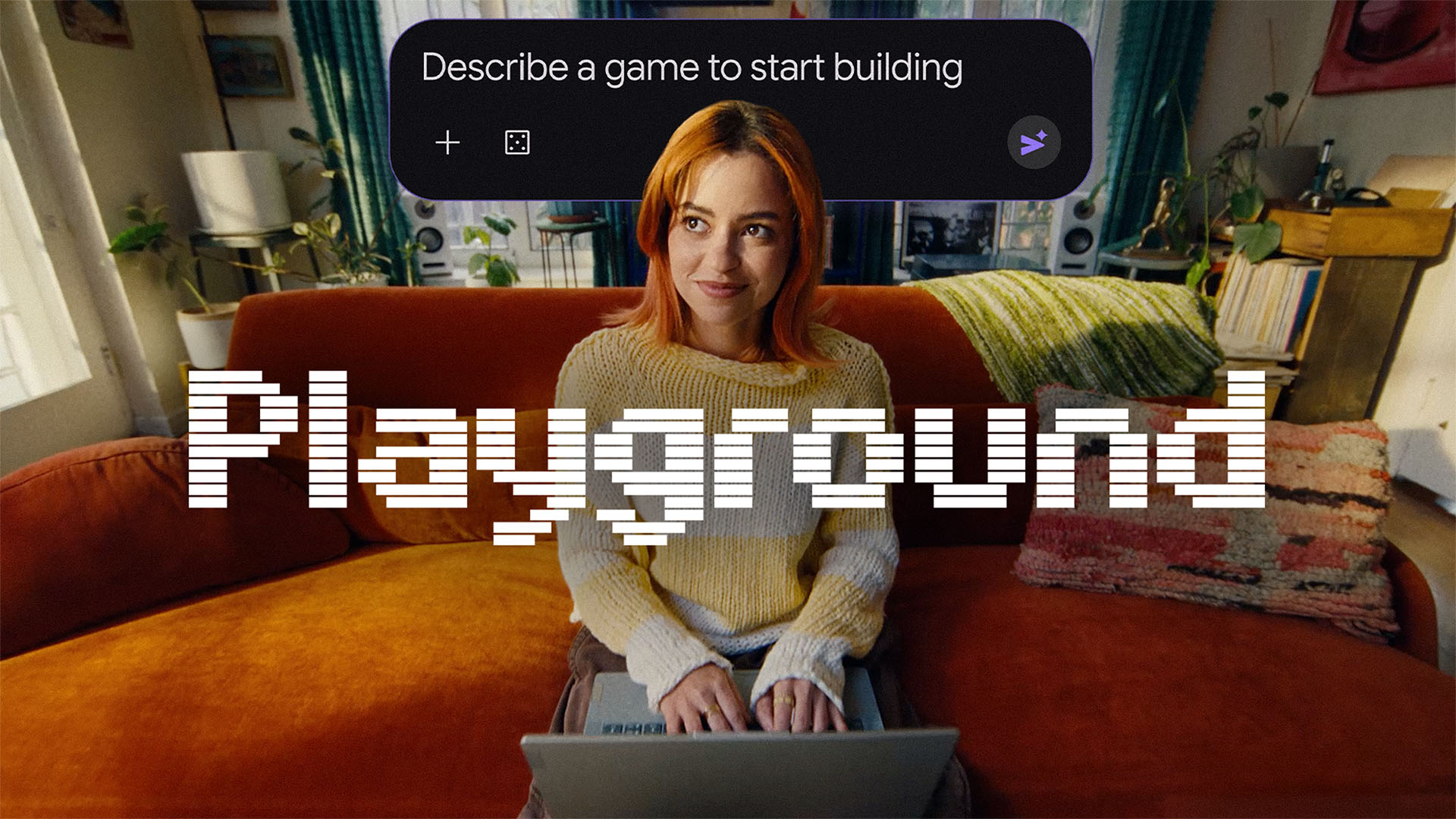
The launch, which became public recently, introduces a browser-based platform where users can articulate their game ideas, preferred art styles, and desired mechanics simply by describing them in plain English. Playground’s underlying AI models then interpret these descriptions and synthesize them into interactive experiences. This groundbreaking approach aims to significantly lower the entry barrier for game development, a field traditionally dominated by individuals with specialized technical skills and significant time investment.
The Vision Behind Playground: Democratizing Creativity
Google’s motivation for launching Playground stems from a long-standing vision to make technology universally accessible and creatively empowering. The company has consistently invested in AI research and applications, from search algorithms to generative AI models, with an increasing focus on tools that augment human creativity. Playground is a direct manifestation of this philosophy, extending the "low-code/no-code" paradigm, which has gained traction in software development, into the realm of interactive entertainment.
For years, the dream of creating one’s own video game remained elusive for many due to the steep learning curve associated with game engines, programming languages, and asset creation tools. While platforms like Unity and Unreal Engine have made strides in simplifying development, they still demand a foundational understanding of their respective ecosystems. Playground, by contrast, seeks to bridge this gap entirely, inviting anyone with an imagination to become a game designer. Google envisions a future where the primary bottleneck for game creation is no longer technical skill but the breadth of one’s ideas.
How Playground Works: From Prompt to Playable Demo
At its core, Playground operates on advanced generative AI capabilities. Users initiate the process by inputting text prompts that describe their desired game. For instance, a user might type, "Create a 2D platformer with a retro pixel art style, where a brave knight collects coins and avoids fire-breathing dragons in a medieval castle." The AI then processes this input, generating the core mechanics, visual assets, and environmental elements necessary for a basic playable demo.
A key feature highlighted by Google is the iterative nature of the platform. Once a demo is generated, users are not limited to the initial output. They can refine their ideas, suggesting modifications to art styles ("Change the knight to a space explorer and the castle to a futuristic spaceship"), mechanics ("Add a double jump ability"), or even environmental details ("Make the dragons shoot ice instead of fire"). This continuous feedback loop allows for rapid prototyping and creative exploration, enabling users to evolve their concepts without needing to restart from scratch or manually adjust code.
To further assist users, Playground offers a selection of "starter prompts" that can be remixed and customized. This feature is particularly valuable for new users who may need inspiration or guidance in formulating their initial game concepts. The platform also provides "guided support," presumably through AI-driven suggestions or tutorials, to help users shape and refine their game ideas more effectively.
Technical Underpinnings and Future Enhancements
While Google has not extensively detailed the specific AI models powering Playground, it is evident that the experiment leverages sophisticated generative AI, including large language models (LLMs) for interpreting natural language and generative adversarial networks (GANs) or diffusion models for asset creation. The ability to synthesize game logic, visuals, and interactive elements from textual descriptions points to a complex integration of various AI capabilities.
Looking ahead, Google has announced a significant future enhancement: the integration of Unity Spark. Unity, one of the world’s most popular real-time 3D development platforms, launched Unity Spark as part of its broader AI initiative, aiming to bring AI-powered creation tools to its ecosystem. Once this integration is live, Playground users will be able to harness Unity Spark’s advanced mechanics and robust 3D capabilities, pushing the boundaries of what can be created with natural language prompts. This partnership suggests that Playground aims to move beyond simple 2D browser games, venturing into more complex and visually rich 3D experiences, potentially blurring the lines between AI-generated prototypes and full-fledged game development. The synergy between Google’s AI prowess and Unity’s established game engine technology could be a formidable force in the future of game creation.
Addressing the Barriers to Game Development: A Historical Perspective
The journey of game development has historically been one of increasing complexity and specialization. In the early days, a single programmer could often create an entire game. However, as hardware advanced and player expectations grew, games became multi-disciplinary projects requiring teams of artists, programmers, designers, sound engineers, and project managers. The advent of sophisticated game engines like Unreal Engine and Unity in the late 1990s and early 2000s, while powerful, still required significant technical acumen. Learning these engines, mastering programming languages like C++ or C#, and understanding game design principles represented a substantial investment of time and resources.
This steep learning curve often stifled innovation from non-traditional creators. Many individuals with compelling game ideas lacked the means to bring them to fruition. The indie game boom, fueled by digital distribution platforms and more accessible tools, began to chip away at these barriers, but still required a dedicated effort. Google Playground represents the next evolutionary leap, offering a direct pathway from concept to playable experience without the need for traditional development skills. It’s a testament to the ongoing trend of democratizing powerful tools, reminiscent of how desktop publishing empowered individuals to create professional-looking documents or how video editing software enabled amateur filmmakers.
The Broader Landscape of AI in Creative Industries
Google Playground doesn’t exist in a vacuum. It is part of a surging wave of AI applications across various creative industries. From AI-powered image generators like DALL-E, Midjourney, and Stable Diffusion that create stunning visuals from text, to AI music composers, scriptwriters, and even architectural design tools, artificial intelligence is rapidly transforming how content is conceptualized and produced.
The rise of generative AI has sparked both excitement and apprehension. While it promises unprecedented creative freedom and efficiency, it also raises questions about intellectual property, the definition of "authorship," and the future of human roles in creative fields. Google’s entry into AI-powered game generation aligns with this broader technological shift, positioning Playground as a significant player in the evolving landscape of AI-assisted creativity. It underscores the industry’s belief that AI will increasingly serve as a co-creator and enabler, rather than merely an automation tool.
Market Context: The Gaming Industry’s Evolution
The global gaming industry is a colossal and rapidly expanding market. According to various market research firms, the industry surpassed $180 billion in revenue in 2023, with projections indicating continued growth to over $300 billion by 2027. Mobile gaming, in particular, dominates a significant portion of this market, accounting for over 50% of global revenues. PC gaming and console gaming follow, each contributing substantial figures.
This immense market size, coupled with a diverse player base, creates fertile ground for new content. However, the sheer volume of games released annually makes it challenging for new titles, especially from independent developers, to gain traction. Playground could potentially flood the market with novel and niche experiences, allowing creators to quickly test concepts and gauge audience interest without massive upfront investment. The browser-based nature of Playground games makes them instantly accessible across devices, tapping directly into the widespread mobile and casual gaming audience.
Accessibility and User Engagement
Currently, Google Playground is available exclusively in the United States, targeting users aged 18 or older. Eligible users can access the experiment via its dedicated website, immediately immersing themselves in playing games created by others. Access to the game creation tools, however, is being rolled out in tiers, with Google One membership playing a role in determining availability. This tiered access strategy is common for new Google experiments, allowing the company to manage server load, gather feedback incrementally, and potentially offer premium features to subscribers.
Beyond creation, Playground emphasizes community and social interaction. Users can play games crafted by others, fostering a dynamic ecosystem of shared creativity. The platform supports in-game leaderboards for select genres, introducing a competitive element, and also allows for multiplayer gaming, enhancing the social experience. Integration with a user’s Play Games account enables features like liking favorite games, joining leaderboards, and following specific creators to stay updated on their latest releases. This social layer is crucial for fostering engagement and building a vibrant community around the platform. By connecting creators directly with players, Playground aims to cultivate a new generation of game designers who can iterate and refine their work based on immediate community feedback.
Potential Implications and Industry Reactions
The launch of Google Playground carries significant implications across various facets of the gaming industry:
- For Independent Developers and Hobbyists: This tool could be a game-changer. It offers an unparalleled opportunity for individuals without traditional development skills to prototype ideas rapidly, experiment with different genres, and even create full, albeit simple, playable experiences. This could lead to an explosion of niche games, highly experimental concepts, and unique personal expressions that might never have seen the light of day through conventional development pipelines. It democratizes the initial ideation and prototyping phases, allowing focus to shift from technical execution to creative vision.
- For Established Game Studios: While Playground is unlikely to replace professional game development teams for AAA titles, it could serve as an invaluable ideation and prototyping tool. Studios might use it to quickly test concepts, gauge player interest in specific mechanics, or even source new ideas from the community. It could also act as a pipeline for identifying raw talent or novel game concepts that can then be further developed using professional tools.
- Ethical Considerations and Challenges: The rise of AI-generated content inevitably brings forth ethical dilemmas. Questions surrounding intellectual property rights for AI-generated assets, the originality of games created solely through prompts, and potential biases embedded within the AI models will need careful consideration. Google will likely face scrutiny regarding content moderation, ensuring that games generated do not promote harmful or inappropriate themes. The sheer volume of potentially similar or derivative games could also pose a challenge for discovery and market saturation.
- The "Creator Economy": Playground aligns perfectly with the burgeoning creator economy. By empowering individuals to create and share games, it fosters a new category of digital content creators. The social features and leaderboard integrations hint at potential monetization avenues in the future, allowing successful creators to build an audience and potentially earn revenue, much like content creators on platforms like YouTube or Twitch. This could lead to new business models centered around AI-assisted game creation and community engagement.
- Impact on Education: Game development courses might see a shift in focus. While core programming and design principles will remain essential, there could be a greater emphasis on prompt engineering, AI tool utilization, and rapid prototyping, preparing students for a future where AI is an integral part of the creative workflow.
Conclusion: A Glimpse into the Future of Game Creation
Google Playground represents more than just another AI experiment; it’s a bold statement about the future of creative industries. By leveraging the power of natural language and advanced generative AI, Google is not just simplifying game development, but fundamentally rethinking who can be a game creator. While the platform is in its nascent stages and currently limited in scope and accessibility, its potential ramifications are immense.
As AI technology continues to advance and integrate with robust game engines like Unity Spark, the boundary between human-directed creation and AI-assisted generation will become increasingly fluid. Playground offers a compelling glimpse into a future where the primary barrier to bringing imaginative worlds to life is no longer technical skill, but merely the scope of one’s imagination. It challenges conventional notions of authorship and production, opening doors for an unprecedented era of diverse, user-generated interactive entertainment. The gaming world, and indeed the broader creative landscape, will be watching closely as Google Playground evolves, potentially ushering in a new golden age of democratic game creation.