
The Neurobiology of Deception: How Artificial Intelligence is Fueling Epistemic Collapse and Redefining Human Perception

In an era where digital synthesis has reached unprecedented levels of fidelity, the boundary between video game aesthetics and physical reality is increasingly indistinguishable. For the modern social media user, the act of scrolling through a feed has become an exercise in constant verification, as individuals struggle to discern whether a viral video or a striking photograph represents a captured moment in time or a calculated output of an algorithm. This confusion is not merely a byproduct of technological novelty but the result of highly efficient digital tools that are systematically eroding the mechanisms sustaining public trust, collective memory, and the democratic process. Researchers have identified this phenomenon as "epistemic collapse"—a state in which a society loses its shared capacity to distinguish the authentic from the fabricated.
The psychological and neurological foundations of this crisis are rooted in the very architecture of the human brain. Scientists have confirmed that the human brain did not evolve to detect deepfakes or synthetic media. Recent neuroimaging studies, utilizing functional Magnetic Resonance Imaging (fMRI) and electroencephalography (EEG) published between 2023 and 2024, provide a startling look into why these technologies are so effective at manipulating human memory and perception.
The Fusiform Gyrus: The Brain’s Reality Signal Under Attack
The primary site of this vulnerability is the fusiform gyrus, a critical region located within the temporal and occipital lobes. This area of the brain is fundamental to the recognition of faces and objects, as well as other complex visual functions. In a natural environment, the fusiform gyrus generates what researchers call a "reality signal." According to a landmark study published in the journal Neuron in 2023, the fusiform gyrus is activated both during active perception and during the act of imagination.
Under normal circumstances, this signal is sent to the medial prefrontal cortex, which acts as a secondary evaluator. The medial prefrontal cortex assesses the strength and quality of the signal to determine if the visual stimulus is "real" (originating from the external world) or "imagined" (originating from internal thought). However, high-quality synthetic content created by modern Artificial Intelligence (AI) effectively "hacks" this biological system. By mimicking the textures, lighting, and facial micro-expressions of reality with near-perfect accuracy, AI-generated media triggers a reality signal so strong that the medial prefrontal cortex erroneously classifies the artificial stimulus as an authentic experience.
Evolutionarily, the human brain was shaped over millions of years to process stimuli from the natural world. Until the last decade, a high-fidelity visual of a human face almost certainly meant a human was physically present or captured via traditional photography. Consequently, humans possess no biological defense mechanisms against synthetic media specifically engineered to bypass these cognitive checkpoints.
Data and Statistics: The Illusion of Human Detection
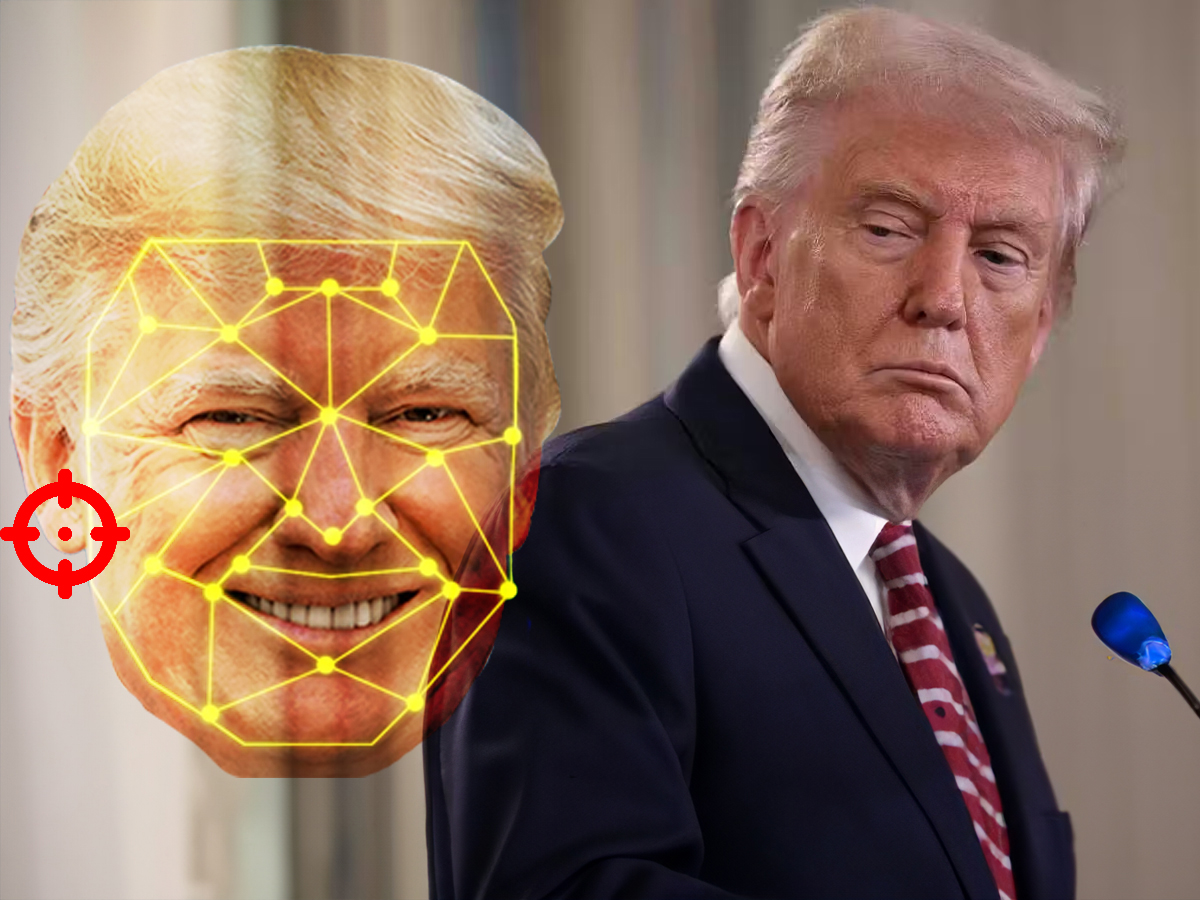
The extent of this vulnerability is supported by empirical data. In a series of large-scale studies involving thousands of participants, researchers found that human detection of AI-generated content is statistically equivalent to a random guess. The average accuracy rate for identifying deepfakes across these studies was approximately 55.54%, a figure only marginally better than a coin flip.
The challenge becomes even more pronounced with video content. AI-generated videos, which involve complex temporal consistency and movement, were detected with an accuracy of only 57.31%. These margins are dangerously insufficient for protecting key societal pillars, such as legal testimony, voter sentiment, or the mental well-being of casual internet users. When the margin of error is nearly 50%, the concept of "seeing is believing" effectively becomes obsolete.
A Chronology of Synthetic Realism
The path to epistemic collapse has been paved by a rapid succession of technological breakthroughs over the last decade. Understanding this timeline is essential to grasping the scale of the current challenge:
- 2014: Ian Goodfellow and his colleagues introduce Generative Adversarial Networks (GANs), the foundational technology that allows two neural networks to compete against each other to create increasingly realistic images.
- 2017: The term "deepfake" enters the public lexicon after a Reddit user applies AI to swap faces in videos, demonstrating that high-level manipulation is no longer restricted to Hollywood studios.
- 2020-2021: The rise of "Deep Nostalgia" and similar tools allows users to animate historical photos, normalizing the idea of AI-driven facial manipulation for the general public.
- 2022: The release of DALL-E 2 and Midjourney marks a paradigm shift, allowing anyone to generate photorealistic imagery from simple text prompts.
- 2023: High-profile AI incidents, such as the viral "Pope in a Puffer Jacket" and AI-generated images of former President Donald Trump in various fictitious scenarios, demonstrate the potential for global misinformation.
- 2024: The introduction of high-fidelity video generators like OpenAI’s Sora suggests that within a short window, synthetic video will be indistinguishable from professional cinematography.
The Social and Political Implications of a Fabricated Reality
The social dimensions of this neurological vulnerability are deeply concerning. In the political arena, deepfakes have moved beyond harmless parody into the realm of strategic disinformation. Synthetic media can be used to manufacture scandals, alter the perception of a candidate’s health or character, and destroy reputations in a matter of minutes. Because the brain’s "reality signal" is so easily triggered, even if a video is later proven to be fake, the initial emotional impact and the memory of the event often persist, a phenomenon known as the "continued influence effect."
Beyond politics, the impact on younger generations is profound. Adolescents are increasingly exposed to sophisticated AI filters that alter body proportions and facial features in real-time. This creates a constant state of comparison against impossible, AI-augmented standards, contributing to widespread body dysmorphia and a distorted sense of self. When the "real" world cannot compete with the "optimized" AI world, the psychological toll on developing minds is significant.
Regulatory Responses and the Concept of "Friction"
As platforms continue to amplify synthetic content through engagement-driven algorithms, experts and policymakers are calling for urgent interventions. The consensus among digital ethicists is that the burden of detection cannot rest on the individual’s shoulders, given the biological limitations of the human brain.

Proposed measures include:
- Permanent AI Watermarking: Implementing cryptographic "nutrition labels" (such as the C2PA standard) that stay attached to a file’s metadata, indicating its origin and any edits made.
- Independent Algorithmic Audits: Requiring social media companies to submit their recommendation engines to third-party reviews to ensure they are not disproportionately promoting deceptive synthetic media.
- The Introduction of "Friction": Designers are advocating for intentional pauses in the user interface—small "speed bumps" that force a user to reflect on the authenticity of a post before they are allowed to share it.
Furthermore, some advocates suggest that users should have the right to "turn off" AI-driven recommendation feeds entirely, opting for a chronological or verified-only stream of information.
Conclusion: The Threat to Shared Memory
What is at stake in the rise of AI-driven deception is not merely a matter of digital security or individual privacy. It is the very foundation of shared memory. A functioning democracy requires a common baseline of facts—a shared reality upon which debate and policy can be built. If the society reaches a point where no visual evidence can be trusted, the result is not just a rise in "fake news," but a "liar’s dividend," where bad actors can dismiss real evidence of wrongdoing as "just another deepfake."
As Janduí Jorge, Leader of Innovation in AI and Digital Products at Edify, suggests, the challenge lies in the fact that our biological hardware is being outpaced by our digital software. Without a concerted effort to regulate the creation and distribution of synthetic media, the human capacity to maintain a collective, authentic history remains in jeopardy. The "epistemic collapse" is not a future threat; it is a current reality that requires a fundamental rethinking of how we interact with the digital world.