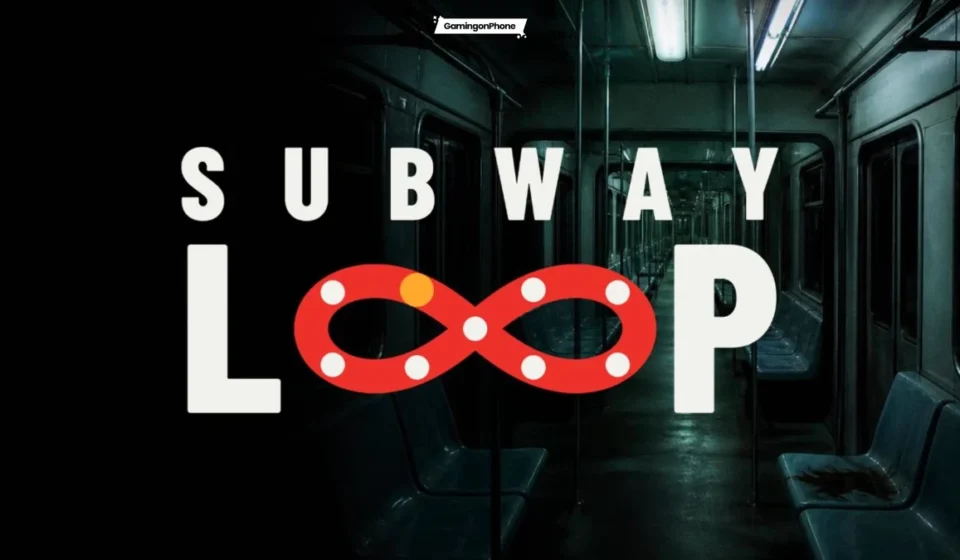
Subway Loop is an eerie spot-the-anomaly horror game now available on iOS

Pulsar Games has officially launched Subway Loop, an unsettling first-person spot-the-anomaly horror game, on iOS, inviting players to a uniquely tense experience within the confines of a seemingly ordinary subway carriage. This release marks a significant expansion for the title, which is also available on PC, Mac, and Linux, with a free demo accessible via itch.io. An Android version is slated for a future release, though a specific date has not yet been announced. The game distinguishes itself by foregoing conventional jump scares for a more insidious form of psychological horror, relying heavily on player observation, attention to detail, and the pervasive dread of the uncanny.
Diving into the Uncanny Commute: Gameplay Mechanics and Core Loop
At its core, Subway Loop immerses players in a repetitive yet progressively unsettling environment: a single subway car. The initial moments present a scene of mundane normalcy, complete with familiar seats, posters, an assortment of passengers, and the ubiquitous flicker of fluorescent lights. However, as the virtual journey progresses, this facade of routine begins to crack. The fundamental gameplay revolves around a simple yet high-stakes decision-making loop: observe the environment for anomalies. If a deviation from the norm is detected, the player’s directive is to disembark at the very next station. Conversely, if the carriage appears entirely normal, the player must remain aboard, continuing the loop. The penalty for misjudgment is severe, serving as a core mechanic that reinforces the game’s tension: a wrong call results in being sent back to the beginning of the sequence or the last checkpoint, amplifying the pressure with each subsequent loop.
This mechanic leverages a deep-seated human instinct to detect patterns and anomalies, transforming a seemingly innocuous setting into a crucible of paranoia. The constant need for vigilance, coupled with the fear of a costly mistake, creates a palpable sense of dread that permeates every moment of gameplay. Players are not merely passively observing; they are actively searching, scrutinizing every pixel and sound, knowing that their perceived reality could shift at any second. This active engagement with the environment is what elevates Subway Loop beyond a simple puzzle game, positioning it firmly within the psychological horror genre.
The Art of Observation: A Closer Look at Anomalies
The brilliance of Subway Loop lies in the subtlety and variety of its anomalies. The game boasts a formidable roster of 50 distinct irregularities, challenging players to hone their observational skills across multiple sensory dimensions. These anomalies are not always overt visual distortions designed to immediately shock; instead, many are crafted to be barely perceptible, blurring the lines between what is normal and what is truly "off."
Visual anomalies might include a poster on the subway wall subtly changing its image or text, a seat cushion appearing in a different color, or a newspaper held by a passenger being inexplicably flipped. Environmental changes could involve a flickering light becoming unusually stable, a shadow appearing where there shouldn’t be one, or the subtle alteration of the train car’s internal architecture. Behavioral anomalies introduce a layer of social unease, where a fellow passenger might be engaging in an action that is just slightly out of place, or their expression might hold an unsettling blankness.
Crucially, not all anomalies are visible. A significant portion of the game’s challenge stems from its auditory cues. Players might encounter a station announcement that sounds subtly distorted, a passenger’s murmur that carries an unnatural tone, or an environmental sound—like the train’s hum or the distant rumble—that deviates from its expected pattern. This emphasis on auditory detection makes the use of headphones not just a recommendation but almost a necessity for players aiming to experience the game to its fullest and succeed in its higher difficulty tiers. The interplay between visual and auditory cues ensures that players must engage all their senses, preventing them from becoming complacent or predictable in their search for discrepancies. This multi-sensory approach deepens the immersion and intensifies the psychological strain, as players constantly question the reliability of their own perceptions.
Crafting Atmosphere: Sound and Visual Design in Subway Loop
The developers at Pulsar Games have masterfully utilized minimalist design principles to construct an atmosphere of pervasive dread. The visual aesthetic of Subway Loop is characterized by dimly lit carriages and a muted color palette. These design choices are not merely stylistic; they are integral to the game’s horror identity. The low lighting creates vast areas of shadow and ambiguity, making it difficult to discern fine details and fostering a sense of vulnerability. The muted colors strip the environment of vibrancy, contributing to a feeling of desolation and detachment. Empty stretches of seats further amplify the eerie silence, suggesting an unnatural emptiness or the impending arrival of something unwelcome.
The "unsettlingly ordinary surroundings" are perhaps the most potent element of the game’s atmospheric horror. By taking a universally recognizable and mundane setting—a public subway—and subtly twisting it, Subway Loop taps into the psychological concept of the "uncanny valley." This phenomenon occurs when something appears almost, but not quite, human or normal, provoking feelings of revulsion or uneasiness. In Subway Loop, the familiarity of the subway car becomes a source of discomfort rather than comfort, as players are conditioned to expect subtle shifts in this otherwise static environment.
The game’s sound design complements its visuals perfectly. Beyond the specific auditory anomalies, the ambient sounds of the subway—the rhythmic clatter of the wheels, the hiss of pneumatic doors, the muffled announcements—are carefully engineered to contribute to the overall tension. These sounds often serve as a backdrop against which the subtle anomalies stand out, or they can themselves become sources of suspicion. The combined effect is an environment that constantly whispers doubt, making players second-guess every detail and fostering a sustained state of paranoia. While the game description mentions a few jump scares, their scarcity implies they are used sparingly and strategically, serving to punctuate the psychological tension rather than define it, aligning with a growing trend in horror gaming that prioritizes atmospheric and psychological dread over cheap frights.
Tailored Terror: Difficulty Settings and Replayability
Subway Loop offers a robust selection of five difficulty options, designed to cater to a wide spectrum of players, from newcomers to seasoned horror enthusiasts. This tiered approach ensures that the game remains accessible while also providing a significant challenge for those seeking a more intense experience.
- Easy Mode: This setting is intended as an introductory phase, helping players acclimate to the subway carriage’s layout and the general mechanics of anomaly detection. Anomalies in this mode are likely more pronounced and easier to spot, providing a forgiving learning curve.
- Normal Mode: Represents the standard experience, offering a balanced challenge for most players.
- Hard Mode: Increases the subtlety of anomalies and likely reduces the margin for error, demanding sharper observation.
- Very Hard Mode: This mode pushes player observation skills to their absolute limit. Anomalies become exceedingly subtle, requiring meticulous attention to even the slightest detail. Crucially, checkpoints, which typically offer a reprieve from restarting from the very beginning, disappear entirely. This significantly ratchets up the stakes, making every decision critical and every mistake potentially devastating.
- Nightmare Mode: This unique difficulty option deviates from the core anomaly-spotting mechanic. Instead, it focuses "exclusively on the horrors," implying a shift towards a more direct and unyielding psychological assault. This mode might feature a higher frequency of unsettling events, more aggressive anomalies, or a more oppressive atmosphere, potentially without the structured "spot-and-decide" loop, instead forcing players to endure the escalating terror.
The presence of 50 distinct anomalies, combined with these varied difficulty settings, significantly enhances the game’s replayability. Players can return to the game multiple times, not just to complete it on a higher difficulty, but also to discover anomalies they might have missed or to experience the unique challenges presented by modes like "Nightmare." This design choice ensures longevity and continued engagement, appealing to players who appreciate depth and a prolonged challenge in their horror experiences.
The Subway as a Liminal Horror Canvas
The choice of a subway system as the primary setting for Subway Loop is a deliberate and highly effective one for generating horror. Subways, much like other transit hubs, hospitals after hours, or abandoned shopping malls, fall into the category of "liminal spaces." These are transitional or in-between places that often evoke a sense of unease due to their familiarity combined with an absence of human activity or their slightly altered state. The inherent qualities of a subway—its repetitive loops, enclosed environment, anonymous crowds, and the constant sense of being transported to an unknown destination—make it a fertile ground for psychological terror.
Historically, subways have been utilized in various horror narratives across literature, film, and games. Their labyrinthine tunnels, the sudden appearance and disappearance of trains, and the sense of being trapped underground contribute to a primal fear. Subway Loop capitalizes on this by emphasizing the mundane turning sinister. The everyday commute, a symbol of routine and predictability, becomes a source of dread. This subversion of the familiar is a powerful tool in horror, as it makes the threat feel more intimate and inescapable. The game preys on the player’s expectation of safety in a public space, twisting that expectation into a source of anxiety. The repetition of the loop, where the same carriage and general environment reappear, further enhances the liminality, suggesting a purgatorial state from which escape is only possible through acute observation and correct judgment.
Pulsar Games’ Vision: An Independent Approach to Horror
Pulsar Games, as an independent developer, appears to be carving out a niche for itself by focusing on a specific, intellectually engaging form of horror. The decision to prioritize anomaly detection and atmospheric tension over explicit gore or relentless jump scares suggests a design philosophy that values psychological impact and player agency. This approach aligns with a growing trend in indie horror development, where creators often experiment with unique mechanics and narrative structures to deliver fresh and memorable experiences.
The availability of a free demo on itch.io further underscores Pulsar Games’ indie roots and its commitment to community engagement. Itch.io is a platform favored by independent developers for its flexibility and direct connection with players, allowing them to gather feedback and build an audience organically. By offering a demo, Pulsar Games invites potential players to experience the unique premise firsthand, building anticipation and trust before a purchase. This strategy is crucial for independent studios aiming to stand out in a crowded market. Their focus on a distinctive gameplay loop, rather than relying on established horror tropes, positions Subway Loop as a thoughtful contribution to the genre, appealing to players who appreciate innovation and a more cerebral form of fear.
Cross-Platform Strategy and Market Positioning
The release strategy for Subway Loop is indicative of a thoughtful approach to market penetration for an indie title. Launching first or concurrently on PC, Mac, and Linux via platforms like itch.io allows developers to tap into a dedicated PC gaming audience that often embraces experimental and indie horror titles. The PC platform also provides greater flexibility for development and testing.
The subsequent launch on iOS for $2.99 positions Subway Loop as a premium mobile game. This pricing model signals a departure from the free-to-play, microtransaction-heavy landscape often found on mobile. Instead, it targets players willing to pay a one-time fee for a complete, high-quality gaming experience without interruptions. This strategy resonates with a growing segment of the mobile market that seeks out console-quality experiences on their handheld devices. The delay in the Android release, while not uncommon, suggests a focus on optimizing the iOS version before expanding to the fragmented Android ecosystem, which often presents greater technical challenges due to the vast array of devices and operating systems. This staggered release allows the developers to refine the game, gather initial feedback, and build momentum before a broader rollout. The cross-platform availability maximizes reach, allowing the game to find its audience across various gaming preferences and hardware capabilities.
The Expanding Landscape of Mobile Horror Gaming
Subway Loop‘s arrival on iOS further enriches the increasingly diverse landscape of mobile horror gaming. Historically, mobile horror has often been characterized by simpler mechanics, shorter playtimes, or adaptations of existing PC/console titles. However, with advancements in mobile hardware and a growing appetite for sophisticated experiences, premium original horror titles are finding a strong foothold. Games like Subway Loop demonstrate that mobile platforms are capable of hosting deeply atmospheric and mechanically unique horror experiences that do not compromise on tension or depth.
The game’s reliance on subtle visual and auditory cues makes it particularly well-suited for mobile devices, where players often use headphones and are immersed in their personal screens. This intimate engagement enhances the psychological impact, as the small screen can make the anomalies feel even closer and more personal. Subway Loop contributes to the maturation of mobile gaming, proving that mobile is not just for casual games but also for niche, intense, and thought-provoking experiences that can stand alongside their PC and console counterparts in terms of conceptual depth and atmospheric power. This trend bodes well for the future of mobile gaming, encouraging more developers to bring innovative and high-quality experiences to handheld devices.
Anticipated Reception and Broader Implications
The unique premise and execution of Subway Loop are likely to garner a positive reception from a specific segment of the gaming community. Players who appreciate psychological horror, puzzle elements, and games that demand intense focus and attention to detail are expected to find Subway Loop particularly compelling. The game’s ability to generate fear through observation and paranoia, rather than overt scares, will appeal to those who seek a more cerebral and lasting sense of dread. Critical acclaim may focus on its innovative gameplay loop, effective atmosphere, and the clever design of its anomalies.
The game could also influence future indie horror development, demonstrating the viability of "spot-the-difference" mechanics as a core horror experience. Its success might encourage other developers to explore similar observational horror games or to experiment with liminal spaces and subtle environmental storytelling to create tension. Furthermore, its premium pricing model on mobile could reinforce the market for high-quality, paid mobile games, providing an alternative to the dominant free-to-play model and fostering a healthier ecosystem for independent creators on mobile platforms.
Availability and Future Prospects
Subway Loop is now available for purchase on iPhone and iPad through the Apple App Store for $2.99. PC, Mac, and Linux users can access the game, with a free demo available on itch.io for those wishing to sample the experience before committing. While the Android version is confirmed to be in development, players on Google’s mobile operating system will need to await a future announcement regarding its release date. The ongoing rollout across platforms indicates Pulsar Games’ ambition to reach a broad audience, ensuring that this distinctive journey into psychological dread is accessible to as many players as possible. As the game continues to expand its reach, it stands poised to become a notable entry in the evolving landscape of indie and mobile horror.