Google Translate Embraces Nuance with Gemini AI-Powered Idiom and Slang Translation

Google Translate is undergoing a significant evolution, moving beyond literal word-for-word translations to better capture the intricate nuances of human language. A pivotal update, now rolling out, leverages the advanced capabilities of Gemini AI to decipher idioms, slang, and colloquialisms that have historically posed challenges for automated translation tools. This enhancement promises to transform the app from a basic utility into a sophisticated linguistic guide, enabling users to communicate with greater authenticity and cultural understanding across languages.
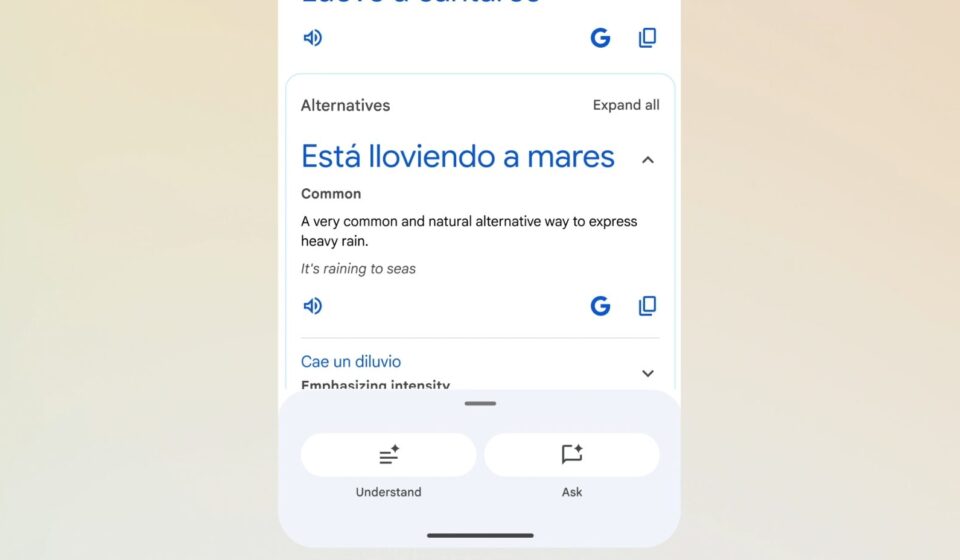
The core of this update lies in its departure from simple word substitution. Instead of merely presenting a direct, often nonsensical, translation of phrases like "it’s raining cats and dogs," Google Translate will now offer users a range of alternative phrasings that convey the intended meaning more accurately and naturally. Crucially, these alternatives are accompanied by explanations of their contextual usage, empowering users to select the most appropriate expression for their specific communication needs, whether for informal texting or formal professional interactions. This addresses a long-standing frustration for users who have encountered the bewildering output of traditional translators when encountering idiomatic expressions, leading to miscommunication and a disconnect from authentic dialogue.
A Leap Forward in Linguistic Accuracy
The integration of Gemini AI represents a substantial technological advancement for Google Translate. Gemini, Google’s most capable and general-purpose AI model, possesses a profound understanding of language structures, cultural contexts, and the subtle ways in which meaning is conveyed beyond literal interpretation. This multilingual intelligence allows the translation engine to identify idiomatic expressions and understand their figurative meanings, rather than treating them as a collection of individual words.
When a user inputs a phrase known for its idiomatic nature, the updated Google Translate interface will present several alternative translations. For instance, translating "it’s raining cats and dogs" might yield options such as "it’s pouring," "it’s a downpour," or "it’s raining heavily," depending on the target language. Accompanying these suggestions will be concise tips explaining the appropriate scenarios for each alternative, guiding the user toward the most fitting expression. This granular level of detail ensures that users can not only understand the meaning but also adopt the correct tone and register for their communication.
Unlocking Deeper Understanding and Context
Beyond offering alternative phrasings, the update introduces features designed to provide users with a deeper comprehension of linguistic subtleties. A "understand" option allows users to access a more detailed explanation of the phrase’s nuances, its origin, and its cultural significance. This feature is particularly valuable for learners of a new language or for individuals interacting with diverse linguistic communities.

Furthermore, a "ask" function enables users to follow up with specific questions about the translation or its usage. This interactive element transforms the translation process into a dialogue, allowing users to clarify doubts about regional variations, dialectal differences, or the precise connotations of certain words or phrases. For example, a user might ask how a particular idiom is used in a specific country or within a particular social group, and the AI aims to provide relevant and accurate responses. This level of engagement moves Google Translate significantly closer to functioning as a personalized language tutor.
The Growing Importance of Tone and Cultural Sensitivity
In an increasingly interconnected world, the ability to communicate effectively across cultural and linguistic barriers is paramount. Literal translations often strip away the personality, humor, and emotional resonance of original speech, rendering informal conversations stiff and formal exchanges robotic. Google’s strategic investment in this nuanced translation capability reflects a growing understanding that effective communication extends beyond mere comprehension of words; it encompasses the successful conveyance of tone, intent, and cultural appropriateness.
The timing of this update is particularly relevant. The surge in remote work, international collaboration, and global tourism has amplified the reliance on translation applications for everyday interactions. A phrase that might be perfectly acceptable in a casual setting could be perceived as inappropriate or even offensive in a professional environment, and vice versa. By providing users with context-aware alternatives and explanations, Google Translate aims to bridge this gap, helping users navigate the complexities of cross-cultural communication with confidence.
Background and Evolution of Translation Technology
The journey of machine translation has been a long and complex one, marked by significant technological leaps. Early translation systems, often based on rule-based approaches, struggled with the inherent ambiguity and irregularity of human language. They primarily focused on translating words and grammatical structures, frequently resulting in awkward and unintelligible output when faced with idiomatic expressions or nuanced phrasing.
The advent of statistical machine translation (SMT) in the late 20th and early 21st centuries represented a major paradigm shift. SMT systems learned translation patterns from vast amounts of parallel text data, leading to more fluid and accurate translations. However, even SMT systems often faltered when confronted with the deeper semantic and pragmatic aspects of language.
The integration of neural machine translation (NMT) in the mid-2010s, particularly with the rise of deep learning models, brought about another revolution. NMT systems, like those powering Google Translate today, process entire sentences and their context, enabling them to generate more coherent and human-like translations. The current update, by incorporating Gemini AI, signifies the next frontier in this evolution, moving towards an AI that not only understands linguistic patterns but also the underlying intent and cultural context.

Data Supporting the Need for Nuance
The demand for more nuanced translation tools is underscored by various data points. A 2023 report by Statista indicated that over 1.5 billion people use translation apps globally, with a significant portion of these users seeking to understand and participate in conversations beyond simple factual exchanges. Furthermore, research in cross-cultural communication consistently highlights the importance of idiomatic language and cultural understanding in fostering successful interpersonal relationships, both personal and professional. For instance, a study published in the Journal of International Business Studies found that a lack of cultural sensitivity in communication can lead to significant misunderstandings and a decline in business partnerships.
Official Statements and Future Outlook
While specific quotes from Google executives were not provided in the original article, the company’s long-standing commitment to improving translation accuracy and user experience is well-documented. Google has consistently invested in AI research and development, with the goal of making information and communication universally accessible. The rollout of Gemini AI into Google Translate is a testament to this ongoing effort, aiming to democratize sophisticated language understanding.
The immediate availability of this feature on Android and iOS devices in the United States and India signifies a strategic focus on two major global markets with diverse linguistic landscapes. The upcoming web version will extend this enhanced functionality to a broader user base, further cementing Google Translate’s position as a leader in the field.
Broader Implications and the Future of AI in Language
This advancement has profound implications for how we interact with technology and each other. As AI becomes more adept at understanding and generating human-like language, translation tools will increasingly serve as bridges between cultures, facilitating deeper understanding and collaboration. The ability to navigate idioms and slang is not merely a technical improvement; it is a step towards making digital communication more inclusive and authentic.
The move towards a more "human-sounding" translation is likely to influence the development of other AI-powered communication tools, such as chatbots, virtual assistants, and content creation platforms. As AI models like Gemini become more sophisticated, we can expect even more seamless and nuanced interactions between humans and machines, and between humans from different linguistic backgrounds. This update to Google Translate is not just about better translations; it’s about fostering greater connection and understanding in an increasingly globalized world, paving the way for a future where language barriers become increasingly surmountable.