

Starting on Monday, March 2, 2026, Apple is poised to unveil its first significant wave of product announcements for the year. Apple CEO Tim Cook has cryptically teased a "big week ahead" with the hashtag #AppleLaunch, signaling a period of intense product introductions. Complementing these digital announcements, the technology giant has scheduled in-person media events in key global cities: New York, Shanghai, and London, all slated for Wednesday, March 4. Industry observers and tech enthusiasts are anticipating a diverse lineup, including the highly anticipated iPhone 17e, an entirely new low-cost MacBook model, and incremental updates to the existing Mac and iPad product lines.
This concentrated period of product reveals suggests a strategic push by Apple to capture market attention early in the year, potentially setting the tone for its product strategy and sales performance throughout 2026. The simultaneous global events underscore Apple’s commitment to its international markets and its ability to generate simultaneous buzz across different continents.
The Dawn of a New Era: The Low-Cost MacBook
A significant development expected from this announcement cycle is the introduction of an all-new, budget-friendly MacBook. Rumors suggest that this new model will borrow heavily from the design language of the MacBook Air, featuring an aluminum chassis available in a variety of color options. Display sizes are reportedly being considered in the 12.9-inch to 13-inch range, offering a compact yet functional screen for everyday use.
The strategic impetus behind a low-cost MacBook appears to be Apple’s desire to broaden its laptop market reach, particularly targeting educational institutions and budget-conscious consumers who may have previously found MacBooks to be outside their price range. This move could position Apple as a more direct competitor to the burgeoning Chromebook market, offering a more integrated ecosystem experience at a more accessible price point.
Potential design considerations point towards a thinner and lighter form factor, possibly enabled by the integration of a lower-power A-series chip. This approach echoes Apple’s past strategy with the 12-inch MacBook, which utilized low-power Core M processors to achieve a sleek profile. However, unlike its predecessor, the focus for this new model is likely to be on affordability rather than cutting-edge thinness, which often incurs premium pricing. Apple might adopt a strategy similar to its low-cost iPad offerings, where older display technologies are used to maintain affordability. This could result in a slightly thicker chassis, which, when combined with an energy-efficient chip, could translate to exceptional battery life, a key selling point for students and mobile professionals.
However, compromises are expected to be inherent in this more affordable offering. Reports indicate that the low-cost MacBook will likely feature lower maximum display brightness, lack True Tone support, and omit a backlit keyboard. Furthermore, slower SSD speeds and the absence of Apple’s N1 chip are anticipated. These trade-offs are crucial for managing production costs and maintaining a distinct product hierarchy within Apple’s laptop lineup.

A Spectrum of Expression: Colors for the New MacBook
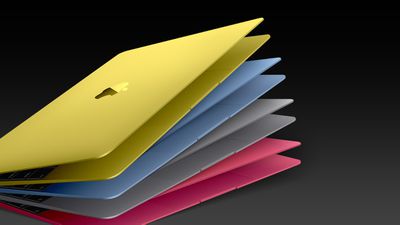
Adding a touch of personalization to the new low-cost MacBook, Apple is reportedly testing a vibrant palette of colors. Sources suggest that shades like light yellow, light green, blue, pink, silver, and dark gray have been evaluated. While not all of these may make it to the final product, it is widely expected that at least four distinct color options will be available, mirroring the successful multi-color strategy employed with the iPad. This move aligns with Apple’s broader trend of offering more color choices across its product portfolio, catering to a wider range of consumer preferences. Analyst Ming-Chi Kuo has specifically predicted a lineup of yellow, silver, blue, and pink, aligning with the current color offerings for the iPad, further solidifying the cohesive design language across Apple’s consumer devices.
The Power Within: The A18 Pro Chip
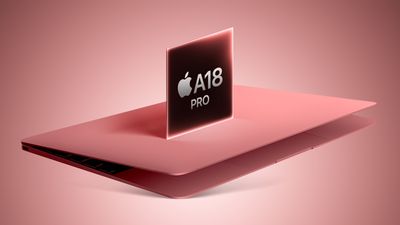
A consistent thread in the rumors surrounding the low-cost MacBook is its departure from the M-series chips. Instead, Apple is expected to leverage its powerful A-series chips, specifically the A18 Pro. This chip, which debuted in the iPhone 16 Pro, is built on a second-generation 3-nanometer process. It boasts a 6-core CPU (four performance, two efficiency), a 6-core GPU, and a 16-core Neural Engine optimized for artificial intelligence tasks.
Benchmarking data indicates the A18 Pro achieves an average single-core score of 3451 and a multi-core score of 8572 in Geekbench tests. While these scores fall short of the M4 chip found in the latest iPad Pro (3694 single-core, 13732 multi-core), they represent a substantial leap over the M1 chip. The M1 has powered a lower-cost MacBook Air variant for several years, highlighting the significant performance uplift this new model will offer, especially in single-core tasks, making it more than capable for everyday computing needs such as web browsing, document creation, video playback, and even light photo and video editing.
Memory and Storage: Balancing Performance and Price
While Macs traditionally start with 16GB of RAM, the iPhone 16 Pro’s 8GB minimum for Apple Intelligence suggests a similar configuration for the A18 Pro MacBook. This minimum allocation would ensure compatibility with Apple Intelligence features. However, the possibility of Apple opting for the standard 16GB RAM across all configurations cannot be ruled out, especially if it aims to position this as a true entry-level Mac.
Storage is another area where cost-saving measures are expected. While the MacBook Air typically starts at 256GB, the new low-cost model might launch with a 128GB SSD. This reduction in storage capacity is a common tactic to lower the overall price point of a device.
Connectivity and Pricing: Defining the Value Proposition
The A18 Pro chip’s limitations, derived from its iPhone origins, are likely to extend to port selection. Without Thunderbolt support on the iPhone 16 Pro, the new MacBook will likely be restricted to USB-C (10Gb/s) connectivity, foregoing Thunderbolt speeds. This limitation could also restrict external display support to a single monitor.
The most crucial aspect of this new MacBook will be its pricing. While the MacBook Air starts at $999, the low-cost model is expected to be significantly more affordable. Projections place the price between $599 and $799. A $599 price point would directly rival high-end Chromebooks often purchased for educational purposes. A slightly higher $699 or $799 price would offer a more premium feel while remaining considerably below the entry-level MacBook Air. This pricing strategy aims to avoid cannibalizing iPad sales, with the low-cost iPad starting at $349 and the iPad Air at $599.
The Evolving iPhone: Introducing the iPhone 17e
Following the February 2025 release of the iPhone 16e, Apple is set to refresh its more affordable iPhone line with the introduction of the iPhone 17e. This update is anticipated to bring several valuable enhancements that will solidify its position as a compelling option for consumers seeking Apple’s ecosystem at a lower price.
Design and Display: Subtle Refinements
The iPhone 17e is expected to retain the design of its predecessor, the iPhone 16e, featuring the same 6.1-inch display size and a single-lens rear camera. Color options are likely to remain consistent with the existing black and white offerings. A key differentiator, however, will be the display’s refresh rate. While the standard iPhone 17 lineup received 120Hz ProMotion technology in 2025, the iPhone 17e is expected to remain at a 60Hz refresh rate. This makes it Apple’s sole new iPhone release without the smoother scrolling and enhanced visual fluidity offered by higher refresh rates, a compromise that helps maintain its affordability.

Furthermore, the iPhone 17e is unlikely to feature an always-on display. This functionality requires an OLED panel with specific low-brightness capabilities, a feature currently reserved for Apple’s more premium iPhone models. Consequently, HDR capabilities and peak brightness levels will also likely lag behind the flagship offerings.
Dynamic Island Integration: A Modernized Look
A significant potential upgrade for the iPhone 17e is the adoption of the Dynamic Island, replacing the notch that characterized the iPhone 16e. This pill-shaped cutout, housing the TrueDepth camera system, offers a more integrated user experience and a modern aesthetic. While some rumors strongly suggest this transition, others indicate the iPhone 17e might retain the notch with slimmer bezels. If the Dynamic Island is indeed implemented, it would represent a substantial visual modernization for Apple’s entry-level smartphone.
Performance Boost: The A19 Chip
Under the hood, the iPhone 17e will be powered by Apple’s A19 chip, the same processor found in the iPhone 17. Built on an enhanced N3P 3-nanometer process, the A19 chip is projected to offer a 5-10% performance improvement over the A18 chip used in the iPhone 16e. While Apple might employ a slightly downclocked version of the A19 for the iPhone 17e to manage costs and differentiate it from the iPhone 17, it will still represent a notable performance leap. A potential GPU downgrade, similar to what occurred with the A18 chip in the iPhone 16e, is also a possibility. Beyond CPU and GPU enhancements, the A19 chip includes an updated display engine, image signal processor, and Neural Engine, further boosting AI capabilities and overall user experience. RAM is expected to remain at 8GB, consistent with the iPhone 16e, and sufficient for Apple Intelligence.

MagSafe and Camera: Key Feature Additions
A notable upgrade anticipated for the iPhone 17e is the inclusion of MagSafe compatibility. The absence of a magnetic ring in the iPhone 16e limited its wireless charging speed to 7.5W and its compatibility with the extensive range of MagSafe accessories. The iPhone 17e is expected to support at least 15W MagSafe charging, bringing it in line with older iPhone models and unlocking access to a wider ecosystem of magnetic chargers and accessories.
Camera hardware is expected to see minimal changes. The rear will likely feature a 48-megapixel Wide Angle camera, similar to the iPhone 16e. The front-facing camera is also rumored to remain a 12-megapixel unit, mirroring its predecessor, despite the iPhone 17 models receiving an upgraded 18-megapixel sensor.
Connectivity Advancements: C1X Modem and N1 Chip
The iPhone 17e is slated to adopt Apple’s C1X modem, a faster and more energy-efficient chip that debuted in the iPhone Air. This move away from Qualcomm modems signals Apple’s continued investment in its in-house silicon. Additionally, there’s a growing possibility that the iPhone 17e will incorporate Apple’s N1 networking chip, enhancing Wi-Fi and Bluetooth capabilities with support for Wi-Fi 7 and Bluetooth 6, along with Thread networking. While initial speculation suggested this might be omitted to control costs, recent rumors indicate its inclusion.
Pricing Stability
The iPhone 16e launched with a starting price of $599, and it is widely anticipated that the iPhone 17e will maintain this pricing structure, offering a consistent value proposition for budget-conscious consumers.
Refreshes Across the iPad Lineup
Apple’s tablet strategy for 2026 appears to include updates to both its mid-range iPad Air and its entry-level iPad, aiming to enhance performance and introduce key features like Apple Intelligence support.
iPad Air: M4 Chip and Connectivity Upgrades
The iPad Air is set to receive a significant performance boost with the integration of the M4 chip. This move follows Apple’s established pattern of equipping the iPad Air with a chip generation behind the flagship iPad Pro. The M4 chip, built on an advanced 3-nanometer process, offers notable improvements in CPU and GPU performance over the M3 chip found in the current iPad Air. With up to 10 CPU cores and enhanced Neural Engine capabilities, the M4 promises up to 30% faster CPU performance and up to 21% faster GPU performance compared to its predecessor.
While the design is expected to remain unchanged, featuring 11-inch and 13-inch display options with standard LED technology and no ProMotion support, the inclusion of the M4 chip ensures continued robust support for Apple Intelligence. RAM is expected to remain at 8GB, meeting the minimum requirement for these advanced features.
Furthermore, the iPad Air is likely to adopt Apple’s N1 networking chip, bringing Wi-Fi 7 and Bluetooth 6 support, alongside Thread connectivity. Cellular models will also benefit from Apple’s C1X modem, offering improved efficiency and integration. Pricing is expected to remain stable, with the 11-inch model starting at $599 and the 13-inch at $799.
Low-Cost iPad: Apple Intelligence Entry Point
The most significant development for the entry-level iPad will be its enablement of Apple Intelligence. While design and display features are expected to remain largely the same—including the 11-inch screen, thick bezels, and Retina LCD—the integration of an A18 or A19 chip will be a substantial upgrade. These chips are capable of running Apple Intelligence features, a capability absent in the current A16-equipped model. This positions the low-cost iPad as the most accessible gateway into Apple’s advanced AI ecosystem.
To support Apple Intelligence, RAM is expected to increase from 6GB to 8GB. While the inclusion of the N1 networking chip is possible, it is not guaranteed, with Apple potentially reserving it for higher-end devices. Similarly, cellular models may receive an Apple-designed modem chip. Pricing is anticipated to remain at $349 for the 128GB model.
Professional Lineups: MacBook Pro and MacBook Air Updates
The professional Mac lineup is also slated for updates, with both the high-end MacBook Pro and the popular MacBook Air expected to receive processor refreshes.
MacBook Pro: M5 Pro and M5 Max Chips
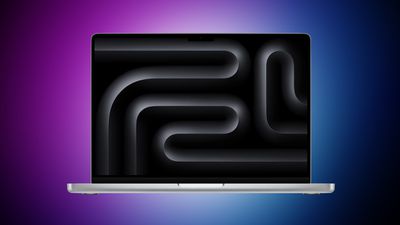
Following the introduction of the base M5 chip in the entry-level 14-inch MacBook Pro, Apple is preparing to launch updated 14-inch and 16-inch MacBook Pro models featuring the M5 Pro and M5 Max chips. These chips, built on TSMC’s third-generation 3-nanometer process, promise substantial performance and efficiency gains over their M4 counterparts. While specific performance uplift figures are not yet confirmed, they are expected to follow the trend of previous generations, offering significant improvements in CPU and GPU capabilities, with a particular emphasis on AI workloads through enhanced Neural Engines and GPU-integrated Neural Accelerators.

However, for consumers not in immediate need of an upgrade, a strategic recommendation emerges: delay purchases of M5 Pro/Max MacBook Pros. Reports suggest that future MacBook Pro iterations are poised to incorporate OLED displays and touchscreen capabilities, marking a significant leap in display technology and user interaction. This, coupled with potential design revisions and the subsequent M6 Pro/Max chips, makes waiting a more attractive option for those seeking the cutting edge.
MacBook Air: The M5 Chip Arrives
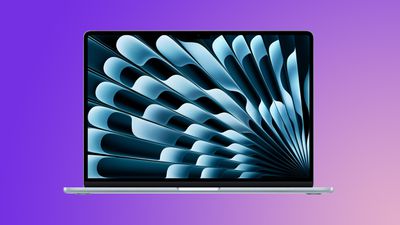
The MacBook Air is also expected to be refreshed with the M5 chip. This processor, already featured in the iPad Pro and entry-level MacBook Pro, utilizes third-generation 3-nanometer technology and offers up to 3.5x faster performance than the M4 chip. Key improvements include faster CPU and GPU performance, enhanced AI capabilities, and increased unified memory bandwidth, providing a noticeable boost for demanding applications and on-device AI tasks.
The design of the MacBook Air, last updated in 2022, is expected to remain consistent, with 13-inch and 15-inch models continuing to feature the current chassis and fanless thermal system. Pricing is also anticipated to stay consistent, starting at $1,099, though potential DRAM shortages could impact the cost of memory upgrades.
Other Potential Announcements and Future Prospects
While the core product announcements are expected to center on iPhones, iPads, and MacBooks, there are other devices that have been subject to rumors and speculation.
HomePod mini and Apple TV: Tied to Siri’s Evolution
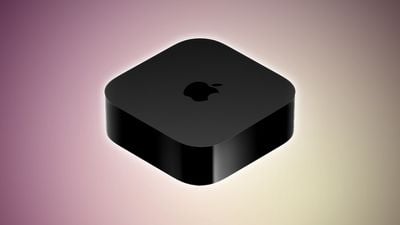
Rumors of a new HomePod mini and an updated Apple TV have circulated for some time. However, these launches appear to be contingent on the release of a significantly revamped Siri. Apple reportedly delayed the integration of advanced Siri features into iOS 26.4 due to ongoing reliability concerns, pushing back the release timeline for these devices. The next-generation HomePod mini is expected to feature a new chip and color options, while the Apple TV is anticipated to receive an internal chip upgrade. Both are likely to be unveiled alongside the enhanced Siri capabilities, whenever that integration finally materializes.
MacRumors Coverage and Special Experience
Apple has opted not to host a traditional live-streamed event for these March 2026 product introductions. Instead, the company is planning a "Special Experience" for members of the media on March 4, 2026, beginning at 9:00 a.m. Eastern Time. This hands-on event in New York will provide attendees, including MacRumors, with an opportunity to experience the new products firsthand. MacRumors will be present to provide comprehensive coverage, including in-depth reviews and analysis of all the new hardware unveiled by Apple. The strategic timing of these announcements, spread across the initial days of March, indicates a coordinated effort by Apple to dominate tech news cycles and capture consumer interest as the year progresses.