Geopolitical Escalation in the Middle East Drives Global Market Volatility as U.S. Energy Independence Provides Economic Buffer

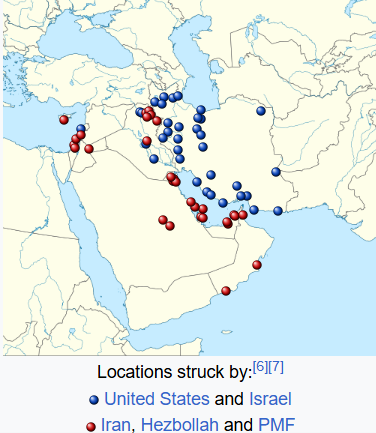
The breakdown of diplomatic negotiations between the United States and Iran has culminated in a series of direct military confrontations, sending shockwaves through global energy markets and international equity indices. Following the collapse of high-stakes talks late last week, a joint military operation involving U.S. and Israeli forces targeted high-value assets within Iranian borders, including senior leadership hubs, missile launch sites, and infrastructure belonging to the Islamic Revolutionary Guard Corps (IRGC). In response, Tehran initiated a wave of retaliatory drone and missile strikes across the region, prompting the U.S. State Department to shutter embassies in Kuwait and Saudi Arabia while issuing urgent travel advisories for American citizens in the Middle East.
While the immediate humanitarian and political consequences are of primary concern, the financial fallout has revealed a stark divergence between domestic and international markets. As oil prices surged by more than 6% in back-to-back trading sessions, investors have begun to price in the risk of a broader regional conflict. However, market data suggests that the United States is currently functioning as a relative safe haven, insulated by its status as a leading energy producer—a significant departure from the economic vulnerabilities the nation faced during previous Middle Eastern crises.
Historical Context: The Transformation of Iran and Global Risk
To understand the current state of animosity, historians often point to the pivotal decade of the 1970s. Prior to 1979, Iran was a rapidly modernizing nation under the Pahlavi dynasty. Tehran was characterized by a cosmopolitan atmosphere, with a burgeoning middle class, Western-style educational institutions, and a lifestyle that mirrored many European capitals. The Iranian economy was deeply integrated with the West, serving as a cornerstone of the global energy supply chain and a key regional ally for the United States.
The 1979 Islamic Revolution fundamentally altered this trajectory. The transition to a theocratic republic led by Ayatollah Khomeini resulted in a total restructuring of Iran’s political system and its foreign policy. The subsequent 444-day hostage crisis at the U.S. Embassy in Tehran severed diplomatic ties, leading to decades of economic sanctions and a shift in Iran’s role from a global partner to a recurring source of geopolitical instability. Over the ensuing decades, the tension has been defined by Iran’s nuclear ambitions, its influence over proxy groups in Lebanon, Yemen, and Iraq, and its strategic positioning near the world’s most critical maritime chokepoints.
Chronology of the Recent Escalation
The current crisis followed a period of fragile "shadow warfare" that has now moved into direct confrontation. The following timeline outlines the rapid deterioration of regional stability:
- Late Last Week: Diplomatic channels between Washington and Tehran reportedly reached an impasse. Negotiations aimed at de-escalating regional tensions and addressing nuclear enrichment levels were suspended without a scheduled date for resumption.
- The Weekend: In a significant escalation, coordinated strikes were launched by U.S. and Israeli forces. Intelligence reports indicate that the targets included command-and-control centers of the IRGC, specific nuclear research facilities, and mobile missile batteries. These strikes represented a shift from targeting proxies to hitting sovereign Iranian infrastructure directly.
- The Retaliation: Iran responded with a multi-axis attack involving dozens of "suicide drones" and ballistic missiles launched toward strategic locations in the region. While many were intercepted by regional air defense systems, the scale of the response heightened fears of a full-scale regional war.
- The Diplomatic Fallout: By Monday, the U.S. Department of State ordered the departure of non-essential personnel from several regional posts. Security at embassies in Riyadh and Kuwait City was bolstered, and a "Level 4: Do Not Travel" advisory was maintained for several neighboring territories.
Market Divergence: The "U.S. Oasis" Phenomenon
The financial reaction to these events has highlighted a growing gap between U.S. equities and the rest of the world. According to data from Bespoke Investment Group, the performance of the SPDR S&P 500 ETF (SPY) has shown remarkable resilience compared to its international counterparts. Since the commencement of the joint strikes, the SPY, which tracks the 500 largest companies in the United States, declined by approximately 1.7% through the early part of the week.
In contrast, the SPDR MSCI ACWI ex-U.S. ETF (CWI), which monitors developed and emerging markets outside the United States, experienced a much steeper decline of roughly 6.8%. This five-percentage-point performance gap in just two trading sessions is a rare statistical anomaly, having occurred only twice since the CWI began trading in 2007.
Analysts attribute this divergence to the structural differences in energy consumption and production. While much of Europe and Asia remains dependent on energy imports that must pass through volatile regions, the United States has undergone a "shale revolution" over the last 15 years. The development of the Permian Basin in West Texas and other domestic reserves has transformed the U.S. from a net importer to a dominant exporter of crude oil and liquefied natural gas (LNG).
The Strategic Importance of the Strait of Hormuz
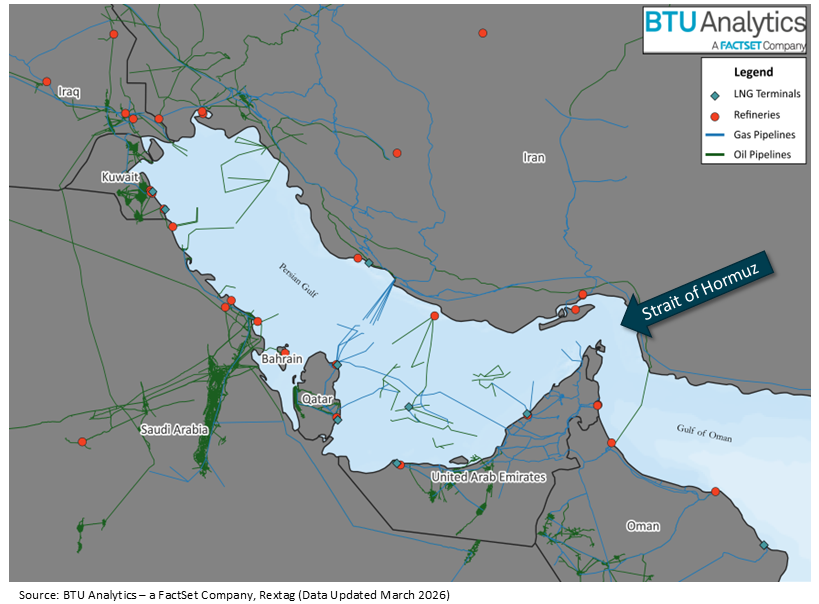
The primary driver of global market anxiety is the potential closure or disruption of the Strait of Hormuz. This narrow passage, situated between the Persian Gulf and the Gulf of Oman, is the world’s most important oil transit chokepoint. Approximately 21 million barrels of oil per day—roughly 21% of global petroleum liquids consumption—pass through this waterway. Furthermore, nearly 20% of the world’s LNG exports originate from the Gulf and must navigate the Strait.
For nations like Japan, South Korea, and several European Union members, a disruption in the Strait of Hormuz would be catastrophic, leading to immediate energy shortages and inflationary spikes. For the United States, however, higher global oil prices present a different economic equation. While American consumers face higher costs at the gas pump, the U.S. energy sector realizes windfall profits. This revenue flows back into the domestic economy through capital expenditures, tax revenue, and employment in the energy-producing states, effectively mitigating the "tax" that high oil prices usually impose on GDP growth.
Official Responses and Geopolitical Posturing
The international community has reacted with a mix of condemnation and calls for restraint. In a statement from the White House, officials emphasized that the strikes were "defensive in nature" and intended to "degrade the capability of the IRGC to launch further attacks on U.S. personnel and allies." The administration maintained that it does not seek a war with Iran but will take "all necessary measures" to protect national interests.
Israeli Prime Minister Benjamin Netanyahu praised the coordination between the two nations, stating that the operations were essential to "ensure that the head of the snake is held accountable for the chaos sown by its proxies."
Tehran, meanwhile, characterized the strikes as a "gross violation of international law and national sovereignty." The Iranian Foreign Ministry warned that the "era of strategic patience is over" and that any further aggression would be met with "a crushing response." Despite the rhetoric, some geopolitical analysts suggest that both sides may still be looking for an "off-ramp" to avoid a total conflict that could collapse the global economy.
Broader Economic Implications and the Role of Innovation
Beyond the immediate energy crisis, the current volatility is highlighting the importance of domestic industrial and technological strength. Historically, geopolitical shocks have led to a "flight to quality," benefiting the U.S. dollar and domestic treasury bonds. This trend appears to be holding, as the dollar strengthened against a basket of global currencies following the news of the strikes.
Furthermore, economists are observing that the U.S. economy is increasingly driven by sectors that are less sensitive to Middle Eastern stability. The ongoing "Fourth Industrial Revolution," characterized by advancements in artificial intelligence (AI), semiconductor manufacturing, and domestic infrastructure buildouts, provides a secondary layer of economic insulation.
As capital retreats from emerging markets due to the perceived risk of regional contagion, much of that liquidity is being redirected toward U.S. technology and infrastructure. The massive investment in data centers and AI-driven productivity tools is seen as a long-term growth engine that operates independently of the price of a barrel of Brent crude. Analysts suggest that while military action typically introduces a period of "known unknowns," the eventual stabilization of energy flows often removes a layer of market uncertainty, potentially paving the way for a recovery in late-year trading.
Conclusion: Navigating a New Era of Risk
The escalation between the U.S., Israel, and Iran marks a significant turning point in 21st-century geopolitics. The transition from proxy conflicts to direct state-on-state strikes suggests that the old "rules of engagement" in the Middle East are being rewritten. For global investors, the takeaway is clear: the geographic location of assets and the energy profile of national economies have never been more relevant.
The United States, through its pursuit of energy and food independence, has built a fortress-like economic structure that can withstand shocks that would otherwise cripple other developed nations. While the human cost of the conflict remains the most pressing issue, the financial data confirms that the U.S. market continues to serve as the global "oasis" in a desert of geopolitical instability. As the situation evolves, the focus of the international community will remain on the Strait of Hormuz and the potential for a diplomatic breakthrough that could finally lower the temperature in one of the world’s most volatile regions.