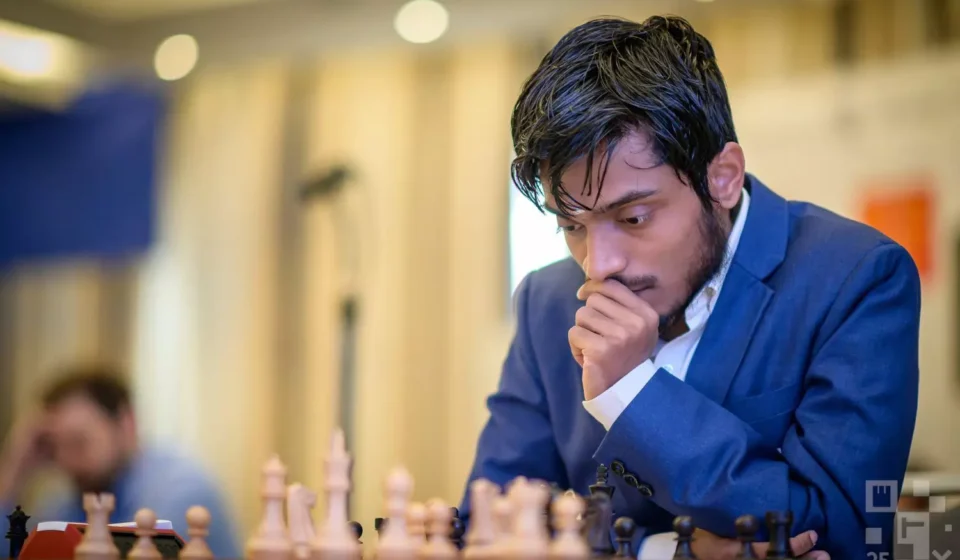
World Champion Gukesh Dommaraju Faces Critical Slump at 2026 Prague Chess Festival as Aravindh Chithambaram Secures Round Six Victory

The landscape of elite chess witnessed a significant shift on Tuesday as the reigning world champion, Gukesh Dommaraju, continued a troubling downward trajectory at the 2026 Prague International Chess Festival. In a high-stakes encounter during the sixth round of the Masters category, Gukesh suffered his third defeat in four games, falling to fellow countryman and defending Prague champion, Grandmaster Aravindh Chithambaram. This latest setback marks a historic low for the young champion, who now finds himself at the bottom of the tournament standings with a mere 1.5 points from a possible six. The defeat has not only compromised his standing in the Czech capital but has also sent shockwaves through the global chess community as his live FIDE rating takes a substantial hit.
The Round Six Collapse: Gukesh vs. Chithambaram
The sixth round was billed as a pivotal moment for Gukesh to stabilize his campaign. Playing with the white pieces, the World Champion was expected to exert pressure and reclaim some of the momentum lost in previous rounds. However, the game unfolded into a grueling 48-move struggle that highlighted the current vulnerabilities in Gukesh’s play.
The opening phase saw a sophisticated theoretical battle where Gukesh attempted to find small advantages in a structured middle game. Aravindh Chithambaram, however, demonstrated the resilience that earned him the title in the previous edition of the festival. As the game transitioned into the endgame, the tension escalated. Despite the objective evaluation remaining relatively balanced for the majority of the afternoon, the pressure of the clock and the psychological weight of his recent losses appeared to take a toll on the World Champion.
In the final phase of the game, Gukesh committed a decisive error in a simplified position. Such mistakes are rare for a player of his caliber, particularly in the endgame, which has historically been one of his greatest strengths. Aravindh was clinical in his execution, capitalizing on the blunder to force a resignation after 48 moves. This victory was particularly significant for Aravindh, as it successfully halted a two-match losing streak, propelling him to joint sixth position with 2.5 points and breathing new life into his attempt to climb back toward the leaders.
Chronology of a Challenging Campaign
To understand the gravity of Gukesh’s current situation, one must look at the sequence of events leading up to this round. The 2026 Prague Chess Festival began with high expectations for the World Champion, who was viewed as the clear favorite.
- Rounds 1-2: Gukesh started with a measured approach, securing draws that seemed to indicate a steady start to a long tournament.
- Round 3: The first signs of trouble emerged as Gukesh faced his first defeat of the event. The loss disrupted his rhythm and forced him into a "must-win" mindset for the subsequent games.
- Round 4: A hard-fought draw provided a momentary reprieve, but the lack of a win began to affect his tournament strategy.
- Round 5: Facing the formidable Uzbek GM Nodirbek Abdusattorov, Gukesh suffered a second defeat. Abdusattorov, a perennial rival of the Indian contingent, utilized a precise tactical sequence to dismantle Gukesh’s defense, leaving the champion reeling.
- Round 6: The loss to Aravindh Chithambaram confirmed a full-blown crisis, marking three losses in the last four games—a statistic rarely associated with a reigning World Champion.
Technical Analysis and Rating Implications
The repercussions of Gukesh’s performance in Prague extend far beyond the tournament hall. In the world of elite chess, the FIDE Classical Rating is the ultimate barometer of a player’s standing. Entering the tournament as one of the highest-rated players in the world, Gukesh has seen a precipitous decline in his live rating points.
Following the loss to Aravindh, Gukesh has dropped approximately 19.5 rating points. This volatility has caused him to slide down to 20th place in the Live FIDE Classical Ratings. For a World Champion to fall out of the top ten, let alone the top fifteen, is a rare occurrence that often prompts discussions regarding fatigue, preparation, or the "curse of the crown"—the immense pressure that follows winning the world title.
Statistically, Gukesh’s performance rating (TPR) in this tournament is significantly below his established Elo. Analysts suggest that the "big mistake" in the endgame against Aravindh is symptomatic of "calculation fatigue." When a player of this level loses multiple games in a short span, the cognitive load of trying to "force" a win often leads to a breakdown in the very precision that made them champion.
The Leaderboard: Jorden van Foreest Sets the Pace
While much of the media attention has focused on Gukesh’s struggles, the tournament leader, Jorden van Foreest of the Netherlands, has put on a masterclass of consistency. Van Foreest currently leads the field with 4.5 points out of 6. His lead of two points over the defending champion Aravindh suggests a dominant form that will be difficult to challenge with only three rounds remaining.
The standings after six rounds are as follows:
- 1st Place: Jorden van Foreest (4.5/6)
- Joint 2nd-5th: (Including players like Abdusattorov and Maghsoodloo)
- Joint 6th: Aravindh Chithambaram (2.5/6)
- Last Place: Gukesh Dommaraju (1.5/6)
For Aravindh, the path to defending his title remains mathematically possible but realistically steep. Trailing the leader by two points with only three games left requires a perfect finish and a simultaneous collapse from Van Foreest.
The Challengers Section: Deshmukh and Ganguly
In the Challengers category, the Indian contingent has maintained a more stable, albeit less explosive, presence. Grandmaster Divya Deshmukh, one of the most prominent figures in women’s chess, and veteran GM Surya Sekhar Ganguly both participated in draws during their respective sixth-round matches.
Divya Deshmukh’s performance is closely watched by scouts and fans alike, as she continues to bridge the gap toward the 2500+ Elo bracket. Her ability to hold draws against seasoned male Grandmasters in the Challengers section reinforces her reputation as a resilient and tactically sound competitor. Surya Sekhar Ganguly, a former second to Viswanathan Anand, continues to use his vast experience to navigate the tournament, though both players will need to secure wins in the final three rounds to contend for the top spots in the Challengers division.
Broader Impact and Expert Reactions
The chess world has reacted with a mix of concern and analytical intrigue to Gukesh’s form. Historically, young World Champions have often faced a "transition period" after reaching the pinnacle of the sport. The intensity required to win the Candidates Tournament and the subsequent World Championship match often leaves a player drained, both mentally and emotionally.
Grandmaster commentators have noted that Gukesh’s play in Prague lacks the "aura of invincibility" usually seen in his games. There is a consensus that his opponents are now approaching him with a "nothing-to-lose" attitude, emboldened by his recent vulnerabilities. Furthermore, the 2026 Prague field is exceptionally deep, featuring hungry young talents and seasoned veterans who are well-prepared for Gukesh’s specific repertoire.
From a coaching perspective, the focus for Gukesh in the coming days will likely be on "damage control." Regaining his rhythm is paramount, not just for the sake of the Prague standings, but to prevent a further slide in the global rankings which could affect his seeding in future elite events.
Looking Ahead: Round Seven Matchups
The festival enters its final stretch on Wednesday with the seventh round. The pairings offer no easy path for the struggling champion. Gukesh Dommaraju is scheduled to face the Iranian Grandmaster Parham Maghsoodloo. Maghsoodloo is known for his aggressive, uncompromising style—a "fighting" player who is unlikely to settle for a quiet draw. For Gukesh, this match will be a test of his defensive stability and his ability to handle high-pressure tactical skirmishes.
Meanwhile, Aravindh Chithambaram will take on Uzbekistan’s Nodirbek Yakubboev. Yakubboev, part of the gold-medal-winning Uzbek Olympiad team, is a formidable opponent whose solid style makes him difficult to beat. Aravindh will need to find a way to break through Yakubboev’s defenses if he hopes to keep his slim title-defense hopes alive.
As the 2026 Prague Chess Festival nears its conclusion, the narrative remains centered on whether the World Champion can arrest his fall. The event serves as a stark reminder of the parity in modern chess; even the man at the top of the mountain is never truly safe from the chasing pack. For Gukesh, the final three rounds are no longer about winning the tournament, but about reclaiming his identity as the world’s premier chess player.