MediaTek and OPPO Unveil Advanced On-Device AI Capabilities with Omni Model and Dimensity 9500 Integration at MWC 2026

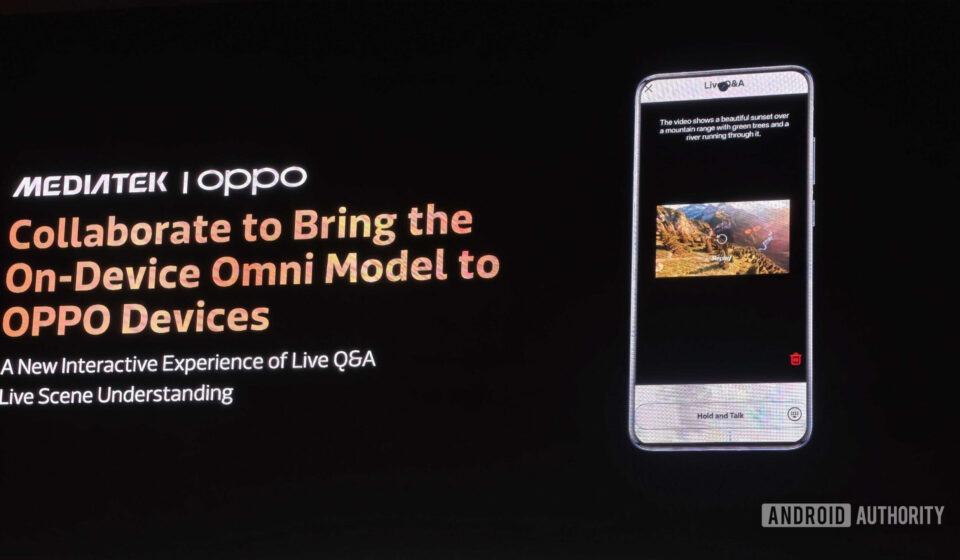
BARCELONA, SPAIN — At the highly anticipated AI keynote during Mobile World Congress (MWC) 2026, semiconductor giant MediaTek announced a landmark collaboration with OPPO, a leading global smart device brand. This partnership aims to integrate MediaTek’s cutting-edge on-device Omni model, a sophisticated multimodal large language model (LLM), into forthcoming Dimensity 9500-powered smartphones, promising a significant leap in interactive artificial intelligence for mobile users. The announcement underscores a pivotal moment in the evolution of smartphone technology, moving advanced AI processing from cloud-dependent services to the local device, thereby enhancing speed, privacy, and responsiveness.
The Omni model represents a new frontier in mobile AI, distinguished by its multimodal capabilities. Unlike traditional LLMs that primarily process text, Omni is engineered to facilitate seamless interaction across various modalities, including text, speech, images, and video. This comprehensive understanding allows for advanced use cases such as Live Scene Understanding, which promises to revolutionize how users interact with their devices in real-time environments. One of the immediate applications highlighted is an interactive Live Q&A experience, where the smartphone can process complex visual and auditory information from a live scene and provide contextually relevant answers or assistance, mirroring and potentially surpassing functionalities seen in cloud-based AI assistants like Google’s Gemini Live. This sophisticated processing is made possible by leveraging the integrated Neural Processing Unit (NPU) within MediaTek’s flagship Dimensity 9500 system-on-chip (SoC), specifically optimized for demanding AI workloads.
The Strategic Alliance: MediaTek and OPPO’s Vision for On-Device AI
The collaboration between MediaTek and OPPO is a testament to the increasing strategic importance of on-device AI in the smartphone industry. For MediaTek, this partnership solidifies its position as a formidable competitor in the high-end SoC market, demonstrating its commitment to pushing the boundaries of mobile computing and AI innovation. The Dimensity 9500, a flagship chip, is designed to deliver exceptional performance and power efficiency, with its NPU being a critical component for accelerating AI tasks directly on the device. This approach minimizes latency, enhances user data privacy by reducing reliance on cloud servers for sensitive information, and ensures functionality even in areas with limited network connectivity.
OPPO, known for its focus on user experience and innovative smartphone features, is strategically leveraging MediaTek’s advancements to differentiate its product line. By integrating the Omni model and other AI features, OPPO aims to offer a more intuitive, personalized, and powerful smartphone experience. The Find X9 series, specifically the OPPO Find X9 and Find X9 Pro, are slated to be among the first devices to benefit from these advancements, confirming OPPO’s commitment to equipping its premium devices with leading-edge technology. This move is expected to resonate with consumers who increasingly seek intelligent features that simplify daily tasks and enhance creativity.
Unpacking the Core AI Features: Omni Model, AI Translate, and AI Portrait Glow
The Omni model’s multimodal nature is its defining characteristic. Imagine pointing your phone at a complex mechanical device, and the Omni model, through Live Scene Understanding, not only identifies the object but also understands its operational context, allowing you to ask questions about its components or troubleshooting steps, receiving immediate, intelligent responses. This goes beyond simple object recognition, delving into semantic understanding of dynamic environments. The integration with the Dimensity 9500’s NPU means these complex computations are performed with remarkable efficiency, ensuring a fluid user experience without significant battery drain.
Beyond the groundbreaking Omni model, MediaTek and OPPO also confirmed the rollout of additional AI-powered features for the Find X9 series through a future ColorOS update. These include OPPO AI Translate and OPPO AI Portrait Glow, each designed to address specific user needs with sophisticated AI algorithms.
OPPO AI Translate is an advanced text-to-text generation LLM, engineered for speed and reliability. This feature will enable robust translation capabilities directly on the device, facilitating seamless communication across language barriers. Unlike cloud-based translation services that require an internet connection and potentially expose user data, on-device AI Translate offers enhanced privacy and offline functionality, making it invaluable for travelers, international business professionals, and anyone needing instant language conversion without connectivity constraints. The underlying LLM is optimized to provide accurate and contextually appropriate translations, moving beyond literal word-for-word exchanges to capture the nuances of human language.
OPPO AI Portrait Glow, on the other hand, is a testament to the advancements in computational photography driven by AI. This feature utilizes AI algorithms to intelligently restore lighting and clarity in portrait photographs, particularly those taken in challenging lighting conditions. It can identify faces, assess lighting deficiencies, and apply corrections to enhance skin tones, reduce shadows, and improve overall image vibrancy, ensuring that portrait subjects look their best. This capability is built upon extensive training data, allowing the AI to understand and reconstruct optimal lighting scenarios, providing a studio-like quality to everyday photos. It represents a significant step forward in making professional-grade photo enhancements accessible to the average smartphone user.
Timeline and Chronology of AI in Mobile
The announcement at MWC 2026 is part of a broader trajectory in the mobile industry’s embrace of artificial intelligence. The journey began years ago with rudimentary AI features like scene recognition in cameras and basic voice assistants. However, the last half-decade has seen an acceleration, fueled by advancements in chip architecture, particularly the integration of dedicated NPUs.
- Early 2010s: Basic AI functions emerge, primarily in cloud-based services (e.g., Siri, Google Assistant) and simple on-device features like facial recognition.
- Mid-2010s: First generation of dedicated AI hardware (NPUs) begins appearing in flagship SoCs, initially focused on image processing and voice command recognition. Companies like Huawei and Apple were early pioneers in integrating dedicated AI accelerators.
- Late 2010s – Early 2020s: AI capabilities expand to include more sophisticated computational photography (HDR, night mode, portrait mode), real-time translation (often cloud-assisted), and personalized user experiences. MediaTek’s Dimensity series chips begin to emphasize AI performance.
- 2024-2025: On-device large language models start gaining traction, exemplified by Qualcomm’s Snapdragon X Elite for PCs and early attempts at bringing generative AI to mobile. Google’s Gemini Nano demonstrated the feasibility of smaller, efficient LLMs on smartphones.
- MWC 2026 (Current Announcement): MediaTek and OPPO’s Omni model announcement marks a significant milestone, indicating a maturation of on-device multimodal LLMs. The Dimensity 9500’s NPU is now powerful enough to handle these complex models efficiently, making "Live Scene Understanding" and advanced Q&A a reality without constant cloud reliance. This solidifies the trend towards making AI an intrinsic part of the mobile operating system, rather than just an application.
This chronological development highlights the industry’s sustained investment in making smartphones more intelligent, intuitive, and autonomous, with MWC serving as a crucial platform for unveiling these technological leaps.
Broader Market Impact and Implications
The collaboration between MediaTek and OPPO, particularly the introduction of the Omni model on the Dimensity 9500, carries substantial implications for the competitive landscape of the smartphone and SoC markets.
For MediaTek: This partnership elevates MediaTek’s profile in the premium segment, directly challenging Qualcomm’s long-standing dominance in high-end Android flagship devices. By demonstrating robust on-device AI capabilities with a major OEM like OPPO, MediaTek signals its readiness to power the next generation of intelligent smartphones. This could lead to increased adoption of Dimensity chips in other flagship and high-mid-range devices, diversifying their revenue streams and strengthening their market share. The focus on NPU performance for multimodal AI also sets a new benchmark for what is expected from a top-tier mobile SoC.
For OPPO: Integrating such advanced AI features positions OPPO as an innovator and a leader in delivering cutting-edge user experiences. The Find X9 series, equipped with these capabilities, gains a significant competitive edge, appealing to users who prioritize smart features, privacy, and seamless interaction. This could translate into stronger sales and brand loyalty, especially in markets where AI-driven differentiation is highly valued. The commitment to on-device processing also aligns with growing consumer concerns about data privacy and the desire for robust functionality independent of network conditions.
For the Smartphone Industry: This announcement accelerates the industry-wide shift towards more powerful on-device AI. Other manufacturers and chipmakers will likely respond by investing further in their own NPU designs and on-device LLM integrations. The move towards multimodal AI will likely become a standard expectation for flagship smartphones, pushing the boundaries of what these devices can accomplish. This also has implications for app developers, who will be able to leverage these native AI capabilities to create more intelligent and context-aware applications. The privacy benefits of on-device AI could also drive a broader re-evaluation of data processing strategies across the tech sector.
For Consumers: The end-users stand to gain significantly. Features like Live Scene Understanding, advanced translation, and intelligent photo enhancements will make smartphones more powerful tools for daily life, travel, and creative pursuits. The promise of faster, more private, and more reliable AI experiences, even without an internet connection, represents a substantial upgrade to the overall mobile experience. This move democratizes access to sophisticated AI, moving it beyond the realm of niche applications to become an integral part of the smartphone’s core functionality.
Concluding Remarks: The Future is Intelligently Connected
The MWC 2026 announcement from MediaTek and OPPO marks a definitive pivot point in the mobile industry’s AI journey. The Omni model, powered by the Dimensity 9500’s NPU, is not merely an incremental update; it signifies a foundational shift towards truly intelligent, context-aware, and multimodal on-device AI. As smartphones become extensions of our senses and intellect, their ability to understand and respond to the world around them in real-time, across various input modalities, will redefine user interaction. The integration of features like AI Translate and AI Portrait Glow further solidifies this vision, promising a future where our mobile devices are not just connected, but intelligently so, anticipating our needs and enhancing our capabilities with unprecedented sophistication and efficiency. This collaborative effort sets a new benchmark for innovation and will undoubtedly influence the strategic directions of competitors and the expectations of consumers for years to come.