The Sims 4 Unveils Official Creator Marketplace and "Moola" Currency, Sparking Fan Concern Over Escalating Costs

The landscape of The Sims 4, a life simulation game that has captivated millions since its 2014 release, is set for a significant transformation with the upcoming introduction of the Sims Maker Program and Marketplace. Announced by Electronic Arts (EA) on March 3, 2026, this new initiative, slated to launch on March 17, 2026, for PC players before extending to PlayStation and Xbox consoles at a later date, aims to integrate custom content creation directly into the game’s ecosystem. However, the accompanying reveal of a new in-game paid currency, dubbed "Moola," has ignited a wave of apprehension and debate among the game’s dedicated fanbase, many of whom already feel financially strained by the game’s extensive catalog of downloadable content.
The Dawn of an Official Creator Marketplace
For years, custom content (CC) has been a vibrant and integral part of the The Sims 4 experience. Enthusiastic creators have tirelessly developed and shared a vast array of items, from intricate hairstyles and detailed furniture to entirely new gameplay mechanics, often distributing them through third-party platforms like The Sims Resource, Curseforge, and increasingly, through direct support channels like Patreon. This new Maker Program seeks to legitimize and streamline this process by allowing creators to officially publish their work directly within the game.
The core concept of the Maker Program is to provide a sanctioned avenue for creators to monetize their creations. Under this new system, creators will be able to submit their custom content for review and potential inclusion in the official Sims 4 Marketplace. Successful submissions will then be available for purchase by players, with creators earning a percentage of the revenue generated from their items. EA has stated that creators will receive 70% of the revenue generated from their sales, with EA retaining the remaining 30%. This move represents a significant shift from the current decentralized model, where creators often rely on donations or subscription services for compensation.
Introducing "Moola": A New Era of In-Game Currency
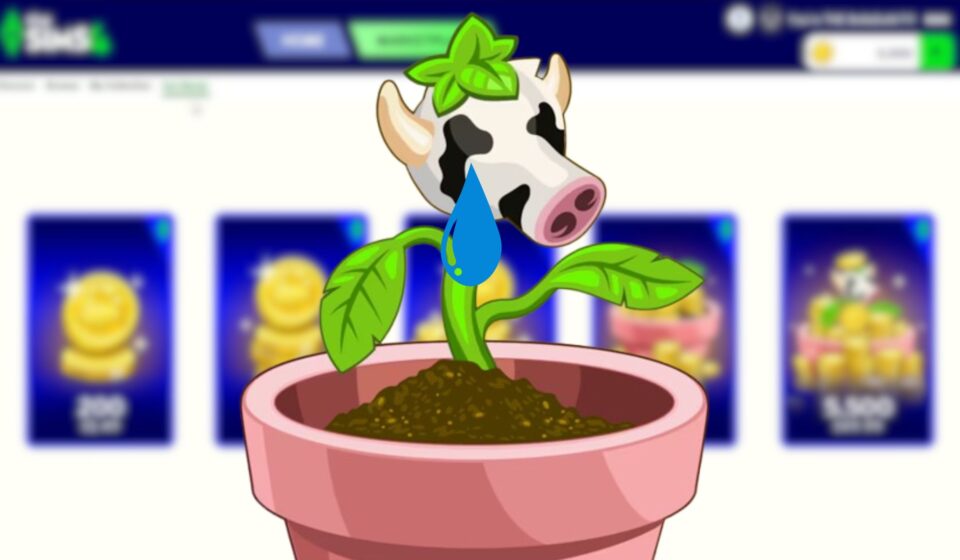
The most contentious aspect of this announcement is the introduction of "Moola," a new premium currency that players will need to purchase with real-world money to acquire items from the Maker Program Marketplace. The currency is visually represented by a cow plant, a distinctive and often humorous in-game plant known for its predatory tendencies and its association with a unique in-game currency from previous Sims titles. This symbolic choice has not gone unnoticed by the community, with some, like content creator SatchOnSims, pointing out the ironic use of a symbol often associated with greed to represent a new monetization strategy.
The pricing structure for Moola has been detailed, revealing a tiered system for purchasing coin packs. The smallest denomination available will be 200 Moola coins for $2.49 USD. Prices then scale upwards, with a larger pack of 5,500 Moola coins available for $49.99 USD. This pricing model draws parallels to established virtual economies in other popular games. For instance, purchasing $49.99 worth of Robux in Roblox yields approximately 5,250 Robux, while the same amount in Genshin Impact’s premium currency, Genesis Crystals, provides around 3,880 crystals. The Sims 4’s Moola pricing appears to be competitive within this market, though direct comparisons are always subject to fluctuating exchange rates and regional pricing.
Implications for Consumers and Creators
The introduction of a paid marketplace for custom content, while potentially beneficial for creators seeking a more stable income stream, raises significant questions about the overall cost of The Sims 4 for its player base. The game has a long-standing reputation for its extensive and often costly downloadable content (DLC) model. As of early 2026, the cumulative cost of all expansion packs, game packs, stuff packs, and kits has been estimated to exceed $1,500 USD, a figure that has steadily increased with each new release. The addition of a microtransaction-based marketplace for individual custom items could further inflate this already substantial expenditure.

According to early indications based on screenshots shared by EA and observed by community members, individual custom content items or small packs of items are expected to range in price from approximately 200 to 400 Moola coins. This translates to roughly $2.49 to $4.98 USD per small pack of custom content. While this allows players the flexibility to purchase only the specific items they desire, rather than being compelled to buy larger, themed packs or kits, the per-item cost can still be perceived as high by a segment of the player base, especially when considering the already significant investment in the base game and its official DLC.
The decision to implement a paid currency for custom content is likely a strategic move by EA to tap into a new revenue stream and to gain greater control over the distribution and monetization of user-generated content. By bringing creators and their work under an official umbrella, EA can ensure quality control, prevent the distribution of potentially harmful or exploitative content, and establish a direct channel for players to access a curated selection of the best custom creations. This also presents an opportunity for EA to foster a more professionalized creator ecosystem, potentially attracting more talented individuals to contribute to the game’s longevity and appeal.
Community Reaction and Historical Context
The announcement has predictably elicited a strong reaction from The Sims community. Many players have expressed concerns on social media platforms and fan forums about the potential for further financial burden. The "Moola" currency, with its cow plant symbolism, has become a focal point of discussion, with some viewing it as a cynical nod to the game’s already aggressive monetization strategies. The irony of using a symbol associated with consumption and potential danger to represent a new form of paid content is not lost on a community that has long debated the value proposition of EA’s DLC strategy.
This move also comes at a time when the live-service model, which relies on continuous content updates and in-game purchases, is prevalent across the gaming industry. Titles like Fortnite with its V-Bucks, Roblox with its Robux, and various mobile games employing gacha mechanics have demonstrated the profitability of in-game currencies and marketplaces. EA’s decision to adopt a similar model for The Sims 4 suggests a desire to align the game with these successful monetization strategies, ensuring its continued financial viability and development for the foreseeable future.
However, The Sims franchise has a unique history and player base. Unlike many competitive online games, The Sims is primarily a single-player experience focused on creativity, storytelling, and life simulation. Players often invest in the game for its immersive world-building and character development, and many have expressed a preference for comprehensive content additions rather than a piecemeal approach to customization. The expectation has often been that significant content additions would come in the form of larger, more substantial packs, rather than numerous small, individually priced microtransactions.
Looking Ahead: The Future of The Sims 4 Content
The rollout of the Sims Maker Program and Marketplace is scheduled to begin on March 17, 2026, with PC players being the first to experience the new system. Subsequent releases on PlayStation and Xbox consoles are planned for later dates, allowing EA to refine the system based on initial player feedback and technical performance. The official EA article detailing the program provides a comprehensive overview of its mechanics for creators, outlining the submission process, revenue share, and the operational framework of the marketplace.
The success of this new initiative will likely hinge on several factors. Firstly, the quality and diversity of the custom content available through the official marketplace will be crucial. If creators can offer compelling and unique additions that genuinely enhance the gameplay experience, it may offset some of the cost concerns. Secondly, EA’s willingness to listen to community feedback and potentially adjust pricing or content offerings will play a significant role in shaping player perception. Finally, the long-term impact on the game’s overall value proposition will be a key point of consideration for both existing and potential new players.
As the launch date approaches, the gaming world will be closely watching The Sims 4 and its evolving monetization strategy. The introduction of Moola and the official creator marketplace marks a significant turning point for the beloved life simulation game, one that could either usher in a new era of creator empowerment and player choice or exacerbate existing concerns about the escalating cost of virtual entertainment. For some long-time fans, the allure of older, more self-contained entries in the series, such as The Sims 2, may become increasingly attractive as they navigate this new financial frontier.