Girls’ Frontline: Fire Control Officially Launches in Southeast Asia, PC Version Confirmed

MICA Team and Sunborn Network Technology have officially released Girls’ Frontline: Fire Control, a new action-shooter set within the expansive Girls’ Frontline universe. The title, which blends high-intensity shooting gameplay with strategic team-building elements, launched for Android devices in Southeast Asia (excluding Vietnam) on November 27, 2025. A PC version, emphasizing 5v5 PvP shooting, is also slated for future release, indicating the developers’ ambition to establish a strong presence across multiple platforms in the competitive shooter genre.
The launch of Girls’ Frontline: Fire Control marks a significant departure for the franchise, which is widely known for its strategic turn-based and tactical role-playing elements in previous iterations like Girls’ Frontline and the upcoming Girls’ Frontline 2. This new installment pivots towards a real-time, player-versus-player (PvP) focused third-person shooter format, attempting to carve out a unique niche within its established universe. Initial impressions, based on extensive gameplay, suggest a title with compelling visuals and character designs but facing considerable challenges in core gameplay mechanics, content variety, and monetization practices that have drawn scrutiny from early adopters.
Unpacking the Gameplay Mechanics: A Mixed Bag for Mobile Combat

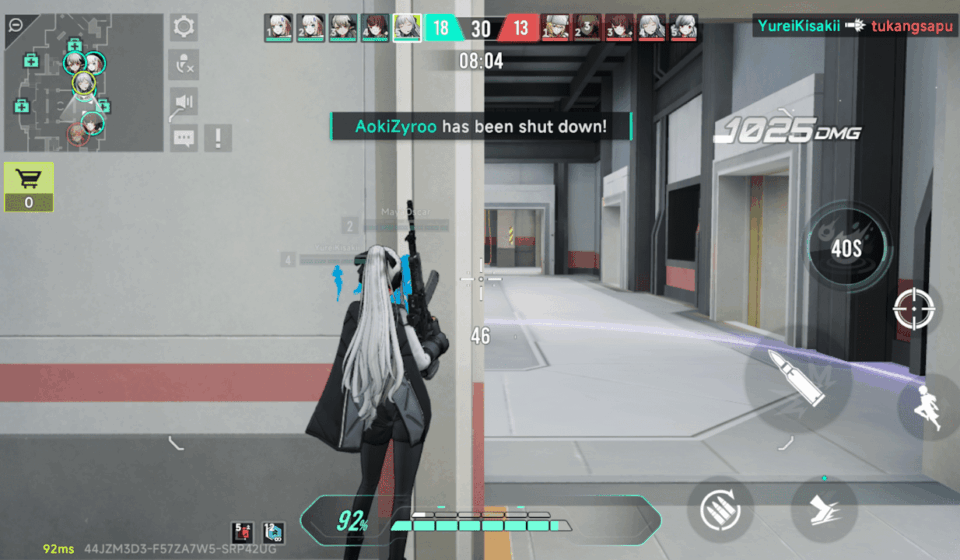
At its core, Girls’ Frontline: Fire Control aims to deliver a fast-paced shooting experience. The game features a roster of Tactical Dolls (T-Dolls), each assigned a different class, weapon type, and unique skills, encouraging players to assemble diverse teams that complement various playstyles. However, the fundamental shooting mechanics, crucial for a competitive title, have been described as merely "average" by early reviewers. The feedback loop for weapon fire, a critical component for player immersion and tactical awareness, appears to be underdeveloped. Shots often lack the tactile "weight" and "punch" expected in modern shooters, with insufficient audio and visual cues to clearly indicate successful hits on enemy characters versus environmental objects. The primary sound cue for impact, such as armor breaking, is reportedly similar to the player’s shield breaking, leading to potential confusion in the heat of combat.
This contrasts sharply with other titles in the franchise, particularly Girls’ Frontline 2, which, despite being turn-based, is lauded for its distinct and impactful weapon sound design. The transition to a full real-time third-person shooter demands a higher fidelity in combat feedback, a facet where Fire Control appears to be currently underperforming. Players are tasked with mastering individual T-Doll abilities and weapon handling within a 5v5 team environment, where strategic positioning and coordinated skill usage are paramount. However, the effectiveness of these strategic elements is hampered if the foundational shooting experience lacks refinement.
Limited Content and Narrative Scarcity: A Point of Contention
One of the most significant criticisms leveled against Girls’ Frontline: Fire Control concerns its dearth of content variety. Upon launch, the game offers a limited selection of six maps and three primary game modes. The map pool, while attempting to provide a mix of indoor, narrow environments and larger, open areas conducive to long-range engagements, largely suffers from visual and structural homogeneity. With the exception of "Sandstorm," which introduces a distinct environmental theme, many maps reportedly blend into one another, offering little in the way of unique strategic layouts or memorable aesthetics. Furthermore, a notable design decision prevents players from selecting their preferred maps or game modes when queuing for matches, leading to a repetitive experience where players are at the mercy of a random selection algorithm.

The available game modes include "Team Deathmatch," "Escort," and "Combat Simulation." Team Deathmatch, a staple of the genre, is praised for its brevity and action-oriented nature. In contrast, "Escort" and "Combat Simulation" (a MOBA-like mode featuring large, open-ended maps) are described as lengthy and repetitive, heavily reliant on a level of team coordination that is often difficult to achieve in the typical matchmaking environment of gacha game communities. The inability to consistently engage in preferred modes or maps exacerbates the feeling of monotony, raising questions about the game’s long-term engagement potential without substantial content updates.
Perhaps more surprisingly for a title within the Girls’ Frontline universe, Fire Control conspicuously lacks any discernible story, lore, or voice acting beyond combat shouts. The Girls’ Frontline franchise is celebrated for its intricate post-apocalyptic narrative, deep character backstories, and the relationships between its human commanders and T-Dolls. Fire Control, however, offers no contextual explanation for the ongoing conflicts, the identities of the combatants, or any lore related to the T-Dolls themselves. Players assume the role of an unseen participant, with no narrative progression or interactive elements to foster a connection with the game world or its characters. Even the option to give gifts to T-Dolls, a common feature in character-driven games, yields no meaningful story unlocks or unique dialogue, further isolating the gameplay from the rich narrative tapestry of its predecessors. This absence of lore and character interaction represents a missed opportunity to leverage the established appeal of the Girls’ Frontline brand and create a more immersive experience for existing fans.
Visuals and Technical Presentation: A High Point with UI Glitches
Despite criticisms regarding content and narrative, Girls’ Frontline: Fire Control undeniably shines in its visual presentation. As the second 3D installment in the Girls’ Frontline series (following Girls’ Frontline 2), the game demonstrates a strong commitment to high-fidelity character models and detailed environments. Developers have invested significant effort in crafting appealing T-Doll designs, intricate skins, and realistic weapon models, many of which rival the quality seen in Girls’ Frontline 2. The close third-person camera perspective during gameplay allows players to appreciate these visual details up close, enhancing the aesthetic appeal of each battle.

Animations are generally fluid and well-executed, avoiding the "janky" or "stiff" movements sometimes observed in mobile titles. Character movements, weapon reloads, and skill activations are smooth, with no noticeable clipping issues or physics anomalies, contributing to a polished visual experience. This technical prowess in graphics and animation stands out as a strong point, showcasing the potential for visually engaging gameplay.
However, the user interface (UI) and user experience (UX) suffer from several shortcomings. A persistent issue, reportedly carried over from Girls’ Frontline 2, involves the synchronization of voice lines with ultimate skill animations; these often lag, disrupting the flow of combat and diminishing the impact of special abilities. More broadly, certain menus are described as cluttered and difficult to navigate, with essential information sometimes obscured or poorly presented. An example cited is the loadout interface, which reportedly fails to display a comprehensive list of equipped items, hindering strategic planning. The inability to select maps or game modes prior to queuing, as previously mentioned, further detracts from player agency and overall UX. While the in-game shop and play menus are noted for their functionality and minimalist design, these positives are overshadowed by the broader UI/UX inconsistencies.
Monetization Strategy: Pay-to-Win Concerns and Competitive Implications
The monetization model of Girls’ Frontline: Fire Control has emerged as a significant point of contention, particularly given its competitive PvP focus. While the game itself is not a traditional gacha title for character acquisition, it incorporates gacha mechanics for cosmetic items such as character costumes. These gacha skins are reportedly expensive, requiring either substantial grinding for in-game currency or direct crystal purchases, which are difficult to acquire for free-to-play (F2P) users.

More critically, the game’s progression system features elements that directly impact gameplay balance, leading to accusations of a "pay-to-win" (P2W) structure. Certain characters are reportedly "paywalled," meaning they can only be unlocked through real-money purchases. This immediately creates an uneven playing field, as F2P players are denied access to potentially powerful or strategically important T-Dolls. Furthermore, the ability to directly purchase Experience (EXP) chips with premium currency allows paying players to rapidly level up their characters’ skill levels, stats, and gameplay variables. This accelerated progression provides a significant competitive advantage over F2P players, who must endure a considerably longer and more arduous grind to achieve comparable character strength.
A specific example of controversial monetization cited is the design of event rewards, where the most desirable cosmetic skin is often reserved for a character that is exclusively available via real-money purchase. Such practices disincentivize F2P engagement in events and foster a sense of inequity within the player base. The reliance on pay-to-progress mechanics in a competitive PvP environment raises serious questions about the game’s long-term competitive viability and its ability to retain a broad and engaged F2P audience. In an era where competitive integrity is paramount, especially in esports-aspirant titles, a P2W monetization model can severely undermine a game’s reputation and community trust.
Developer Context and Future Outlook
MICA Team and Sunborn Network Technology have a history of developing titles with a strong narrative and tactical depth. The Girls’ Frontline franchise, originating from a fan project that evolved into a commercial success, has cultivated a dedicated global fanbase. The decision to launch Fire Control as a real-time PvP shooter represents a bold strategic shift, aiming to expand the franchise’s reach into a different market segment. However, the current state of Fire Control suggests a product struggling to meet the high expectations set by its predecessors and the competitive landscape of mobile shooters.

The criticisms regarding content, monetization, and fundamental gameplay mechanics indicate that the game may have been released prematurely or with an underdeveloped vision for its new genre. While the visual fidelity is commendable, it cannot fully compensate for the perceived lack of depth and polish in other crucial areas. The "fan project" origin mentioned in the review hints at a potential disconnect between an initial community-driven concept and its commercial execution. Scaling a beloved concept into a full-fledged competitive game requires robust infrastructure, extensive content planning, and meticulous balancing—areas where Fire Control appears to be currently lacking.
For Girls’ Frontline: Fire Control to achieve sustained success, the developers face a significant undertaking. Addressing player feedback on shooting mechanics, expanding the map and mode variety, and re-evaluating the monetization strategy to ensure a more equitable competitive environment will be crucial. Furthermore, integrating elements of the rich Girls’ Frontline lore, even in a peripheral capacity, could help solidify its identity and appeal to the existing fanbase. The planned PC version offers an opportunity for a more polished release, but the fundamental issues identified in the mobile launch will need to be rectified to prevent similar criticisms.
In conclusion, Girls’ Frontline: Fire Control presents a visually appealing entry into the mobile shooter market, leveraging the established Girls’ Frontline brand. However, its current iteration is marked by average shooting mechanics, a severe lack of content variety, an absent narrative, and a monetization model that raises significant pay-to-win concerns. These factors collectively temper initial enthusiasm, suggesting that while the game possesses a solid fundamental foundation for a competitive shooter, it requires substantial development and strategic refinement to evolve from its current "average" standing into a truly compelling and successful title. The path forward for MICA Team and Sunborn Network Technology will require a concerted effort to address these critical areas and re-establish confidence among players in this ambitious spin-off.