Vivo X300 Ultra Poised to Reshape Mobile Photography with Sony LYTIA 901 Sensor and Global Ambitions

The landscape of premium smartphone photography is on the cusp of a significant shift with the emerging details surrounding the Vivo X300 Ultra. This week has brought a cascade of revelations, culminating in the confirmation that the upcoming flagship device will be the first smartphone globally to integrate Sony’s groundbreaking LYTIA 901 camera sensor, boasting an impressive 200-megapixel resolution. Coupled with support for the Advanced Professional Video (APV) codec and a strategic move towards a global launch, the X300 Ultra is positioning itself as a formidable contender in the high-end segment, signaling Vivo’s intent to challenge established players and redefine expectations for mobile imaging capabilities.
A Phased Unveiling: From MWC to Weibo
The initial whispers of the Vivo X300 Ultra’s advanced capabilities began to solidify during the recent Mobile World Congress (MWC), one of the world’s largest annual trade shows for the mobile industry, held in Barcelona. MWC serves as a crucial platform for manufacturers to showcase cutting-edge technologies and set the tone for the year’s innovations. It was at this prestigious event that Vivo officially confirmed the X300 Ultra’s support for the Advanced Professional Video (APV) codec. This announcement was particularly noteworthy, as the APV codec had previously made headlines for its integration into the hypothetical future flagship, the Galaxy S26 Ultra, positioning Vivo at the forefront of adopting next-generation video processing standards. The APV codec promises to deliver unparalleled video quality, offering professional-grade control and fidelity directly from a smartphone, a feature set increasingly sought after by content creators and cinephiles alike.
Following the MWC revelation, further crucial details about the X300 Ultra’s camera hardware surfaced through official channels. On [specific date, if available, otherwise just "today"], Vivo Product Manager Han Boxiao took to Weibo, China’s popular microblogging platform, to provide an in-depth look at the device’s imaging prowess. Boxiao’s post served as the official confirmation of the Sony LYTIA 901 sensor, a development that immediately captured the attention of tech enthusiasts and industry analysts. This social media disclosure underscores the growing trend of direct engagement between manufacturers and their audience, often leveraging platforms like Weibo for strategic leaks and official announcements that generate immediate buzz.
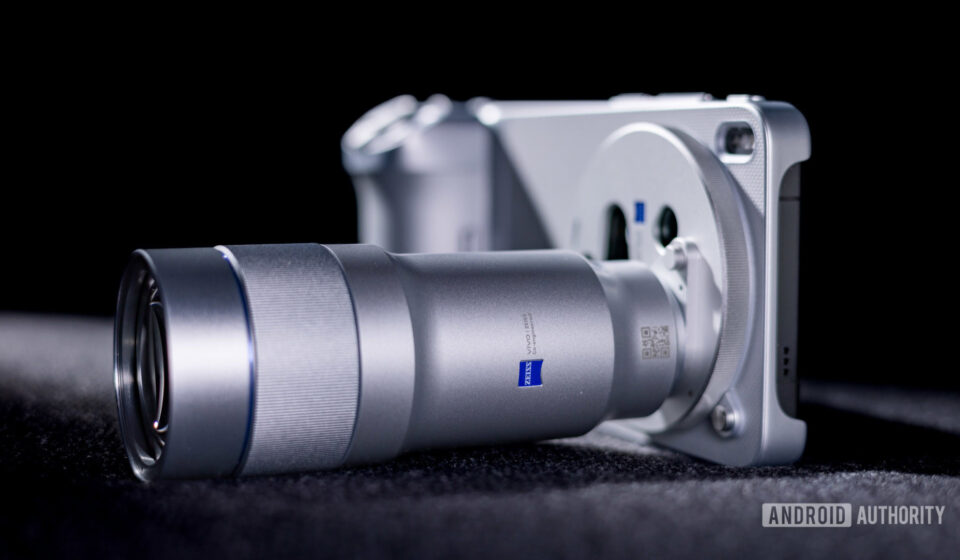
Adding to the comprehensive photographic ecosystem, Vivo had earlier in the week showcased a range of accessories designed to complement the X300 Ultra. Among these, an add-on telephoto lens with a remarkable 400mm focal length garnered significant interest. This modular approach, offering nearly 17x optical zoom when combined with the primary camera, suggests Vivo’s commitment to providing a versatile and expandable photographic experience that extends beyond the integrated camera module.
The Heart of the System: Sony LYTIA 901 Sensor
The introduction of the Sony LYTIA 901 sensor is arguably the most impactful revelation for the Vivo X300 Ultra. At a staggering 200 megapixels, the sensor’s resolution alone places it among the highest-count mobile imaging chips available. While megapixel count has often been a contentious metric in smartphone photography, frequently criticized as a marketing gimmick rather than a true indicator of image quality, the LYTIA 901 distinguishes itself through more fundamental advancements.
The true innovation lies in its physical dimensions. Measuring an impressive 1/1.12 inches, the LYTIA 901 is exceptionally large for a smartphone sensor. To put this into perspective, many flagship smartphones typically feature primary sensors in the 1/1.3-inch to 1/1.5-inch range, with only a select few pushing past the 1-inch mark. The physical size of a camera sensor is a critical determinant of its light-gathering capabilities. A larger sensor boasts a greater surface area, allowing it to capture significantly more photons in a given exposure time. This translates directly into superior low-light performance, producing images with reduced noise, enhanced detail, and better color accuracy even in challenging lighting conditions. Furthermore, a larger sensor contributes to a shallower depth of field, enabling more natural background blur (bokeh) that often mimics the aesthetic of professional cameras with larger sensors and lenses. This optical advantage minimizes the reliance on computational photography for depth effects, leading to more authentic and pleasing results.
The LYTIA brand itself signifies Sony’s latest generation of mobile image sensors, focusing on advanced architectures and computational integration. These sensors are designed not just to capture raw light but to work in tandem with the phone’s image signal processor (ISP) and AI algorithms to produce optimized images. The LYTIA 901, therefore, is expected to leverage advanced pixel-binning technologies, where multiple pixels combine to form larger "super pixels," effectively enhancing light sensitivity and dynamic range in various scenarios, especially in dimly lit environments. For instance, a 200MP sensor could output highly detailed 12.5MP or 50MP images by combining data from 16 or 4 pixels, respectively, dramatically improving per-pixel light gathering.
Beyond its size and resolution, the LYTIA 901 sensor also features an equivalent 35mm focal length. This specification is crucial for understanding the sensor’s field of view. Many smartphone primary cameras are designed with wider focal lengths (e.g., 24mm or 26mm equivalent) to capture expansive scenes. A 35mm equivalent focal length, however, offers a more "standard" or "natural" perspective, often favored by street photographers and portrait artists for its ability to render subjects with minimal distortion and a slightly more "zoomed-in" look compared to typical wide-angle smartphone lenses. This choice of focal length implies a deliberate design decision by Vivo to optimize the primary camera for more focused, artistic compositions, offering a distinct visual signature that diverges from the ultra-wide trend.
The official disclosure also highlighted advancements in image stabilization and lens coatings. The sensor will come with improved image stabilization, a critical component for high-resolution sensors and longer effective focal lengths. Whether this refers to advanced Optical Image Stabilization (OIS), Electronic Image Stabilization (EIS), or a combination of both with computational enhancements, superior stabilization is essential for capturing sharp, blur-free images and stable video, particularly in low light or when zooming. Moreover, the lens covering the LYTIA 901 is slated to feature a more effective anti-glare coating than those found in previous Vivo phones. Anti-glare coatings are vital for minimizing lens flare and ghosting, optical artifacts that can degrade image quality, especially when shooting into bright light sources. Improved coatings ensure cleaner images with better contrast and color fidelity, even in challenging lighting conditions.
Advanced Professional Video Codec: Unlocking Cinematic Potential
The integration of the Advanced Professional Video (APV) codec is a significant indicator of Vivo’s ambitions in the realm of mobile videography. While specific technical details of the APV codec are yet to be fully disclosed, its very designation implies a focus on delivering video quality and post-production flexibility that approaches professional-grade standards. Standard smartphone video codecs like H.264 (AVC) and H.265 (HEVC) are efficient for everyday use but often fall short when demanding professional workflows are involved. An "Advanced Professional Video" codec likely signifies several key improvements:
Firstly, it could offer higher bitrates and more efficient compression algorithms, allowing for richer detail and fewer compression artifacts without exponentially increasing file sizes. Secondly, it might support higher color bit depths (e.g., 10-bit or even 12-bit color), which translates to a vastly greater range of colors and smoother gradients, crucial for professional color grading. Thirdly, it could integrate support for advanced dynamic range profiles, such as HDR10+ or Dolby Vision, or even proprietary log formats that preserve more highlight and shadow detail, providing greater latitude for color correction and grading in post-production.
The fact that this codec is also associated with the "Galaxy S26 Ultra" suggests it represents a new industry benchmark for high-fidelity video capture on mobile devices. For videographers, content creators, and enthusiasts, the APV codec could mean the ability to capture footage that is not only visually stunning but also robust enough to be integrated into professional editing suites with greater ease and flexibility, reducing the need for dedicated video cameras for many scenarios. This move positions the Vivo X300 Ultra as a serious tool for cinematic expression, pushing the boundaries of what is traditionally expected from a smartphone.
Expanding the Photographic Horizon: The 17x Optical Zoom Accessory
Complementing the advanced internal camera system, Vivo’s introduction of an add-on telephoto lens with a 400mm focal length is a bold statement about modularity and extreme zoom capabilities. This accessory, when paired with the X300 Ultra’s primary camera, facilitates a nearly 17x optical zoom. To fully grasp the significance, consider that a 400mm lens on a full-frame camera is a powerful telephoto, often used for wildlife, sports, or distant subjects. Translating this to a smartphone, even with a smaller sensor, provides an unprecedented level of magnification without relying solely on digital zoom, which inevitably degrades image quality.
The trend of modular accessories, though not universally adopted, represents an interesting avenue for manufacturers to extend the utility of smartphones without compromising their slim profiles. While the convenience of a built-in versatile zoom system remains paramount for many users, offering a specialized accessory caters to a niche of serious photographers who demand specific capabilities for particular shooting scenarios. This 400mm lens effectively transforms the X300 Ultra into a highly specialized photographic instrument, capable of capturing intricate details from afar, an area where most smartphones, even those with periscope lenses, still struggle.
However, such an accessory also comes with practical considerations. Its bulk and the need for manual attachment might limit its everyday use, making it more suitable for planned photography excursions rather than spontaneous captures. Nonetheless, its existence underscores Vivo’s commitment to pushing the boundaries of what’s possible in mobile photography, offering a comprehensive solution for users who seek maximum versatility.
Vivo’s Strategic Global Ambitions and Market Implications
Perhaps one of the most significant strategic announcements concerning the Vivo X300 Ultra is its expected global launch. Historically, Vivo’s "Ultra" series devices, representing the pinnacle of their technological innovation, have been exclusive to the Chinese market. This decision to launch the X300 Ultra globally marks a pivotal shift in Vivo’s international strategy. While the term "globally" likely excludes the highly competitive and regulated U.S. market, it signifies a broader push into key European, Asian, and other international regions where Vivo has been steadily expanding its presence.
This global rollout indicates Vivo’s confidence in the X300 Ultra’s ability to compete directly with established flagships from giants like Samsung, Apple, Xiaomi, and Google. By bringing its top-tier innovations to a wider audience, Vivo aims to elevate its brand perception from a regional player to a global premium smartphone manufacturer. The X300 Ultra, with its advanced camera system, acts as a technological showcase, demonstrating Vivo’s engineering prowess and commitment to pushing boundaries in mobile imaging.
The implications for the broader mobile photography market are substantial. Vivo’s aggressive pursuit of cutting-edge sensor technology (LYTIA 901), advanced video codecs (APV), and extreme optical zoom accessories (400mm add-on lens) will intensify competition among smartphone manufacturers. This competitive pressure often accelerates innovation, benefiting consumers with more capable and versatile devices. Other brands may be compelled to respond with their own advancements in sensor technology, computational photography, and video capabilities to maintain their market share in the lucrative premium segment.
Furthermore, the X300 Ultra’s feature set suggests a deliberate strategy to appeal to professional users and photography enthusiasts who are increasingly looking for devices that can bridge the gap between traditional cameras and smartphone convenience. The combination of a large, high-resolution sensor, a unique focal length, advanced video capabilities, and an extreme telephoto option caters directly to this demographic, potentially carving out a significant niche for Vivo.
The Evolution of Mobile Photography: A New Benchmark
The Vivo X300 Ultra, as revealed through these cumulative announcements, appears poised to set a new benchmark in mobile photography and videography. The integration of Sony’s LYTIA 901 sensor signifies a renewed focus on fundamental image quality, emphasizing sensor size and light-gathering capabilities over mere pixel count. The 35mm equivalent focal length provides a distinct photographic perspective, while enhanced stabilization and anti-glare coatings address critical aspects of image fidelity. The APV codec promises a leap in mobile video quality, offering tools previously reserved for dedicated cameras. And the optional 400mm telephoto lens pushes the boundaries of accessible optical zoom on a smartphone.
These advancements collectively indicate a future where smartphones are not just convenient cameras but highly sophisticated imaging tools capable of professional-grade results across a diverse range of photographic and videographic scenarios. As the mobile industry continues its relentless pace of innovation, devices like the Vivo X300 Ultra are crucial in demonstrating the next frontier of what’s possible, challenging the status quo, and ultimately enriching the creative possibilities for users worldwide. While an official launch window remains unconfirmed, the anticipation for the X300 Ultra is palpable, as it promises to be a pivotal device in the ongoing evolution of mobile imaging.