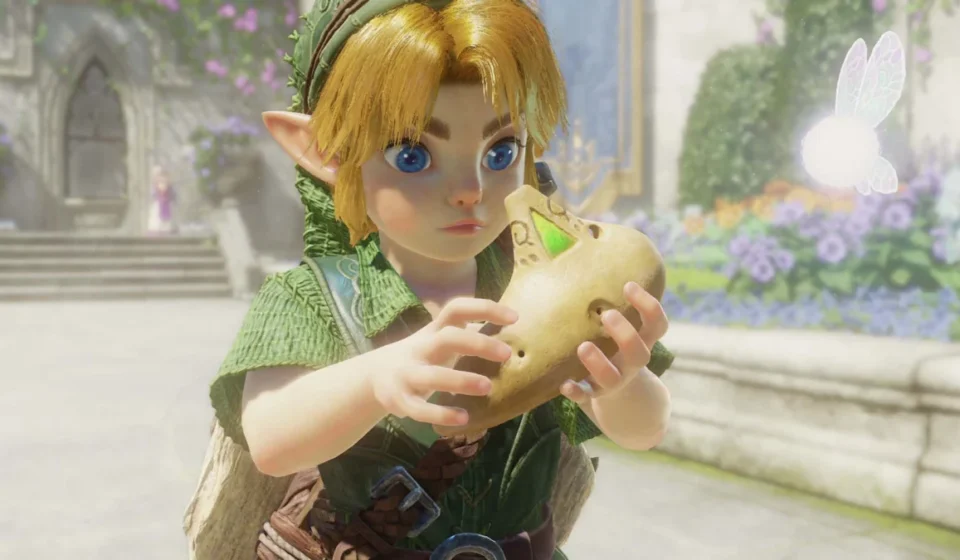
The Legend of Zelda: Ocarina of Time Remake Previewed in Frankfurt, Promises Faithful Recreation with Modern Polish

Frankfurt, Germany – Attendees at a recent exclusive preview event in Frankfurt, Germany, offered a first glimpse into the highly anticipated remake of the seminal Nintendo 64 title, The Legend of Zelda: Ocarina of Time, slated for release on the Nintendo Switch 2. The event, hosted by Nintendo of Europe, provided hands-on experience with the early stages of the game, allowing seasoned fans and newcomers alike to assess the fidelity of the reimagining. Early impressions suggest a meticulous dedication to preserving the original’s spirit while enhancing its visual and interactive elements for a contemporary audience.
The preview environment itself was curated to evoke a sense of immersion, described as a dimly lit space adorned with fairy lights and lush greenery, mirroring the mystical ambiance of Hyrule. This setting was designed to transport participants into the familiar world of Link and Princess Zelda, setting a nostalgic tone for the gameplay session. Participants were granted access to early save files, enabling them to navigate iconic starting areas such as Kokiri Village and engage with its memorable characters.
Rekindling Nostalgia: An Early Journey Through Hyrule
The preview began with players stepping back into the shoes of a young Link in Kokiri Village, a starting point that resonated deeply with many who grew up with the original game. The initial apprehension some expressed regarding the art style, particularly following its reveal during the Zelda 40th Anniversary stream, appeared to dissipate upon experiencing the remake firsthand. The character models, while updated, were described as having a charm that quickly won over attendees. The familiar interactions with characters like Mido, Saria, and the girl offering Z-targeting tutorials provided a powerful wave of nostalgia, demonstrating the remake’s success in tapping into core memories.

The early gameplay loop involved familiar tasks: acquiring a sword and shield, collecting rupees, and navigating the village. The remake faithfully recreates the environmental details, including the ability to cut down a wide array of foliage, a small but appreciated touch that harks back to the original’s interactive world. Even the seemingly minor details, such as the placement of ferns and flora, contribute to a sense of authenticity. The player’s muscle memory was reportedly engaged as they traversed the village with ease, a testament to the enduring design of the original game. Encounters with environmental hazards, such as the rolling boulder, provided moments of lighthearted challenge and reminded players of the game’s enduring personality.
Enhancing the Legend: Combat and Narrative Fidelity
The journey to the Great Deku Tree marked a significant point in the preview. The combat against Deku Babas was noted for its enhanced satisfaction, with each sword swing feeling substantial and well-weighted, an improvement over the original’s mechanics while retaining its core feel. The voice acting, while potentially a point of adjustment for long-time fans, was generally praised for its quality, with the voice actor for the Great Deku Tree effectively conveying wisdom and care towards Link. This segment underscored the developers’ commitment to not only visual but also auditory fidelity, aiming to capture the emotional resonance of key narrative moments.
Inside the Great Deku Tree, players experienced gameplay up to the acquisition of the Fairy Slingshot. This early dungeon segment highlighted the remake’s dedication to replicating the original’s atmosphere and enemy encounters. The menacing lunge of the Deku Babas, the spitting of Deku Scrubs, and the ominous rattling of Skulltulas were all faithfully recreated, offering a modern realization of childhood fears and adventures. The visual polish applied to these elements allows players to experience the game’s iconic moments with a clarity and impact that was previously only imagined.
Expanding the Horizon: Hyrule Field and Castle Town
Transitioning to Hyrule Field, the vast plains were described as visually stunning, offering a sense of scale and freedom that is central to the Zelda experience. However, a minor point of critique emerged regarding certain textures, particularly in densely vegetated areas. Some attendees noted a "low-res vibe" to hair and grass, which, while manageable for retro game enthusiasts, might prove slightly off-putting to those prioritizing cutting-edge graphical fidelity. This observation suggests a deliberate artistic choice that prioritizes overall aesthetic coherence over hyper-realistic detail in specific elements.

Hyrule Castle Town presented a noticeable expansion from its original iteration. The addition of back streets and accessible interiors, such as a house for resting and recovering hearts, contributes to a more vibrant and lived-in environment. The inclusion of beloved locations like the Bombchu Bowling Alley, the Shooting Gallery, and the potion shop ensures that the town retains its familiar charm while offering a richer exploration experience. The townsfolk were described as having a more dynamic appearance, further enhancing the feeling of a bustling and authentic community. Among the more whimsical observations from the preview was the enjoyment derived from interacting with Cuccos and playfully pursuing Richard the dog, small moments that contribute to the game’s enduring appeal.
The Dungeons: Where the Remake Truly Shines
A significant portion of the preview focused on adult Link’s experience, particularly within the Forest Temple. The immediate threat posed by approaching Wolfos upon entering the temple grounds was noted as a particularly effective moment, still capable of eliciting a sense of surprise and tension. The dungeons, in general, were highlighted as areas where the remake truly excels, especially when experienced as adult Link.
The detailed textures of the temple’s interior – walls, banisters, carpets, and more – were lauded for their beauty and fidelity. This visual enhancement allows players to see the dungeons as they might have always imagined them, a powerful testament to the developers’ work. While some public discourse, particularly on social media platforms, has focused on the design of child Link, the adult Link’s rendition was met with near-universal approval, praised for its successful capture of a more stoic and serious demeanor. This contrast in character representation appears to be a deliberate choice that enhances the narrative progression and Link’s transformation throughout the game.
Faithful Reconstruction and Future Potential
The preview concluded with an acknowledgment that the limited time with the game did not allow for the discovery of all its secrets. Nevertheless, the overarching impression was that of a deeply faithful recreation, infused with a palpable love and respect for the original source material. The developers appear to have prioritized an almost 1:1 remake, ensuring that the core experience remains intact.

Looking ahead, there is an expressed hope that the final release might incorporate some of the cut content from the original game, offering even more for players to discover during their full playthroughs. The potential for speedrunners to engage with this new version was also a point of interest, given the established popularity of Ocarina of Time speedrun content.
The preview event in Frankfurt served as a compelling demonstration of Nintendo’s commitment to honoring its legacy titles while embracing modern gaming standards. With a release date set for November 5th, the remake of The Legend of Zelda: Ocarina of Time on the Nintendo Switch 2 is poised to be a significant event for fans, offering a chance to relive a beloved adventure with a fresh coat of paint and enhanced gameplay elements. The sentiment among attendees was overwhelmingly positive, suggesting that this remake is on track to capture the magic of the original for a new generation of players and to reignite that same spark for those who have cherished it for decades.
Supporting Data and Context
The Legend of Zelda: Ocarina of Time was originally released in 1998 for the Nintendo 64, and it is widely regarded as one of the most influential video games of all time. It achieved critical acclaim for its groundbreaking 3D gameplay, immersive storytelling, and innovative mechanics such as the Z-targeting system. The game sold over 7.6 million copies worldwide, solidifying its status as a commercial and critical success. Its impact on subsequent game design is immeasurable, with many action-adventure titles borrowing elements from its formula.
The remake for the Nintendo Switch 2 represents the latest in Nintendo’s strategy of reintroducing its most beloved franchises to new hardware. This approach has seen previous successes with titles like The Legend of Zelda: Link’s Awakening and the Super Mario 3D All-Stars collection. The decision to remake Ocarina of Time taps into a deep well of nostalgia among players who grew up with the Nintendo 64 and its successor, the GameCube, which also saw a port of the game.

The preview event in Frankfurt, held at a dedicated Nintendo of Europe facility, was part of a carefully orchestrated marketing campaign designed to build anticipation for the title. Such events are crucial for generating early buzz and securing positive pre-release coverage. The inclusion of specific gameplay segments, such as Kokiri Village, Hyrule Field, and the Forest Temple, allows for a controlled demonstration of the remake’s key features and improvements. The date of November 5th, while specific, could be subject to change as is common in game development and marketing cycles.
Analysis of Implications
The successful execution of this remake could have significant implications for the Nintendo Switch 2’s market position. By leveraging a universally acclaimed title with a strong existing fanbase, Nintendo is likely to drive hardware sales and reinforce its brand loyalty. The visual enhancements, while not always reaching photorealistic standards, aim to bridge the gap between nostalgic memory and modern graphical expectations. This approach often appeals to a broad spectrum of gamers, from those seeking a faithful re-experience to those discovering the classic for the first time.
Furthermore, the remake’s success could set a precedent for future reinterpretations of Nintendo’s extensive back catalog. A faithful yet modernized approach to beloved classics like Ocarina of Time suggests that Nintendo is willing to invest in high-quality remakes, potentially opening doors for similar projects involving other iconic series. The careful attention to detail, from environmental design to character animation, indicates a commitment to quality that is essential for satisfying a discerning fanbase. The potential inclusion of cut content would further bolster the remake’s appeal, offering added value and a unique selling proposition for dedicated fans. The engagement of speedrunners with the new version also highlights the enduring replayability and community aspects of the Zelda franchise.