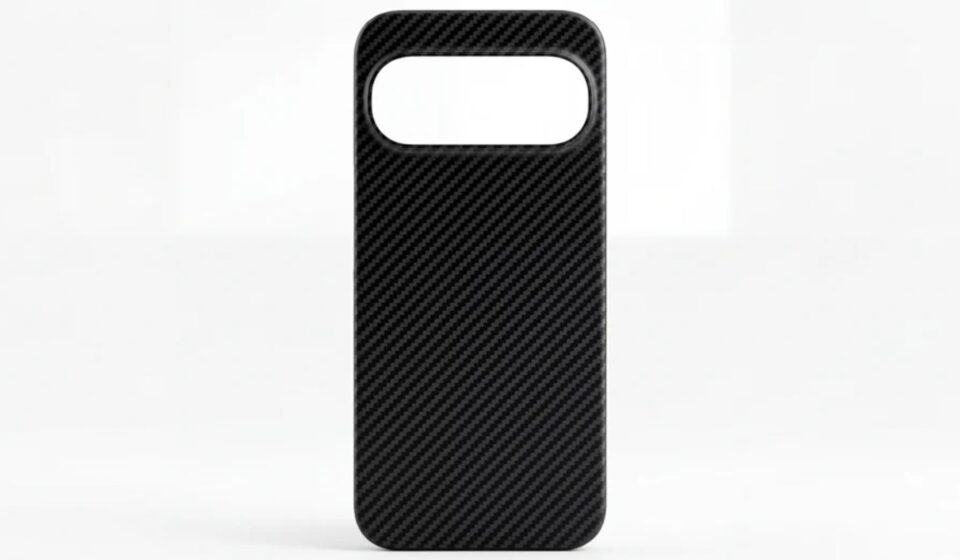
A 0.9mm case just leaked more about the Pixel 11 Pro than Google has. Spoiler: it might look a lot like the phone you already have.

A seemingly unassuming accessory listing from an independent case manufacturer has provided an intriguing early glimpse into the potential design of the upcoming Google Pixel 11 Pro. Thinborne, a Texas-based company known for its exceptionally slim aramid fiber cases, has inadvertently become a significant source of information, listing a case for what it labels the "Pixel 11 Pro XL" on its website. While the case itself adheres to Thinborne’s signature minimalist aesthetic, the crucial detail lies within its camera cutout, which strongly suggests a design philosophy that prioritizes iterative refinement over radical reinvention for Google’s next flagship smartphone.
The leaked case, characterized by its ultra-thin profile (0.9mm on the back and 0.6mm on the sides) and construction from 600D aramid fiber, also features MagSafe compatibility and is bundled with a tempered glass screen protector. These specifications are typical for Thinborne’s premium offerings and, in isolation, would not warrant significant attention. However, the precise dimensions and shape of the camera housing cut into the case align remarkably closely with the distinctive oval camera bar present on the current Pixel 10 Pro XL. This alignment is a potent indicator that Google may opt for a continuation of its established design language for the Pixel 11 Pro, rather than a dramatic departure.

This potential design continuity is not without precedent within Google’s Pixel lineage. The Pixel 10 Pro itself was widely reported to represent a subtle evolution from the Pixel 9 Pro, maintaining a consistent aesthetic that included flat sides, rounded corners, and the signature oval camera module. This approach suggests that Google, much like other major smartphone manufacturers, may be focusing its innovation efforts on internal hardware and software advancements, while preserving a familiar and refined external design. The emphasis on color palette refreshes and minor material tweaks, rather than wholesale redesigns, has become a common strategy to manage development costs and maintain brand recognition.
The implications of this continued design consistency are multifaceted. For consumers, it suggests that users upgrading from the Pixel 10 Pro to the Pixel 11 Pro may find the transition seamless in terms of handling and ergonomics. Existing accessories, particularly cases and screen protectors, might even retain a degree of compatibility, a rarity in the smartphone industry where generational design changes often render previous accessories obsolete. This can be a significant cost-saving factor for consumers and can reduce electronic waste.
From Google’s perspective, a conservative design approach allows for greater focus on the core user experience. By minimizing the resources dedicated to designing and tooling entirely new external chassis, the company can channel its engineering talent and financial investment into areas such as camera sensor technology, artificial intelligence processing, and software optimization. This strategy could lead to more substantial improvements in areas that directly impact daily usability, such as computational photography, on-device AI capabilities, and overall system performance.

Furthermore, a consistent design can contribute to building a stronger brand identity. The distinctive camera bar has become a recognizable hallmark of the Pixel series, and its continued presence, even if slightly refined, reinforces this visual cue. This can help consumers quickly identify Pixel devices in a crowded market, fostering brand loyalty and recognition.
However, it is crucial to temper initial excitement with a degree of caution. The information derived from case listings, while often accurate, is not infallible. Case manufacturers typically work with preliminary design specifications, often based on supply chain leaks and educated guesses. The "Pixel 11 Pro XL" nomenclature on Thinborne’s listing could potentially be a placeholder or even an erroneous product name. Supply chain whispers and early schematics can sometimes be misinterpreted or prove to be inaccurate as product development progresses. Therefore, while the camera cutout alignment offers a compelling hypothesis, it remains an unconfirmed leak.
Google typically unveils its flagship Pixel devices in August. This traditional release window suggests that the Pixel 11 Pro, assuming the current timeline holds, is still approximately five months away from an official announcement. This extended lead time allows ample opportunity for further leaks, rumors, and official disclosures to emerge. The period before the official unveiling is often a dynamic one, characterized by a steady stream of information that can either corroborate or contradict early insights.

The history of Google’s Pixel design evolution provides context for this potential continuity. The Pixel 10 Pro’s design was itself seen as a refinement of the Pixel 9 Pro’s aesthetic. This iterative approach suggests a strategic decision by Google to perfect its existing design language before embarking on a significant overhaul. This is a common practice in the tech industry, allowing companies to capitalize on established design principles while incrementally introducing new features and technologies.
The focus on subtle evolutionary changes in design is also a testament to the maturation of smartphone form factors. With the fundamental slab design having been refined over more than a decade, manufacturers are increasingly exploring incremental improvements in ergonomics, durability, and aesthetics. The move towards more sustainable materials, enhanced water and dust resistance, and refined button placement are examples of how even familiar designs can be improved without drastic visual alterations.
For photography enthusiasts, the camera module’s design is of paramount importance. The oval camera bar houses Google’s advanced computational photography hardware, which has been a cornerstone of the Pixel experience. The consistent placement and presumed size of this module suggest that Google intends to continue its push in mobile imaging, likely incorporating new sensor technology, improved optical elements, and further advancements in its AI-powered image processing algorithms. The ability of the Pixel line to consistently deliver exceptional photographic results, often surpassing devices with seemingly more impressive hardware specifications, is a direct result of Google’s deep investment in software and computational photography.

The potential for a continued design can also be viewed through the lens of user interface and user experience consistency. A familiar hardware design can contribute to a more predictable and intuitive software experience. When hardware and software evolve in tandem, users can more easily adapt to new features and functionalities. This is particularly important for Google, which emphasizes its AI-driven software experiences.
Looking ahead, the period leading up to the Pixel 11 Pro’s launch will undoubtedly be filled with further speculation and analysis. Tech enthusiasts and industry observers will be scrutinizing every leaked detail, from camera specifications to processor rumors. The case leak from Thinborne serves as an early indicator, suggesting that the Pixel 11 Pro might be an exercise in refinement rather than revolution. This approach, if proven accurate, would signal Google’s confidence in its current design direction and its commitment to prioritizing core performance and user experience improvements.
The broader implications for the smartphone market are also worth considering. If Google continues its iterative design strategy, it could further normalize this approach among competitors. In an era where radical design changes can be costly and sometimes unpopular, a focus on delivering compelling technological advancements within a familiar and well-received form factor might become an even more prevalent strategy. This could lead to a market where innovation is increasingly measured by internal advancements and software prowess, rather than solely by external aesthetics.

Ultimately, the Pixel 11 Pro’s design remains subject to official confirmation. However, the early insights provided by an unlikely source offer a compelling narrative of measured evolution. The potential for a visually similar device to its predecessor underscores Google’s strategic priorities and its continued commitment to delivering a refined and powerful smartphone experience, driven by both hardware innovation and sophisticated software. The coming months will reveal whether this initial glimpse into the Pixel 11 Pro’s design holds true.