Apple Unleashes a Torrent of New Products: MacBook Neo, iPhone 17e, M5-Powered Macs, and Next-Gen Displays Shake Up the Tech Landscape

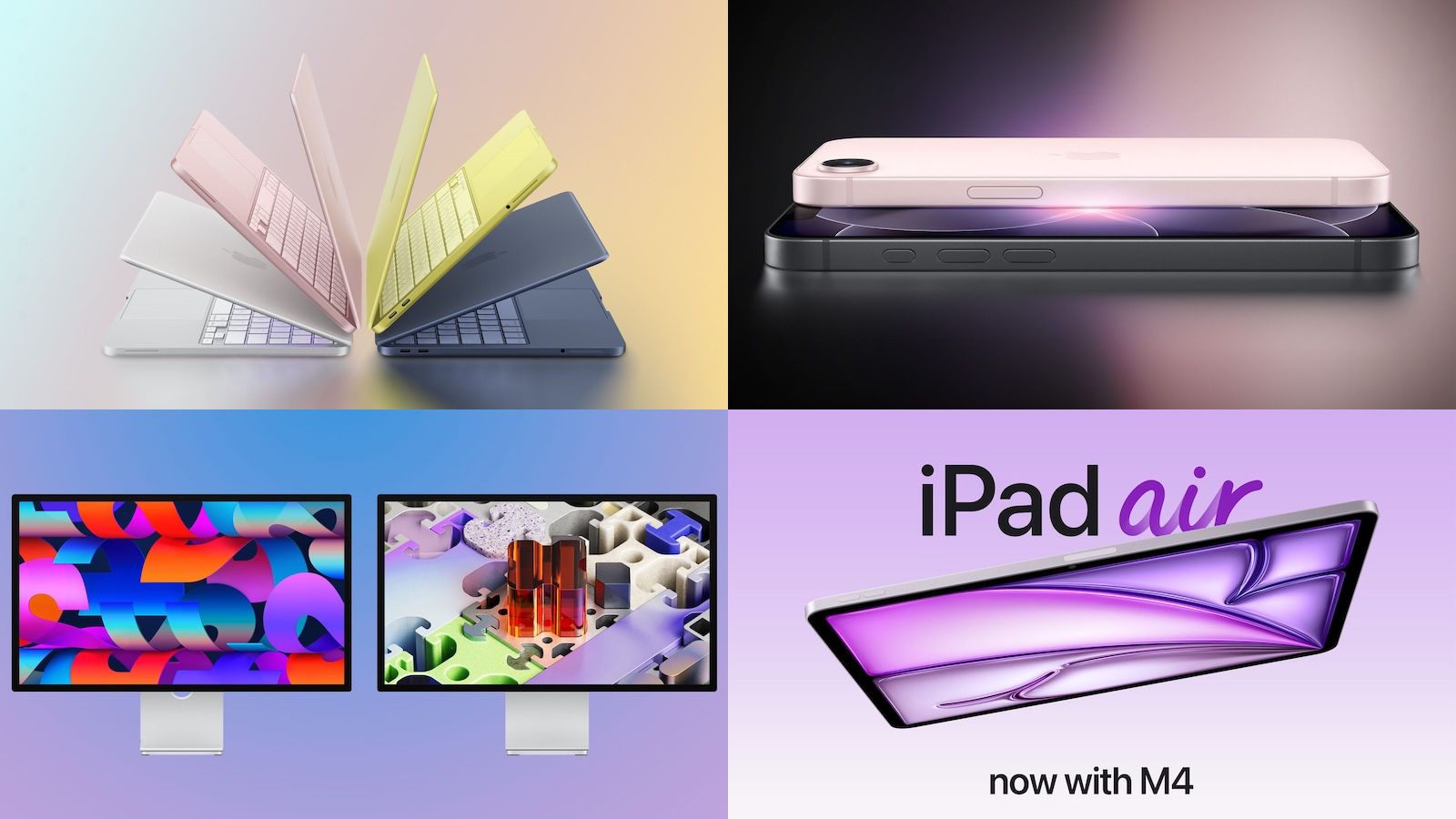
Apple ignited the tech world this week with an unprecedented product launch, unveiling a total of seven new devices over three intensive days from Monday to Wednesday. The barrage of releases includes a groundbreaking low-cost MacBook, a budget-friendly iPhone, significant upgrades to the MacBook Air and MacBook Pro lines, a revitalized iPad Air, and two advanced external displays. This strategic rollout signals Apple’s aggressive push to expand its market reach and solidify its dominance across various consumer and professional segments.
A Week of Unprecedented Innovation: Key Product Announcements
The week’s announcements commenced with the highly anticipated arrival of the "MacBook Neo," a budget-friendly laptop designed to bring the Mac experience to a wider audience. This was swiftly followed by the introduction of the "iPhone 17e," an affordable smartphone offering essential Apple features. The latter half of the week saw substantial enhancements to Apple’s professional and enthusiast offerings, with the unveiling of new MacBook Pro models powered by the next-generation M5 Pro and M5 Max chips, alongside a refreshed MacBook Air. Apple also introduced two new external displays: an updated Studio Display and the premium Studio Display XDR, which replaces the Pro Display XDR. Finally, the iPad Air received a significant performance boost with the integration of the M4 chip.
The MacBook Neo: Democratizing the Mac Ecosystem
Apple Introduces $599 MacBook Neo, Powered by A18 Pro Chip
In a move that promises to redefine the entry-level laptop market, Apple officially launched the MacBook Neo, its most affordable Mac to date, priced at a compelling $599. The company had inadvertently revealed the "MacBook Neo" moniker a day prior to the official announcement, fueling anticipation for this budget-conscious offering. The Neo is distinguished by its integration of an iPhone chip, specifically the A18 Pro, which first debuted in the iPhone 16 Pro models in 2024.
Apple asserts that the MacBook Neo delivers performance up to 50% faster for everyday tasks compared to leading PCs equipped with the latest Intel Core Ultra 5 processors. Its on-device AI capabilities are reportedly up to three times faster, and it achieves up to twice the speed for demanding operations like photo editing. This significant performance leap, achieved through a mobile-first architecture, underscores Apple’s strategy of leveraging its powerful custom silicon across its product lines.
The MacBook Neo features a vibrant 13-inch Liquid Retina display with a resolution of 2408 by 1506 pixels, offering 500 nits of brightness and an anti-reflective coating. Notably, the display eschews the notch found on some higher-end models, opting instead for uniform bezels reminiscent of the iPad design, contributing to a cleaner aesthetic. The laptop is available in four appealing pastel color options, further enhancing its appeal to a younger demographic and those seeking a more personalized device.
While the $599 price point necessitates certain compromises compared to Apple’s premium MacBook offerings, such as potentially reduced port selection or less robust build materials, the MacBook Neo is strategically positioned to attract students, first-time Mac users, and budget-conscious consumers looking for a reliable and performant device for essential computing needs. This move is expected to significantly broaden Apple’s market share in the education sector and among individuals transitioning from other operating systems.
iPhone 17e: Bringing Core Apple Experiences to a Wider Audience
Apple Unveils iPhone 17e: A19 Chip, MagSafe, and Enhanced Connectivity at an Accessible Price
Continuing its expansion into more accessible price points, Apple introduced the iPhone 17e, a new model designed to offer core iPhone functionalities and a modern Apple experience at a competitive price. The iPhone 17e is powered by the A19 chip, the same processor found in the flagship iPhone 17, promising a substantial performance upgrade for users upgrading from older devices. This chip features a 6-core CPU and a 4-core GPU, delivering up to twice the performance of the iPhone 11, a device that many prospective buyers of the 17e are likely to be replacing.
A key highlight of the iPhone 17e is its inclusion of MagSafe connectivity, a feature previously reserved for higher-end models, allowing for seamless attachment of accessories and more efficient wireless charging. The device also boasts faster charging capabilities and an upgraded 16-core Neural Engine, optimized for the growing demands of large generative AI models. Furthermore, the integration of Apple’s latest-generation C1X modem, also found in the iPhone Air, ensures up to twice the cellular performance compared to the iPhone 16e, providing faster and more reliable connectivity.
The iPhone 17e starts at $599 and is available in three attractive colors: classic black, crisp white, and a new, subtle soft pink. This pricing strategy places the iPhone 17e directly against a highly competitive mid-range smartphone market, offering a compelling alternative for consumers who desire the Apple ecosystem and its renowned user experience without the premium cost of flagship iPhones. This move is expected to further drive iPhone adoption among a broader demographic.

MacBook Pro and MacBook Air Evolve with M5 Silicon and Enhanced Features
Apple Unveils MacBook Pro with M5 Pro and M5 Max Chips, Featuring Revolutionary Fusion Architecture
The professional Mac lineup received a significant overhaul with the announcement of new 14-inch and 16-inch MacBook Pro models. These powerhouses are equipped with the groundbreaking M5 Pro and M5 Max chips, built upon an innovative "Fusion Architecture." This new design marks a departure from previous single-die chip configurations, employing advanced packaging to bond two third-generation 3nm dies into a single, cohesive chip.
The Fusion Architecture integrates the CPU, GPU, Media Engine, Neural Engine, unified memory controller, and Thunderbolt 5 capabilities onto a unified platform, promising unprecedented performance and efficiency. Apple claims this new architecture enables the M5 Pro and M5 Max chips to deliver substantial leaps in processing power and graphics capabilities, essential for demanding professional workflows such as video editing, 3D rendering, and complex software development.
Beyond the silicon upgrade, the new MacBook Pro models also feature enhanced memory and storage options, along with Apple’s N1 networking chip, which brings support for the latest Wi-Fi 7 and Bluetooth 6 standards. This ensures users benefit from the fastest and most reliable wireless connectivity available.
MacBook Air Gets M5 Chip and Doubled Base Storage
Complementing the professional-grade MacBook Pro, the popular MacBook Air has also been refreshed with the M5 chip. This update brings a significant performance boost to Apple’s ultraportable laptop, featuring a 10-core CPU that Apple touts as containing the world’s fastest CPU cores. The M5 chip also includes configurations with up to 10 GPU cores, each equipped with Neural Accelerators, delivering up to four times faster performance for AI tasks compared to the previous M4-equipped MacBook Air.
A notable improvement for the MacBook Air is the doubling of its base storage to 512GB SSD, a move that addresses a common user request and enhances the device’s out-of-the-box utility. This increased storage is paired with an SSD that boasts twice the read and write performance of its predecessor. The starting prices for the MacBook Air have seen a modest increase of $100, with the 13-inch model now starting at $1,099 and the 15-inch model at $1,299. This price adjustment reflects the enhanced capabilities and increased storage capacity, positioning the MacBook Air as an even more compelling option for students, creatives, and everyday users.
Next-Generation Displays: Studio Display XDR and Updated Studio Display
Apple Introduces All-New Studio Display XDR: 120Hz, Mini-LED, and Pro-Level Features

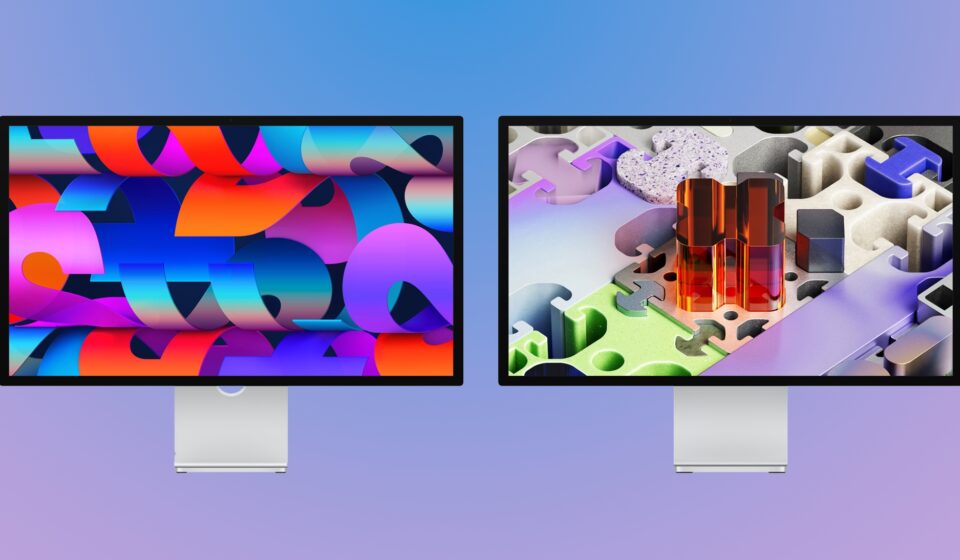
Apple is also elevating its external display offerings with the introduction of two new 27-inch models. The Studio Display XDR is poised to become the new standard for professionals, replacing the Pro Display XDR. This premium display boasts a stunning 5K resolution and is equipped with mini-LED backlighting, enabling superior contrast ratios and deeper blacks. A standout feature is its 120Hz refresh rate coupled with Adaptive Sync technology, providing exceptionally smooth motion for creative professionals and gamers alike.
The updated Studio Display retains its 27-inch, 5K resolution panel but receives minor revisions, ensuring it remains a strong option for users seeking a high-quality, integrated display solution for their Macs. The Studio Display XDR is priced starting at $3,299, reflecting its advanced technology and professional-grade performance, while the standard Studio Display begins at $1,599.
iPad Air Revitalized with M4 Chip and Enhanced Connectivity
Apple Unveils iPad Air with M4 Chip, Increased RAM, and Wi-Fi 7 Support
Apple’s popular iPad Air line has been significantly upgraded with the integration of the M4 chip, marking a substantial leap in performance for Apple’s mid-range tablet. This powerful new chip, previously exclusive to higher-end iPads, delivers faster processing and graphics capabilities, making the iPad Air more capable for demanding tasks, including creative applications and multitasking.

In addition to the M4 chip, the new iPad Air features an increased 12GB of RAM, further enhancing its ability to handle complex workloads and run multiple applications simultaneously. Connectivity has also been improved with the inclusion of Apple’s N1 wireless networking chip, offering support for the latest Wi-Fi 7 standard, and the C1X modem in cellular models for faster and more reliable mobile data speeds.
Despite these substantial internal upgrades, the new iPad Air retains the same overall design as its predecessor, which was equipped with the M3 chip, 8GB of RAM, and Wi-Fi 6E. The new models are available in the same range of colors as the previous generation: blue, purple, starlight, and space gray. Pricing remains competitive, with the 11-inch model starting at $599 and the 13-inch model at $799, making the M4-powered iPad Air a highly attractive proposition for a wide range of users.
Strategic Implications and Market Impact
This comprehensive product launch demonstrates Apple’s multifaceted strategy to cater to an ever-broadening customer base. The introduction of the MacBook Neo and iPhone 17e at the $599 price point is a clear signal of Apple’s intent to capture a larger share of the budget-conscious market, particularly among students and emerging economies. By leveraging its in-house silicon expertise, Apple is able to deliver impressive performance at these accessible price tiers, challenging competitors in the mid-range segment.
The significant upgrades to the MacBook Pro and MacBook Air, powered by the advanced M5 series chips, reinforce Apple’s commitment to its professional and enthusiast user base. The innovative Fusion Architecture in the M5 Pro and M5 Max chips signifies a new era in Apple silicon development, promising even greater performance ceilings for demanding applications. The enhanced connectivity features across all new Mac and iPad models, including Wi-Fi 7 and Thunderbolt 5, ensure that Apple’s ecosystem remains at the forefront of technological advancement.

The new display lineup, particularly the Studio Display XDR, positions Apple to compete more directly in the high-end professional monitor market, offering features that rival or surpass existing professional-grade displays. The updated iPad Air with the M4 chip further blurs the lines between tablets and laptops, offering a potent and versatile device that can serve as a primary computing tool for many.
Overall, this week’s product onslaught underscores Apple’s relentless pace of innovation and its strategic vision to democratize access to its ecosystem while simultaneously pushing the boundaries of performance and capability for its premium offerings. The market is now left to digest these significant releases and observe how consumers and competitors respond to Apple’s aggressive expansion across its entire product portfolio.