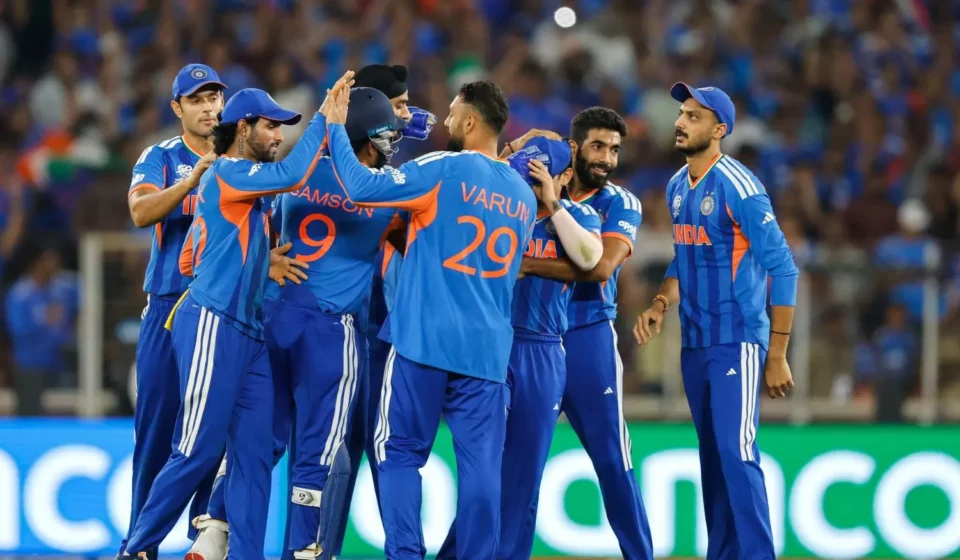
India Secures Historic Third T20 World Cup Title with Dominant 96-Run Victory Over New Zealand in 2026 Final

India reasserted its absolute supremacy in the shortest format of international cricket on Sunday, delivering a masterclass in power-hitting and disciplined bowling to defeat New Zealand by 96 runs in the final of the ICC Men’s T20 World Cup 2026. In a high-stakes encounter held before a capacity crowd, the Men in Blue not only successfully defended the title they won in 2024 but also became the first nation in history to claim three T20 World Cup trophies. The victory, characterized by a record-breaking first-innings total of 255 for five and a clinical defensive effort led by Jasprit Bumrah, cements India’s status as a modern-day dynasty in global cricket.
The summit clash was a one-sided affair for the majority of the evening, as India’s aggressive tactical blueprint overwhelmed a resilient but outmatched New Zealand side. Opting to bat with a fearless approach that has become the hallmark of their T20 strategy over the last two years, India dismantled the Black Caps’ bowling attack from the opening over. The victory marks a significant milestone for captain Suryakumar Yadav, who has now led India to consecutive global titles, reinforcing the team’s evolution into a relentless T20 juggernaut.
A Record-Breaking Offensive: The First Innings Breakdown
The foundation of India’s victory was laid during a blistering opening stand that effectively batted New Zealand out of the contest within the first eight overs. Sanju Samson, promoted to a permanent role at the top of the order for this tournament, produced a career-defining innings of 89 runs off just 46 deliveries. His knock was a blend of classical timing and raw power, featuring eight boundaries and six towering sixes.
Samson found an ideal partner in Abhishek Sharma, whose meteoric rise in international cricket reached its zenith on the grandest stage. Sharma struck a rapid 52 off 21 balls, ensuring that New Zealand’s opening bowlers, including the experienced Tim Southee and Trent Boult, were never allowed to settle into a rhythm. Together, the duo stitched a 98-run partnership in a mere 7.1 overs, a scoring rate of nearly 14 runs per over that left the New Zealand captain searching for answers.
The momentum did not subside after the first wicket fell. Ishan Kishan, coming in at number three, continued the onslaught with a ferocious 54 off 25 balls. His ability to manipulate the field and target the shorter boundaries ensured that India crossed the 150-run mark in the 12th over. By the 15th over, India had surpassed 200, putting them on track for a total exceeding 270.
However, New Zealand staged a brief and dramatic comeback in the 16th over. Veteran all-rounder James Neesham, utilizing his experience and clever changes of pace, managed to claim three wickets in a single over. He dismissed Samson, who fell short of a century while attempting a lofted drive, followed by the quick dismissals of Kishan and Suryakumar Yadav. This triple strike momentarily checked India’s progress and gave the Black Caps a glimmer of hope to restrict the total.
The late-innings surge was eventually anchored by Shivam Dube. While the flurry of wickets had slowed the scoring rate, Dube’s unbeaten 26 off 15 balls provided the necessary finishing touch. India added 52 runs in the final five overs to finish at 255 for five, the highest total ever recorded in the history of a T20 World Cup final, eclipsing all previous benchmarks for the tournament’s ultimate match.
The Defensive Masterclass: Bumrah and Axar Lead the Way
Faced with the daunting task of chasing 256—a target that required a run rate of 12.8 per over from the outset—New Zealand required a flawless start. However, the Indian bowling attack, led by the world’s premier fast bowler Jasprit Bumrah, proved too clinical. Bumrah struck in his very first over, utilizing a searing yorker to dismiss the dangerous Devon Conway, immediately putting the Black Caps on the back foot.
Bumrah’s opening spell was a masterclass in T20 bowling, combining extreme pace with deceptive slower balls. He finished the match with figures of 4 for 15 in four overs, an economy rate of 3.75 in a match where the average scoring rate was nearly 10. His ability to take wickets at the start and the death ensured New Zealand never found the momentum required to threaten the target.
In the middle overs, left-arm spinner Axar Patel played a pivotal role. As New Zealand attempted to accelerate, Patel utilized the scoreboard pressure to his advantage, varying his lengths and speeds to stifle the batsmen. He claimed three crucial wickets, including those of the middle-order mainstays, effectively ending any hopes of a miraculous recovery.
The only significant resistance from the New Zealand camp came from Tim Seifert. The wicketkeeper-batsman played a spirited innings, scoring 52 off 26 balls, including several innovative scoops and reverse sweeps. However, he lacked sustained support from the other end. Once Seifert was dismissed by a sharp catch in the deep off the bowling of Axar Patel, the New Zealand tail was quickly exposed. The Black Caps were eventually bundled out for 159 in 19 overs, falling 96 runs short of the target.
Chronology of Key Match Events
- 0.1 Overs: India begins the innings with Abhishek Sharma hitting a boundary off the first ball, signaling aggressive intent.
- 6.0 Overs: India finishes the Powerplay at 82/0, one of the highest Powerplay scores in T20 World Cup history.
- 7.1 Overs: The opening stand of 98 ends as Abhishek Sharma is caught at long-on.
- 11.4 Overs: India crosses the 150-run mark in record time for a final.
- 15.2 – 15.6 Overs: James Neesham takes three wickets (Samson, Kishan, Yadav), shifting the momentum briefly.
- 20.0 Overs: India finishes at 255/5, setting a monumental target.
- 1.2 Overs: Jasprit Bumrah dismisses Devon Conway, beginning the New Zealand collapse.
- 9.4 Overs: Axar Patel removes the New Zealand captain, leaving them at 88/4.
- 14.1 Overs: Tim Seifert reaches his half-century but falls two balls later.
- 19.0 Overs: New Zealand is all out for 159; India is crowned champions.
Statistical Milestones and Tournament Context
The 2026 T20 World Cup final was not just a victory in a single match but the culmination of a tournament where India remained undefeated. Statistically, this victory broke several long-standing records:
- Highest Final Total: India’s 255/5 broke the previous record for the highest score in a T20 World Cup final.
- Most Titles: With wins in 2007, 2024, and 2026, India is now the most successful team in the history of the tournament.
- Margin of Victory: The 96-run win is one of the largest margins by runs in a major ICC tournament final.
- Bumrah’s Consistency: Jasprit Bumrah ended the tournament as the leading wicket-taker for India, maintaining an economy rate of under 6.00 across all matches.
The tournament journey for India was marked by tactical flexibility. In the group stages held across various venues in India and Sri Lanka, the team adapted to differing pitch conditions, relying on spinners in slower tracks and their explosive batting depth on flatter surfaces. Their semi-final victory over England was a precursor to the final, where they defended a modest total, proving that the team possessed the bowling depth to complement their batting firepower.
Post-Match Reactions and Leadership Analysis
In the post-match presentation, Indian captain Suryakumar Yadav credited the victory to the "fearless culture" instilled in the dressing room. "We decided two years ago that we would play a brand of cricket that didn’t fear failure. Today was the ultimate manifestation of that. Sanju and Abhishek set the tone, and our bowlers did what they do best. To win three titles is a dream, but to defend it is even more special," Yadav stated.
The New Zealand camp, while disappointed, acknowledged the gap between the two sides. Head coach Gary Stead noted, "You have to give credit where it’s due. India played a level of T20 cricket today that was nearly impossible to contain. We had a small window after Neesham’s over, but their bowling depth is so immense that they never let us back into the chase."
Cricket analysts have pointed to India’s "IPL-led pipeline" as a primary reason for this sustained dominance. The inclusion of players like Abhishek Sharma and Shivam Dube, who have flourished in the high-pressure environment of the Indian Premier League, allowed India to field a squad where every player from 1 to 11 is a potential match-winner.
Broader Impact and the Future of T20 Cricket
India’s triumph in 2026 has significant implications for the global cricketing landscape. By becoming the first team to defend a T20 World Cup title in the modern era, India has set a new standard for consistency. This victory is expected to further solidify the Board of Control for Cricket in India’s (BCCI) influence on the global stage and may lead to a tactical shift among other nations.
The "Indian Model"—characterized by aggressive batting from ball one and a reliance on high-pace bowling coupled with elite finger spin—is likely to be emulated by other teams heading into the next cycle of ICC events. Furthermore, the success of Sanju Samson and Ishan Kishan in the final highlights the shifting of the guard in Indian cricket, as younger stars take over the mantle from the legends of the previous decade.
As the celebrations continue across India, the focus of the cricketing world will eventually shift to the 2027 ODI World Cup. However, for now, the Men in Blue remain the undisputed kings of the T20 format, possessing a blend of youth, experience, and tactical brilliance that seems currently unmatched in international sport. The 2026 final will be remembered not just for the runs scored or wickets taken, but as the night India truly conquered the T20 world for the third time.