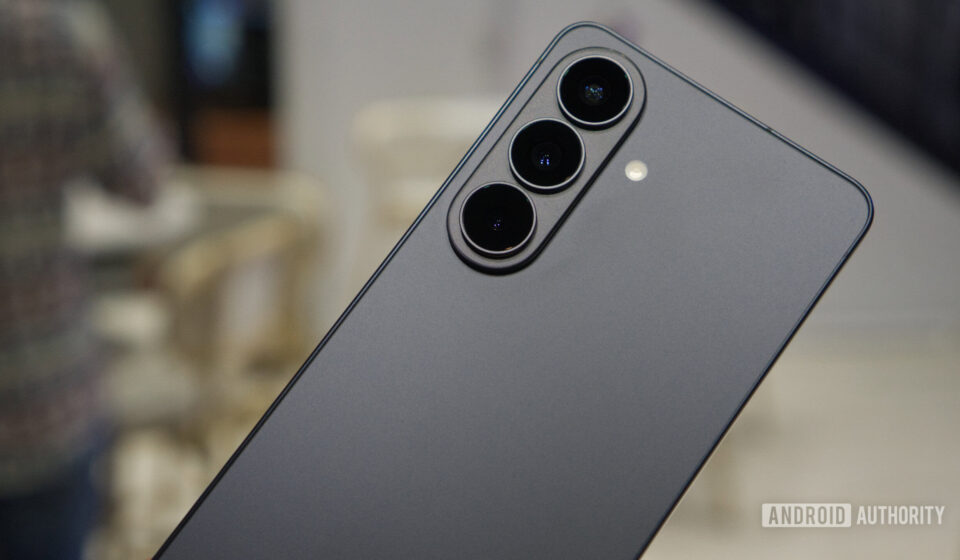

Samsung Electronics has officially confirmed that two of the most anticipated software innovations introduced with its latest flagship, the Galaxy S26 series, will be ported to its predecessor, the Galaxy S25 lineup. This significant development includes the expanded Virtual Aperture feature for telephoto cameras within the Expert RAW application and the advanced AI-powered document scanning capability integrated into the standard camera app. The announcement, stemming from a direct response by a Samsung camera development executive on the company’s community forums, underscores a strategic commitment to enhancing the value proposition for existing premium smartphone users and leveraging software advancements across its ecosystem.
The decision to extend these cutting-edge functionalities to older models, particularly the Galaxy S25 series, is a notable move in an industry often characterized by rapid hardware-driven upgrade cycles. For owners of the Galaxy S25, this means access to professional-grade photographic controls and enhanced productivity tools that were initially highlighted as key differentiators for the newly launched S26 series. While the exact timeline for the rollout of these features remains unspecified, the confirmation itself signals a positive trend for consumer experience and brand loyalty within the highly competitive smartphone market.
Deep Dive into Virtual Aperture: Bridging Software and Professional Photography
The Virtual Aperture feature represents a sophisticated software-driven approach to achieving professional-looking portrait photography, a capability traditionally associated with high-end DSLR and mirrorless camera systems. In conventional photography, the aperture, a physical diaphragm within the lens, can be adjusted to control the amount of light entering the sensor and, crucially, to manipulate the depth of field. A wider aperture (smaller f-number) results in a shallower depth of field, producing the coveted "bokeh" effect – a pleasing blur in the background that isolates the subject. Conversely, a narrower aperture (larger f-number) yields a greater depth of field, keeping more of the scene in focus.
For smartphones, which are constrained by physical size and often feature fixed-aperture lenses, emulating this effect requires advanced computational photography. Virtual Aperture leverages sophisticated algorithms and depth-sensing hardware (like Time-of-Flight sensors or dual-pixel autofocus data) to digitally simulate varying aperture sizes. This allows users to dynamically adjust the intensity of background blur after a photo has been taken, offering unparalleled creative control over portrait shots.
With the launch of the Galaxy S25 series, Samsung introduced Virtual Aperture support, but it was primarily limited to the device’s main wide-angle camera sensor. While this provided a significant enhancement for standard portrait photography, power users and professional photographers often utilize telephoto lenses for portraits to achieve a more natural compression and perspective, further enhancing the subject’s prominence against a blurred background. The Galaxy S26 series debuted with an expanded Virtual Aperture functionality, extending this capability to its telephoto cameras, allowing for even greater versatility and artistic expression.
The confirmed porting of this telephoto Virtual Aperture support to the Galaxy S25 series is a substantial upgrade. It means S25 users will be able to capture telephoto portraits with the same level of post-capture blur adjustment as the newer S26, all accessible through Samsung’s Expert RAW app. Expert RAW is a specialized camera application designed for photography enthusiasts and professionals, offering manual controls over various camera parameters, multi-frame RAW capture for enhanced dynamic range, and a more robust foundation for post-processing. Its integration with Expert RAW underscores Samsung’s intent to position these features as tools for serious photographers, providing granular control beyond the typical point-and-shoot experience.
Understanding AI-Powered Document Scanning: Beyond Basic Digitization
Beyond photography, the other major feature slated for the S25 series is the AI-powered document scanning. While basic document scanning functionalities have been available on smartphones for years, often through third-party apps or rudimentary built-in features, Samsung’s new iteration promises a significant leap forward by integrating artificial intelligence directly into the camera app. This feature aims to transform the act of digitizing documents from a manual, often imperfect process into a seamless, intelligent one.
An AI-powered document scanner goes beyond merely capturing an image of a document. It employs advanced machine learning algorithms to automatically detect the document’s edges, correct for perspective distortions, enhance text clarity, and adjust lighting conditions for optimal readability. For instance, if a document is photographed at an angle, the AI can intelligently straighten it, crop out extraneous background elements, and ensure the text is sharp and legible, even in challenging lighting environments. Some advanced implementations can also perform optical character recognition (OCR) to convert scanned images into editable text, although the specifics of Samsung’s implementation for the S25 remain to be fully detailed.
The Samsung executive’s response concerning this feature explicitly mentioned "maximizing NPU resources by significantly improving performance in the S26." NPU, or Neural Processing Unit, is a specialized processor core within modern smartphone System-on-Chips (SoCs) designed to accelerate machine learning and AI tasks. These units are crucial for efficiently handling complex AI computations without excessively draining battery life or bogging down the main CPU. The fact that the S25, equipped with its own powerful NPU (e.g., within the Snapdragon 8 Gen X or Exynos 2X00 series), is capable of supporting this feature highlights the robust AI processing capabilities already present in recent flagship hardware. The optimization for the S26 suggests further enhancements to the NPU in the newer generation, but the S25’s existing hardware is deemed sufficient for a capable implementation. This feature promises to significantly boost productivity for students, professionals, and anyone needing to quickly and accurately digitize physical documents.
The Announcement and Its Context: A Community-Driven Revelation
The confirmation of these feature ports did not come via a grand press release but emerged from an organic interaction on Samsung’s official community forums. This channel, often a direct line between avid users and product developers, served as the crucible for this significant revelation. A user on the Korean Samsung Community forums expressed a desire for the Galaxy S25 Ultra to receive Virtual Aperture support for its telephoto cameras in Expert RAW, noting its presence on the newly launched S26.
Remarkably, a Samsung executive, identified as being responsible for camera development, directly responded to this user’s query. The executive’s succinct, yet definitive, reply, translated to English, stated: "Yes, we will support up to [Galaxy] S25." This direct confirmation immediately sparked widespread discussion among tech enthusiasts and news outlets, including SamMobile, which subsequently reported on the exchange.
Following this, another user inquired about the AI-powered document scanning feature. The same executive provided further insight, explaining that "We’re maximizing NPU resources by significantly improving performance in the S26," and then adding, "We’ll provide further information regarding expansion of previous models in the future, but we currently anticipate it will be available up to the S25." This dual confirmation solidified Samsung’s intent to bring both key S26 camera and productivity features to the S25 series. This method of announcement, while informal, resonates positively with the community, demonstrating that Samsung is attentive to user feedback and willing to engage directly with its most passionate customers.
Samsung’s Software Strategy and Customer Loyalty: A Broader Perspective
This move by Samsung aligns with a broader industry trend where software innovation increasingly dictates the user experience and differentiates premium devices, often more so than incremental hardware upgrades. For years, smartphone manufacturers have been in a race for more powerful processors, higher megapixel counts, and larger batteries. While hardware remains fundamental, the maturity of these components means that truly transformative experiences often stem from software optimization and artificial intelligence.
Samsung’s decision to port these advanced features to the Galaxy S25 series is a calculated strategic maneuver that yields several benefits:
- Enhanced Customer Satisfaction and Loyalty: By extending premium features to older flagships, Samsung adds significant value to devices that users have already purchased. This fosters goodwill, reduces "feature envy" among owners of slightly older models, and can significantly boost customer satisfaction. Loyal customers are more likely to remain within the Samsung ecosystem for future purchases.
- Extended Device Lifespan and Value Proposition: In an era of increasing environmental consciousness and consumer desire for longevity, providing meaningful software updates helps extend the perceived and actual lifespan of a device. It mitigates the pressure for users to upgrade solely for software perks, thereby strengthening the long-term value proposition of Samsung’s premium devices.
- Competitive Edge: This approach positions Samsung favorably against competitors. While Apple is renowned for its long-term software support, and Google often brings Pixel-exclusive features to older Pixel models, Samsung’s commitment to porting significant, newly introduced features from one generation to the immediately preceding one reinforces its competitive standing in the premium Android segment. It demonstrates a holistic approach to innovation that benefits a wider user base.
- Showcasing Ecosystem Strength: By making Expert RAW and the main camera app more powerful across generations, Samsung reinforces the strength of its integrated software and hardware ecosystem. It encourages deeper engagement with its proprietary apps and services.
This strategy suggests a shift from purely hardware-driven differentiation to a more balanced approach where software enhancements play a critical role in maintaining user engagement and perceived device value.
Technical Considerations and Performance Implications
Porting advanced software features from a newer generation device to an older one, even within the same flagship lineage, is not without its technical complexities. While the Galaxy S25 series is a powerful and capable device, featuring top-tier processors (e.g., Snapdragon 8 Gen 3 or equivalent Exynos chip, depending on the region) and dedicated NPUs, optimizing S26 features for its hardware requires meticulous engineering.
The Virtual Aperture feature, especially for telephoto lenses, relies heavily on accurate depth mapping and sophisticated image processing. The S25’s camera hardware and image signal processor (ISP) will need to efficiently handle these computational demands. Similarly, the AI-powered document scanning feature, as noted by the Samsung executive, leverages NPU resources extensively. While the S25’s NPU is robust, the S26 likely features an even more powerful and efficient NPU. Samsung’s engineers will need to ensure that the S25 can execute these AI tasks smoothly, without significant performance bottlenecks or excessive battery consumption. This often involves tailoring the algorithms to the specific capabilities of the older hardware, potentially sacrificing minor levels of speed or precision compared to the S26, but still delivering a highly functional and valuable experience.
The integration into Expert RAW for Virtual Aperture is a smart move, as Expert RAW users are typically more tolerant of slightly heavier processing loads for the sake of advanced control and quality. For the AI scanning feature, its integration into the main camera app implies a focus on seamless, quick execution for everyday use.
Broader Industry Trends: Software as a Primary Differentiator
The smartphone industry has largely matured in terms of fundamental hardware capabilities. Most flagship devices from major manufacturers offer exceptional displays, powerful processors, capable cameras, and decent battery life. The incremental gains in raw specifications from year to year are becoming less dramatic and less perceptible to the average user. This saturation point has prompted manufacturers to seek new avenues for differentiation, and software, particularly features powered by artificial intelligence and machine learning, has emerged as the new frontier.
Features like Virtual Aperture and AI document scanning are prime examples of this shift. They don’t rely on a revolutionary new sensor or a never-before-seen processor architecture. Instead, they leverage existing hardware in smarter, more sophisticated ways through advanced algorithms. This trend means that the "software experience" is becoming increasingly paramount in a user’s decision-making process. Companies that can consistently deliver compelling, useful, and well-optimized software features – and extend them to a broader range of devices – are likely to build stronger user bases and maintain market leadership.
The future of smartphone innovation lies heavily in how intelligent these devices can become through software. From generative AI capabilities integrated into the operating system to ever-more sophisticated computational photography, software is shaping how we interact with our phones and what they can accomplish. Samsung’s commitment to bringing S26 software features to the S25 is a testament to this evolving paradigm, signaling that the company understands the long-term value of a robust and continually updated software ecosystem.
Anticipated Rollout and User Experience
While a precise rollout schedule has not been provided, the nature of such updates typically involves inclusion in a future major software update (e.g., One UI iteration) or a dedicated update for the Expert RAW application. Galaxy S25 owners can anticipate receiving these features via an over-the-air (OTA) update in the coming months.
Upon receiving the update, users will likely find the expanded Virtual Aperture controls for telephoto lenses within the Expert RAW app, offering more options for creative composition and depth-of-field manipulation in portrait photography. The AI document scanning feature, if integrated into the main camera app, would likely appear as a new mode or an intelligent overlay when the camera detects a document. This would streamline workflows for students, professionals, and anyone needing quick, high-quality digital copies of physical papers.
The implications for the user experience are overwhelmingly positive. Galaxy S25 users, who have already invested in a premium device, will receive a significant boost to its capabilities without needing to upgrade to the latest model. This not only enhances the perceived value of their existing device but also solidifies Samsung’s reputation as a company that supports its user base with continuous innovation, fostering a deeper sense of loyalty and satisfaction within its extensive Galaxy ecosystem.