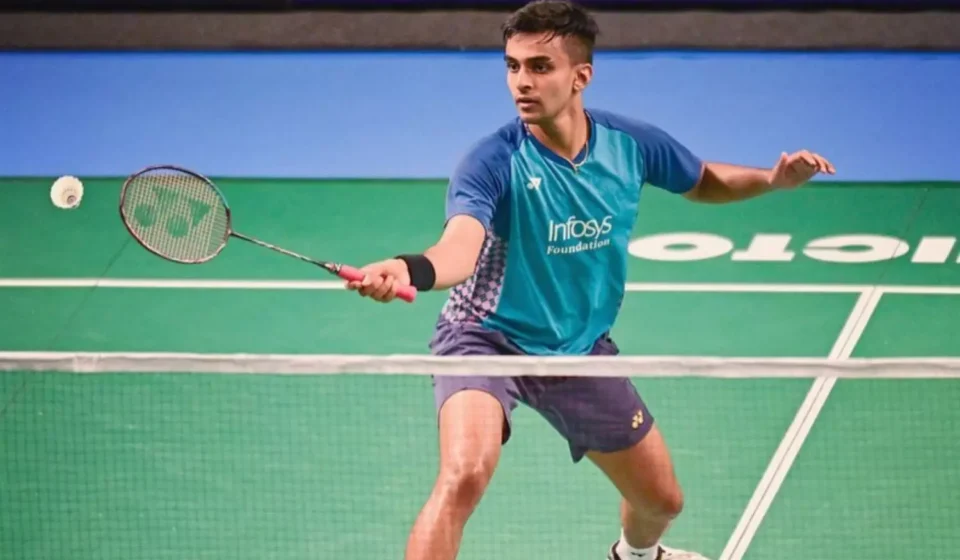
Kiran George Secures Historic Upset Over Loh Kean Yew as India Faces Mixed Results at the BWF Swiss Open 2026

The landscape of international badminton witnessed a significant shift on Wednesday at the St. Jakobshalle in Basel, where the BWF Swiss Open 2026 delivered a series of high-stakes encounters that reshaped the expectations for the Indian contingent. In a day characterized by dramatic highs and tactical disappointments, the spotlight firmly settled on Kiran George, who produced a masterclass in resilience and precision to eliminate the former world champion, Loh Kean Yew of Singapore. While George’s triumph provided a beacon of hope for India’s prospects in the Super 300 tournament, the day was otherwise marred by the exit of veteran Kidambi Srikanth and a series of setbacks in both the men’s and women’s singles draws.
The Swiss Open, a staple of the European leg of the BWF World Tour, has historically been a happy hunting ground for Indian shuttlers. However, the 2026 edition has already proven to be a test of endurance and psychological fortitude. As the Round of 32 concluded, the Indian camp found itself grappling with a polarized scorecard: a breakthrough performance from a rising star contrasted against the early departure of established stalwarts.
The Giant-Killing of Loh Kean Yew
The marquee match of the afternoon featured Kiran George, a player whose trajectory has been marked by steady improvement on the World Tour, facing off against the 2021 World Champion, Loh Kean Yew. Going into the match, Loh was the heavy favorite, known for his explosive speed and high-intensity attacking play. However, George entered the court with a tactical blueprint designed to neutralize the Singaporean’s pace.
From the opening serve, George displayed a level of composure that belied his lower ranking. He focused on keeping the shuttle deep in Loh’s court, preventing the former champion from finding the rhythm required for his trademark smash-and-follow game. The contest was a grueling affair, characterized by long rallies and sophisticated net play. George’s ability to retrieve difficult shots and convert defensive positions into offensive opportunities eventually wore down Loh.
The victory is being hailed as one of the most significant results of George’s career. By advancing to the Round of 16, he not only secures vital ranking points but also sends a clear message to the top tier of the badminton world. Analysts noted that George’s fitness levels appeared superior in the closing stages of the match, allowing him to maintain accuracy even as fatigue began to impact Loh’s shot selection. This win ensures that India remains a threat in the men’s singles category despite the loss of other key players.
The Collapse of Kidambi Srikanth
In stark contrast to George’s success, the opening round proved to be a bitter pill for Kidambi Srikanth. The former world number one faced Indonesia’s Jonatan Christie Gunawan in a match that initially looked set to favor the Indian. Srikanth, known for his elegant stroke play and deceptive cross-court drops, started the match with vintage form. He dominated the first game, utilizing the drift in the arena to his advantage and closing it out convincingly at 21-15.
However, the momentum shifted drastically in the second game. Gunawan, a seasoned campaigner and a formidable opponent in the Super 300 and Super 500 circuits, adjusted his defensive stance and began to exploit Srikanth’s unforced errors. The Indonesian’s ability to extend rallies forced Srikanth into risky maneuvers that failed to pay off. Gunawan took the second game 21-12, leveling the match and placing immense pressure on the Indian veteran.
The deciding third game was a one-sided affair that raised concerns about Srikanth’s current match endurance. Gunawan raced to a massive lead, ultimately clinching the game 21-4. For Srikanth, the loss is a significant blow to his 2026 season ambitions, particularly as he seeks to regain his place in the top 10 of the BWF World Rankings. The collapse in the final game—scoring only four points—highlights a recurring struggle with consistency that has plagued the latter stages of his career.
A String of Singles Setbacks
The difficulties for India were not limited to the veteran ranks. The younger brigade also faced stiff opposition, leading to a thinning of the Indian roster early in the competition. Ayush Shetty, who has shown flashes of brilliance in recent months, faced Canada’s Brian Yang. While Shetty fought valiantly, Yang’s experience in navigating the pressure of the BWF circuit proved decisive. Shetty narrowly lost the encounter 18-21, 19-21, showing that while he possesses the talent to compete at this level, he still lacks the finishing touch required to close out tight sets against top-30 opponents.
In the women’s singles draw, Tanvi Sharma faced a formidable challenge in Indonesia’s Putri Kusuma Wardani. The match was a reflection of the current gap between the emerging Indian women’s singles players and the established elite of Southeast Asia. Wardani dominated from the outset, utilizing her superior court coverage and aggressive smashes to dictate the tempo. Sharma struggled to find her footing, eventually falling 11-21, 10-21. This exit leaves the Indian women’s singles contingent under significant pressure, as the search for a consistent successor to the era of Saina Nehwal and PV Sindhu continues.
The Withdrawal of HS Prannoy
Adding to the day’s disappointments was the late withdrawal of HS Prannoy. As India’s highest-ranked male shuttler, Prannoy was a major title contender in Basel. His decision to pull out of his opening-round match against Japan’s Koki Watanabe gave the Japanese player a walkover and left a void in the upper half of the draw.
While official statements regarding the specific nature of his withdrawal were not immediately released, sources close to the team suggest that a recurring fitness issue or a precautionary measure ahead of the busier summer schedule may be the cause. Prannoy’s absence is a strategic blow for India, as he has been the most consistent performer in major tournaments over the last two years. His withdrawal also simplifies the path for other seeds in the tournament, potentially altering the projected matchups for the quarterfinals and semifinals.
Chronology of the Day’s Events
The sequence of events on Wednesday at the St. Jakobshalle provided a rollercoaster of emotions for the coaching staff and fans:
- 09:30 AM CET: Ayush Shetty takes the court against Brian Yang. Despite a late surge in both games, Shetty exits the tournament after a 42-minute battle.
- 11:15 AM CET: Tanvi Sharma faces Putri Kusuma Wardani. The match concludes in just 31 minutes, marking a swift exit for the Indian youngster.
- 01:00 PM CET: The news of HS Prannoy’s withdrawal is confirmed, giving Koki Watanabe a direct entry into the Round of 16.
- 03:45 PM CET: Kidambi Srikanth begins his match against Jonatan Christie Gunawan. After winning the first game in 18 minutes, the tide turns against him over the next hour.
- 06:30 PM CET: Kiran George enters the arena for the day’s final Indian singles match. In a high-intensity clash lasting over 65 minutes, he secures the upset against Loh Kean Yew.
Technical Analysis and Statistical Implications
Kiran George’s victory over Loh Kean Yew is supported by data that suggests a shift in George’s tactical maturity. In this match, George recorded a smash defense success rate of nearly 74%, significantly higher than his season average. By neutralizing Loh’s primary weapon—the steep downward smash—George forced the Singaporean into unforced errors. Loh committed 14 unforced errors in the final game alone, a statistic that underscores George’s ability to induce frustration in his opponents.
Conversely, the statistics for Kidambi Srikanth’s match point to a worrying trend in physical conditioning. After a high-octane first game where Srikanth covered 1.2 kilometers on court, his movement speed dropped by 15% in the third game. This decline allowed Gunawan to dominate the "T" area of the court, leading to the lopsided 21-4 scoreline.
For the BWF World Rankings, George’s progression to the Round of 16 will likely see him climb several spots, inching him closer to the top 30. This is crucial for securing direct entries into Super 500 and Super 750 events later in the year. For the defeated players, the focus must now shift to the recovery and preparation for the upcoming Orleans Masters and other European circuit events.
Broader Impact on Indian Badminton
The results in Basel reflect the current transitional phase of Indian badminton. The "Old Guard," represented by Srikanth and the absent Prannoy, is facing increasing challenges from both younger international opponents and the physical demands of a packed BWF calendar. Meanwhile, the "New Guard," led by Kiran George, is showing the potential to take over the mantle, though consistency remains the primary hurdle.
The Swiss Open 2026 serves as a critical barometer for the Badminton Association of India (BAI) as they assess the pipeline of talent. The early exits of Shetty and Sharma indicate a need for more exposure to high-pressure environments for the U-23 players. However, Kiran George’s performance acts as a catalyst for morale, proving that Indian shuttlers remain capable of defeating the world’s best on any given day.
As the tournament progresses into the Round of 16, the focus will remain on George to see if he can capitalize on this momentum. With several top seeds now out of his path, the possibility of a deep run in Basel is very real. For the rest of the contingent, the Swiss Open 2026 will be remembered as a day of "what ifs" and a stark reminder of the razor-thin margins at the pinnacle of international badminton.