John Lewis Embraces Social Commerce and AI Discovery in Major Digital Transformation Strategy

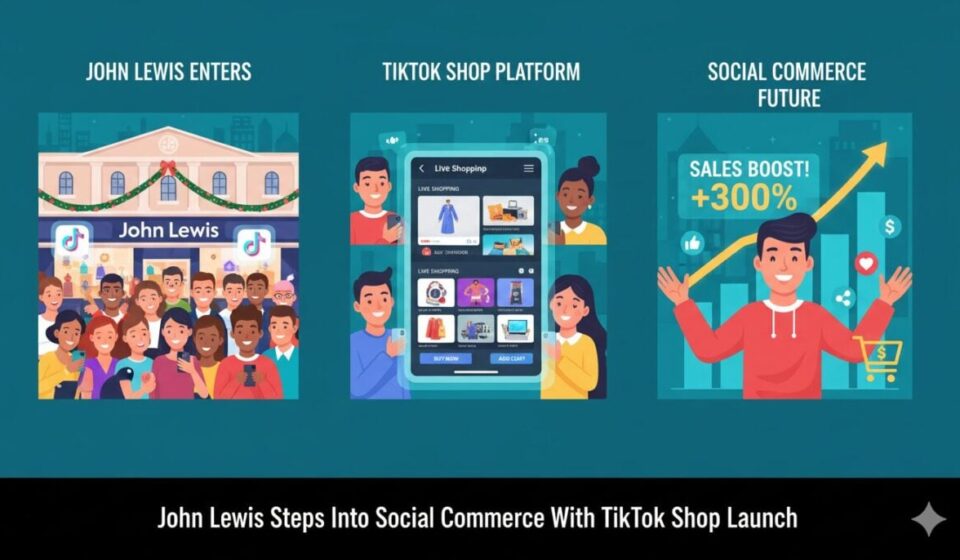
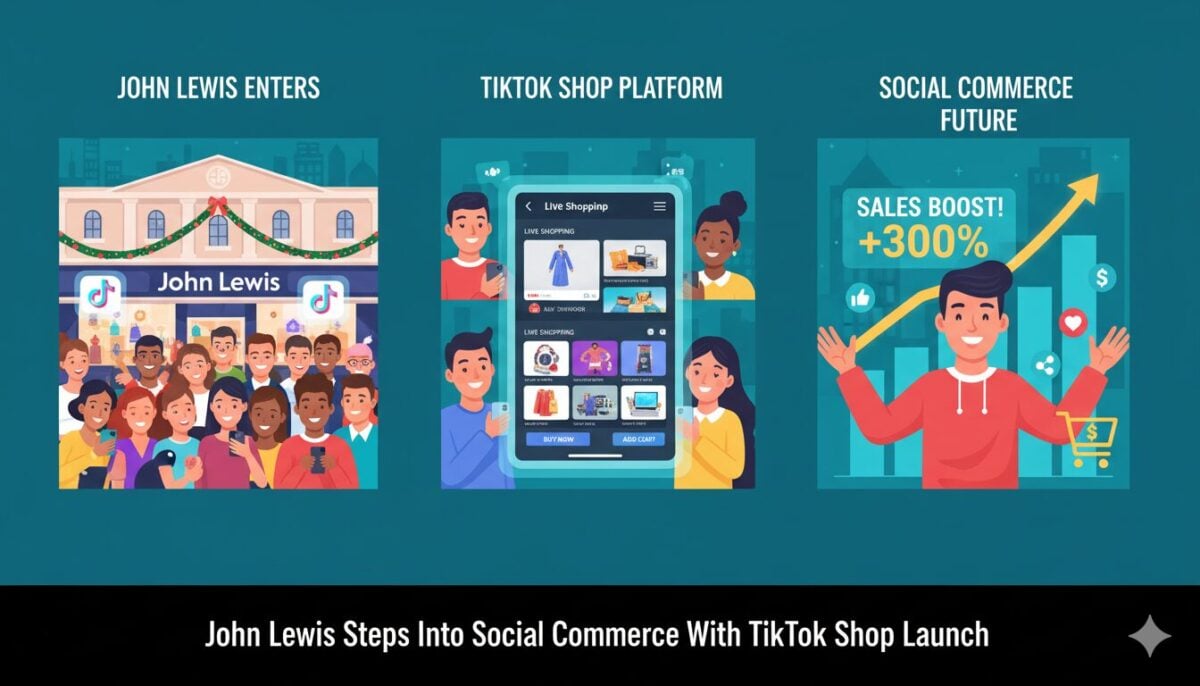
John Lewis, the venerable British department store chain with a history spanning over 160 years, has officially entered a new era of digital retail with the launch of a 90-day pilot program on TikTok Shop. This move, designed to capture the growing "discovery-driven" shopping demographic, marks a significant departure from traditional department store models and signals a pivot toward a social-first commerce strategy. By integrating its product catalog directly into the TikTok interface, the employee-owned retailer is attempting to bridge the gap between social media engagement and immediate point-of-sale conversion. The initiative is part of a much larger, multi-year £800 million investment plan aimed at modernizing the brand’s infrastructure, enhancing its digital presence, and ensuring its relevance in an increasingly fragmented retail landscape.
The TikTok Shop pilot is strategically timed to coincide with the high-traffic period leading up to Mother’s Day in the United Kingdom. Rather than offering its entire inventory, John Lewis has opted for a curated selection of high-end beauty and gifting products. Featured brands include prestigious names such as Jo Malone London, Augustinus Bader, and Estée Lauder. A central highlight of the launch is the final release of the retailer’s popular Mother’s Day Beauty Box, a limited-edition bundle valued at over £300 but priced at £60 for the promotion. By utilizing TikTok’s "drop" culture—where limited-edition items are released to a captive, live audience—John Lewis is leveraging the platform’s unique ability to generate urgency and impulse purchases.
The decision to move into social commerce is backed by significant industry data. Current market reports indicate that the boundary between entertainment and shopping has become nearly invisible for younger consumers. Recent data from the TikTok Marketing Report suggests that 51.9% of marketing teams now utilize TikTok Shop as a direct sales channel rather than a mere promotional tool. For a legacy brand like John Lewis, which has historically relied on physical footfall and its proprietary website, this transition represents an acknowledgment that the modern consumer journey often begins in an algorithmically curated feed rather than a search engine or a storefront.
This pilot program is not an isolated marketing tactic but a cornerstone of a comprehensive digital overhaul. To facilitate this shift, John Lewis has deepened its long-standing partnership with commercetools, a leader in "headless" and AI-first digital commerce platforms. This technological foundation allows the retailer to decouple its front-end user interface from its back-end data management, enabling its product catalog to be seamlessly integrated into various external environments. This "everywhere commerce" approach ensures that whether a customer is browsing TikTok, interacting with an AI assistant, or searching via a third-party platform, the John Lewis inventory remains accessible and purchasable.
Beyond social media, John Lewis is aggressively pursuing integration with generative Artificial Intelligence (AI) platforms. The retailer has announced plans to make its product offerings discoverable through conversational AI tools such as ChatGPT and Google Gemini. As consumers increasingly turn to these platforms for gift recommendations, interior design advice, or skincare routines, John Lewis aims to have its products appear as native suggestions within the conversation. Dom McBrien, the Chief Digital and Omnichannel Officer at John Lewis, noted that this strategy aligns with evolving consumer behaviors where inspiration is sought through dialogue and AI-driven curation. The ultimate goal of this integration is to enable transactions directly within these AI environments, further reducing the friction between the moment of discovery and the completion of a purchase.
The chronology of John Lewis’s modernization efforts reveals a brand in the midst of a radical self-reinvention. Following several years of challenging financial results and the closure of several physical locations, the Partnership has focused on a "Plan for Growth" that emphasizes agility and technological integration. In late 2023 and early 2024, the retailer began laying the groundwork for this digital expansion by upgrading its legacy systems. The current TikTok pilot and AI integration represent the "outward-facing" phase of this transformation, where the internal technological improvements finally meet the consumer in new digital spaces.
In addition to digital discovery, John Lewis is addressing the "last-mile" challenge of modern retail through a new partnership with Uber Eats. Recognizing the growing demand for "Quick Commerce" (Q-commerce), the retailer is expanding an on-demand delivery service later this month. This service will be available to customers near stores in Stratford, Kingston, Cambridge, and Liverpool. Shoppers in these catchment areas will be able to choose from a selection of approximately 3,000 products—ranging from home essentials and beauty products to small technology items—and receive them within 45 minutes. This move follows a successful smaller-scale trial and positions John Lewis to compete with the immediacy offered by Amazon and specialized delivery apps, particularly in dense urban environments.
The implications of these moves for the wider retail industry are profound. John Lewis’s strategy highlights a shift away from the "destination" model of retail, where the burden is on the consumer to visit a specific store or website. Instead, the "distributed" model of retail brings the store to the consumer’s current digital or physical location. For the UK high street, this represents a significant evolution. As other heritage retailers struggle to maintain relevance, John Lewis’s willingness to experiment with TikTok creators and AI search suggests a blueprint for survival: maintaining brand prestige and trust while adopting the delivery mechanisms of the digital age.
Industry analysts suggest that the success of the TikTok Shop pilot will be measured not just in immediate sales, but in the brand’s ability to lower the average age of its customer base. Historically, John Lewis has enjoyed strong loyalty from older, more affluent demographics. However, to ensure long-term viability, the retailer must capture the "Gen Z" and "Millennial" markets, who prioritize convenience, social proof, and seamless mobile experiences. The use of the Mother’s Day Beauty Box as a "hero product" is a calculated move to appeal to these younger shoppers who are often the primary consumers of beauty content on social media.
Furthermore, the integration with AI search engines like Google Gemini and ChatGPT addresses a major shift in SEO (Search Engine Optimization). As "Search Generative Experience" (SGE) becomes more prevalent, traditional keyword-based search is being replaced by intent-based queries. By ensuring its catalog is "AI-ready," John Lewis is future-proofing its visibility. If a user asks an AI, "What is a good sustainable gift for a 60-year-old who likes gardening?" John Lewis wants its products to be the first and most easily purchasable answer provided.
While the 90-day pilot is a temporary experiment, the infrastructure being built—from the AI-first commerce backend to the Uber Eats fulfillment network—is permanent. This suggests that the John Lewis of the future will be a hybrid entity: a trusted physical institution that also functions as a sophisticated, platform-agnostic digital merchant. The success of this £800 million transformation will likely determine whether the "John Lewis Partnership" remains a cornerstone of British retail or becomes a cautionary tale of a legacy brand that failed to adapt.
As the pilot progresses, the retail industry will be watching closely to see how a premium brand maintains its "luxury" image within the often chaotic and fast-paced environment of TikTok. The challenge lies in balancing the "Never Knowingly Undersold" heritage of quality and service with the high-speed, influencer-led world of social commerce. If John Lewis can successfully navigate this tension, it may well set a new standard for how century-old brands can thrive in the era of AI and social media.
The broader retail landscape is currently defined by a "race to the consumer." With the rise of global platforms like Temu and Shein, and the continued dominance of Amazon, legacy retailers can no longer afford to wait for customers to come to them. John Lewis’s move into TikTok Shop and AI discovery is a clear signal that the retailer understands this new reality. By meeting consumers at the point of inspiration—whether that is a 15-second video clip or a conversation with an AI—John Lewis is attempting to recapture the magic of the department store in a digital format, ensuring that it remains "one step ahead" in a rapidly changing world.