Impact.com and Rakuten Advertising Form Strategic Alliance to Streamline Global Partnership Marketing Ecosystem

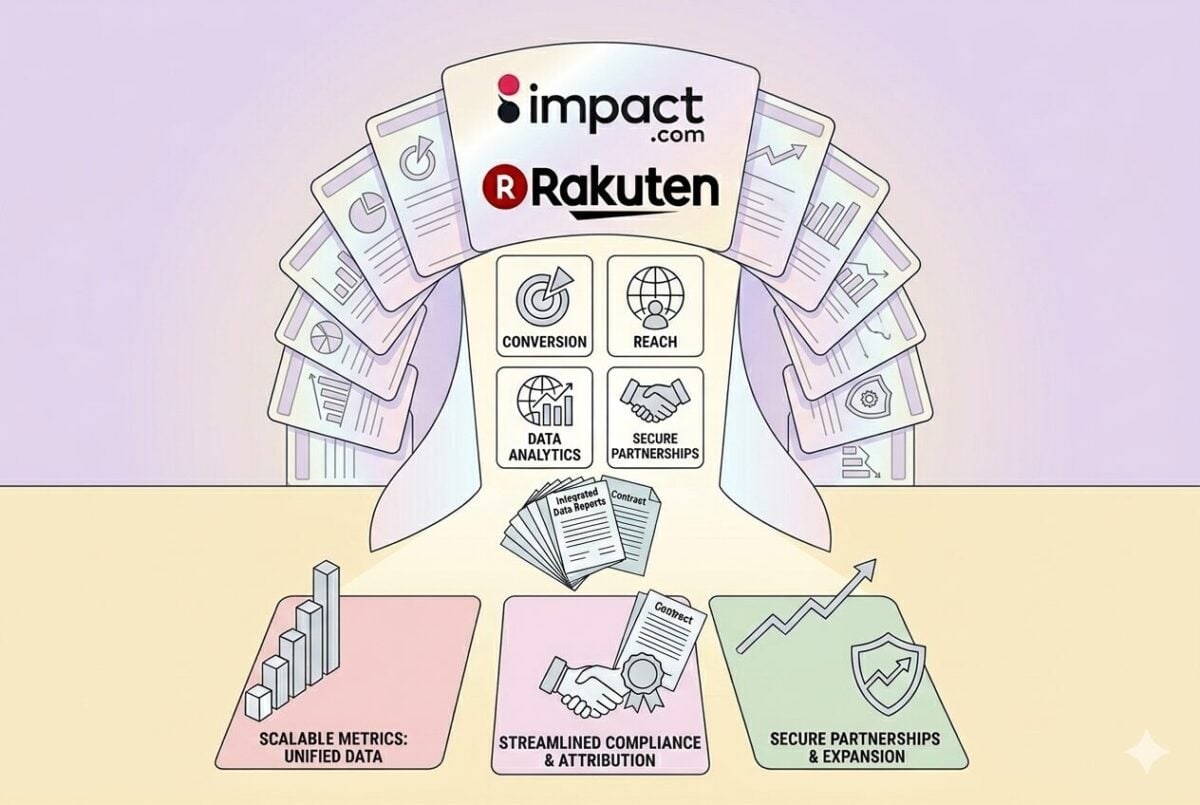
The landscape of affiliate and partnership marketing is undergoing a significant structural transformation as two of the industry’s most prominent players, impact.com and Rakuten Advertising, announce a new strategic alliance. This collaboration is designed to address the long-standing issue of fragmentation within the performance marketing sector by integrating impact.com’s advanced platform infrastructure with Rakuten Advertising’s extensive global network and managed services. The move signals a broader industry shift toward consolidation, as brands increasingly seek unified systems to manage complex partnership lifecycles, from initial discovery and contracting to sophisticated attribution and global payments.
The Architecture of a Full-Stack Performance Model
At the center of this alliance is the creation of what industry analysts are calling a "full-stack" performance marketing model. Historically, brands have had to navigate a bifurcated market: on one side were the software-as-a-service (SaaS) platforms providing the technical plumbing for tracking and payments, and on the other were the affiliate networks providing the relationships and managed services. This alliance effectively bridges that gap.
The partnership leverages impact.com’s robust platform technology, which serves as the technical foundation for tracking user journeys, managing partner contracts, and automating complex payment structures across different currencies and regions. Rakuten Advertising contributes its specialized managed services and global performance expertise, allowing brands to outsource the strategic execution of their campaigns to a team with deep local market knowledge.
Furthermore, the integration incorporates Rakuten Rewards, a component that adds a layer of proprietary consumer intelligence. By utilizing first-party data from Rakuten’s massive consumer ecosystem, the alliance aims to provide advertisers with a more granular understanding of purchasing behavior. This data is critical for determining "incrementality"—the measure of whether a marketing effort actually drove a new sale that would not have otherwise occurred—which remains one of the most significant challenges in modern digital advertising.
Addressing the Challenge of Fragmentation
For years, the partnership marketing sector has struggled to keep pace with the seamless ecosystems offered by "walled gardens" such as Google and Meta. While partnership marketing often delivers a higher return on ad spend (ROAS) because it is based on a pay-per-performance model, the operational overhead has been a deterrent for many large-scale enterprises.
David A. Yovanno, CEO of impact.com, noted that while partnership marketing has emerged as a primary growth driver for modern businesses, the underlying systems have remained stubbornly disconnected. This fragmentation often leads to data silos, where information from influencer campaigns, traditional affiliate links, and strategic brand-to-brand partnerships are stored in different places, making holistic measurement impossible.
By aligning their technologies and services, impact.com and Rakuten Advertising are attempting to replicate the ease of use found in major social and search platforms. The goal is to create a single environment where execution, measurement, and optimization occur simultaneously. This allows marketers to see the entire customer journey in one view, reducing the "leakage" that occurs when moving data between disparate tools.
Strategic Benefits for Brands and Agencies
The alliance offers several tangible advantages for advertisers and the agencies that represent them. Under the new framework, brands can expect:
- Enhanced Operational Efficiency: Agencies will no longer need to toggle between multiple platforms to manage a single client’s partnership portfolio. This consolidation reduces the time spent on administrative tasks like manual reporting and payment reconciliation, allowing teams to focus on high-level strategy and partner recruitment.
- Global Scalability: Rakuten’s global reach, combined with impact.com’s multi-currency payment infrastructure, enables brands to launch and scale campaigns in international markets with significantly less friction. This is particularly relevant for e-commerce brands looking to expand into the APAC or EMEA regions, where local nuances in partner behavior and regulatory requirements are prevalent.
- Unified Performance Intelligence: With the inclusion of Rakuten Rewards data, advertisers gain access to consumer-level insights that were previously difficult to obtain. This allows for better targeting and a more sophisticated approach to attribution, ensuring that high-value partners are rewarded appropriately for their role in the conversion funnel.
Amit Patel, CEO of Rakuten International, emphasized that this alliance is about more than just technology; it is about providing a "fundamentally stronger approach" to performance marketing. By combining infrastructure, service excellence, and consumer intelligence, the two companies are positioning themselves as an essential utility for global brands.
The Economic Context of Partnership Marketing
The timing of this alliance coincides with a period of rapid growth and increased scrutiny within the digital advertising industry. According to industry reports, the global affiliate marketing industry is currently valued at over $14 billion and is expected to continue growing as brands pivot away from traditional advertising due to rising costs and privacy-related tracking limitations.
As the cost of customer acquisition (CAC) on platforms like Instagram and Google continues to climb, performance-based partnerships have become an attractive alternative. Unlike traditional media buying, where brands pay for impressions or clicks regardless of the outcome, partnership marketing allows brands to pay only when a specific action—such as a sale or a lead—is completed.
However, the lack of standardized infrastructure has prevented this channel from capturing an even larger share of total marketing budgets. The impact.com and Rakuten alliance is a direct response to this market demand for professional-grade, scalable infrastructure that can handle the complexities of modern retail and service-based economies.
Chronology of Industry Consolidation
The alliance between impact.com and Rakuten Advertising is part of a broader trend of consolidation in the marketing technology (MarTech) space. Over the past five years, the industry has seen a flurry of acquisitions and strategic partnerships aimed at creating "all-in-one" solutions.
- 2019-2021: A period of aggressive acquisition, where platform providers began buying up smaller tools for influencer management, coupon tracking, and mobile app attribution.
- 2022-2023: The focus shifted toward data privacy and first-party data. Platforms began integrating more deeply with retail media networks to circumvent the loss of third-party cookies.
- 2024: The current phase is defined by strategic alliances between major market leaders. Rather than direct acquisitions, companies are forming deep technical integrations to offer "best-of-breed" solutions that combine the strengths of multiple specialized organizations.
This chronology suggests that the era of the "standalone affiliate network" may be coming to an end, replaced by integrated ecosystems that offer software, services, and data in a unified package.
Implications for Publishers and Creators
While much of the focus of this alliance is on the advertiser side, the impact on publishers and creators is equally significant. In the fragmented landscape of the past, creators often had to join dozens of different networks to work with their favorite brands, each with different payment terms and tracking methods.
Through this alliance, publishers and creators gain access to a wider pool of global advertisers through a more streamlined interface. This reduces the barrier to entry for smaller creators and allows larger media houses to manage their monetization strategies with greater precision. The move toward a unified platform environment means more consistent reporting and potentially faster payment cycles, which are critical for the "creator economy" to flourish.
Analysis: The Future of Performance Infrastructure
The collaboration between impact.com and Rakuten Advertising represents a maturation of the partnership marketing channel. It is no longer being treated as a peripheral tactic or a "digital version of a coupon book." Instead, it is being repositioned as core performance infrastructure.
The success of this alliance will likely be measured by how well the two companies can integrate their disparate data sets and workflows. If successful, it could set a new standard for the industry, forcing other players to either consolidate or innovate their technical capabilities.
For brands, the message is clear: the future of growth lies in connected ecosystems. As the digital landscape becomes more complex and consumer behavior becomes more fragmented across different devices and platforms, the ability to track, manage, and optimize partnerships through a single lens will become a competitive necessity.
In the long term, this alliance may be viewed as the moment when partnership marketing finally moved out of the shadow of search and social, establishing itself as a sophisticated, data-driven, and highly scalable pillar of the global marketing mix. The shift from isolated tools to integrated infrastructure is not just a technical upgrade; it is a fundamental reimagining of how brands and partners create value in the digital age.