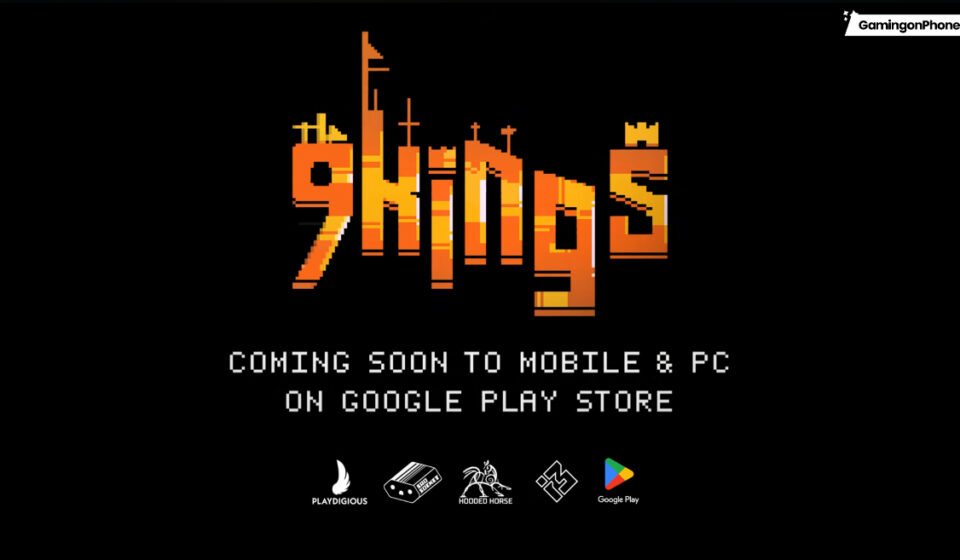
Playdigious’ 9 Kings brings its roguelike kingdom builder experience to Android very soon

Playdigious, a prominent publisher renowned for bringing acclaimed indie titles to mobile platforms, has officially announced the imminent launch of 9 Kings, a highly anticipated roguelike kingdom builder, for Android and PC via the Google Play Store. Developed by Sad Socket, 9 Kings first garnered critical acclaim and a dedicated player base following its initial release on Steam, published by Hooded Horse. This expansion marks a significant step for the title, making its unique blend of strategic depth and replayability accessible to a broader audience, with an iOS release also slated for later this year.
The move to mobile platforms, particularly through Playdigious, underscores a growing trend in the gaming industry where successful PC indie titles are optimized and released for handheld devices, tapping into the immense global mobile gaming market. Playdigious has established itself as a specialist in this niche, known for meticulously porting complex games while preserving their original integrity and enhancing user experience for touch interfaces. Their involvement suggests a high-quality adaptation of 9 Kings, which is crucial for a game with intricate mechanics.
Unpacking the Gameplay: Ruling a Roguelike Kingdom
9 Kings distinguishes itself as a fast-paced roguelike kingdom builder, a genre hybrid that offers both strategic depth and the high replayability inherent in roguelikes. Players embark on a journey from managing a humble village, gradually expanding it into a formidable citadel with the ultimate goal of becoming the "King of Kings." The core gameplay loop involves a dynamic card-based system where players strategically place cards to expand their territory, recruit diverse troops, and upgrade various buildings and defensive towers. This tactical card management is central to the game’s strategic appeal, demanding foresight and adaptability with each new run.
At the heart of 9 Kings lies its innovative approach to player agency through the selection of one of nine distinct kings, each offering a unique playstyle and set of advantages. This character-based differentiation ensures that no two playthroughs are entirely alike. For instance, some kings might excel at resource accumulation, focusing on hoarding gold to fuel rapid expansion, while others might specialize in raising hordes of imps, emphasizing overwhelming enemy forces through sheer numbers. This diversity encourages experimentation and caters to various strategic preferences, significantly enhancing the game’s replay value.
The game’s progression is designed to be engaging and multifaceted. As the citadel expands, players are continually presented with decisions regarding card placement, unit composition, and defensive strategies. The roguelike elements introduce procedural generation and permanent consequences, meaning that each decision carries weight and can profoundly impact the outcome of a run. Players must adapt to evolving challenges, unexpected events, and the unique characteristics of each map, ensuring that every session feels fresh and demanding. The combination of card-based strategy, kingdom management, and roguelike unpredictability creates a compelling and addictive gameplay experience that has resonated positively with PC players.
Strategic Depth and Enduring Replayability
Beyond the foundational mechanics, 9 Kings offers layers of strategic depth that appeal to seasoned strategy enthusiasts. Players are tasked with carefully crafting their deck by looting rival kings and discovering unique cards. This deck-building aspect is crucial for creating powerful card synergies, allowing players to combine abilities and effects in unexpected ways to achieve devastating results. The ability to customize and evolve one’s deck throughout a run adds another dimension of strategic choice and personalization.
The game environment is far from static. Players must not only focus on internal development but also contend with external threats. The description highlights the need to protect one’s kingdom while surviving war, chaos, and unpredictable events. These elements ensure that players are constantly challenged to adapt their strategies, whether it’s fortifying defenses against an impending invasion or managing the fallout from a sudden, chaotic event. This dynamic threat system keeps players on their toes and prevents gameplay from becoming monotonous.
The "very positive response" on Steam, as noted in the original announcement, serves as a testament to the game’s quality and engaging design. This high praise often indicates a strong core gameplay loop, robust mechanics, and effective execution of its genre elements. Factors contributing to this positive reception likely include the game’s "endless replayability," which is a hallmark of successful roguelikes, and the inclusion of "unique challenges in Quest mode." Quest mode likely provides curated scenarios or specific objectives that offer a different pace and set of challenges compared to the standard roguelike run, further diversifying the player experience. The mention of "large-scale battles" and "solid visuals" also points to a well-rounded production that delivers both strategic depth and an immersive aesthetic.
From PC Success to Mobile Accessibility: The Journey of 9 Kings
9 Kings was initially developed by Sad Socket, an indie studio that demonstrated a clear vision for blending established genres into a novel experience. Their creative efforts were first brought to a wider audience through Hooded Horse, a publisher specializing in strategy and simulation games. Hooded Horse has cultivated a reputation for identifying and supporting innovative titles within these genres, building a portfolio that appeals to a dedicated community of strategic gamers. The success of 9 Kings on Steam under Hooded Horse’s guidance laid a solid foundation for its future expansion.
The decision to port 9 Kings to mobile platforms marks a strategic expansion, indicative of both the game’s potential and the evolving landscape of the gaming industry. Playdigious, with its extensive experience in porting premium indie games, was a natural fit for this endeavor. The company has a distinguished track record of successfully adapting complex PC and console titles for mobile, ensuring that touch controls are intuitive, user interfaces are optimized for smaller screens, and performance is smooth across a range of devices. Previous successful ports by Playdigious include critically acclaimed titles like Dead Cells, Streets of Rage 4, and Slay the Spire, demonstrating their capability to handle games with diverse mechanics and high expectations from players.
The porting process for a game like 9 Kings involves several technical and design challenges. Adapting a card-based strategy game with kingdom-building elements from a mouse-and-keyboard interface to a touch-based one requires careful consideration of UI/UX design. Elements such as card dragging, building placement, and menu navigation must be re-engineered to feel natural and responsive on touchscreens. Furthermore, performance optimization is critical to ensure the game runs smoothly on various mobile chipsets and battery life is not excessively drained. Playdigious’s expertise in these areas is paramount to ensuring that the mobile version of 9 Kings lives up to the quality of its PC counterpart.
The Broader Context: Mobile Gaming Market Trends
The expansion of 9 Kings to mobile platforms aligns with several significant trends in the global gaming market. Mobile gaming continues to dominate the industry in terms of revenue and player numbers, consistently outpacing PC and console gaming combined. In 2023, the mobile gaming market was estimated to generate well over $100 billion in revenue, with billions of players worldwide. This vast audience represents a substantial opportunity for developers and publishers looking to extend the reach and longevity of their titles.
Within the mobile market, there’s a growing appetite for premium, high-quality experiences that offer depth and replayability without relying on aggressive free-to-play monetization models. While free-to-play games still constitute the majority of mobile revenue, a segment of players is increasingly willing to pay an upfront cost for a complete, ad-free, and microtransaction-free gaming experience. This "premium mobile" niche is where Playdigious thrives, and 9 Kings is perfectly positioned to cater to this demographic. The $6.99 price point, with a free trial option, reflects this strategy, offering a low barrier to entry while allowing players to commit to a full purchase if they enjoy the initial experience.
The roguelike and strategy genres, in particular, have found a strong foothold on mobile devices. Roguelikes, with their inherent session-based gameplay and high replayability, are well-suited for shorter play sessions on the go. Strategy games, which often involve careful planning and tactical decisions, also appeal to mobile players who seek engaging mental challenges. Titles like Slay the Spire (also ported by Playdigious) have demonstrated the immense potential for complex card-based roguelikes on mobile, proving that players are willing to engage with deep strategic experiences on their phones and tablets. 9 Kings, with its blend of these popular genres, is poised to capture a significant share of this market segment.
Release Details and Future Outlook
The launch of 9 Kings is imminent for Android and PC via the Google Play Store, allowing players to pre-register now to be notified upon release. This pre-registration period is a common strategy to build anticipation and ensure a strong launch day uptake. For iOS users, the wait will be slightly longer, with the App Store release planned for later in the year. This phased rollout often allows developers and publishers to fine-tune the Android version based on initial feedback before launching on another major platform.
The pricing structure for 9 Kings on mobile is noteworthy: players will have the option to try the game for free, with a full unlock available for $6.99. This hybrid model allows potential players to experience the core mechanics and decide if the game aligns with their preferences before making a purchase. It effectively mitigates the risk for consumers while still offering a premium price point for the full experience, balancing accessibility with a sustainable revenue model for the developers and publisher.
The implications of this launch are significant for all parties involved. For Sad Socket, it represents a substantial expansion of their game’s audience and a new revenue stream, validating their original creative vision. For Playdigious, 9 Kings further solidifies their position as a leading porting specialist and adds another high-quality title to their impressive mobile portfolio, reinforcing their commitment to premium mobile gaming. For the broader mobile gaming market, it serves as another strong example of how successful PC indie games can thrive on handheld platforms, potentially encouraging more developers to consider mobile adaptations. Players can look forward to a meticulously crafted experience that brings the strategic depth and addictive replayability of 9 Kings directly to their fingertips.