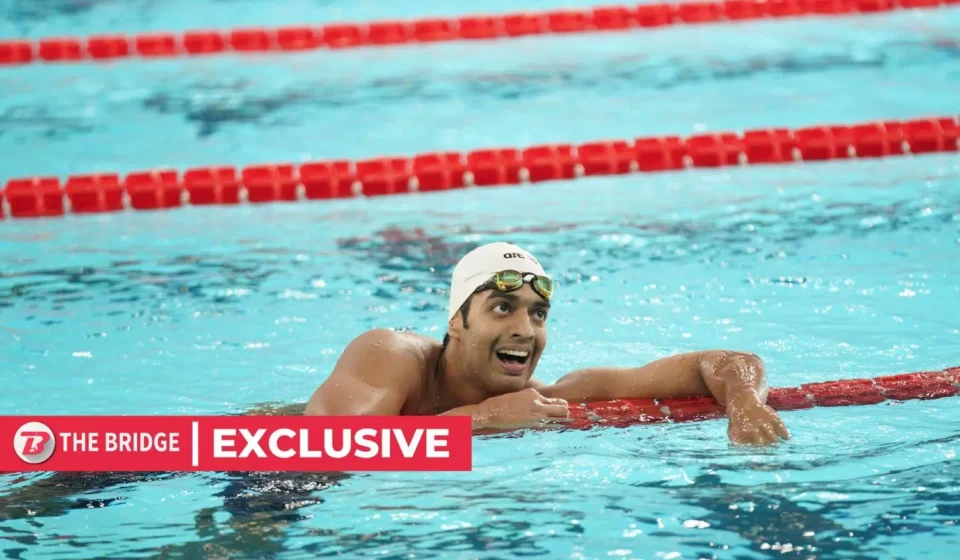
Indian Swimmers Face Critical Visa Delays Ahead of Singapore National Age Group Championships 2026

The recurring specter of administrative hurdles has once again cast a shadow over India’s elite sporting landscape, as several of the nation’s premier swimmers find themselves entangled in a high-stakes race against time—not in the pool, but through the corridors of visa processing. With the Singapore National Age Group (SNAG) Swimming Championships 2026 scheduled to commence at the OCBC Aquatic Centre on March 17, a significant cohort of India’s 15-member Asian Games probable squad has faced unprecedented delays in obtaining travel clearances. National record holder Srihari Natraj, along with standout performers Rohit Benedicton, Anish Gowda, Aditya Dinesh, and Anand A.S., were among those left stranded in India while the remainder of the national contingent began their essential acclimatization process in Singapore.
The Singapore National Age Group Championships serves as a vital cornerstone in the 2026 swimming calendar. For the Indian contingent, which includes over 40 swimmers in total, the meet is recognized as a primary qualification event for both the Commonwealth Games and the Asian Games. The delay in visa issuance has not only disrupted the athletes’ meticulously planned travel schedules but has also jeopardized their physical preparation and mental focus ahead of the season’s inaugural major international competition.
The Chronology of Uncertainty and Administrative Friction
The logistics of the Indian team’s departure were structured to allow for a three-day acclimatization period before the first events began on March 17. The primary group was scheduled to depart on Friday, March 13. However, as the departure date arrived, six key members of the delegation—comprising four swimmers, one physiotherapist, and one coach—had yet to receive their entry permits from the Singaporean authorities.
Srihari Natraj, the 25-year-old two-time Olympian and the face of Indian backstroke, detailed a timeline marked by last-minute updates and logistical chaos. While his mother’s visa was unexpectedly approved at 7:50 pm on the eve of their scheduled departure, Natraj’s own clearance remained in limbo, forcing him to miss his scheduled 11:50 am flight on March 14. This delay created a cascading effect on his competition strategy. With his first event, the 100m backstroke, scheduled for Tuesday, March 17, the prospect of a late arrival posed a significant threat to his performance.
The administrative bottleneck is particularly striking given the profile of the athletes involved. These are not developmental swimmers but seasoned internationals who represent India’s best hope for podium finishes on the continental stage. While an update eventually confirmed that Srihari Natraj received his visa following the initial delays, the window for recovery and preparation had already narrowed significantly, forcing the athlete to weigh the benefits of competing against the physical toll of a "red-eye" travel schedule.
Profiles of the Affected Athletes: A Deep Dive into Performance Stakes
The impact of these delays is best understood through the lens of the athletes’ recent achievements and their goals for the 2026 season.
Srihari Natraj: The National Standard-Bearer
Srihari Natraj enters the 2026 season on the heels of a dominant performance at the Asian Aquatics Championships 2025 held in Ahmedabad. During that meet, Natraj secured a staggering seven medals, contributing significantly to India’s total haul of 13. For Singapore, he had registered for five high-intensity events: the 50m, 100m, and 200m backstroke, alongside the 50m and 100m freestyle. For an athlete of Natraj’s caliber, the Singapore meet is less about securing a win and more about benchmarking his stroke rate and turns against international rivals from nations like Chinese Taipei, who often provide the "push" that domestic Indian races lack.
Rohit Benedicton: The Sprint Specialist
Rohit Benedicton holds the distinction of being the first Indian male swimmer to break the sub-24-second barrier in the 50m butterfly. His specialty lies in explosive power and high-frequency sprinting. Unlike Natraj, whose events began early in the week, Benedicton’s primary races—the 50m freestyle and 50m butterfly—are scheduled toward the latter half of the championships. This scheduling quirk offered him a slight buffer, allowing him to remain hopeful even as his teammates faced cancellations. Benedicton emphasized that the Singapore meet was designed to serve as a diagnostic tool, identifying technical flaws that need rectification before the Senior National Championships in May.
The Developmental Guard: Anish Gowda and Aditya Dinesh
The delay also affected younger probables like Anish Gowda and Aditya Dinesh. For these swimmers, international exposure at the OCBC Aquatic Centre—a world-class facility—is crucial for building the "big-meet" temperament required for the Asian Games. Missing such an opportunity creates a competitive vacuum that is difficult to fill through domestic training alone.
The Strategic Importance of the Singapore Meet
The Singapore National Age Group Championships is more than just a seasonal opener; it is a strategic necessity for the Swimming Federation of India (SFI) and the athletes. There are three primary reasons why this specific meet is irreplaceable in the 2026 roadmap:
- Qualification Standards: The meet is a sanctioned FINA (now World Aquatics) event, meaning the timings clocked here are officially recognized for qualification toward the Commonwealth Games and Asian Games. Missing this window forces athletes to rely on fewer opportunities later in the year, increasing the pressure to perform.
- High-Level Competition: Swimming in India often suffers from a lack of depth in certain disciplines. National record holders often find themselves winning domestic races by multiple body lengths, which does not simulate the pressure of a continental final. In Singapore, the presence of elite swimmers from across Southeast Asia and East Asia provides the necessary friction to drive faster times.
- Acclimatization and Testing: The transition from heavy training blocks to "race-ready" mode requires testing under competition conditions. The Singapore meet allows coaches to see how athletes handle the taper and how their bodies react to the specific environmental conditions of the region.
Analyzing the "Missing Middle": The Lack of Viable Alternatives
The visa crisis is compounded by a lack of alternative racing venues in the current geopolitical and environmental climate. Traditionally, the Dubai Open has served as a fallback for Indian swimmers. However, the current volatility in the Middle East has rendered travel to Dubai an unviable or high-risk option for the national team.
The remaining options on the calendar present their own sets of challenges:
- The Malaysian Open (April): While geographically convenient, the conditions in Malaysia are notoriously difficult for many swimmers. Srihari Natraj noted that the extreme heat and humidity in Malaysian indoor facilities often lead to physical discomfort. He recounted past experiences where the humidity made the process of donning a high-compression racing suit so difficult that it resulted in physical injury, such as bleeding fingers.
- Senior National Championships (May): While the Senior Nationals are the definitive selection trials, relying solely on this meet is a risky strategy. If an athlete has a "bad day" or a minor illness during the Nationals without having a backup time from an earlier meet like Singapore, their entire season could be compromised.
The Physiological Impact of Travel Delays on Elite Swimmers
In elite swimming, performance is measured in hundredths of a second. The physiological preparation for a meet involves a "taper," where training volume is reduced to allow the body to recover and reach peak power. This process is highly sensitive to external stressors.
A delay in travel disrupts the "pre-race routine," which includes specific meal timings, sleep cycles, and light "feel" sessions in the competition pool. If a swimmer like Natraj is forced to travel on Monday and race on Tuesday, they face the dual challenge of jet lag and muscle stiffness from a long flight. The "straight to the pool" scenario described by Natraj is far from ideal for an athlete attempting to hit Asian Games qualification marks. The lack of proper sleep and the inability to conduct a "warm-down" or "activation" session in the water 24 hours before a race can lead to increased lactic acid buildup and a lack of "water feel," which is essential for backstroke efficiency.
Broader Implications for Indian Aquatics
The recurring nature of visa issues for Indian athletes suggests a systemic friction that extends beyond individual sports. While the Swimming Federation of India and the Sports Authority of India (SAI) typically facilitate these tours, the reliance on third-party visa processing centers and the varying requirements of host nations create a precarious environment for planning.
For Indian swimming to move from "participation" to "podium" at the Asian level, the support system must ensure that the athletes’ only focus is the water. When top-tier athletes are forced to spend the week before a major meet refreshing tracking pages for visa updates, the mental energy diverted away from competition is significant.
Furthermore, these delays highlight the need for a more robust domestic competition circuit that mimics international standards. If India possessed multiple Olympic-sized facilities hosting high-stakes, high-depth meets throughout the year, the reliance on foreign meets like the SNAG would decrease, mitigating the impact of administrative hurdles.
Conclusion: The Path to the Senior Nationals
As the situation in Singapore unfolds, the focus for the Indian swimming community shifts toward the Senior National Championships in May. For those who managed to reach Singapore despite the delays, the goal will be to salvage their performances and gather as much data as possible. For those whose seasons were disrupted by the visa bottleneck, the pressure now intensifies for the Malaysian Open and the subsequent domestic trials.
The resilience shown by athletes like Srihari Natraj and Rohit Benedicton in the face of these challenges is a testament to their professionalism. However, as the 2026 Asian Games approach, the hope remains that the "race before the race" will eventually become a thing of the past, allowing India’s fastest swimmers to let their performance in the pool do the talking. The Singapore National Age Group Championships 2026 will be remembered not just for the times recorded on the scoreboard, but as a stark reminder of the logistical tightrope that elite Indian athletes must walk in their pursuit of international glory.