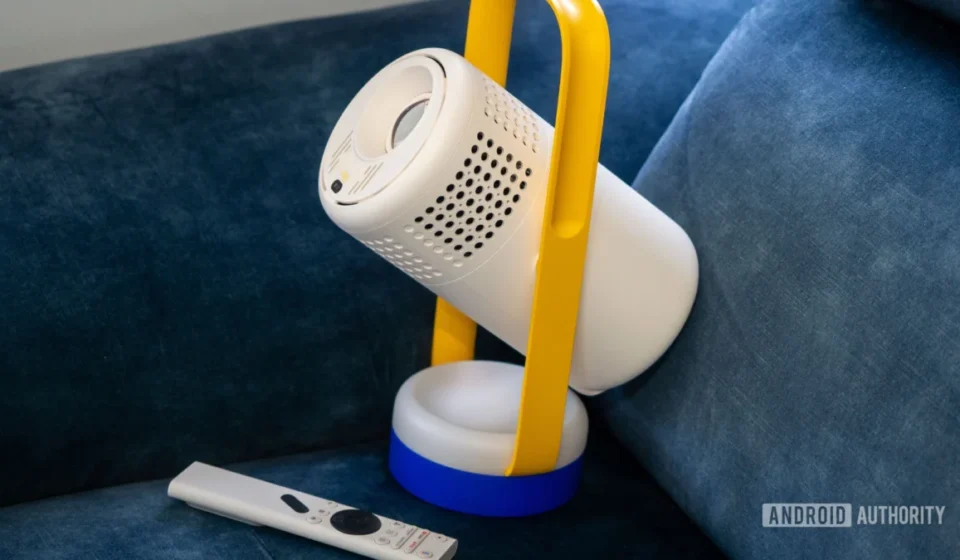
XGIMI Vibe One Projector Emerges as a Cost-Effective and Versatile Alternative Amidst Premium TV Reliability Concerns

The XGIMI Vibe One, an affordable all-in-one Google TV projector, has demonstrated its utility as a reliable and portable entertainment solution, particularly in unforeseen circumstances such as the failure of a primary, high-end television. Priced at approximately $250, this compact device integrates built-in speakers, a battery, and an adjustable stand, positioning it as a highly flexible option for consumers seeking adaptable viewing experiences. Its recent performance as a primary display following the unexpected breakdown of a $2,200 Samsung The Frame Pro TV underscores its unexpected value proposition in the modern home entertainment landscape.
The Unexpected Shift: From Premium Display to Portable Projector
The catalyst for the XGIMI Vibe One’s elevation to primary home entertainment status began with the premature failure of a 65-inch Samsung The Frame Pro TV, an incident that occurred less than a year after its purchase. This premium television, valued at $2,200, had been plagued by persistent technical issues, including frequent and random CEC (Consumer Electronics Control) problems affecting its interaction with a Google TV streamer and Samsung’s proprietary soundbar. Compounding these connectivity woes were arbitrary power-offs that interrupted viewing sessions. The situation escalated when the television ceased functioning entirely, powering on for mere seconds before shutting down.
The subsequent repair process, managed by Samsung support in France, proved protracted and inefficient. A delay of two weeks was reported before the television was even collected for repair, leaving the household without a primary viewing device for an extended period. This experience highlights a common frustration among consumers regarding post-purchase support for high-value electronics, where repair processes can often be protracted, leaving users without functional devices. Such incidents underscore the growing importance of secondary or backup entertainment solutions that can seamlessly fill the void created by main system failures.
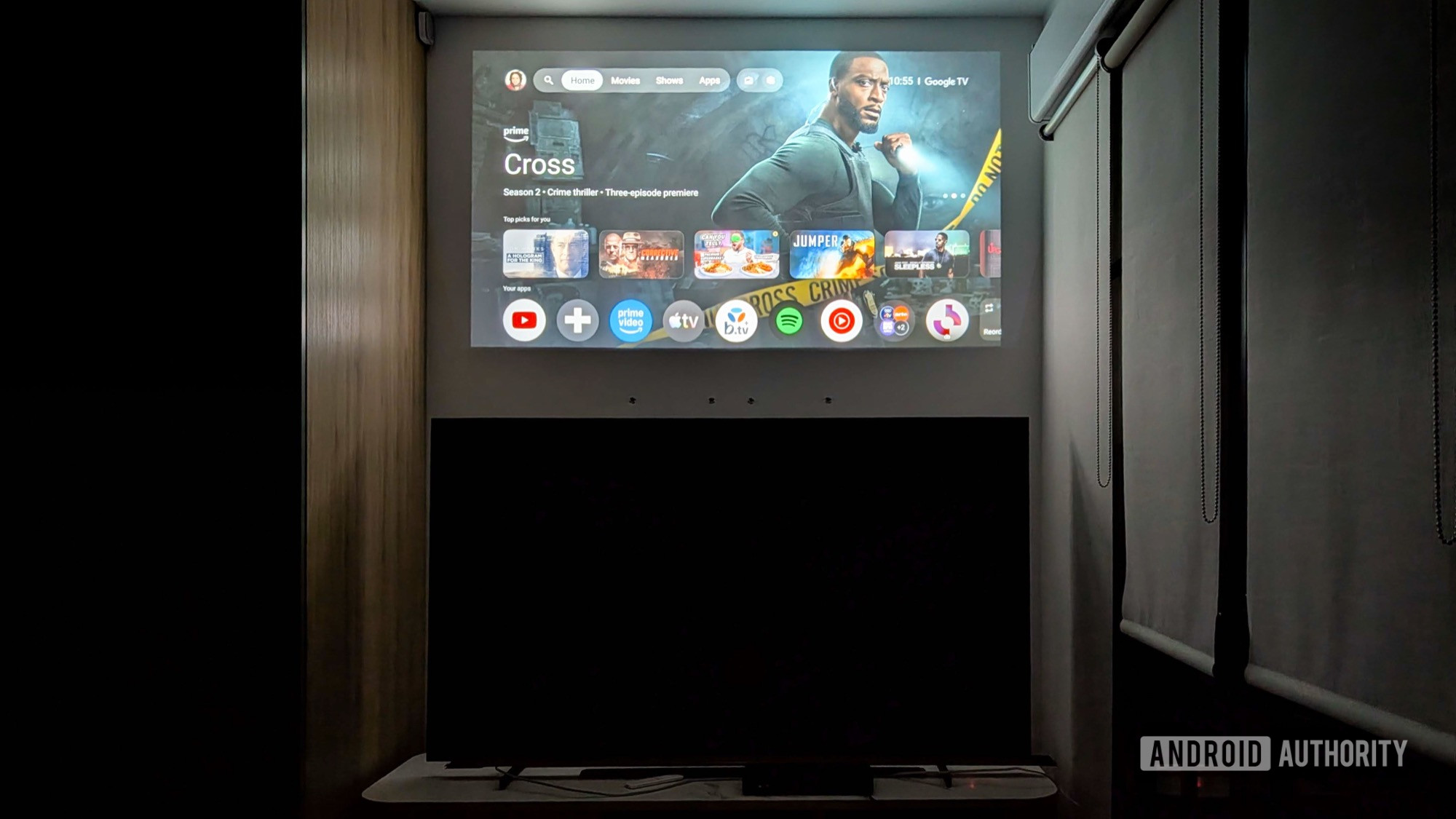
In a critical moment, during the second-leg tie of a UEFA Champions League match between Real Madrid and Benfica, the defunct Samsung TV was swiftly replaced by the XGIMI Vibe One. Retrieved from a bedroom where it was sporadically used, the projector was quickly set up in the living room, projecting a large-format image directly onto the wall. This rapid deployment allowed for the continuation of the football match, notably catching a pivotal 80-minute goal. For several weeks thereafter, the XGIMI Vibe One served as the household’s sole television, proving its capability to perform beyond its intended secondary role.
The Rise of Portable Projectors in Modern Homes
The increasing adoption of portable projectors like the XGIMI Vibe One reflects a broader trend in consumer electronics towards versatility, mobility, and cost-effectiveness. Traditional large-screen televisions, while offering superior image quality in controlled environments, are fixed installations that lack flexibility. Portable projectors, by contrast, offer a "TV anywhere, anytime" experience, transforming any flat surface into a screen. This adaptability is particularly appealing for modern living spaces, where users might desire entertainment in various rooms—from a living room to a bedroom with unconventional wall structures, or even outdoors for casual viewing.
The global market for portable projectors has seen consistent growth, driven by advancements in LED and laser projection technology, increased resolution in compact form factors, and the integration of smart TV platforms. Industry analysts project continued expansion, with a focus on devices that combine portability with robust smart features. XGIMI, as a notable player in this segment, has positioned itself by offering a range of projectors that often balance performance with competitive pricing, targeting consumers who value both quality and flexibility. The Vibe One, with its integrated Google TV, built-in speakers, and battery, embodies this market shift.
XGIMI Vibe One: A Closer Look at Features and Performance
The XGIMI Vibe One, retailing at approximately $250, packs a compelling set of features for its price point. It projects a 1080p (Full HD) image with a brightness of 250 ISO Lumens. While this specification doesn’t rival the luminosity or contrast of high-end Neo QLED 4K televisions, particularly in brightly lit environments, it performs admirably in darker conditions. Users must typically ensure all shutters and curtains are closed to fully appreciate the projected image, which, under optimal conditions, can nearly replicate the immersive experience of a traditional TV. However, in rooms with ambient light, the image can appear significantly washed out, a common characteristic of projectors in this brightness class. Despite this limitation, the Vibe One remains "watchable" and fulfills its role as a portable viewing solution.
Audio is handled by two integrated 3W JBL speakers, enhanced with Dolby Audio. While these speakers offer a satisfactory experience for casual content such as music videos, YouTube, sports broadcasts, and TV series, they are not designed to replace a dedicated soundbar or home theater system. Their inclusion, however, eliminates the need for external audio components, contributing to the projector’s all-in-one appeal and simplifying its setup.
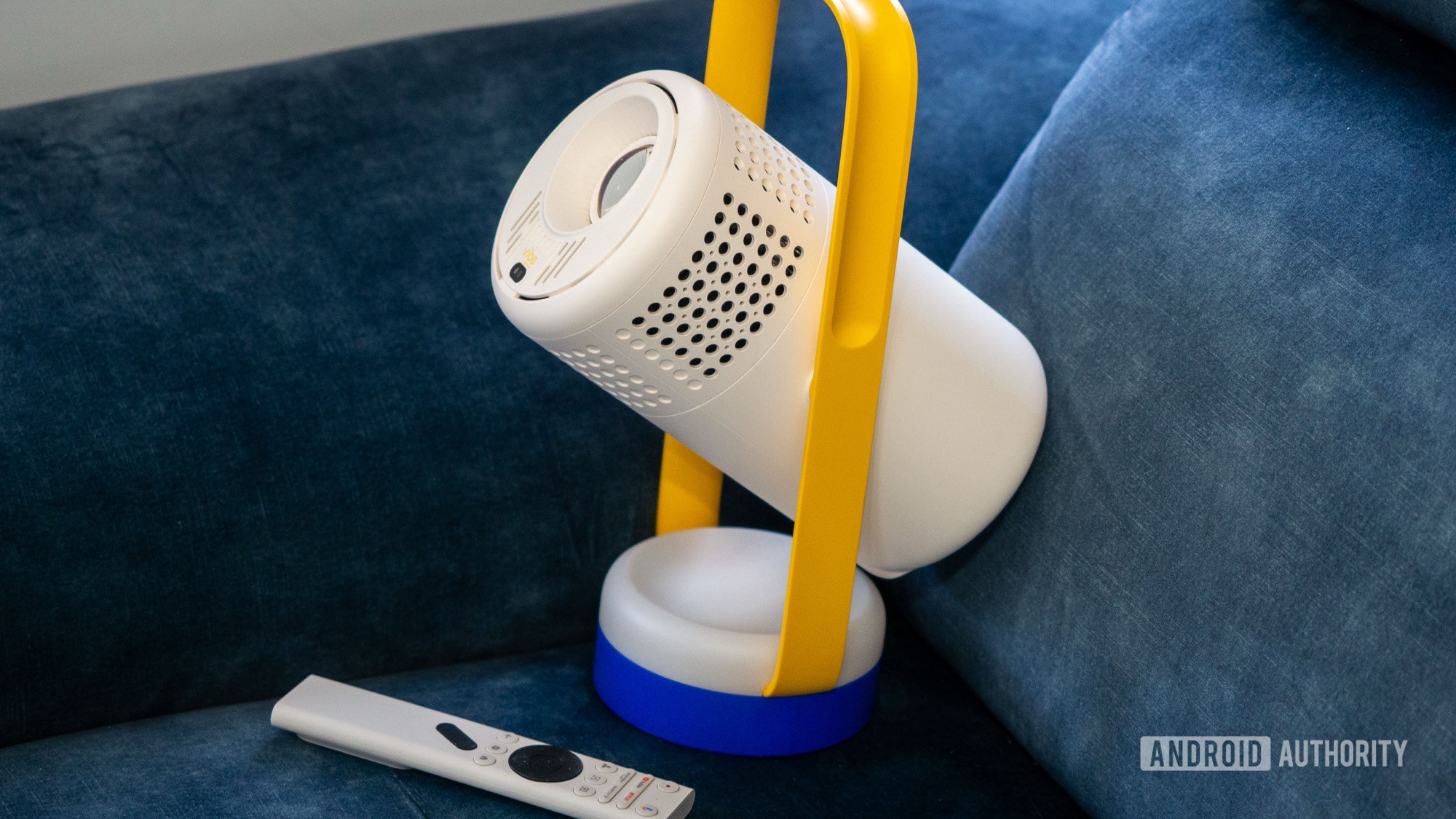
A cornerstone of the Vibe One’s design is its exceptional portability and adaptability. It features a built-in handle and a pivoting stand that allows for 160° rotation around its vertical axis (80° in either direction). This integrated stand negates the need for external tripods, providing immediate flexibility in adjusting the projection angle. The projector’s self-contained nature—with its own speakers, battery, and Google TV operating system—means it requires only a suitable white surface for projection, eliminating the clutter of additional cables or devices. Its compact form factor makes it effortless to transport between rooms, allowing for spontaneous entertainment setups.
The Vibe One’s advanced keystone correction is a standout feature, automatically adjusting the image to maintain a rectangular shape even when projected onto skewed or uneven surfaces. This is particularly beneficial in rooms with unconventional architecture, such as attic bedrooms with slanted walls, where traditional TVs are impractical. The remote control includes a dedicated auto-focus button for quick image clarity adjustments, complemented by manual settings and a specialized ceiling projection mode, which enhances usability in diverse environments. The ability to hide the projector in a drawer when not in use further adds to its discreet appeal, contrasting sharply with the permanent presence of a large wall-mounted television.
Navigating Limitations: Charging, Battery Life, and Performance Nuances
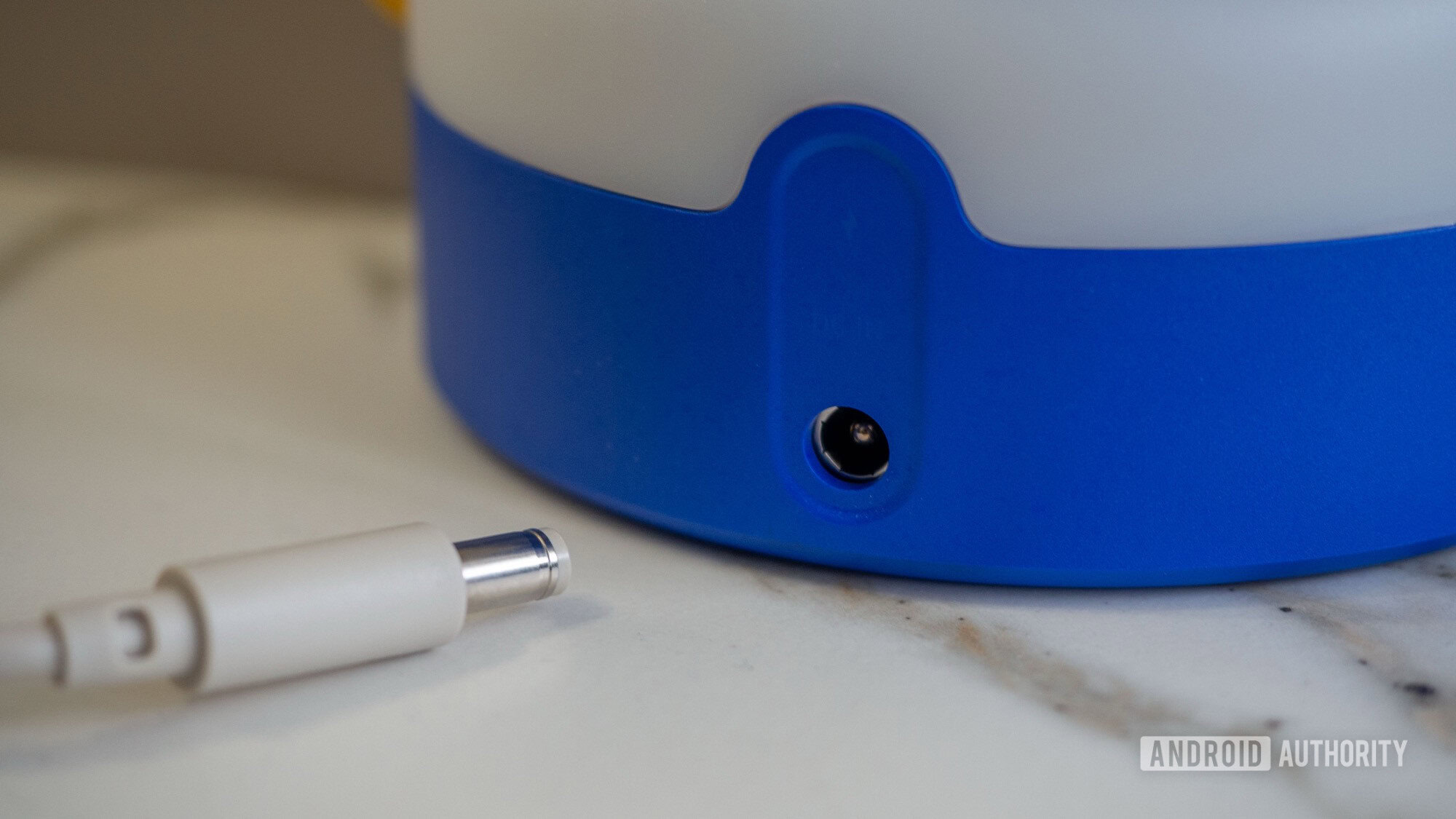
Despite its strengths, the XGIMI Vibe One is not without its compromises, particularly concerning its power management and initial performance. A significant point of contention for many modern users is the inclusion of a DC barrel charging port, rather than the ubiquitous USB-C standard. In an ecosystem increasingly dominated by USB-C, the requirement to locate and utilize a specific DC adapter for charging introduces an element of inconvenience. While a third-party DC to USB-C cable (5.5mm x 2.5mm) offers a workaround, allowing compatibility with powerful USB-C chargers and power banks, this necessity highlights an area where XGIMI could improve user experience in future iterations.
The projector’s built-in battery provides approximately 96 minutes of playback on a full charge, often with reduced brightness to conserve power. This duration is generally insufficient for watching an entire feature film or a full-length sporting event without needing to connect to a power source. Consequently, while advertised as battery-powered, the Vibe One often requires external power for extended viewing sessions, somewhat diminishing its "untethered" portability.
Another design choice that has drawn scrutiny is the translucent plastic base, which enables a "light show" in Bluetooth speaker mode when the projector lens points downwards. This feature, described as "gimmicky," diverts resources that could potentially have been allocated to a larger battery, which would offer significantly more practical utility to users. The trade-off between novelty features and core functional improvements like battery longevity is a critical consideration in product design.
Initial startup performance reveals a slight lag, with the projector taking around 10 seconds to achieve smooth operation. This delay is attributed to its hardware specifications, which include 2GB of RAM and a 1.5GHz MT9630 processor. While this might be a minor inconvenience, the system generally performs without significant hiccups or performance drops once fully operational. A positive aspect of the hardware configuration is the inclusion of 32GB of internal storage, a generous amount compared to many entry-level Google TV devices, ensuring ample space for installing various applications without immediate concerns about storage capacity.
Google TV Integration and Enhanced User Experience
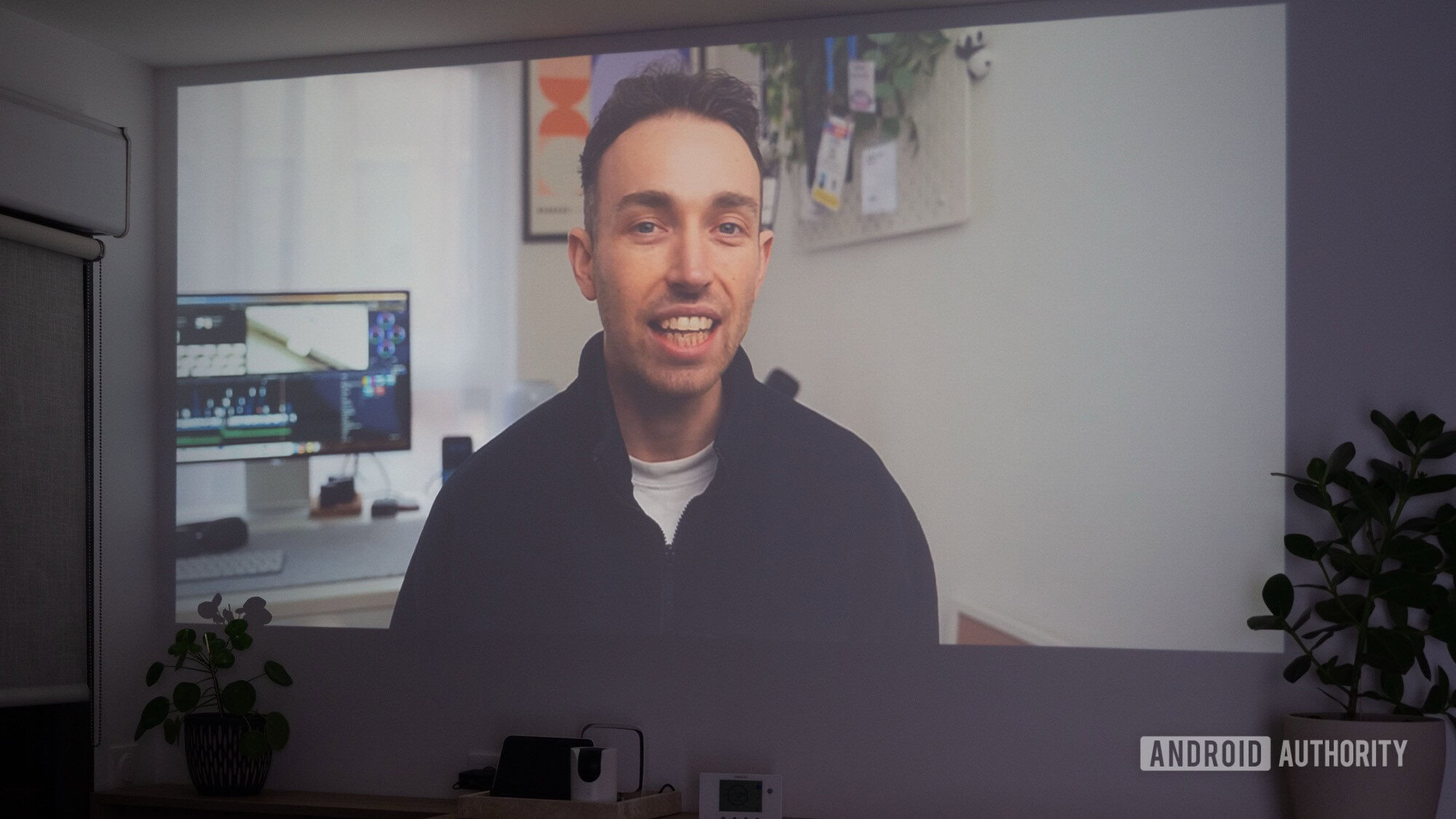
The XGIMI Vibe One’s integration of Google TV out-of-the-box is a major advantage. It provides users with access to a vast ecosystem of streaming applications and content, all managed through a familiar and intuitive interface. XGIMI has commendably opted for a clean, largely uncustomized Google TV experience, preserving the platform’s core functionalities while adding only essential projector-specific settings for image adjustment, power management in battery mode, and remote button customizations.
The accompanying Google TV remote is particularly noteworthy. It features a dedicated button for switching user profiles, a significant convenience for multi-user households that streamlines access to personalized content. Additionally, a quick settings button provides instant access to common adjustments without interrupting the viewing experience—a functionality surprisingly absent from some of Google’s own streaming device remotes. Standard Google TV features such as voice input, casting support, remote control via the Google Home app, and integrated Google Assistant/Gemini are all present, further enhancing the user experience.
Implications for Consumers and the Future of Home Entertainment
The XGIMI Vibe One’s performance as a primary entertainment device in a crisis scenario highlights several key implications for consumers and the broader home entertainment industry. Firstly, it demonstrates that highly functional and enjoyable viewing experiences are accessible at a fraction of the cost of premium televisions. This empowers consumers with more flexible budgeting options and greater resilience against unexpected hardware failures.
Secondly, the Vibe One reinforces the growing demand for portable and versatile entertainment solutions. As lifestyles become more fluid and living spaces more dynamic, the ability to project content on any surface, in any room, or even outdoors, offers unparalleled freedom. This trend suggests a future where home entertainment systems are less about fixed installations and more about adaptable, on-demand experiences.
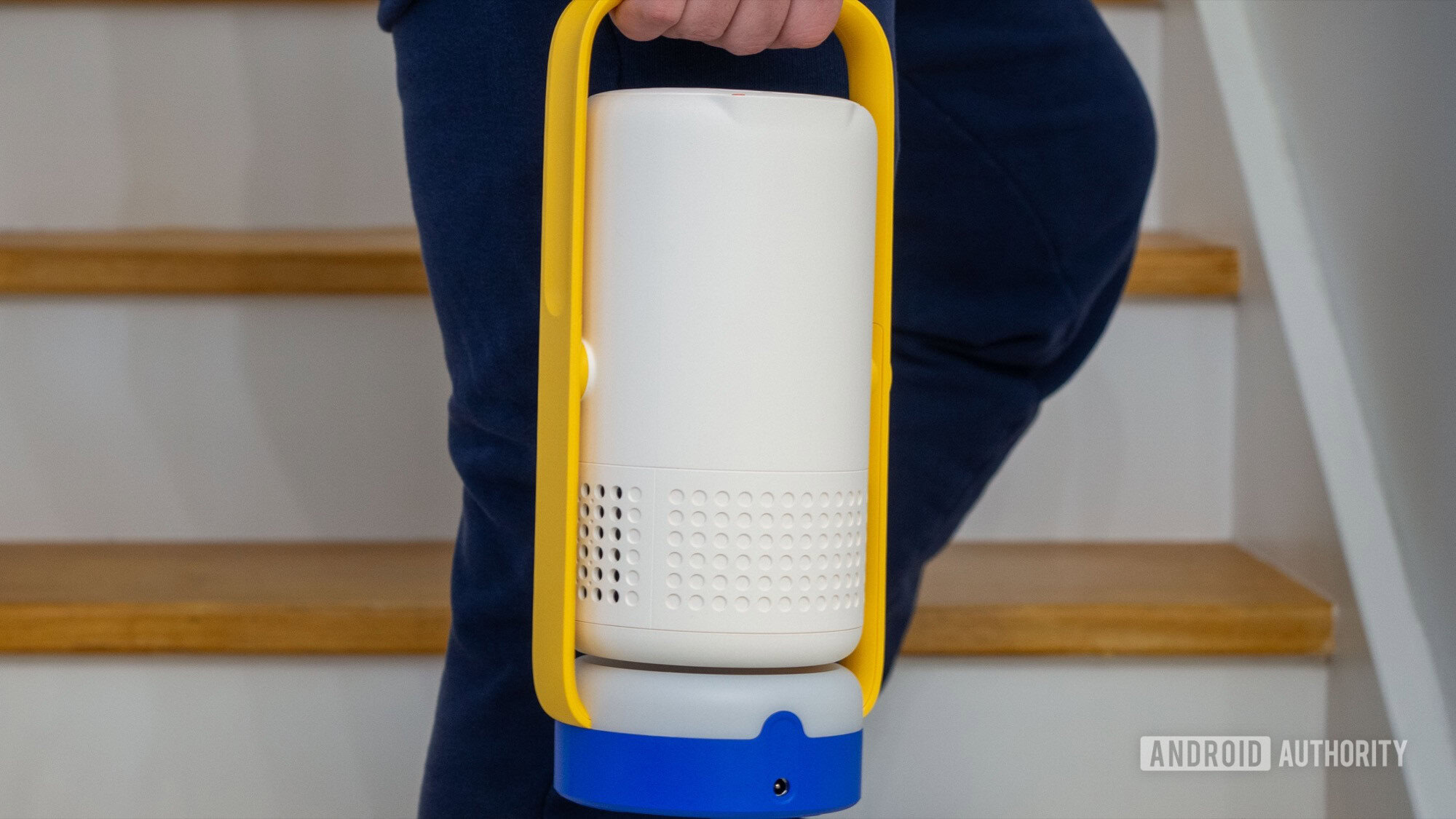
Finally, the incident with the Samsung TV and the subsequent reliance on the Vibe One underscores the importance of having reliable backup solutions. While premium devices offer cutting-edge performance, their complexity can sometimes lead to vulnerabilities. A cost-effective, portable projector can serve as an invaluable contingency, ensuring continuous access to entertainment even when primary systems falter. This shift in consumer behavior, driven by both practicality and technological advancement, is likely to further accelerate the development and adoption of smart portable projectors.
Market Alternatives and Recommendations
For consumers considering a portable projector in the $200-$300 range, the XGIMI Vibe One stands out for its comprehensive feature set, particularly its integrated Google TV, battery, and adjustable stand. However, the market offers several alternatives, each with distinct advantages and trade-offs.
If Google TV is not a primary requirement, the Aurzen EAZZE D1R (around $200) offers Roku TV, a robust smart platform, though it lacks an integrated stand. Conversely, projectors like the Dangbei N2 Mini and Yaber T2, often found at similar price points, are generally less recommended due to their reliance on Linux-based operating systems, which typically suffer from limited app availability and inconsistent long-term software updates.
The TCL C1 (around $225) is a Google TV projector that closely mirrors the XGIMI Vibe One in features but crucially omits the built-in battery. The absence of battery power significantly reduces its portability, making the slightly higher investment in the XGIMI Vibe One for its battery functionality a worthwhile consideration.
A strong contender is the Aurzen BOOM Air (around $300, often discounted to $210). This projector boasts a brighter 300 ANSI Lumens projection, a built-in 110° rotatable stand, and a more powerful 10W speaker. Crucially, it supports USB-C power, addressing one of the Vibe One’s primary shortcomings. While it lacks an internal battery and may require an additional stand for ceiling projection, its overall performance and modern connectivity make it a compelling choice, especially when discounted.
For those willing to extend their budget slightly, more premium portable projectors offer enhanced capabilities. The JMGO Play (around $349) is an emerging option featuring a larger battery capable of three hours of playback, USB-C charging, an 88° adjustable gimbal, and a brighter 400 ISO Lumens projection. It also includes a Bluetooth speaker mode with a light show, catering to those who appreciate such features. Other alternatives like the Aurzen BOOM Mini (around $230), XGIMI Mogo 3 Pro (around $450), and Nebula Capsule 3 GTV (around $400) occasionally see discounts that bring them into a more competitive price bracket (around $300-$320), offering superior brightness, battery life, or overall performance for a moderate premium.
In conclusion, the XGIMI Vibe One effectively serves its purpose as a versatile, portable, and affordable Google TV projector. Its ability to step in as a primary entertainment device during a crisis, coupled with its user-friendly features and clean Google TV interface, solidifies its recommendation for those seeking a flexible viewing solution for secondary rooms, non-traditional spaces, or as a reliable backup. While its DC charging port and limited battery life present minor drawbacks, its overall value proposition remains strong in the competitive portable projector market.