The Intellectual Renaissance How Mind Sports Are Redefining the Indian Competitive Landscape in 2026

The traditional image of the Indian athlete, long defined by the dusty cricket pitches of Mumbai or the frenetic football stadiums of Kolkata, is undergoing a profound transformation. As the nation moves deeper into the mid-2020s, a new category of competition has moved from the periphery to the mainstream. "Mind Sports"—disciplines that prioritize cognitive faculty, strategic foresight, and mathematical precision over physical exertion—are now attracting a level of investment, viewership, and national pride once reserved exclusively for physical athletics. From the silent, high-tension halls of international chess tournaments to the rigorous analytical environments of competitive bridge and Sudoku, India has established itself as a global hegemon in intellectual endurance. This shift represents more than a change in recreational preference; it signals a fundamental evolution in how the world’s most populous nation defines sporting excellence.
The Chess Hegemony: From the Anand Era to the Gukesh Supremacy
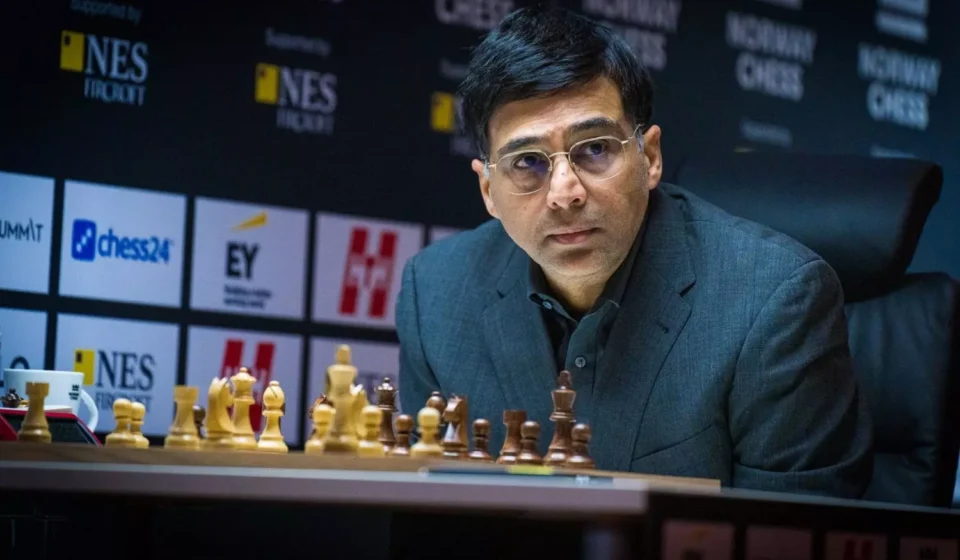
Chess stands as the vanguard of the Indian mind sports revolution. While the nation’s ascent began with the pioneering career of five-time World Champion Viswanathan Anand, the current landscape is defined by an unprecedented "Golden Age" of young talent. As of 2026, India is widely regarded as the strongest chess nation in the world, a status solidified by the historic achievements of Gukesh Dommaraju.
Gukesh’s victory in the 2024-2025 World Chess Championship cycle, where he became the youngest-ever undisputed World Champion, served as a catalyst for a nationwide surge in interest. This triumph was not an isolated event but the result of a decades-long infrastructure build-up. The All India Chess Federation (AICF) and private academies have nurtured a pipeline of talent that includes Grandmasters like Rameshbabu Praggnanandhaa, Arjun Erigaisi, and Vidit Gujrathi, all of whom have consistently ranked within the world’s top ten.
The commercialization of chess has played a pivotal role in this expansion. The Global Chess League (GCL), a joint venture between Tech Mahindra and FIDE, has introduced a franchise-based model that mirrors the Indian Premier League (IPL). By incorporating rapid and blitz formats, the league has made the sport accessible to a digital-first audience. Streaming platforms like YouTube and Twitch have further democratized the game, with Indian chess creators garnering millions of views, turning complex endgame theories into viral content.
The Formalization of Bridge: Skill Over Stigma
Parallel to the success of chess is the institutional rise of Bridge. Historically viewed as an elite pastime confined to social clubs, Bridge has successfully transitioned into a recognized competitive discipline in India. The Bridge Federation of India (BFI) has been instrumental in this shift, working to distinguish the game from gambling by emphasizing its reliance on probability, memory, and sophisticated communication protocols between partners.
The inclusion of Bridge in the Asian Games has been the most significant factor in its modern legitimization. Following India’s medal-winning performances in the 2018 and 2022 editions, the government has integrated the sport into its broader athletic funding schemes. This recognition has encouraged a younger demographic—largely comprised of engineers, data scientists, and mathematicians—to take up the sport. Unlike the solitary nature of some mind sports, Bridge requires an intense level of psychological synergy, making it a favorite among analytical thinkers who value collaborative strategy.
In 2025, the Indian national team’s performance at the World Bridge Championships underscored the country’s growing depth. Analysts note that India’s strength lies in its "Open" and "Seniors" categories, though the "Junior" programs are now seeing a 40% year-on-year increase in participation, driven by university-level tournaments and digital bridge platforms that allow for remote training and competition.
The Regulatory Pivot of Poker: Game Theory and Risk Management
Perhaps the most complex evolution in the Indian mind sports circuit is that of Poker. For years, the game occupied a legal gray area, often conflated with games of chance. However, the introduction of the Promotion and Regulation of Online Gaming Act (PROGA) in 2025 provided the necessary clarity that the industry required. While PROGA introduced stricter regulations on real-money gaming and high-stakes online play, it inadvertently accelerated the sport’s "intellectualization."
Deprived of the ability to market "quick wins," poker platforms and organizations have pivoted toward "Skill Education." Poker is now increasingly marketed as a practical application of Game Theory, Nash Equilibrium, and risk management. This academic approach has found a home in India’s premier management and engineering institutes, where poker clubs are used to teach decision-making under uncertainty.
The competitive scene remains vibrant through three primary channels:
- Live Circuit Dominance: Legalized physical poker rooms in Goa and Sikkim have become hubs for the World Poker Tour (WPT) India and other regional championships. These venues provide a regulated environment for high-level play.
- Global Success: Indian professionals like Nipun Java and Aditya Agarwal have paved the way for a new generation of players who compete in the World Series of Poker (WSOP). In 2025, Indian players collectively secured a record number of "cashes" and final table appearances in Las Vegas, signaling the high technical proficiency of the Indian circuit.
- The Rise of Free-to-Play Leagues: To comply with PROGA, many operators have launched ranking-based leagues where players compete for points and prestige rather than direct monetary stakes. This has shifted the focus toward long-term statistical performance, further cementing poker’s status as a mind sport.
Sudoku and Logic Puzzles: From Newspapers to World Stages
While often overlooked, Sudoku and logic puzzles represent the most inclusive segment of India’s mind sports portfolio. What began as a staple of daily newspapers has evolved into a rigorous competitive discipline managed by Logic Masters India (LMI), the official Indian affiliate of the World Puzzle Federation.
The All India Sudoku Championship (AISC) has grown from a niche gathering to a massive national event with over 25,000 annual participants. The 2025 National Champion, Kishore Sridharan, has become a symbol of the sport’s rising profile. Under the leadership of LMI, the Indian national team has consistently placed within the top 10 at the World Sudoku & Puzzle Championships (WSPC), often outperforming traditional powerhouses like Japan and Germany in specific logic categories.
The appeal of Sudoku lies in its accessibility. It requires no expensive equipment or high-speed internet, making it the most egalitarian of all mind sports. Schools across India have begun integrating logic puzzles into their curricula to enhance cognitive development, viewing them as a "mental gym" that prepares students for the rigors of STEM (Science, Technology, Engineering, and Mathematics) education.
Chronology of the Mind Sports Revolution
To understand the current state of these sports, one must look at the key milestones over the last decade:
- 2018: Bridge is included in the Asian Games; India wins one gold and two bronze medals, sparking national interest.
- 2022: The 44th Chess Olympiad is held in Chennai, marking the largest chess event in Indian history and signaling the arrival of the "New Wave" of Grandmasters.
- 2024: Gukesh Dommaraju wins the Candidates Tournament, becoming the youngest challenger in history.
- 2025: The implementation of PROGA provides a regulatory framework for online gaming, forcing a shift toward skill-based poker.
- 2025: India achieves its highest-ever rank (4th) at the World Sudoku Championships.
- 2026: India officially bids to host the World Mind Sports Games, seeking to consolidate its position as a global hub for intellectual competition.
Data and Economic Impact
The economic footprint of mind sports is significant. Market research conducted in early 2026 suggests that the "Mind Sports and Strategy Gaming" sector in India is valued at approximately $1.2 billion, including tournament sponsorships, media rights, and educational technology (EdTech) integrations.
Chess coaching alone has become a major export, with Indian Grandmasters training students from the United States, Europe, and China via digital platforms. Furthermore, the "gamification" of logic and math through Sudoku and Bridge has led to a surge in venture capital funding for startups that use these sports as tools for cognitive assessment in corporate hiring processes.
Official Responses and Strategic Vision
Government officials have begun to recognize the strategic value of these disciplines. A spokesperson for the Ministry of Youth Affairs and Sports recently stated, "Mind sports represent the future of competitive engagement. They align perfectly with our ‘Digital India’ mission and our goal of developing a knowledge-based economy. We are looking at ways to provide more structured support to these athletes, including specialized training centers and pension schemes similar to those available for Olympic athletes."
The Bridge Federation of India (BFI) has also echoed this sentiment, noting that the "stigma of the past is dead." According to a BFI official, the focus is now on "institutionalizing the sport at the grassroots level, ensuring that every university has a Bridge club by 2028."
Analysis of Broader Implications
The rise of mind sports in India is a reflection of a broader societal shift toward valuing cognitive agility and "soft power." In a globalized economy where analytical skills are at a premium, these sports serve as a public demonstration of a nation’s intellectual capital.
Unlike physical sports, which are often limited by age, gender, and physical health, mind sports offer a level playing field. A 12-year-old can compete against a 70-year-old; a person with a physical disability can be a world champion. This inclusivity is vital for a country as diverse as India, providing a platform for meritocracy that transcends traditional barriers.
Furthermore, the "Anand Effect" and now the "Gukesh Effect" have proven that India can produce world-class talent without the massive physical infrastructure required for sports like athletics or swimming. The "infrastructure" for mind sports—a chessboard, a deck of cards, or a logic grid—is minimal, making it the most cost-effective way for a developing nation to achieve global sporting dominance.
As 2026 progresses, the trajectory for Indian mind sports remains upward. With a combination of government support, corporate investment, and a seemingly inexhaustible pool of young talent, India is not just participating in the global intellectual arena—it is setting the rules of the game. The silent intensity of the chessboard and the calculated risks of the poker table have become the new battlegrounds where India’s competitive spirit shines brightest.