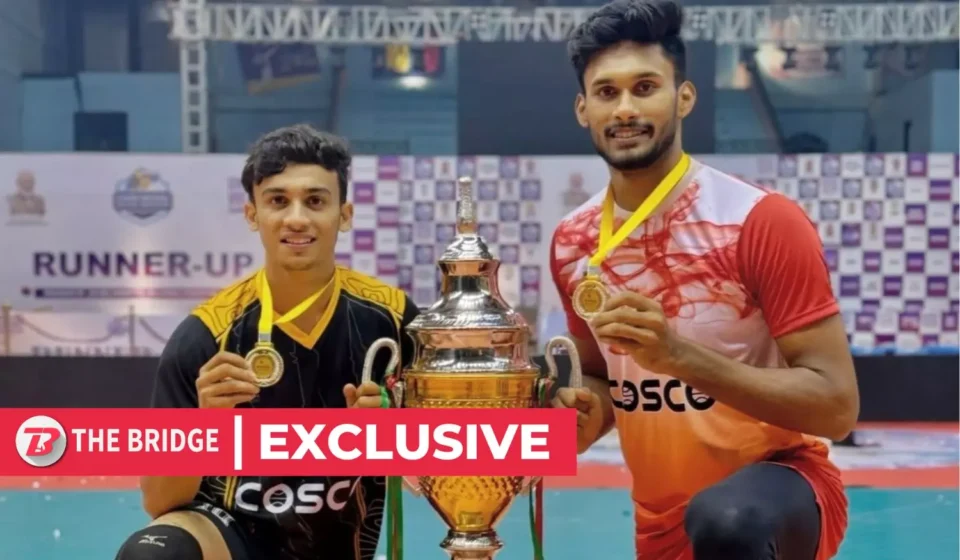

The Indian senior men’s national volleyball team has been plunged into a state of internal turmoil following the high-profile withdrawal of two of its most prominent athletes, libero Anand K and middle blocker John Joseph, from the ongoing national coaching camp in Ahmedabad. The players, who have been instrumental in India’s recent international performances, officially stepped away from the camp after raising alarm over what they described as a "regressive environment" that fundamentally lacks the scientific rigor, medical support, and professional infrastructure required for modern international competition. This development comes at a critical juncture, as India prepares to host the prestigious AVC Men’s Cup 2026 from June 20 to 28 at the Veer Savarkar Sports Complex in Ahmedabad.
The withdrawal is not merely a dispute over personal preferences but a pointed critique of the current administrative and coaching trajectory of the sport in India. In two detailed representations accessed by the media, the athletes outlined a stark decline in standards compared to the high-performance environment they experienced under former national coach Dragan Mihailović at the Sports Authority of India (SAI) center in Bangalore. The players expressed a profound sense of disillusionment, stating that the current setup feels like a retreat into an obsolete system that prioritizes traditional drills over modern, data-driven excellence.
A Breakdown of Systemic Deficiencies in Ahmedabad
The grievances aired by Anand and John are categorized into five primary pillars of concern, each highlighting a gap between the current camp conditions and the standards maintained by top-tier Asian volleyball nations like South Korea, Japan, and Qatar.
First among these is the total absence of a scientific training structure. In modern volleyball, training sessions are typically designed around specific physiological outputs and tactical objectives. However, the players alleged that the current sessions are "unstructured and random," with no clear monitoring of player workload. In a sport characterized by high-impact jumping and explosive movements, the lack of workload management significantly elevates the risk of overuse injuries and burnout.
Secondly, the players highlighted the absence of dedicated Strength and Conditioning (S&C) support. In the contemporary era, S&C is considered the backbone of athletic longevity and power. The players noted that while professional leagues, such as the Prime Volleyball League (PVL), have introduced them to world-class S&C protocols, the national camp has failed to provide a dedicated expert to oversee physical development.
The third major concern involves the lack of performance analysis and scouting. Modern volleyball is a game of millimeters and split-second decisions, often guided by "scoutmen" or data analysts who track ball trajectories, player positioning, and opponent tendencies. According to the players, there is currently no tracking of mistakes or weaknesses, leaving the team ill-prepared for the tactical complexities of upcoming international opponents.
Fourthly, the medical and recovery infrastructure was described as woefully inadequate. The players claimed that for at least two weeks, the camp operated without proper physiotherapy support. This neglect has reportedly led to multiple players carrying "niggles" that have gone untreated, with at least two athletes already ruled out of the camp due to serious injuries that might have been preventable with early intervention.
Finally, the infrastructure at the Veer Savarkar Sports Complex, while new, was deemed inferior to the established high-performance center at SAI Bangalore. The players pointed out a lack of advanced recovery equipment and specialized training tools, which are essential for athletes competing at the elite level.
The Chronology of the Walkout: A Breach of Confidentiality
The friction between the players and the management reached a breaking point between April 9 and April 11, 2026. On the night of April 9, seeking to address these systemic issues through official channels, Anand and John sent a confidential email to international and national stakeholders. This correspondence included the Fédération Internationale de Volleyball (FIVB) and the Asian Volleyball Confederation (AVC), intended to highlight the deteriorating conditions in the camp.
However, the players’ attempt at whistleblowing resulted in an immediate backlash. By the morning of April 11, the contents of the confidential email had been leaked to the interim body of the Volleyball Federation of India (VFI) and the coaching staff on the ground. The players were summoned and questioned by the staff, creating a hostile atmosphere.
During this interaction, rather than addressing the logistical and medical gaps, the coaching staff reportedly demanded a "sorry mail" from the athletes, asking them to retract their statements and label their grievances as a mistake. John Joseph and Anand K refused to comply, stating that they could not apologize for speaking the truth about the realities they were experiencing.
"We cannot apologize for speaking the truth," the players stated in their second formal email. "This withdrawal is not only against the current unprofessional camp conditions, but also against a system that fails to provide basic professional standards, does not ensure player welfare and safety, cannot protect confidential communication, and attempts to suppress genuine concerns instead of addressing them."
The decision to walk out was described by the duo as an act of "self-respect and responsibility" toward the future of the sport in India, rather than an act of defiance against the nation.
Governance Crisis: The VFI and the Steering Committee
The current crisis is inseparable from the broader governance issues that have plagued the Volleyball Federation of India for years. The VFI has been under suspension since June 2020 for failing to comply with the National Sports Code, leading to a vacuum in leadership and a lack of long-term planning. Since June 2025, an interim body has been managing the sport’s affairs with a limited mandate to reform the constitution and conduct fresh elections.
In March 2026, the FIVB granted this interim body a temporary eight-month recognition to allow Indian teams to participate in international events and access government funding. To ensure oversight, an IOA-FIVB Steering Committee was established. However, this committee has already voiced significant concerns regarding the interim body’s unilateral decision-making.
A letter from the Steering Committee in early April 2026 criticized the removal of former coach Dragan Mihailović. Under Mihailović’s tenure, the Indian team had shown significant improvement, most notably securing a silver medal at the CAVA Men’s Nations League 2025 in Uzbekistan. The Steering Committee also raised questions regarding potential conflicts of interest in player selection and a departure from the high-performance plans previously agreed upon.
The departure of Anand K and John Joseph validates many of the Steering Committee’s fears, suggesting that the "professional system" built over the last three years is being dismantled in favor of an older, less effective methodology.
Implications for the AVC Men’s Cup 2026
The withdrawal of a premier libero and a top-tier middle blocker—John Joseph was named the Best Middle Blocker at the 2025 CAVA Nations League—represents a massive blow to India’s prospects at the upcoming AVC Men’s Cup. The tournament is set to feature 12 of Asia’s strongest teams, including powerhouse nations like South Korea, Qatar, Thailand, Pakistan, and Australia.
Beyond the immediate loss of talent, John Joseph highlighted a troubling shift in team composition. He noted the absence of several senior players in the current camp, which he believes has compromised the team’s balance and prestige. The lack of a "bridge" between veteran experience and youthful energy could leave India vulnerable against tactically superior opponents who utilize seasoned rosters.
Furthermore, the public nature of this dispute may affect the morale of the remaining players in the camp. If the concerns regarding injury risks and lack of medical support remain unaddressed, the risk of further withdrawals or substandard performances remains high.
The Influence of Professional Leagues and Modern Expectations
A significant factor in this standoff is the evolving mindset of the modern Indian volleyball player. The advent of the Prime Volleyball League (PVL) has exposed domestic players to international coaches, specialized trainers, and data-driven tactics. Having experienced a professional environment where their physical health and tactical growth are prioritized, players like Anand and John are no longer willing to accept the "substandard" conditions that were once the norm in Indian sports.
The players’ stance reflects a broader movement within Indian athletics where sportspersons are increasingly demanding accountability and professionalism from their governing bodies. By citing the "scientific training" they received under Dragan Mihailović, the athletes have set a benchmark that they believe the national federation must meet if India is to become a force in Asian volleyball.
Conclusion and Current Status
As of the latest reports, there has been no official response from the VFI interim committee or the IOA-FIVB Steering Committee regarding the specific allegations of medical neglect or the breach of confidentiality. The players remain firm in their decision, emphasizing that they are "standing up for Indian volleyball" rather than against it.
The situation remains fluid, but the implications are clear: without a swift return to professional standards and a resolution of the governance deadlock, India’s hosting of the AVC Men’s Cup 2026 may be overshadowed by administrative failure rather than celebrated for athletic achievement. The sports community now waits to see if the interim body will address these "genuine concerns" or if the "regressive environment" will continue to alienate the country’s top sporting talent.