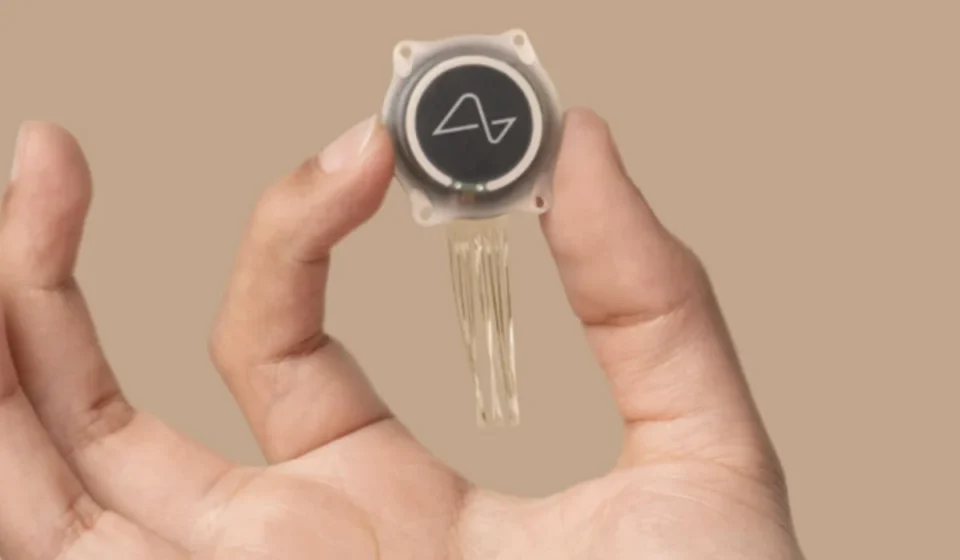

A groundbreaking wearable device, disguised as a commonplace beanie, is poised to redefine human-computer interaction. Developed by the Silicon Valley startup Sabi, this prototype employs advanced brain-computer interface (BCI) technology to translate a user’s internal monologue, or subvocalization, directly into text. This innovation promises a future where individuals can effectively "type" using only their thoughts, bypassing the need for physical keyboards or voice commands. This development, detailed in a recent report by WIRED, marks a significant step toward making sophisticated brain-tech wearables less obtrusive and more integrated into daily life, moving away from the often bulky and conspicuously futuristic designs of experimental BCI hardware.
The Dawn of Non-Invasive Thought Translation
Sabi’s innovative approach leverages electroencephalography (EEG), a well-established, non-invasive neuroimaging technique. EEG works by detecting and recording the electrical activity of the brain through electrodes placed on the scalp. This method stands in stark contrast to invasive BCI systems, such as those being pioneered by companies like Neuralink, which require surgical implantation of electrodes directly into brain tissue. By opting for a non-surgical, external solution, Sabi aims to significantly lower the barrier to entry for BCI technology, making it accessible to a much wider audience without the inherent medical risks and recovery periods associated with invasive procedures.
The core functionality of the Sabi beanie revolves around capturing and interpreting "internal speech." This refers to the silent, inner voice that individuals use to articulate thoughts to themselves, a process that occurs without any physical vocalization. The ultimate goal is to decode these neural signals and translate them into tangible text displayed on a connected device. If Sabi achieves its objectives, this technology could revolutionize communication for individuals with speech impairments, unlock new forms of hands-free device control, and offer unprecedented levels of efficiency in digital tasks.
To achieve a higher degree of accuracy in decoding these subtle neural patterns, Sabi’s beanie incorporates an exceptionally high density of miniature sensors. Traditional EEG devices typically employ a limited number of electrodes, which can constrain the detail and granularity of the brain signals captured. Sabi’s design, however, is reported to feature tens of thousands of these micro-sensors, meticulously integrated into the fabric of the beanie. This dense array is engineered to capture a far richer and more nuanced representation of neural activity, providing the artificial intelligence algorithms with the detailed data necessary for precise interpretation of the user’s internal speech. This technological leap in sensor density is a critical factor in the system’s potential to differentiate between various internal thoughts and translate them accurately.
A More Accessible BCI Paradigm
The landscape of brain-computer interfaces has largely been dominated by two primary avenues: invasive surgical implants and bulky, often cumbersome external hardware. While both have demonstrated remarkable potential in research settings, their widespread adoption has been hampered by significant challenges. Invasive methods, while offering the most direct neural signal access, carry inherent medical risks, require extensive recovery, and are prohibitively expensive for most consumers. External systems, on the other hand, often suffer from practical limitations such as poor signal quality due to the insulating effects of the scalp and skull, the need for precise electrode placement, and the requirement for frequent recalibration. Furthermore, their often unwieldy appearance makes them impractical for seamless integration into everyday life.

Sabi’s beanie offers a compelling alternative by prioritizing user comfort, discretion, and ease of use. The device is designed to be worn like any other piece of headwear, blending effortlessly into casual or professional attire. Crucially, the company claims the beanie is engineered to function effectively "out of the box," minimizing or even eliminating the need for daily calibration routines that have plagued many previous BCI systems. This persistent calibration requirement has been a major stumbling block, demanding significant user effort and time, and hindering the practical application of BCI technology for everyday tasks. By simplifying the user experience, Sabi aims to make thought-based communication a truly accessible reality.
Early projections for typing speed using the Sabi beanie suggest an average of around 30 words per minute. While this might not immediately rival the typing speeds of proficient typists using conventional keyboards, it represents a significant achievement for a non-invasive BCI. The company anticipates that this speed will increase as users become more accustomed to the system and as the underlying AI models are further refined through continued training and user interaction. The potential applications of such a system are vast and transformative. For individuals with severe motor impairments, such as those suffering from ALS, spinal cord injuries, or advanced stages of neurological diseases, this technology could restore a vital means of communication and independence. Beyond accessibility, the implications for general users are equally profound, envisioning a future of truly hands-free computing, seamless interaction with smart devices, and enhanced productivity in various professional settings where traditional input methods might be impractical or impossible.
The Intricacies of Decoding the Mind
Despite its promising trajectory, the Sabi beanie and similar BCI technologies face considerable scientific and engineering hurdles. The human brain is an extraordinarily complex organ, and the neural signals associated with thought are highly variable. Brain activity can differ significantly from one individual to another, and even for the same person, a particular thought may not elicit precisely the same neural pattern every time. This inherent variability poses a substantial challenge for any system attempting to reliably decode these signals.
To overcome this obstacle, Sabi is investing heavily in the development of a sophisticated, large-scale artificial intelligence model. This AI is undergoing extensive training, utilizing thousands of hours of brain data meticulously collected from a diverse pool of volunteers. The objective is to train the model to identify and recognize recurring patterns within neural activity that reliably correspond to specific internal speech sounds or words, irrespective of individual variations. The success of this AI in generalizing across different users will be a critical determinant of the technology’s widespread applicability.
However, it is important to temper expectations regarding the current capabilities of BCI technology. Experts in the field frequently caution against the sensationalized notion of "mind-reading." While current systems can achieve a degree of success in decoding specific commands, intentions, or limited sets of words, the seamless and continuous translation of fluid, natural thought into coherent text remains a formidable and evolving challenge. The nuanced nature of human cognition and the subtle variations in neural signaling mean that achieving a truly comprehensive "thought-to-text" capability is a long-term scientific endeavor.
Navigating the Ethical Frontier: Privacy and Security
As BCI technology inches closer to widespread consumer availability, profound ethical questions, particularly concerning data privacy and security, come to the forefront. Neural data is arguably the most intimate and personal information an individual possesses. It can potentially reveal not only conscious thoughts and intentions but also subconscious biases, emotional states, and cognitive patterns that individuals may not wish to share. The implications of this data being collected, stored, and potentially misused are significant and warrant careful consideration.

Sabi acknowledges these concerns and states that it is implementing robust security measures. The company emphasizes its commitment to encrypting all neural data collected by the beanie and is actively collaborating with leading neurosecurity experts. This collaboration is aimed at developing and implementing best practices for the safe and responsible handling of sensitive neural information. Despite these assurances, the broader societal discourse surrounding brain data rights, consent frameworks, and the ethical boundaries of neurotechnology is likely to intensify as devices like the Sabi beanie move from the laboratory to the marketplace. Establishing clear ethical guidelines and robust legal protections will be paramount to fostering public trust and ensuring that this transformative technology is developed and deployed in a manner that respects individual autonomy and privacy.
The Road Ahead: Towards Ubiquitous Brain-Computer Interfaces
Sabi has set an ambitious target for the release of its first consumer-ready product. The company is aiming to launch its innovative beanie, alongside a complementary cap variant, by late 2026. This timeline suggests a rapid pace of development and a strong commitment to bringing this technology to the public within the next few years.
Should Sabi’s endeavor prove successful, it could signify a pivotal shift in how we perceive and interact with technology. The development of subtle, everyday brain-computer interfaces that integrate seamlessly into our lives could pave the way for a new era of human-computer symbiosis. This evolution would move beyond the current paradigm of explicit input and command-driven interactions towards a more intuitive and potentially effortless digital experience.
For now, the concept of communicating solely through one’s thoughts might still reside in the realm of science fiction for many. However, with the emergence of innovations like the Sabi beanie, that future is rapidly materializing. It is a future that promises not only enhanced functionality and accessibility but also a more wearable, less intrusive, and ultimately more integrated relationship between the human mind and the digital world. The journey from a prototype in a lab to a ubiquitous consumer device will undoubtedly be complex, but the potential rewards for humanity are immense.