Fellow Moon to close on July 23, 2026 in Japan, ending its supernatural strategy RPG run without a global release

Garena International II, a prominent publisher in the global mobile gaming market, has officially announced the impending shutdown of its turn-based supernatural strategy RPG, Fellow Moon, in Japan. The game’s End of Service (EOS) is slated for July 23, 2026, marking a definitive conclusion to its operational life in one of its key regional markets, following an earlier closure in China. This decision brings an end to a journey that saw the game undergo public beta testing in China, a final closed beta test (CBT) across Korea and Taiwan, and a subsequent regional launch in select territories, notably without ever achieving a full global release. The prolonged sunset period, stretching over two years from the announcement, offers players a final opportunity to engage with the game while reflecting the complexities of managing game lifecycles in the highly competitive mobile sector.
The Genesis and Premise of Fellow Moon
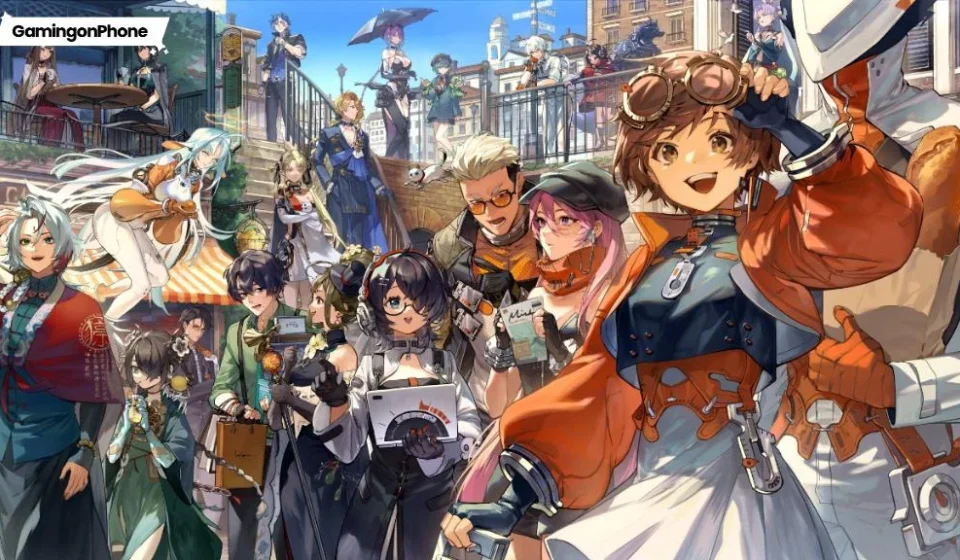
Fellow Moon carved out a niche for itself as an urban paranormal strategy RPG, inviting players into the mysterious metropolis of Nanting. The narrative positioned players as the esteemed head of the Super Management Bureau, an organization tasked with investigating and combating strange, supernatural occurrences plaguing the city. Players were responsible for assembling and leading a diverse team of "Agents," each possessing unique abilities and backstories, to confront both ethereal threats and rival factions in intricate, team-based tactical battles. The game’s visual presentation was frequently lauded, with many early adopters and critics pointing to its "stunning art" as a significant draw. This distinctive aesthetic, coupled with its intriguing premise blending urban fantasy with strategic combat, initially generated considerable anticipation within the mobile gaming community, particularly among fans of the gacha RPG genre.
The game’s development and pre-release phases were indicative of a carefully planned regional rollout. Its initial public beta in China served as a crucial testing ground, gathering player feedback and refining core mechanics. This was followed by a more targeted final Closed Beta Test (CBT) in the key East Asian markets of Korea and Taiwan, strategic regions known for their enthusiastic adoption of mobile RPGs. Following these beta cycles, Fellow Moon proceeded with a regional launch in select countries, aiming to build a stable player base before potentially expanding further. However, the anticipated global launch never materialized, a critical factor that would later become a point of discussion regarding the game’s overall trajectory and ultimate fate.
A Phased Retreat: The Journey Towards End of Service
The announcement of Fellow Moon‘s closure in Japan is not an isolated incident but rather the latest step in a phased withdrawal from the market. While the exact date of its China closure was not widely publicized, its prior cessation of services in that colossal market undoubtedly signaled early challenges for the title. The competitive landscape of the Chinese mobile gaming market is notoriously fierce, characterized by a high volume of new releases, sophisticated monetization strategies, and discerning player bases. Successfully navigating this environment requires not only compelling gameplay and engaging content but also robust operational support and sustained player engagement. The game’s inability to thrive in China likely prompted a reassessment of its viability in other regions.
The official notification regarding the Japan EOS was disseminated through the game’s official X (formerly Twitter) account, @FellowMoonJP. The announcement, typical of such industry communications, expressed profound gratitude to the player community: "We, the operations team, extend our heartfelt gratitude to all the captains who have supported us until now." This standard phrasing, while sincere in its sentiment, often accompanies end-of-service declarations across the industry, rarely delving into the specific commercial or operational factors that necessitate such a decision. The absence of an explicit reason for the shutdown leaves room for speculation but is generally understood to stem from a confluence of factors, including declining player engagement, insufficient revenue generation to cover operational costs, or a strategic reallocation of resources by the publisher.
Operational Wind-Down and Player Provisions
In the immediate aftermath of the EOS announcement, Garena International II initiated a structured wind-down process. Following what was termed the "Dawn’s Return version maintenance," several key operational changes were implemented. Crucially, new user registrations were disabled, effectively preventing new players from joining the game. Concurrently, all in-app purchases were halted, signifying the cessation of new revenue generation from existing players. These measures are standard practice for games entering their sunset phase, aiming to prevent further financial investment by players into a service that will soon be discontinued.
Despite these restrictions, Garena has committed to allowing existing players to continue accessing and playing Fellow Moon until the official shutdown date of July 23, 2026. This extended period, stretching over two years, is notably generous compared to many other mobile game shutdowns, which often provide only a few months’ notice. During this time, players are encouraged to utilize any remaining in-game currency or resources. To facilitate this, the "Special Delivery Area" remains operational, allowing players to exchange items. Furthermore, the development team has implemented "bonus cycles" running from May 7 to July 8, 2026, likely offering enhanced rewards or opportunities to spend accumulated resources, serving as a final incentive for continued engagement and a gesture of appreciation for the loyal player base.
A significant point of concern for many players, however, is the confirmation that no offline version of Fellow Moon will be made available. This means that once the servers are officially taken offline, the game will become entirely unplayable, rendering any progress, collections, or virtual investments irretrievably lost. This reality underscores a pervasive challenge in the digital-only gaming ecosystem, where player access is contingent upon ongoing server maintenance and publisher support.
Player Sentiment and Industry Realities
The news of Fellow Moon‘s impending closure has elicited a mixed but largely melancholic response from its community. On platforms like Reddit, discussions among gacha gaming enthusiasts reveal a spectrum of opinions. Many players echo the sentiment that the game possessed considerable "potential," particularly highlighting its "stunning art" as a standout feature. The disappointment is palpable among those who envisioned a brighter future for the title, especially given the lack of a global release that might have broadened its audience and revenue streams. For these players, the game’s aesthetic appeal was a compelling reason to invest their time, making its closure a regrettable loss.
Conversely, a segment of the community holds a more critical perspective, suggesting that while the art was indeed impressive, Fellow Moon ultimately lacked the depth required to sustain long-term engagement in a cutthroat market. Comments such as, "Fellow Moon had nice art, but that’s really all it had," point to perceived shortcomings in "gameplay and story." In the crowded gacha RPG space, stunning visuals are often a prerequisite, but lasting success hinges on innovative mechanics, compelling narratives, frequent content updates, and a finely tuned monetization system that balances player satisfaction with profitability. If Fellow Moon struggled in these latter aspects, even exceptional art might not have been enough to secure its longevity.
Another frequently cited factor in online discussions is the "brutal competition in the CN gacha market." This observation is profoundly insightful, as the Chinese mobile gaming sector is not only vast but also intensely competitive. It is a market characterized by high development budgets, aggressive marketing campaigns, and a constant influx of new, high-quality titles. Games must vie for attention against established giants and innovative newcomers alike, often requiring continuous content updates and strategic pivots to maintain relevance. A game failing to gain significant traction in China, even with regional success elsewhere, can face an uphill battle for global viability. The operational costs of maintaining servers, developing new content, and conducting marketing for a game that isn’t meeting revenue targets can quickly become unsustainable.
Broader Implications for the Mobile Gaming Ecosystem
The shutdown of Fellow Moon serves as a poignant reminder of the inherent volatility and competitive pressures within the global mobile gaming industry, particularly for games relying on the "games as a service" model. The lifecycle of a mobile game, especially a gacha RPG, is often characterized by an initial surge of interest, a period of sustained engagement, and then, for many, an eventual decline leading to an "End of Service."
Several factors contribute to these shutdowns:
- Economic Viability: Mobile games, particularly those with high production values like Fellow Moon, incur substantial development, marketing, and ongoing operational costs (server maintenance, customer support, content updates). If a game fails to generate sufficient revenue through in-app purchases and advertisements to offset these costs, publishers are often compelled to cease operations.
- Market Saturation and Competition: The mobile gaming market is oversaturated, with thousands of new titles released annually. Standing out and retaining players requires constant innovation and significant investment, which smaller or less successful titles often cannot match against industry titans.
- Evolving Player Preferences: Player tastes are constantly shifting. What was popular a few years ago might no longer resonate with a modern audience. Games that fail to adapt or provide fresh content risk losing their player base to newer, more engaging alternatives.
- Technical Debt and Maintenance: Over time, games can accumulate "technical debt" – complex codebases that become difficult and expensive to maintain or update. Publishers may decide that the cost of overhauling an aging game outweighs the potential returns.
- Strategic Reprioritization: Large publishers like Garena International II manage extensive portfolios. Resources (developers, marketing budgets, server capacity) are finite. A decision to shut down one game might reflect a strategic choice to reallocate those resources to more promising titles or new projects.
The lack of a global release for Fellow Moon is particularly noteworthy. While regional releases can allow for focused market penetration and cultural tailoring, they also limit the potential player base and overall revenue ceiling. In an industry where scale often dictates success, confining a game to select regions might inadvertently cap its growth potential, making it more vulnerable to the economic pressures that lead to shutdowns.
Garena’s Strategy and Future Outlook
Garena International II, a subsidiary of Sea Limited (which also owns Shopee and Free Fire), is a significant player in the digital entertainment space, particularly known for its success with titles like Free Fire. The decision to sunset Fellow Moon in Japan, after its earlier closure in China, suggests a pragmatic approach to portfolio management. Publishers like Garena continuously evaluate the performance of their titles against key metrics such as daily active users (DAU), monthly active users (MAU), average revenue per user (ARPU), and return on investment (ROI). Games that consistently underperform against these benchmarks are often candidates for EOS, allowing the company to streamline operations and focus resources on more profitable ventures.
While the closure of Fellow Moon might be disappointing for its dedicated players, it aligns with broader business strategies in the mobile gaming sector. It underscores that even games with strong artistic merit or initial potential can succumb to the harsh realities of market economics and competition. For Garena, this move likely represents a calculated decision to optimize its resources and continue investing in titles that demonstrate stronger long-term viability and growth prospects.
The Enduring Challenge of Digital Preservation
The absence of an offline version for Fellow Moon highlights a critical issue in modern gaming: digital preservation. For many players, the time and financial investment in a "games as a service" title represent a significant personal commitment. When these games are shut down, all that investment, along with the game itself, vanishes. This raises questions about player ownership in the digital age and the broader cultural implications of losing access to digital artifacts. Unlike physical games that can be played indefinitely (barring hardware failure), online-only titles are entirely dependent on publisher support, making their lifespans inherently finite. The Fellow Moon case serves as yet another example of this ongoing challenge, leaving a segment of its player base with a sense of loss for a world they can no longer visit.
In conclusion, Fellow Moon‘s journey from a promising urban paranormal RPG with striking visuals to its eventual End of Service in Japan on July 23, 2026, encapsulates many of the triumphs and tribulations of the modern mobile gaming industry. It reflects the intense competition, the constant battle for player attention, and the economic realities that often dictate the fate of even well-received titles. While its "stunning art" garnered praise, the game’s inability to secure a global release or perhaps sustain sufficient engagement in its regional markets ultimately led to its sunset. For its loyal "captains," the two-year grace period offers a bittersweet farewell, a final opportunity to explore Nanting before it fades into the digital ether, a testament to the ephemeral nature of online-only gaming experiences.