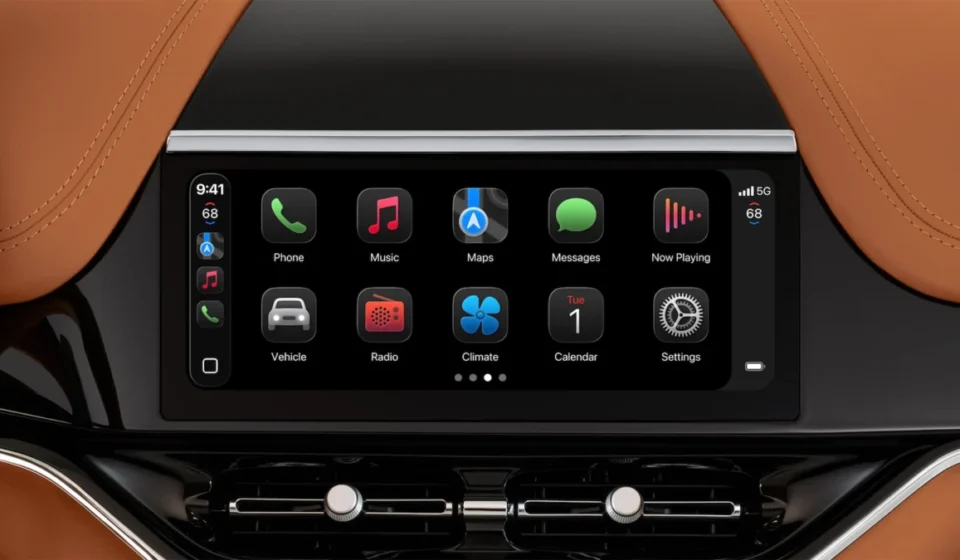

Nearly a year after its initial debut, Apple’s advanced in-car infotainment system, CarPlay Ultra, is poised for a significant expansion, moving beyond its exclusive initial home in Aston Martin’s luxury vehicles. The company announced that several prominent automotive brands, including Hyundai, Kia, and Genesis, are slated to integrate CarPlay Ultra into their upcoming vehicle models. This strategic rollout promises to bring a more deeply integrated and feature-rich digital driving experience to a broader consumer base, signaling a pivotal moment in the evolution of automotive software.
The Genesis of CarPlay Ultra: A Leap in Automotive Integration
CarPlay Ultra, first introduced in May 2025, represents a substantial evolution from the standard CarPlay experience. Unlike its predecessor, which primarily mirrored iPhone applications onto a vehicle’s infotainment screen, CarPlay Ultra is designed for profound system-level integration. This next-generation software allows for a seamless blend of iPhone-provided app data with crucial vehicle telemetry, creating a unified and dynamic user interface.
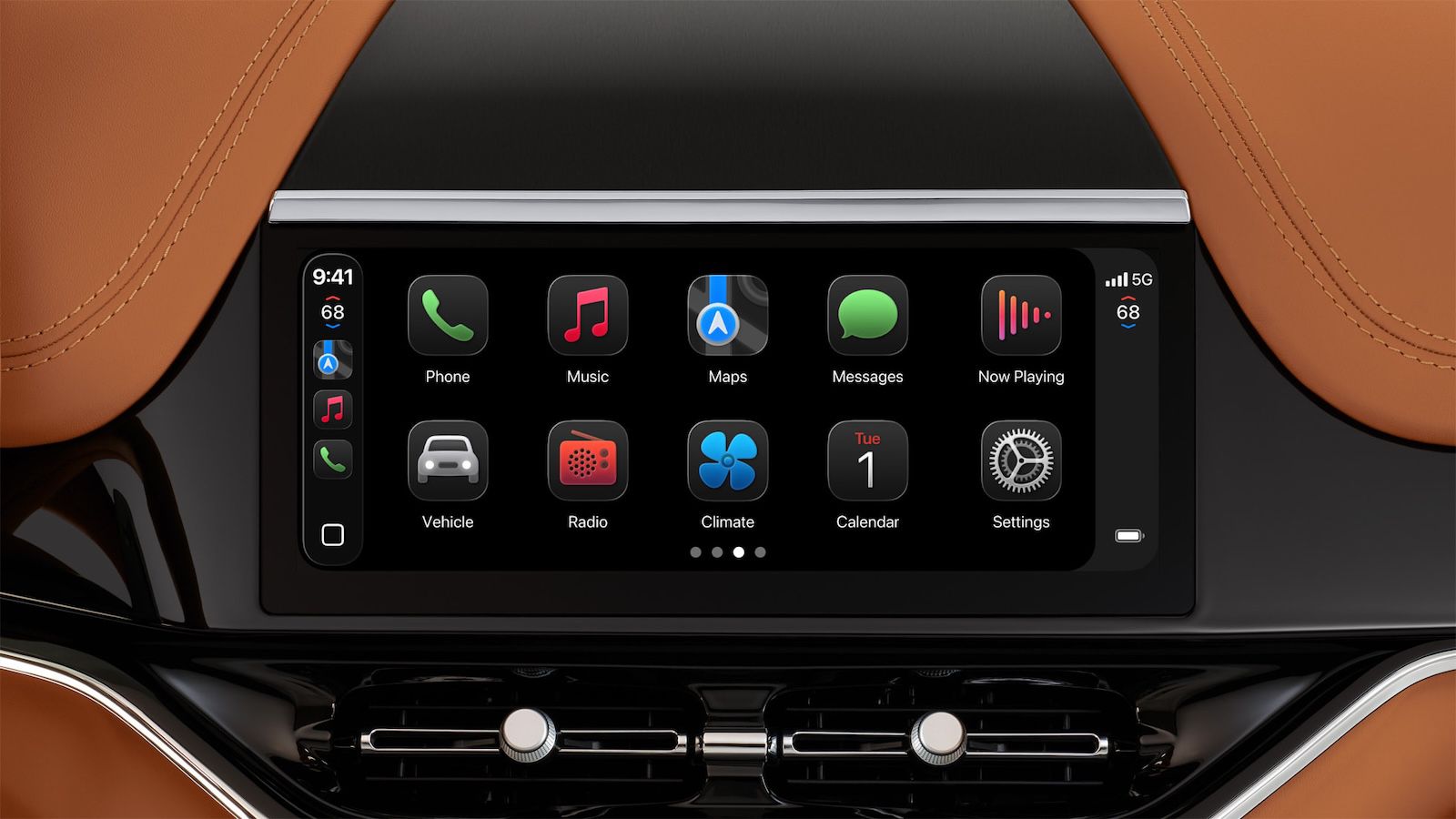
Key enhancements introduced with CarPlay Ultra include native support for instrument cluster displays, enabling the projection of navigation, media information, and driving alerts directly into the driver’s line of sight. Furthermore, it incorporates built-in applications for essential vehicle functions such as radio tuning and climate control, offering a more cohesive and intuitive user experience. The system also boasts enhanced support for rear-view camera feeds, presenting a clearer and more integrated view for drivers.
The technical architecture of CarPlay Ultra leverages the strengths of both the connected iPhone and the vehicle’s own systems. The iPhone acts as the processing hub for app-related data, ensuring access to the latest information from Apple’s ecosystem. Concurrently, the vehicle provides real-time data, including critical metrics like current speed, fuel level, tire pressure, and engine temperature. This synergistic approach allows for a level of responsiveness and data richness previously unattainable with traditional automotive infotainment systems.
A Phased Rollout: From Luxury Exclusivity to Mainstream Adoption
The journey of CarPlay Ultra began with an exclusive partnership with Aston Martin. The British luxury car manufacturer was the first to adopt the new system, integrating it into its latest high-end models. This initial phase served as a crucial proving ground for CarPlay Ultra, allowing Apple and its automotive partner to refine the technology and gather real-world user feedback in a premium environment.
Following this exclusive debut, Apple confirmed its intentions to broaden the reach of CarPlay Ultra. In May 2025, alongside the Aston Martin announcement, the company revealed a roster of additional automakers committed to integrating the advanced software. The list prominently featured Hyundai, Kia, and Genesis, brands that collectively represent a significant portion of the global automotive market, from mass-market sedans and SUVs to premium offerings.
The timeline for this wider adoption has been a subject of considerable interest within the tech and automotive industries. Reports from industry analysts and tech journalists have offered glimpses into the expected rollout schedule. In early 2026, Mark Gurman of Bloomberg reported that he had received information indicating that at least one major new Hyundai or Kia vehicle model was expected to feature CarPlay Ultra in the latter half of the year. This forecast suggests that consumers can anticipate seeing CarPlay Ultra becoming more prevalent in dealerships in the coming months, marking a significant shift from its limited availability.
Tailored Interfaces: A Brand-Centric Driving Experience
A key aspect of CarPlay Ultra’s design philosophy is its adaptability and customization. Apple has emphasized that the interface is meticulously tailored to align with each vehicle model and the unique brand identity of the automaker. This means that while the underlying technology is consistent, the visual presentation and user flow can be distinct for a Hyundai versus a Kia or Genesis vehicle.
Automakers have the flexibility to choose from various preset design options, allowing them to imbue their CarPlay Ultra implementation with their signature aesthetic. This approach ensures that the digital experience within the car feels cohesive with the vehicle’s overall design language and brand ethos. Drivers can expect to see interfaces that reflect the styling cues and user experience principles established by each manufacturer, ranging from minimalist and modern to more performance-oriented and detailed layouts. This level of customization is crucial for maintaining brand loyalty and providing a unique ownership experience.
Deeper Integration: Unpacking the Core Features
The enhanced integration offered by CarPlay Ultra extends to several core functionalities that significantly improve the driver’s interaction with their vehicle and digital life.
- Instrument Cluster Integration: Perhaps the most transformative feature, CarPlay Ultra can seamlessly project information onto the vehicle’s instrument cluster. This allows for dynamic displays of navigation turn-by-turn directions, media playback details, incoming call notifications, and system alerts without the driver needing to divert their gaze to the central infotainment screen. This feature is particularly valuable for safety, keeping essential information within the driver’s primary field of vision.
- Native Climate Controls: Moving beyond a simple on-screen representation, CarPlay Ultra provides dedicated, built-in applications for managing climate control systems. This allows drivers to adjust temperature, fan speed, and air direction using an interface that feels native to the car, rather than an app running in a separate window. This streamlines the process of making comfort adjustments on the go.
- Enhanced Radio Functionality: The system includes built-in radio applications that can display richer information, such as artist and song titles for terrestrial radio broadcasts, and provide more intuitive controls for tuning and saving presets.
- Rear-View Camera Feed: CarPlay Ultra offers an improved integration for rear-view camera feeds. This means that when the vehicle is put into reverse, the camera view can be presented with greater clarity and potentially overlaid with dynamic parking assist lines that adapt to the steering angle.
- Synergistic Data Exchange: The core of CarPlay Ultra’s power lies in its ability to meld data from the iPhone with vehicle telemetry. For example, a navigation app on the iPhone can receive precise vehicle speed data to offer more accurate ETA calculations or to adjust route suggestions based on driving conditions. Conversely, the vehicle’s system can leverage iPhone-based services for advanced features like real-time traffic analysis or integration with smart home devices accessible through the iPhone.
Supporting Data and Industry Context
The expansion of CarPlay Ultra comes at a time when the automotive industry is increasingly prioritizing the digital experience as a key differentiator. Consumer expectations for in-car technology have evolved dramatically, with seamless connectivity, intuitive interfaces, and integrated smart features becoming as important as traditional automotive performance metrics for many buyers.
The market for in-car infotainment systems is substantial and growing. Reports from market research firms indicate that the global automotive infotainment market is projected to reach hundreds of billions of dollars in the coming years, driven by advancements in connected car technologies and the increasing demand for integrated digital services. Apple’s CarPlay, in its various iterations, has already captured a significant share of this market, with millions of vehicles worldwide supporting the platform.
The deeper integration offered by CarPlay Ultra is a strategic move by Apple to solidify its position in the automotive sector. By moving beyond simple mirroring and into system-level control, Apple aims to become an even more indispensable part of the driving experience. This also presents a potential competitive advantage over other in-car operating systems and connected car platforms.
Broader Implications and Future Outlook
The wider rollout of CarPlay Ultra carries significant implications for consumers, automakers, and the broader technology landscape.
For consumers, the primary benefit will be access to a more sophisticated, intuitive, and integrated in-car digital experience. The ability to control vehicle functions alongside smartphone applications within a unified interface promises to enhance convenience and safety. As more vehicle models adopt CarPlay Ultra, drivers will benefit from a more consistent and advanced user experience across different brands, provided they use compatible iPhones.
For automakers, integrating CarPlay Ultra represents an opportunity to enhance the perceived value of their vehicles and to offer a compelling technology proposition to consumers. However, it also requires significant investment in vehicle hardware and software development to ensure full compatibility and to leverage the system’s advanced capabilities. The tailored interface approach allows brands to maintain their distinct identity while benefiting from Apple’s robust software platform.
From a competitive standpoint, the expansion of CarPlay Ultra intensifies the landscape of in-car technology. It directly challenges proprietary automotive infotainment systems and other third-party integration efforts. The success of CarPlay Ultra could further solidify Apple’s influence in the automotive software ecosystem, potentially paving the way for even deeper integration of Apple services and devices in the future.
The recent additions of third-party voice-based conversational apps like ChatGPT to CarPlay, following the enablement in iOS 26.4, further illustrate the evolving nature of the platform. These developments suggest a trend towards making the car a more integrated hub for digital interaction, extending beyond navigation and media to encompass a wider range of AI-powered services.
As the automotive industry continues its rapid digital transformation, the widespread adoption of advanced systems like CarPlay Ultra will be a key indicator of the future direction of the connected car. The coming months and years will be critical in observing how effectively automakers integrate this technology and how consumers respond to this next generation of in-car digital experiences. The promise of a more intelligent, responsive, and personalized driving environment appears closer than ever.