The AI Revolution in Living Rooms: Project Neo Reshapes Content Discovery on Google TV

The pervasive challenge of content discovery in the modern streaming era, often characterized by "doomscrolling" through seemingly endless libraries, is poised for a significant transformation. An experimental AI agent, Project Neo, developed by the Indian hardware startup Lumio, is emerging as a compelling solution to this long-standing user frustration. Designed to bridge the critical gap between content discovery on mobile devices and consumption on the big screen, Project Neo integrates directly with Google TV via everyday communication platforms like WhatsApp and Instagram. This innovative approach promises to eliminate the friction typically associated with finding desired entertainment, heralding a potential future where smart TV ecosystems are intuitively driven by conversational AI. After initial testing, this chatbot-dictated viewing experience is seen by many as a remarkably intelligent application of artificial intelligence, addressing a core pain point for millions of global streaming subscribers.
The Persistent Challenge of Content Discovery in the Streaming Age
For years, the promise of unlimited content from platforms like Netflix, Hulu, Disney+, and countless others has paradoxically led to increased user frustration. This phenomenon, often dubbed "decision paralysis" or "doomscrolling," sees users spending significant time navigating interfaces rather than actually watching content. Industry reports consistently highlight that consumers spend an average of 7-10 minutes browsing before selecting a show or movie, with a substantial percentage giving up entirely. Despite advancements in streaming technology and the proliferation of smart TVs, the underlying mechanisms for content discovery remain fundamentally flawed.
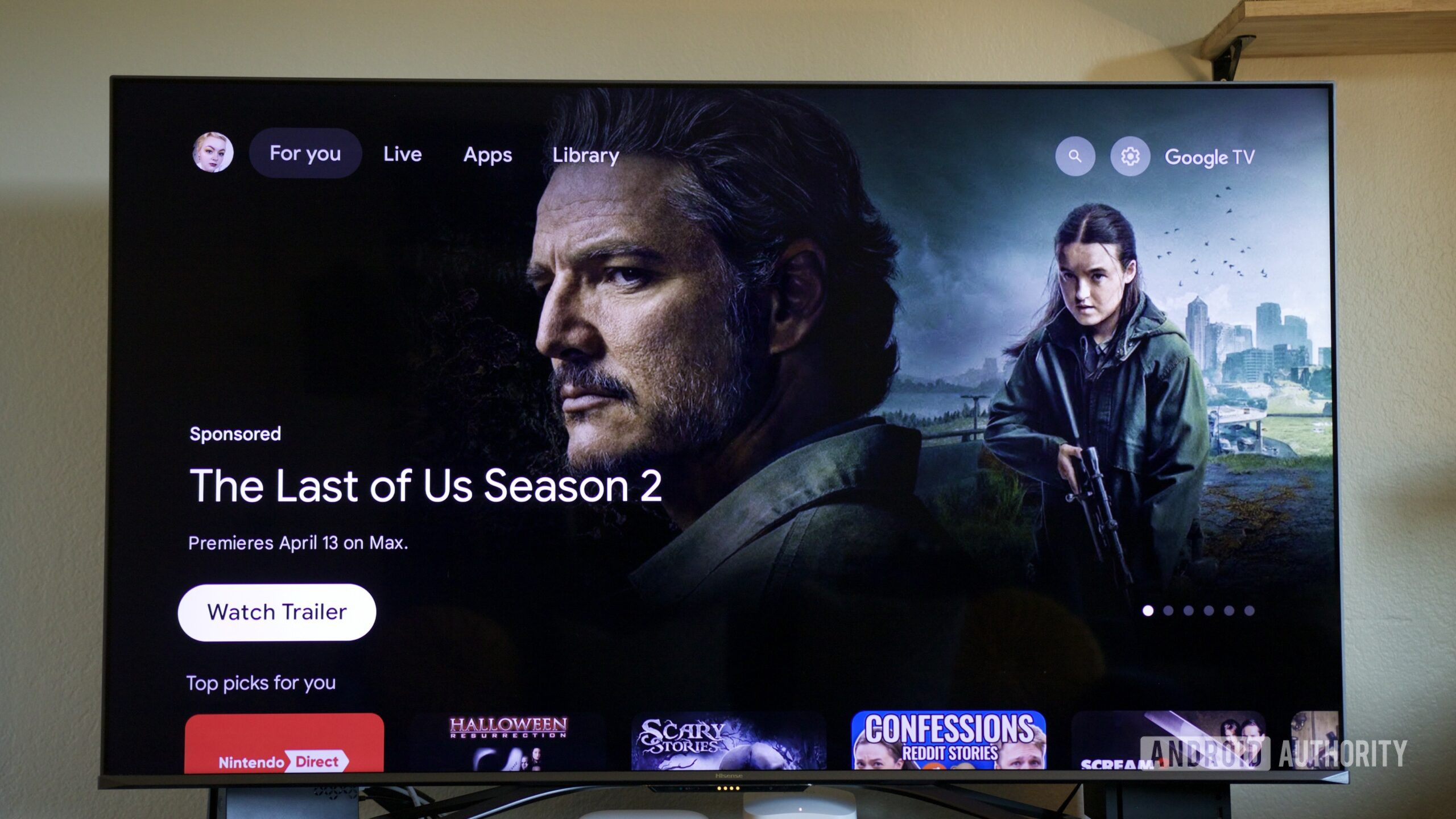
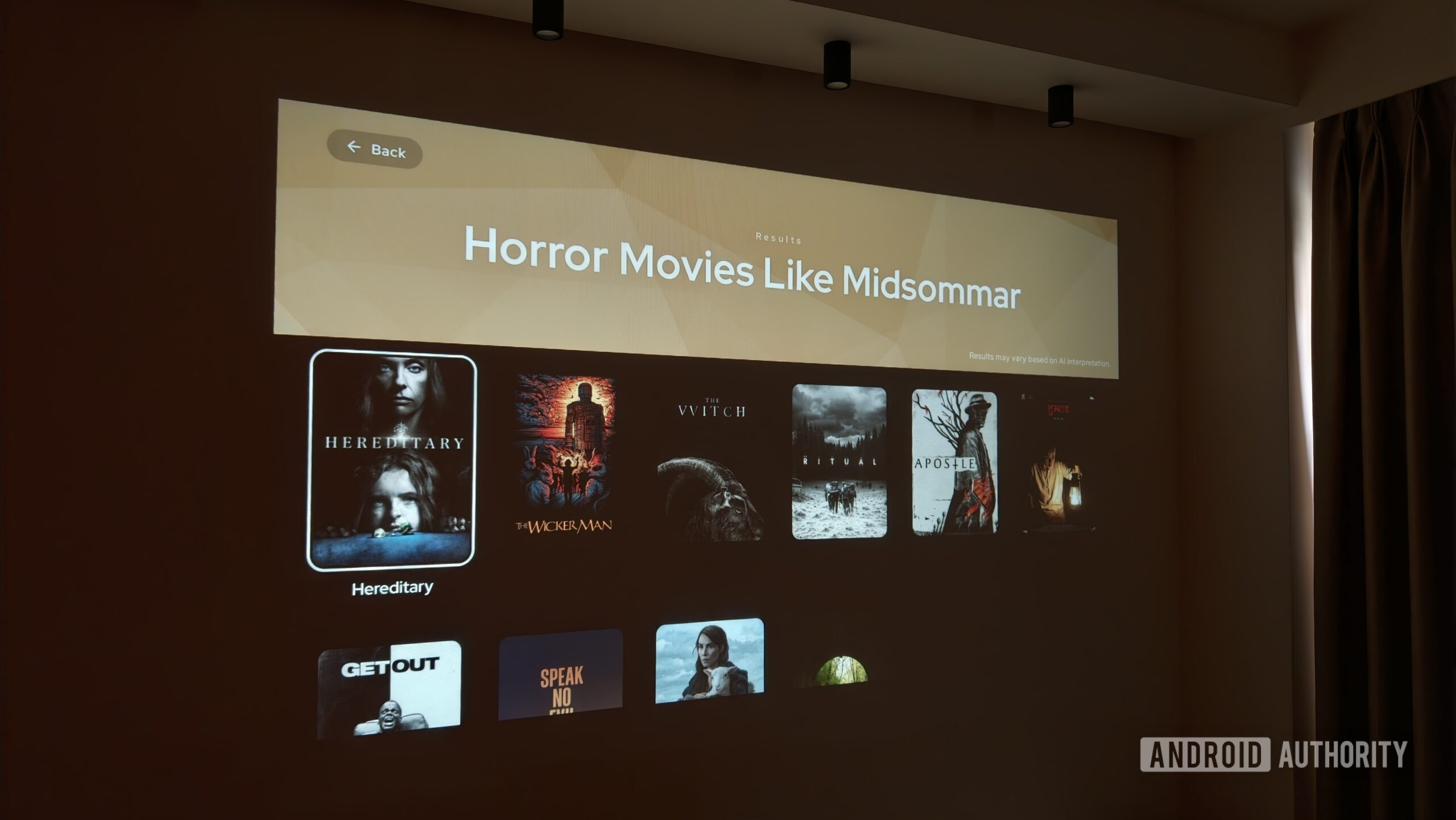
Current smart TV platforms primarily rely on genre-dependent categorization and promotional tiles, often failing to grasp the nuanced preferences of individual viewers. For instance, a critically acclaimed, atmospheric horror film like Midsommar might be superficially grouped with generic slasher flicks, despite sharing deeper thematic or stylistic connections with a classic psychological thriller like The Wicker Man. This lack of sophisticated contextual understanding results in irrelevant recommendations and a cluttered user experience. Traditional streaming interfaces are often designed to maximize engagement time through endless scrolling, auto-playing trailers, and dense grids, rather than facilitating efficient discovery. This design philosophy often overlooks the natural evolution of how people discover content in their daily lives.
Crucially, modern content discovery largely occurs on smartphones through various digital channels. Social media platforms, dedicated film forums like Reddit, movie review sites, and even casual text recommendations from friends are primary sources of new viewing ideas. The significant disconnect arises when users attempt to translate these mobile discoveries to their living room televisions. The current process typically involves remembering a title, identifying its streaming platform, locating the remote, opening the specific app, and then laboriously typing out the title using an on-screen keyboard or relying on often-unreliable voice search functionalities like Google Assistant. This multi-step, cumbersome process introduces considerable friction, transforming what should be a relaxing activity into a tedious chore.
Introducing Project Neo: A Novel Approach to Content Discovery
Lumio, an emerging hardware startup from India, has conceptualized Project Neo as an experimental AI agent specifically designed to tackle these content discovery challenges head-on. The core innovation lies in its ability to integrate directly with Google TV systems using widely adopted communication applications, eliminating the need for users to download yet another proprietary app.
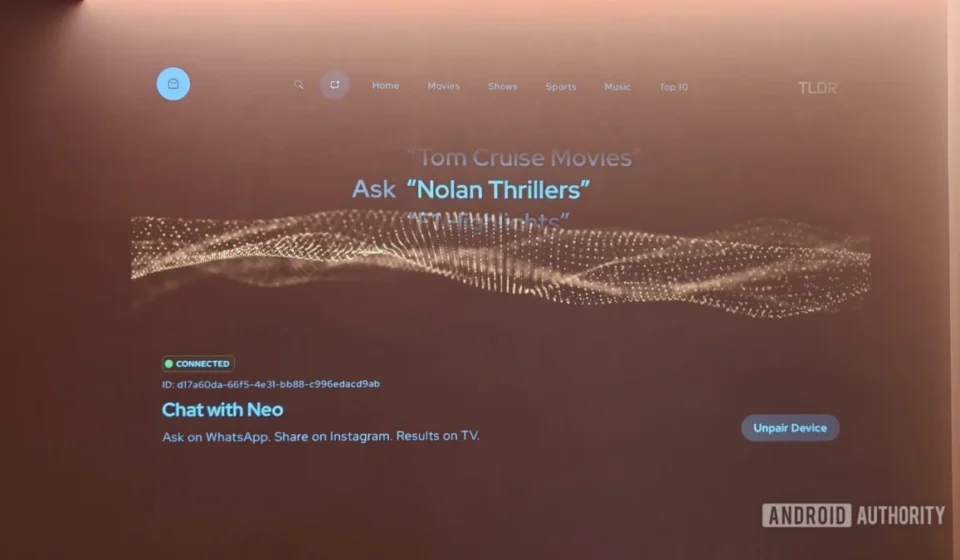
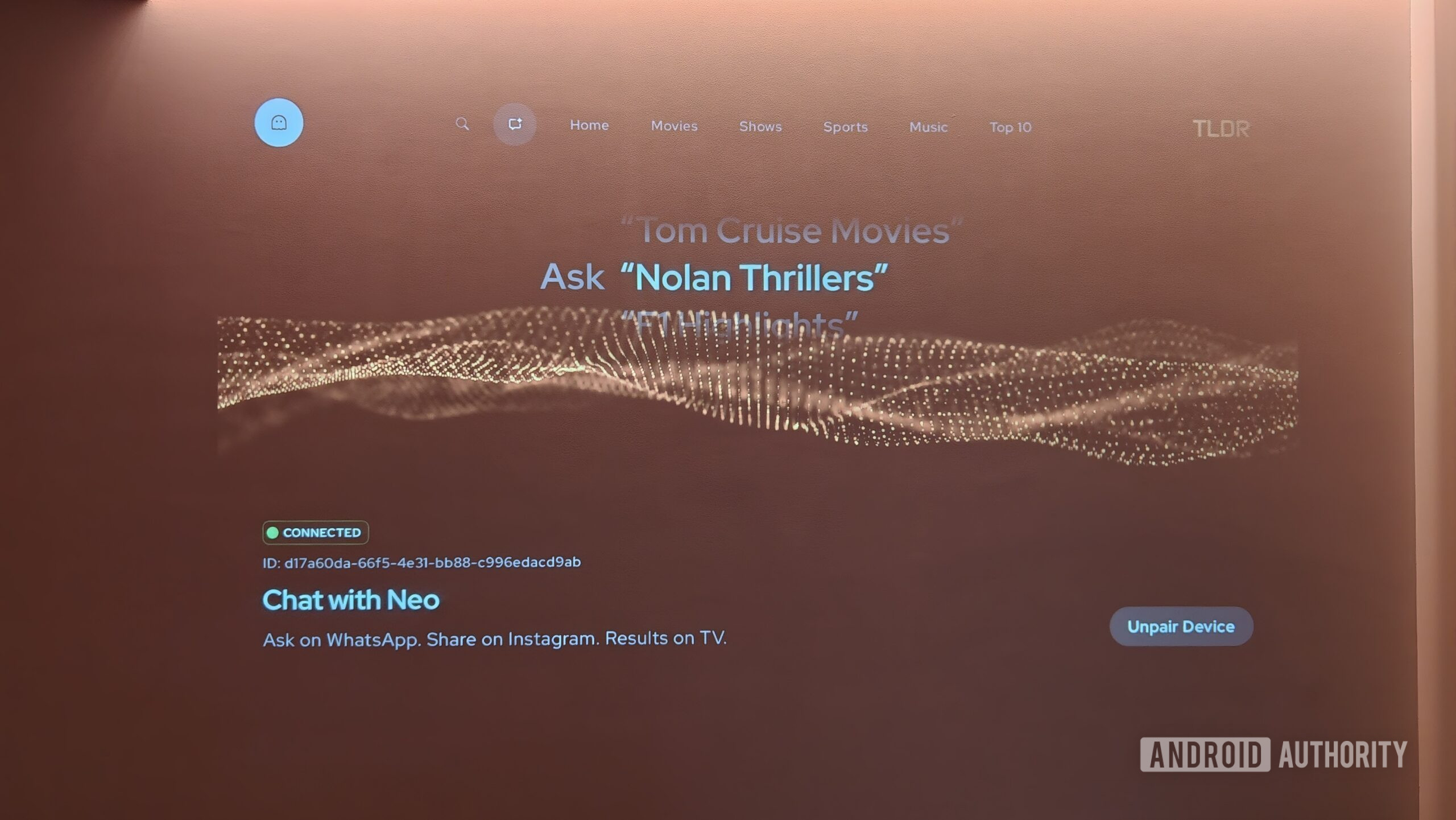
The operational mechanism of Project Neo is remarkably straightforward. Users first install a companion application, named TLDR, on their Google TV-powered device. Following a standard QR code-based pairing process, a dedicated WhatsApp chatbot is linked to the user’s account. Once established, this connection transforms the smartphone into a sophisticated, conversational input device for the television. The system leverages the familiarity of WhatsApp’s interface, allowing users to interact with the AI bot using both text and voice commands. This approach brings content discovery back to the mobile environment where it naturally occurs, bypassing the clunky remote and on-screen navigation.
The seamlessness of this integration is a significant differentiator. Users are not required to learn a new application or navigate complex settings. Instead, they can simply type or speak their content requests directly into WhatsApp. The TLDR app on the television then processes these requests, pulling up relevant content on the screen. A tap on the displayed thumbnail initiates playback, provided the user is logged into the respective streaming service. If not, the system intelligently informs the user which services host the content, accompanied by rich metadata including posters, banner images, summaries, and cast information. This intuitive flow drastically reduces the steps from discovery to viewing.
Beyond Basic Search: Intelligent and Nuanced Recommendations
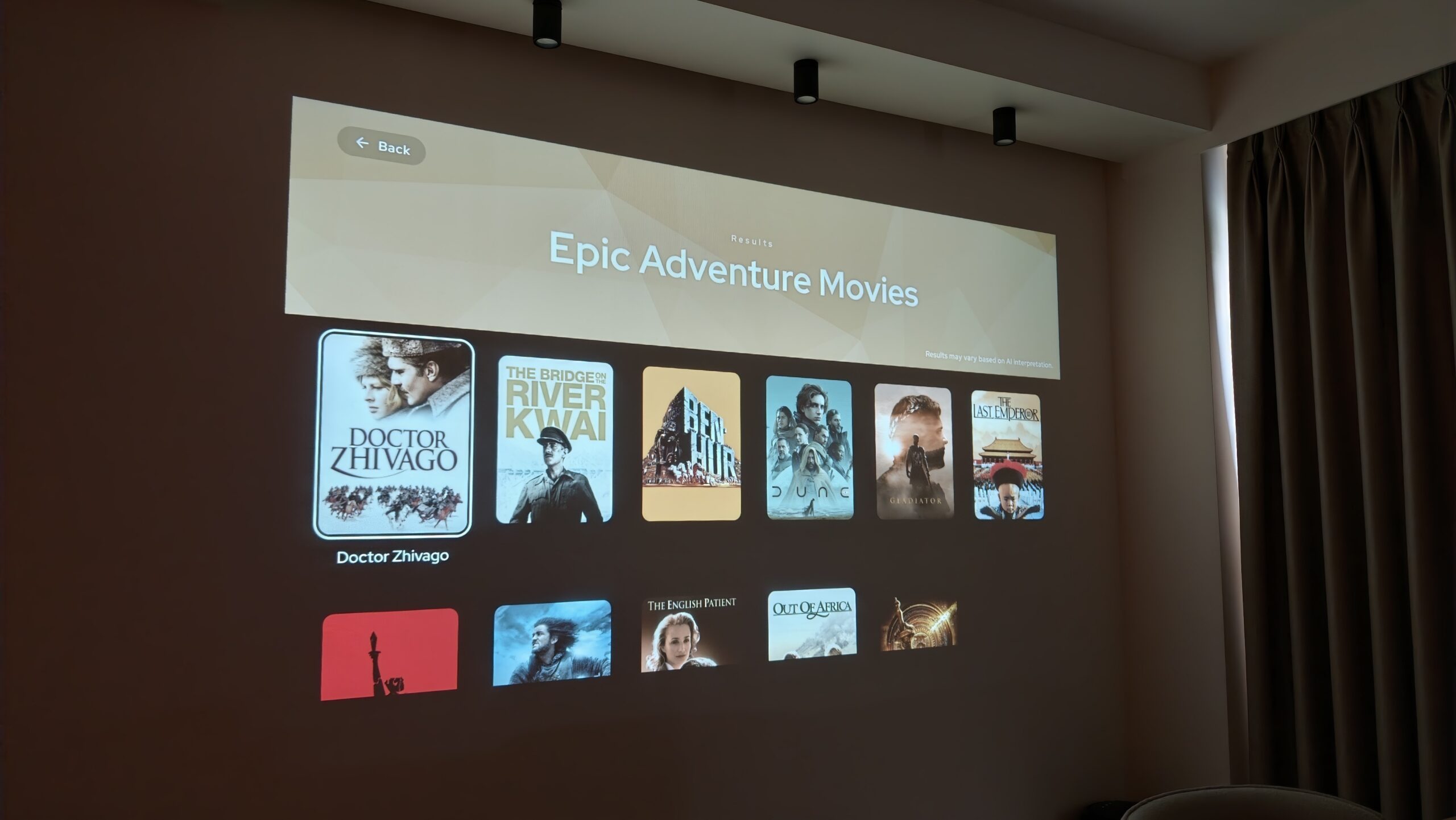
Project Neo’s capabilities extend far beyond simple media launching. At its heart is a robust AI-powered recommendation engine that demonstrates a surprising degree of sophistication. During testing, the system proved adept at understanding nuanced requests and delivering highly relevant suggestions. For example, when prompted for movies similar to the epic adventure Lawrence of Arabia, the AI bot generated spot-on recommendations such as Ben-Hur and The Last Emperor, showcasing its ability to identify thematic and stylistic parallels rather than just superficial genre classifications.
The conversational nature of the WhatsApp interface allows for natural language queries, accommodating slang and abbreviated communication styles. Users can ask for general categories like "trending movies" or formulate complex, multi-criteria searches. An example of this advanced capability includes requesting "a non-obvious, neo-noir crime thriller from the ’90s with high ratings and featuring at least one Oscar-nominated actor." The system successfully processed such intricate requests, presenting solid recommendations directly on the projector screen. Further refinement of results is possible through follow-up queries, such as filtering for "movies longer than 90 minutes."
The convenience of voice input further enhances the user experience. Instead of typing, users can send voice notes to the chatbot, which are accurately parsed and acted upon. The scope of content discovery is also broad, encompassing not only movies and TV shows but also music videos and sports scores. For sports, the TV displays title cards with game highlights, although the ability to directly jump into an ongoing live match is still a feature in development. This multifaceted functionality represents a significant leap forward in personalized content discovery.
Bridging the Social Media Gap: Instagram Integration
A particularly innovative aspect of Project Neo is its integration with social media platforms, specifically Instagram. Many users, particularly younger demographics, discover new content through Instagram Reels, posts, and recommendations from influencers or friends. This social-first discovery often remains siloed on the mobile device, leading to a "collection languishing" problem where interesting content is saved but rarely translated to the big screen.
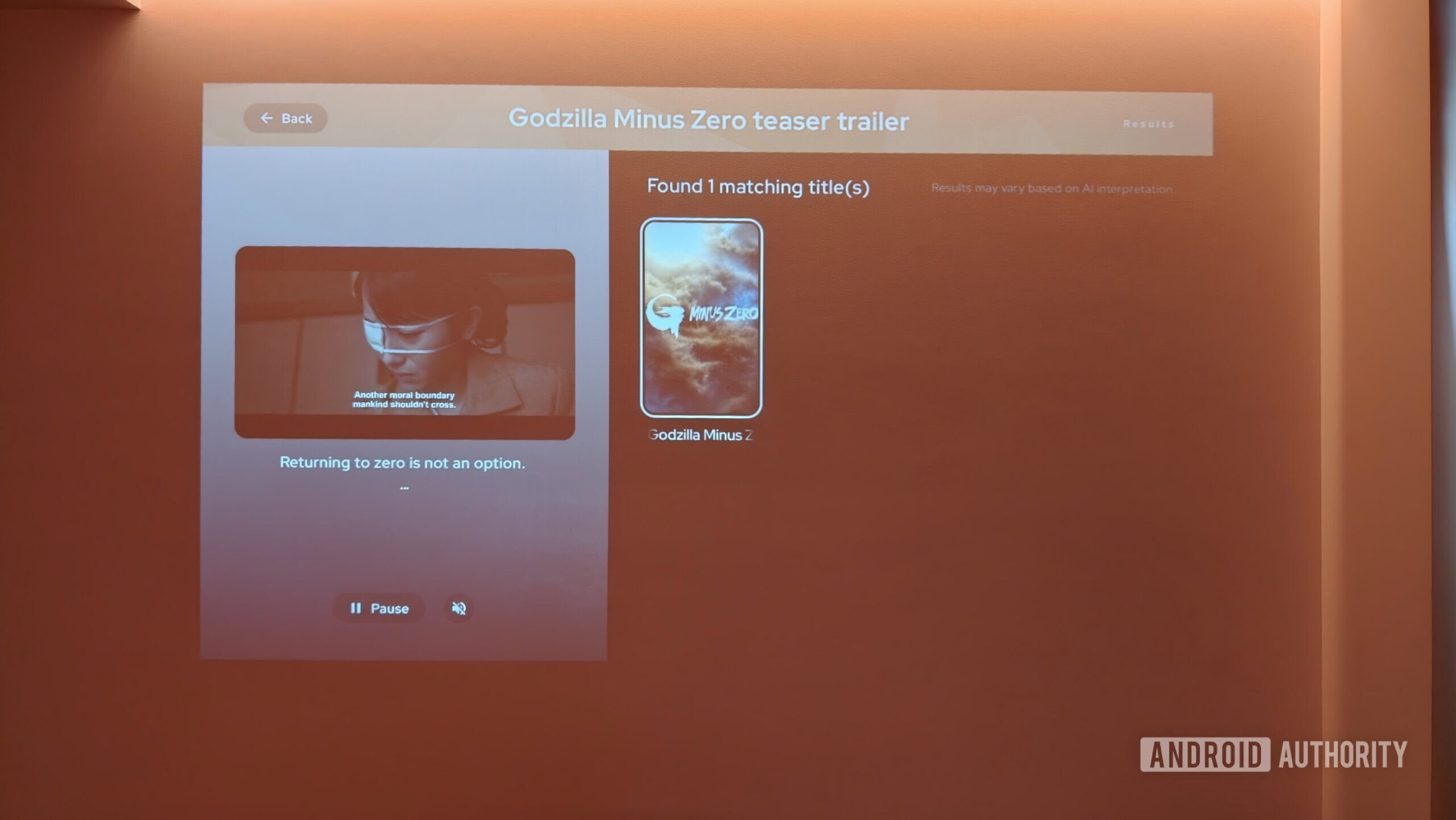
Project Neo addresses this by allowing users to link their Instagram accounts to the platform. When an image or a Reel featuring a movie or show is forwarded to the WhatsApp bot, the AI intelligently parses the content and pulls up the corresponding recommendation on the television. For instance, forwarding a trailer for Godzilla Minus One not only initiated playback of the trailer on the TV but also displayed a comprehensive movie card, enabling the user to add it to a watchlist.
This capability to seamlessly transfer Instagram content to the big screen has broader implications. It allows users to effortlessly share funny clips or interesting videos discovered on social media with friends and family on the large television, without the awkwardness of passing around a phone or dealing with screen mirroring issues and intrusive notifications. Project Neo effectively bridges the chasm between mobile-centric social content discovery and the immersive experience of watching on a large display, making the living room experience more communal and dynamic.
Initial Impressions and User Experience
Initial testing of Project Neo reveals an incredibly fluid and intuitive user experience. The conversational interface, rooted in familiar apps like WhatsApp, eliminates the learning curve associated with new applications. The ability to articulate complex preferences in natural language, whether through text or voice, marks a substantial improvement over traditional remote-based navigation or often-frustrating voice assistants. The system’s capacity to deliver relevant, nuanced recommendations based on stylistic similarities rather than just genre labels highlights its advanced AI capabilities. This user-centric design dramatically reduces the "decision paralysis" that plagues many streaming enthusiasts, allowing for more time spent enjoying content and less time searching for it.
Limitations and Future Prospects
While Project Neo offers an ambitious glimpse into the future of content discovery, it is important to acknowledge that it is currently an early-stage beta with certain limitations. One significant hurdle is its ability to launch videos across all popular streaming applications. While it supports many, the often-locked-down nature of platforms like Google TV can restrict deep-linking capabilities, meaning users may occasionally still need to manually launch a recommended movie or show within its native app.
Another observed limitation is the occasional slowness of the AI-powered bot. While not a frequent occurrence, there were instances during testing where the system exhibited noticeable delays in processing requests, leading to moments of uncertainty for the user. As with any nascent AI technology, optimization for speed and responsiveness will be crucial for broader adoption.
Furthermore, a significant strategic decision by Lumio is the exclusivity of the TLDR companion app to its own hardware, such as Lumio TVs and projectors. While understandable from a business perspective to enhance the value proposition of their products, this exclusivity also represents a missed opportunity. Making the TLDR app available on the Google Play Store for a wider range of Android TV and Google TV devices could exponentially expand Project Neo’s reach and establish it as a de facto standard for content discovery, potentially accelerating its development through broader user feedback.
Finally, the broader industry landscape presents a looming consideration: Google’s own initiative, Gemini for TV. This forthcoming AI-powered experience is poised to bring similar intelligent discovery features natively to a wider array of televisions. While Gemini for TV promises a powerful, integrated solution, a concrete timeline for its broad availability remains elusive. Moreover, Project Neo’s unique WhatsApp and Instagram chat-based interface offers a distinct advantage, providing a highly familiar and frictionless input method that Gemini for TV may not replicate in its initial rollout. This novel social integration is a feature that Google, for the benefit of the entire ecosystem, would do well to observe and potentially integrate.
Strategic Implications for Google TV and the Industry
The philosophy and execution behind Lumio’s Project Neo present a compelling playbook for the evolution of Google TV and the broader smart TV industry. Google already possesses all the fundamental components necessary to develop a similar, native AI-driven content discovery experience, and on a scale that a startup like Lumio cannot match. Based on preliminary insights into Gemini for TV, it appears Google is indeed moving in a similar direction.
However, if Google were to fully embrace and integrate a conversational, smartphone-linked AI discovery engine natively into the core TV experience, complete with the social media linkages demonstrated by Project Neo, it would represent a true paradigm shift. A native Google solution would inherently overcome many of the deep-linking hurdles that currently challenge Project Neo and other third-party applications. Such an integrated system could not only find a movie but also instantly launch and begin playing it across virtually any streaming service, rendering traditional remotes and existing voice-based interactions largely obsolete.
Project Neo emphatically demonstrates that natural language input, facilitated by the ubiquity and familiarity of the smartphone keyboard and voice input, is the ultimate tool for seamless content discovery. As the smart TV market continues to mature and consumer expectations for personalized, intuitive experiences grow, Google has a clear opportunity to build upon this future. Adopting Project Neo’s innovative approach could position Google TV as the definitive platform for the next generation of entertainment consumption, characterized by unparalleled ease of use and intelligent, contextually aware recommendations.
The Future of Entertainment: Personalized, Seamless, and Social
Project Neo, despite its early stage, offers a powerful vision for the future of television. It illustrates how artificial intelligence, when integrated thoughtfully with existing communication platforms, can fundamentally reshape how we interact with our entertainment. The days of endless scrolling and frustrating searches for content may soon be behind us. Instead, we can look forward to a living room experience that is not only personalized and seamless but also inherently social, reflecting how we naturally discover and share content in our daily lives. This convergence of AI, mobile communication, and big-screen entertainment promises a more intuitive, enjoyable, and less friction-filled future for everyone.