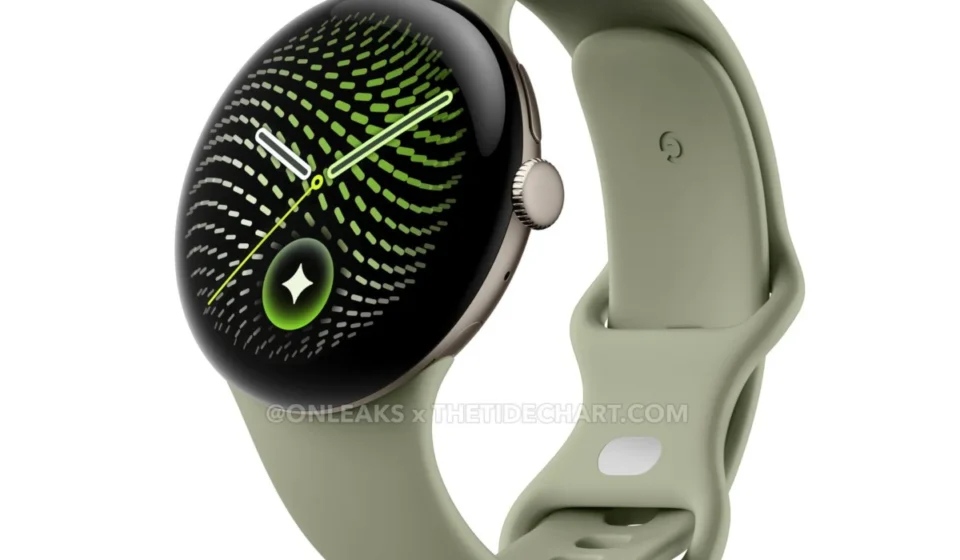
Google Pixel Watch 5 Leaks Detail Iterative Processor, Increased RAM, and Potential Price Hike Ahead of Pixel 11 Debut

A significant "semi-official" leak from the Google Play Console listing has offered an unprecedented glimpse into the core hardware specifications of the forthcoming Google Pixel Watch 5, confirming earlier design renders and revealing key internal upgrades and some notable continuities. This latest disclosure, initially reported by 9to5Google, arrives as anticipation builds for the wearable’s expected launch alongside the Pixel 11 smartphone series next month, solidifying many previously circulating rumors regarding Google’s next-generation smartwatch.
The Play Console listing, a critical source of developer information often updated ahead of device releases, paints a picture of a device that prioritizes specific enhancements while maintaining a familiar foundational architecture. Central to the revelations is the confirmation of the Qualcomm SW5100 platform powering the device. This chipset features four Cortex-A53 CPU cores clocked at 1.7GHz, paired with an Adreno 702 GPU. This configuration mirrors that found in its predecessors, the Pixel Watch 4 and even the Pixel Watch 2, indicating that Google is poised to utilize the same primary processor for the fourth consecutive generation of its wearable lineup.
The Enduring Qualcomm SW5100: An Analysis of Google’s Processor Strategy
The decision to retain the Qualcomm SW5100 platform for the Pixel Watch 5, effectively marking its fourth iteration of use, invites considerable discussion regarding Google’s strategic approach to smartwatch hardware. While the Android Authority article highlighted this as an unchanged specification, it’s crucial to delve into what this means for the device and its position in the highly competitive smartwatch market.
The Qualcomm SW5100, which has been the backbone of Google’s Pixel Watch series since its inception, is based on a foundational architecture that, while capable, is not at the bleeding edge of wearable processor technology. The Cortex-A53 cores, despite their efficiency, represent an older generation of ARM architecture compared to the newer Cortex-A55 or even A7x series found in more powerful mobile SoCs. For a smartwatch, however, raw computational power often takes a backseat to power efficiency, size, and thermal management. The 1.7GHz clock speed across four cores, coupled with the Adreno 702 GPU, provides adequate performance for Wear OS, handling typical tasks such as navigating the user interface, launching applications, processing sensor data for health tracking, and managing notifications.
Google’s continued reliance on the SW5100 suggests a maturity in their software optimization efforts. Rather than chasing raw clock speed or core count increases, the company appears to be focusing on extracting maximum efficiency and performance from existing hardware through software refinements. This strategy can lead to more stable performance, predictable battery life, and potentially lower manufacturing costs, which could be a factor in overall pricing.
However, this iterative approach to the main processor also carries potential drawbacks. Competitors, notably Samsung with its Exynos W-series chips and other Qualcomm-powered devices utilizing newer Snapdragon Wear platforms, are pushing the boundaries of wearable performance. For instance, the original article mentions the Samsung Galaxy Watch 9, which, despite retaining 2GB of RAM, has upgraded its processor to the Qualcomm Snapdragon Wear Elite (SDW6100). The SDW6100, a more advanced platform, offers significant generational improvements in both performance and power efficiency, potentially providing a smoother user experience and enabling more complex on-device computations. While the Play Console listing does not explicitly detail the co-processor in the Pixel Watch 5, the Pixel Watch 4 did upgrade to Qualcomm’s Snapdragon W5 Gen 2 platform to support features like Satellite SOS. This suggests that Google may continue to leverage advancements in co-processor technology to introduce new functionalities without overhauling the primary SoC. Such a dual-chip architecture allows for specialized tasks, like always-on display or background health monitoring, to run on a lower-power co-processor, thereby extending battery life. The absence of specific co-processor details in this leak leaves room for Google to introduce significant under-the-hood improvements that are not immediately apparent from the main SoC specifications.
A Crucial RAM Upgrade: Fueling On-Device AI
Perhaps the most compelling hardware upgrade revealed by the Google Play Console listing is the increase in system memory. The Pixel Watch 5 is set to feature 3GB of RAM, a notable jump from the 2GB found in all previous Pixel Watch iterations. If this information proves accurate, it marks the first RAM increase since Google’s entry into the smartwatch market and represents a significant enhancement for the device’s capabilities.
The role of RAM in a smartwatch is critical for overall system responsiveness, multitasking, and the performance of memory-intensive applications. More RAM allows the device to keep more applications open in the background without needing to reload them, leading to a smoother and more fluid user experience. It also provides a larger working space for complex computations, which is particularly relevant in the context of modern smartwatches increasingly integrating advanced artificial intelligence (AI) features.
Google’s explicit focus on supporting "memory-intensive on-device Gemini experiences" strongly suggests that this RAM upgrade is directly tied to their broader AI strategy. Gemini, Google’s advanced AI model, is designed to be multimodal and highly capable, and bringing even a subset of its capabilities directly onto a wearable device requires substantial computational and memory resources. With 3GB of RAM, the Pixel Watch 5 could potentially handle more sophisticated on-device AI tasks, such as:
- Enhanced voice assistant capabilities: Faster processing of natural language queries, more complex contextual understanding.
- Proactive health insights: Analyzing sensor data in real-time to offer personalized health recommendations or detect anomalies without constant cloud reliance.
- Smart replies and text generation: More intelligent and context-aware suggestions for responding to messages directly from the wrist.
- On-device machine learning for personalized experiences: Adapting the watch’s behavior and recommendations based on user habits and preferences without needing to send all data to the cloud.
This move positions the Pixel Watch 5 favorably against competitors like the Samsung Galaxy Watch 9, which, as noted, maintains 2GB of RAM. While Samsung’s device boasts a newer processor (SDW6100), Google’s strategic RAM increase for AI-centric features could give the Pixel Watch 5 a distinct advantage in specific software experiences, aligning with Google’s broader emphasis on AI across its product ecosystem. The additional gigabyte of RAM is likely to be a significant factor in how Wear OS performs on the Pixel Watch 5, especially as the operating system continues to evolve and incorporate more demanding features.
Design Continuity and Aesthetic Choices
Beyond the internal specifications, the Google Play Console listing also included an image of the Pixel Watch 5, which directly corroborates the design renders leaked earlier this month by renowned leaker OnLeaks. This consistency across multiple sources strengthens the confidence in the final aesthetic of the device.
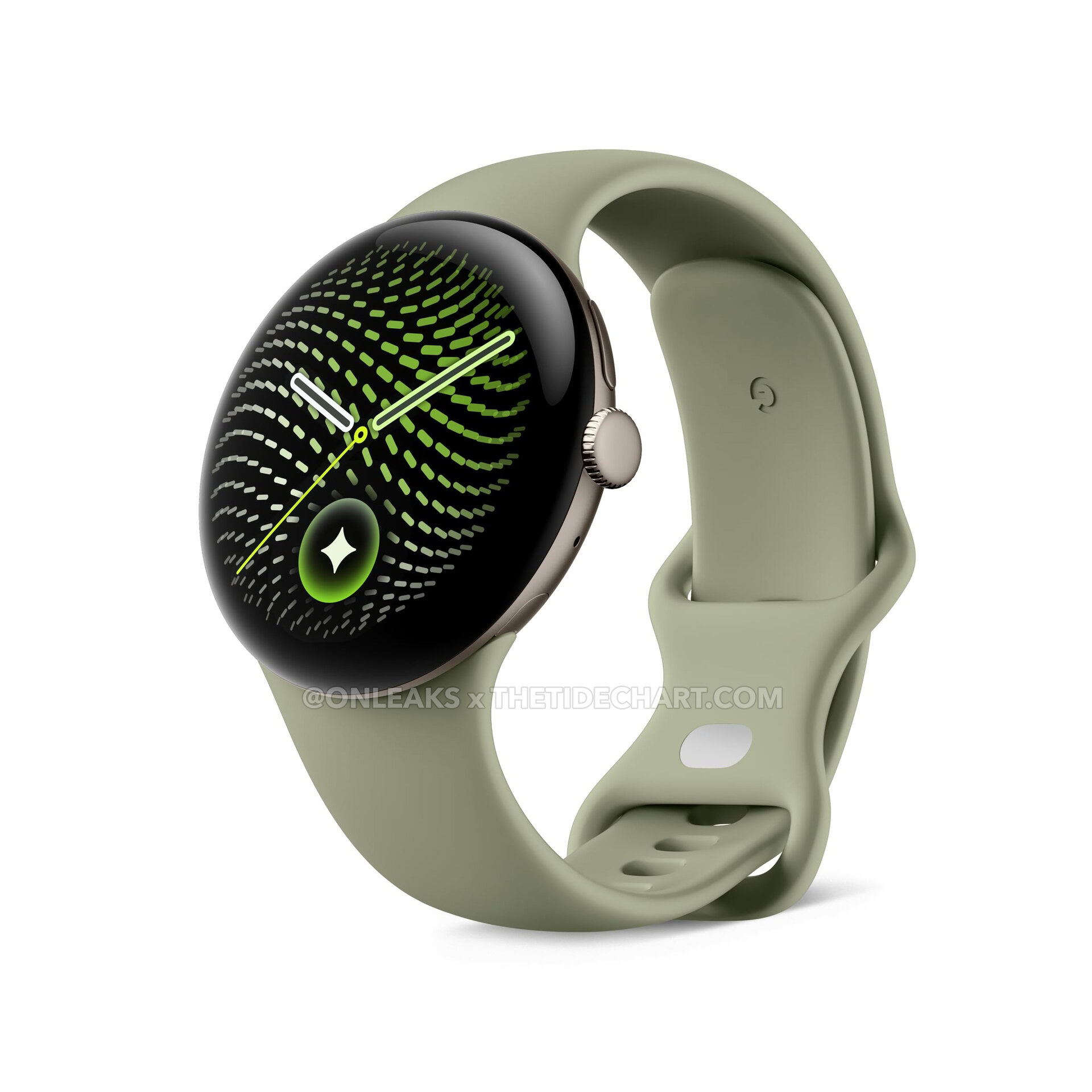
The renders showcased the Pixel Watch 5 in four distinct color finishes: Dark Anthracite, Natural Silver, Pyrite, and Warm Gold. The detailed imagery suggests a continuation of the sleek, minimalist design language that has characterized the Pixel Watch series since its debut. The circular, domed glass design, which seamlessly blends into the watch case, appears to remain a signature element. The inclusion of multiple color options allows for broader consumer appeal, catering to different style preferences. Notably, previous leaks indicated that the Warm Gold color might be exclusively available for the smaller 41mm model, a strategy that could be aimed at attracting a demographic that prefers more delicate or fashion-forward aesthetics.
The availability of the Pixel Watch 5 in both 41mm and 45mm sizes also reflects Google’s commitment to offering choices that accommodate varying wrist sizes and preferences. The 41mm variant typically appeals to users with smaller wrists or those who prefer a more discreet wearable, while the 45mm option caters to users who prefer a larger display for easier interaction and potentially a larger battery for extended usage. Furthermore, the confirmation of both Wi-Fi and LTE variants is standard practice for modern smartwatches, providing users with the flexibility to choose between a device that relies on a paired smartphone for connectivity or one that offers standalone cellular capabilities for calls, messages, and streaming on the go.
The Looming Price Increase: Value Proposition Under Scrutiny
One of the more contentious rumors surrounding the Pixel Watch 5 is a potential $50 price increase across the entire lineup. If accurate, this would represent a significant jump, especially given the largely iterative nature of the main processor. The current Pixel Watch models are already positioned as premium smartwatches, and a price hike could test consumer willingness to invest, particularly in a market with strong competition from more established players like Apple and Samsung.
The justification for such a price increase would likely rest on a combination of factors. The upgrade to 3GB of RAM, while seemingly minor, represents a tangible hardware improvement that enhances the device’s capabilities, particularly for AI-driven features. Additionally, ongoing inflationary pressures affecting component costs, supply chain logistics, and research and development expenses could contribute to higher retail prices. Google might also be factoring in the perceived value of enhanced software experiences, including the promised "on-device Gemini experiences," which represent a significant investment in AI development.
However, the continued use of the older SW5100 processor could make it challenging for Google to fully justify a price increase to consumers who prioritize raw performance and cutting-edge hardware. Competitors often introduce new processor generations with each major release, and an unchanging core silicon for four generations might be seen as a stagnation point. The value proposition of the Pixel Watch 5 will therefore hinge heavily on the demonstrable improvements in user experience, particularly how effectively the increased RAM and any potential co-processor enhancements translate into smoother performance, extended battery life, and truly innovative AI features that set it apart. Consumers will weigh these factors against the pricing of rivals such as the Apple Watch Series and Samsung Galaxy Watch line, which often offer aggressive features and robust ecosystems at competitive price points.
Broader Context: Google’s Smartwatch Strategy and Ecosystem Integration
The Pixel Watch 5’s specifications and anticipated features must be viewed within the broader context of Google’s hardware strategy and its commitment to the Wear OS ecosystem. The Pixel Watch is designed to be a seamless extension of the Pixel phone experience, deeply integrated with Google services and leveraging the company’s strengths in AI and software. This ecosystem approach aims to create a cohesive and intuitive user experience across all Pixel devices.
Google’s acquisition of Fitbit in 2021 signaled a serious commitment to health and fitness tracking, and the Pixel Watch series is central to integrating these capabilities into a premium wearable. While the leaked specifications don’t detail new health sensors, it’s expected that the Pixel Watch 5 will continue to offer advanced heart rate monitoring, ECG, sleep tracking, and other fitness features, potentially enhanced by the increased processing power and RAM for more sophisticated on-device analysis.
The iterative processor approach, while potentially disappointing for enthusiasts craving raw performance gains, might reflect Google’s strategy of incremental improvements focused on stability, reliability, and software optimization. This could be a deliberate choice to ensure a consistent and polished Wear OS experience, rather than rushing to integrate new, unproven hardware. Google’s partnership with Samsung in the development of Wear OS has also been crucial, leading to a more unified and robust platform that has seen renewed interest from developers and users alike.
The Pixel Watch 5’s success will ultimately depend on its ability to deliver a compelling user experience that justifies its price and differentiates it in a crowded market. The combination of a familiar, refined design, a significant RAM upgrade for AI capabilities, and the robust Wear OS platform presents a strong foundation. However, the lack of a major processor overhaul and the rumored price increase will undoubtedly place greater scrutiny on the device’s real-world performance and its ability to truly innovate.
Anticipation and Official Silence
As with all pre-release leaks, Google has maintained its characteristic silence on the Pixel Watch 5, offering no official comments or confirmations regarding the details revealed by the Play Console listing or earlier renders. This is standard practice for major tech companies leading up to product launches. However, the nature of the Google Play Console leak, coming directly from Google’s own developer platform, lends a significant degree of credibility to the information, making it a "sort of official" preview.
The expected debut of the Pixel Watch 5 alongside the Pixel 11 series next month positions it as a key component of Google’s fall hardware event. Consumers and industry observers will be keenly watching for the official announcement to confirm these leaked specifications, learn about any unrevealed features (such as battery life improvements, new health sensors, or unique software functionalities), and, crucially, to hear the official pricing and availability details. The next few weeks are set to be pivotal in understanding Google’s vision for the future of its wearable technology and its strategy for competing in the dynamic smartwatch market.