Itens de PC gamer já são 82% dos anúncios internacionais no Mercado Livre – Observatório Tech

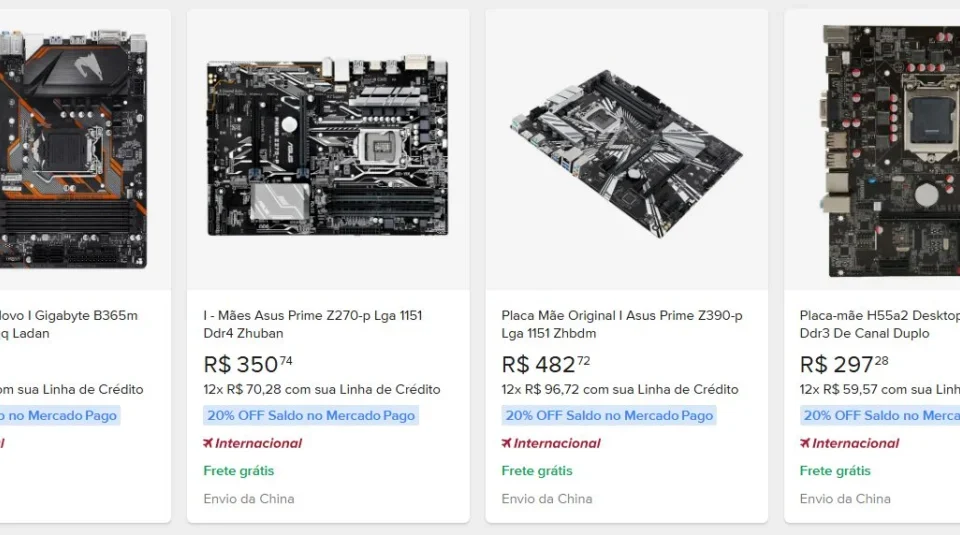
The landscape of Brazilian e-commerce is undergoing a seismic shift as international listings take center stage, particularly within the high-growth gaming sector. According to the latest data released by JoomPulse, a premier analytics and data intelligence platform powered by artificial intelligence, Mercado Livre has solidified its position as a primary destination for the "gamer" demographic. The study highlights a staggering concentration of international offerings within the PC gaming accessory category, where 82% of all active advertisements now originate from foreign sellers. This figure represents the highest share of international participation across all product categories on the marketplace, signaling a profound change in how specialized technology products are sourced and consumed in the region.
The surge in international inventory is not an isolated event but rather the culmination of a rapid acceleration in cross-border logistics and digital integration. In April 2026, Mercado Livre recorded 14.1 million new international listings, maintaining a momentum that reached historic levels just a month prior. In March 2026, the platform hit a record-breaking 14.6 million new foreign advertisements. This period of hyper-growth indicates that the infrastructure for international trade has matured to a point where global sellers can compete directly with domestic inventory on scale, variety, and increasingly, on delivery speed and price.
A Strategic Pivot: The Chronology of International Expansion
The path to this international dominance was paved over several years of logistical investment and regulatory navigation. To understand the current 82% saturation in the PC gaming niche, it is essential to look at the timeline of Mercado Livre’s strategic maneuvers. Throughout 2024 and 2025, the platform invested heavily in its "Mercado Envios" infrastructure, specifically focusing on its cross-border division. By streamlining customs clearance and partnering with international air freight carriers, the company reduced the "friction" that previously discouraged Brazilian consumers from purchasing items from abroad.
By late 2025, the volume of international listings began to show a steady upward trend. However, the data from early 2026 reveals an exponential spike. In March 2026 alone, the volume of new foreign advertisements added to the platform exceeded the total cumulative growth of the previous 14 months combined. This statistical anomaly suggests a coordinated push by the marketplace to onboard large-scale international distributors, likely in anticipation of shifting consumer habits and favorable regulatory adjustments.

The "gamer" niche served as the perfect catalyst for this expansion. Gamers are historically early adopters of technology and are often more willing to navigate international purchase processes to secure specific hardware, such as mechanical keyboards with niche switches, high-polling-rate sensors for mice, and specialized internal components that may not have consistent local distribution. The JoomPulse report confirms that this consumer behavior has been successfully met by an influx of sellers primarily from the Asian and North American markets, who now dominate the visibility of the category.
Regulatory Influence and the "Taxa das Blusinhas"
A significant factor in this acceleration has been the evolving tax environment in Brazil. For years, the cross-border market was hampered by complex tax structures and the uncertainty of import duties at the point of entry. The JoomPulse research indicates that the expansion of international offers was already well underway before the full implementation of federal tax reductions for international purchases. However, the anticipated and subsequent reduction of what is colloquially known as the "taxa das blusinhas"—the import tax on low-value consumer goods—acted as a massive incentive for platforms to front-load their international inventory.
João Sartini, Head of Sales at JoomPulse, notes that the tax changes are a tailwind for a movement that the marketplaces had already been structuring. According to Sartini, the reduction in these federal rates tends to further accelerate the presence of international ads in categories where the consumer is particularly sensitive to price fluctuations and product variety. For the PC gaming market, where components are often standardized globally, the ability to offer a wider variety of brands and models at competitive prices—even with international shipping—gives cross-border sellers a distinct advantage over local retailers who must contend with domestic inventory carrying costs and different tax burdens.
Beyond Gaming: Diversity in International Dominance
While PC gaming accessories lead the pack with an 82% international share, the JoomPulse data reveals that several other categories are following a similar trajectory. This suggests a broader strategy by Mercado Livre to globalize its entire catalog. The categories with the highest international presence include:
- PC Gaming Accessories: 82%
- Jewelry: 77%
- Plush Toys: 75%
- Medical Equipment: 71%
- Automotive GPS Navigators: 70%
The high percentage in jewelry and plush toys is often attributed to the "long tail" of e-commerce, where consumers seek highly specific designs or characters that are produced in massive volumes in manufacturing hubs like China and Southeast Asia. Conversely, the high international share in medical equipment and automotive GPS systems highlights a reliance on foreign specialized manufacturing for high-precision electronics.

The common thread among these categories is the "price-variety" sensitivity mentioned by Sartini. In these segments, the domestic market often lacks the sheer breadth of options available globally. By opening the floodgates to international sellers, Mercado Livre effectively transforms from a local retailer into a global hub, allowing a consumer in a remote part of Brazil to access the same inventory as a consumer in a major global tech hub.
The Role of AI and Data Intelligence
The ability to track these shifts with such precision is a testament to the role of AI-driven analytics in modern commerce. JoomPulse utilizes sophisticated algorithms to monitor millions of active listings, scraping data on seller origin, pricing, and category performance. This level of insight allows marketplaces to identify "supply gaps"—areas where domestic production cannot meet consumer demand—and actively recruit international sellers to fill those voids.
For Mercado Livre, the data serves as a roadmap for infrastructure investment. If 82% of gaming ads are international, the platform knows it must prioritize customs-bonded warehousing and last-mile delivery optimizations for those specific types of parcels. This data-centric approach minimizes the risk for the marketplace and ensures that the "international" experience for the customer feels as seamless as a domestic one.
Implications for the Domestic Market and Local Sellers
The rise of international dominance poses a significant challenge to domestic Brazilian sellers. Local retailers of PC accessories must now compete with global prices and a vastly superior range of products. To remain competitive, many domestic sellers are being forced to pivot, either by specializing in high-end, locally-serviced goods or by becoming "importers of record" themselves, leveraging Mercado Livre’s fulfillment centers to maintain a competitive edge on delivery times.
Furthermore, this trend highlights a potential "hollowing out" of certain domestic retail sectors. If 82% of the inventory in a high-value category like gaming is foreign, the local economic multiplier effect of those sales is reduced, as a larger portion of the transaction value leaves the country. However, proponents of this globalization argue that it forces local industry to become more efficient and provides consumers with better value, which in turn stimulates other areas of the digital economy.

Future Outlook and Market Predictions
Looking toward the remainder of 2026 and into 2027, the trend of internationalization shows no signs of slowing. Market analysts predict that as logistics continue to improve—with some international shipments now reaching major Brazilian cities in under seven days—the distinction between "local" and "international" shopping will continue to blur.
The success of the PC gaming category is expected to serve as a blueprint for other technical categories. We may soon see similar 80% plus international shares in photography equipment, specialized hobbyist electronics, and high-end home automation. The "Mercado Livre for game" phenomenon is likely just the first wave of a complete overhaul of the Brazilian digital marketplace, driven by a combination of favorable tax policies, aggressive logistical expansion, and a consumer base that is increasingly looking beyond its own borders for the best tech the world has to offer.
In conclusion, the data from JoomPulse underscores a pivotal moment for Latin American e-commerce. Mercado Livre’s strategic embrace of international sellers, particularly in the PC gaming sector, has redefined the competitive landscape. As the platform continues to break records for new listings, the focus will inevitably shift to how domestic players and regulators respond to this new era of globalized retail. For now, the "gamer" is king, and their kingdom is increasingly international.