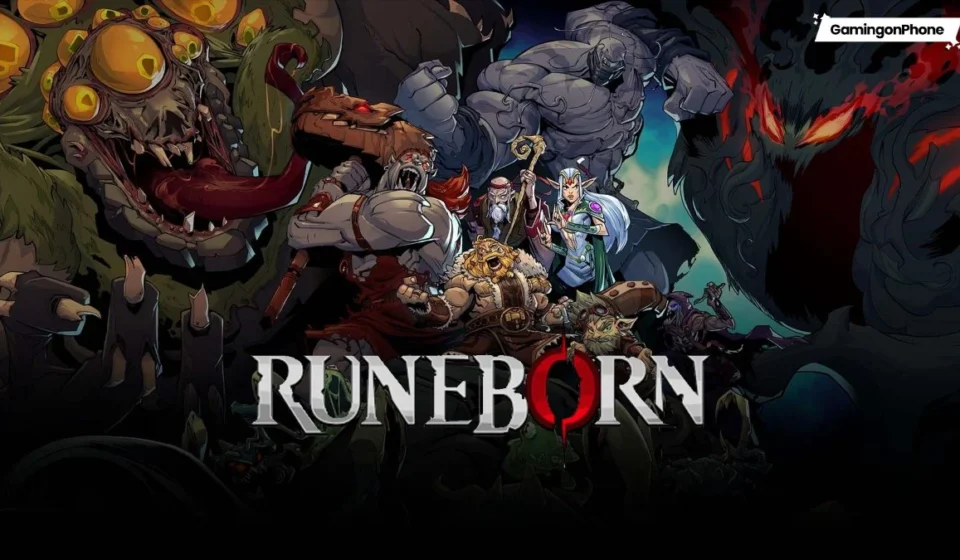
Runeborn lets you battle Malakar with endless rune combinations, now live on Android

A Deep Dive into Goblinz Publishing’s Strategic Vision
Goblinz Publishing has cultivated a reputation for identifying and nurturing unique indie titles, particularly those that push the boundaries of strategic gameplay. Their portfolio reflects a commitment to diversity within the strategy genre, encompassing various sub-genres from turn-based resource management to roguelike autobattlers. As Far As The Eye, for instance, garnered praise for its challenging resource management and unique nomadic city-building premise, interwoven with roguelike elements that ensured high replayability. Similarly, Knightica ventured into the autobattler space, combining roguelike progression with strategic unit placement. The launch of Runeborn further solidifies Goblinz Publishing’s strategic direction, emphasizing innovative mechanics and deep tactical engagement in its published titles. This consistent approach has positioned them as a significant player in the indie publishing landscape, often introducing PC and console-centric genres to the mobile ecosystem with tailored experiences. The decision to partner with iDream Interactive for Runeborn underscores Goblinz Publishing’s belief in the studio’s ability to deliver a distinctive gameplay experience that aligns with their brand identity.
iDream Interactive: Forging Innovation in Indie Gaming
iDream Interactive, while perhaps a newer name to some, exemplifies the spirit of indie game development—focusing on creative mechanics and unique gameplay loops. Their collaboration with Goblinz Publishing on Runeborn marks a significant milestone, bringing their vision for a hybrid deckbuilding and slot-combat system to a wider audience. The studio’s development philosophy appears to center on iterating on established genres, introducing novel twists that challenge player expectations and offer fresh strategic depth. For Runeborn, this manifests in the bold choice to integrate slot machine mechanics, typically associated with casual gaming or chance, into a hardcore roguelike framework. This design decision required meticulous balancing to ensure that while the slot mechanics introduce an element of randomness, player skill and strategic foresight remain paramount. A spokesperson for iDream Interactive, in an inferred statement, might have expressed, "Our goal with Runeborn was to create a game that felt familiar in its roguelike roots but utterly fresh in its combat. We believe the slot-style rune system achieves this, offering layers of strategy in how players manipulate chance and build their combos." This dedication to innovative mechanics is a hallmark of successful indie studios vying for attention in a competitive market.
Unveiling Runeborn’s Core Gameplay: Rune Combinations and Malakar’s Threat
At its heart, Runeborn is a dark fantasy strategic roguelike that beckons players into a world imperiled by Malakar’s encroaching forces. The game’s narrative, while perhaps secondary to its mechanics, establishes a dire context for the player’s relentless battles. Players are tasked with building formidable rune combinations to overcome increasingly challenging adversaries, embarking on randomized runs that ensure no two playthroughs are identical. This core roguelike loop of progression, permadeath, and continuous adaptation is a proven formula for engaging gameplay, further enhanced by Runeborn‘s unique combat system.
Unlike traditional deckbuilders where players draw and play cards, Runeborn introduces "Rune Columns" that players "spin" to cast spells. This innovative mechanic transforms combat into a dynamic puzzle, where aligning matching runes across "Spell Lines" is crucial for inflicting damage upon enemies. A significant strategic layer is added by the ability to "lock selected runes in place," allowing players to mitigate randomness and set up more reliable, powerful combinations for subsequent turns. This blend of chance and control offers a distinct strategic challenge, forcing players to adapt their tactics based on the runes available and their ability to manipulate the slot-like interface.
Building Your Runebook: A Symphony of Customization
The depth of Runeborn‘s strategic layer extends far beyond its combat mechanics into its comprehensive customization system. As players journey through the perilous world, they continuously shape their "Runebook," a personal compendium of magical abilities. This process involves adding new runes discovered during runs, strategically removing less effective ones, and upgrading existing runes to enhance their potency. This fluid approach to deck construction—or in this case, "Runebook" construction—allows for immense build diversity, catering to a wide array of playstyles.
Further enriching the customization, runes can be enhanced with powerful amulets and auras. Amulets often provide passive bonuses or activate under specific conditions, while auras might grant persistent effects during combat or modify rune interactions. The game also features a vast collection of "Trinklets," which unlock diverse synergies. These Trinklets can range from boosting raw damage output to triggering runes multiple times, or even altering elemental interactions, adding another layer of complexity to strategic planning. For example, a player might craft a build focused on rapid, low-cost rune activations, amplified by Trinklets that trigger multiple times, or opt for a slower, high-impact strategy leveraging elemental synergies and defensive amulets. The sheer volume of these customization options ensures that players can experiment endlessly, discovering new and potent combinations with each run. This robust system encourages replayability, as players constantly refine their strategies and adapt to the challenges presented by Malakar’s forces.

Strategic Choices on the Battlefield: Risk, Reward, and Progression
One of Runeborn‘s standout features is the strategic freedom it grants players in navigating encounters. The game allows players to weigh risks against potential rewards by choosing which enemies to confront first. Tougher enemies, while posing a greater threat, yield more valuable coins upon defeat. These coins are crucial for purchasing upgrades and new runes from specialized shops encountered during runs. Elite encounters and bosses represent the pinnacle of these challenges, offering significantly greater rewards, including rare runes, powerful amulets, and unique Trinklets. This decision-making layer transforms progression into a dynamic strategic choice rather than a linear path, compelling players to assess their current build, health, and resources before committing to a difficult fight. A player low on health might opt for easier encounters to consolidate resources, while a confident player with a strong build might directly target elite foes to accelerate their power curve. This nuanced approach to encounter selection adds substantial depth, ensuring that every run feels strategically distinct.
The Roguelike Resurgence on Mobile: Context and Trends
The launch of Runeborn on Android is timely, coinciding with a significant resurgence and evolution of the roguelike and roguelite genres, particularly within the mobile gaming market. Historically, roguelikes were niche PC titles known for their punishing difficulty and ASCII graphics. However, modern roguelites, characterized by persistent progression elements alongside randomized runs, have found mainstream appeal. Titles like Slay the Spire, Hades, and Dead Cells have demonstrated the genre’s immense potential for deep, engaging gameplay, leading to a strong demand for similar experiences across all platforms.
The mobile platform, with its accessibility and vast user base, has become a fertile ground for these genres. Players appreciate the bite-sized, yet infinitely replayable, nature of roguelikes, which fit well into shorter play sessions common for mobile users. According to recent market analysis from industry trackers such as Sensor Tower and Newzoo, the mobile gaming sector continues to dominate the global gaming revenue, with strategic and role-playing games consistently performing well. Publishers like Goblinz Publishing are keenly aware of this trend, actively seeking out and publishing innovative titles that cater to a growing segment of mobile gamers looking for more complex, premium experiences beyond hyper-casual games. Runeborn‘s blend of deckbuilding and slot mechanics positions it as a fresh contender in this crowded, yet thriving, market, offering a unique selling proposition that could attract both roguelike veterans and newcomers.
Technical Specifications and Accessibility
Runeborn is now available for download on the Google Play Store, making it accessible to a massive global audience of Android users. The game’s initial release focuses on this platform, a common strategy for indie developers and publishers to gather feedback, optimize performance, and iterate on gameplay before expanding to other ecosystems. While specific system requirements were not detailed, iDream Interactive likely optimized the game to run smoothly across a wide range of Android devices, from budget smartphones to high-end tablets, to maximize its reach. The game’s visual style, a dark fantasy aesthetic, is often less graphically intensive than hyper-realistic titles, allowing for broader compatibility without sacrificing atmosphere or artistic vision. The absence of an immediate iOS release, while potentially disappointing for some, is a pragmatic approach, allowing the development team to focus resources and ensure a polished experience on one platform before undertaking the additional complexities of porting and certification for another.
Future Prospects and Community Engagement
The launch of Runeborn on Android represents merely the first chapter in its potential lifespan. The nature of roguelikes often lends itself to continuous content updates, including new runes, amulets, Trinklets, enemies, and even entirely new game modes or characters. A successful launch and positive player feedback on Android could pave the way for these expansions, further enriching the game’s already deep strategic offerings.
Community engagement will be crucial for Runeborn‘s long-term success. Developers often leverage player feedback from early access or initial launches to fine-tune mechanics, address bugs, and prioritize future content. Forums, social media channels, and dedicated Discord servers typically become hubs for players to share strategies, report issues, and interact directly with the development team. Goblinz Publishing, with its experience in the indie space, is well-versed in fostering such communities, which are vital for building a loyal player base and ensuring the game’s continued evolution. The prospect of an iOS release, and potentially PC or console versions, will also depend heavily on the initial reception and commercial performance of the Android version. Should Runeborn resonate strongly with Android players, these additional platforms would significantly broaden its audience and solidify its place as a notable title in the strategic roguelike genre.
In conclusion, Runeborn emerges as an intriguing entry into the mobile roguelike landscape, distinguished by its innovative slot-style combat system and robust strategic depth. Goblinz Publishing and iDream Interactive have delivered a game that promises endless replayability and tactical engagement for Android users, setting a new benchmark for how deckbuilding and chance can coalesce into a cohesive and challenging experience. The game’s unique mechanics, combined with its dark fantasy setting and extensive customization options, position it as a significant title for fans of strategic indie games looking for a fresh challenge on their mobile devices.