FCC Expands Ban on Chinese ‘Advanced Robotic Devices’ to Include Robot Vacuums, Sparking Industry Concerns

The United States government’s intricate relationship with China, often characterized by escalating trade tensions and national security concerns, has taken a new turn with the Federal Communications Commission (FCC) extending its ban on "advanced robotic devices" to encompass a surprisingly ubiquitous category: robot vacuums. This latest regulatory action, confirmed by the FCC, signifies a considerable broadening of what constitutes a national security risk in the realm of consumer technology, potentially disrupting a rapidly growing market segment heavily reliant on Chinese manufacturing and innovation.
The Unfolding Policy Shift: From Humanoids to Home Cleaners
Yesterday, the FCC formally announced a ban targeting certain foreign "advanced robotic devices," initially focusing on humanoid and quadrupedal robots—essentially, any device designed to walk. However, the scope of this ban has now been definitively clarified by the FCC to include self-propelled, camera-equipped smart home appliances, most notably robot vacuums. This interpretation suggests that the administration views the capabilities embedded in these seemingly innocuous household gadgets as posing potential national security threats, aligning them with more overtly sophisticated robotic systems.
The decision underscores a deepening concern within U.S. regulatory bodies regarding the proliferation of connected devices from "foreign adversary" nations, particularly China. While the immediate focus was on robots with legs, the expansion to include devices like robot vacuums highlights a proactive, albeit broad, approach to safeguarding domestic data and infrastructure from potential espionage or exploitation. The implications for consumers and the smart home industry are substantial, as many leading robot vacuum brands have significant ties to Chinese manufacturing and development.
Defining "Advanced Robotic Devices": A Broad Interpretation
The FCC’s initial announcement referenced "advanced robotic devices," a term that, prior to this clarification, was widely assumed to apply to sophisticated industrial, military, or research robots. The inclusion of robot vacuums under this umbrella reveals a much broader interpretation, one that hinges on the devices’ connectivity, sensor capabilities, and potential for data collection rather than their complex locomotion. Modern robot vacuums are often equipped with an array of sensors, including Lidar, cameras, and ultrasonic sensors, to map home layouts, navigate obstacles, and identify debris. They connect to home Wi-Fi networks, upload mapping data to cloud servers, and are controlled via smartphone applications, making them sophisticated data-gathering machines operating within the most private spaces of American homes.
This redefinition challenges conventional understandings of "advanced robotics" and signals a pivot towards evaluating connected devices based on their data handling and network integration rather than purely their mechanical complexity. It suggests that any device capable of collecting sensitive environmental data, processing it, and transmitting it over networks, particularly if manufactured or operated by entities linked to foreign adversaries, could fall under similar scrutiny in the future.
A History of Concern: Robot Vacuums and Security Risks
The FCC’s heightened concern is not entirely without precedent. Several incidents involving robot vacuums have highlighted the very vulnerabilities now being cited as justification for the ban. A couple of years ago, reports emerged of hackers successfully compromising ECOVACS vacuums, gaining unauthorized control over the devices and potentially accessing their camera feeds. More recently, significant security flaws were discovered in DJI vacuums, raising alarms about the potential for malicious entities to exploit these vulnerabilities for surveillance or data exfiltration.
These devices, often equipped with high-resolution cameras, microphones, and advanced mapping capabilities, create detailed schematics of users’ homes, identify objects, and can potentially record audio and video. This data, if compromised or intentionally accessed by unauthorized parties, could offer invaluable intelligence regarding household layouts, routines, personal belongings, and even conversations. For national security agencies, the idea of millions of such devices forming a distributed network of potential surveillance points within American homes represents a significant and unacceptable risk. The aggregation of such data, even seemingly innocuous details about floor plans and furniture, could be leveraged for sophisticated intelligence gathering, especially if the data servers are located in or accessible by adversary nations.
The Broader Geopolitical Landscape: US-China Tech Tensions
This latest FCC action is not an isolated event but rather a continuation of a protracted and escalating technological rivalry between the United States and China. For several years, the U.S. government has expressed deep concerns over China’s technology sector, citing national security risks, intellectual property theft, and unfair trade practices. This geopolitical backdrop provides crucial context for understanding the current ban.
The timeline of escalating tensions includes:
- 2018-2019: The Trump administration initiated a trade war with China, imposing tariffs on various Chinese goods and significantly escalating rhetoric around technology transfer and intellectual property theft.
- May 2019: Huawei, a leading Chinese telecommunications giant, was placed on the Commerce Department’s Entity List, effectively blocking it from acquiring U.S. technology and components without government approval. This move was justified on national security grounds, alleging Huawei’s ties to the Chinese government and military.
- 2020: The U.S. moved to ban popular Chinese apps like TikTok and WeChat, citing concerns over data privacy and potential data access by the Chinese Communist Party. While legal challenges have slowed these bans, the intent was clear.
- November 2022: The FCC banned the sale or import of new telecommunications equipment from Huawei and ZTE, as well as certain video surveillance equipment from Hikvision, Dahua, and Hytera, citing "an unacceptable risk to national security."
- December 2023: The FCC expanded its "Covered List" of prohibited equipment and services, further restricting the use of certain Chinese-made technology in U.S. networks.
- Early 2024: The U.S. government broadened its focus to include consumer-grade internet routers from specific Chinese companies, again citing national security risks related to potential backdoors and data vulnerabilities.
This consistent pattern demonstrates a strategic effort by the U.S. to decouple its technology infrastructure and supply chains from perceived threats originating in China. The inclusion of robot vacuums signifies that this strategy is now extending deep into the consumer smart home ecosystem, affecting devices that were once considered far removed from high-stakes geopolitical concerns.
Market Impact and Industry Reactions
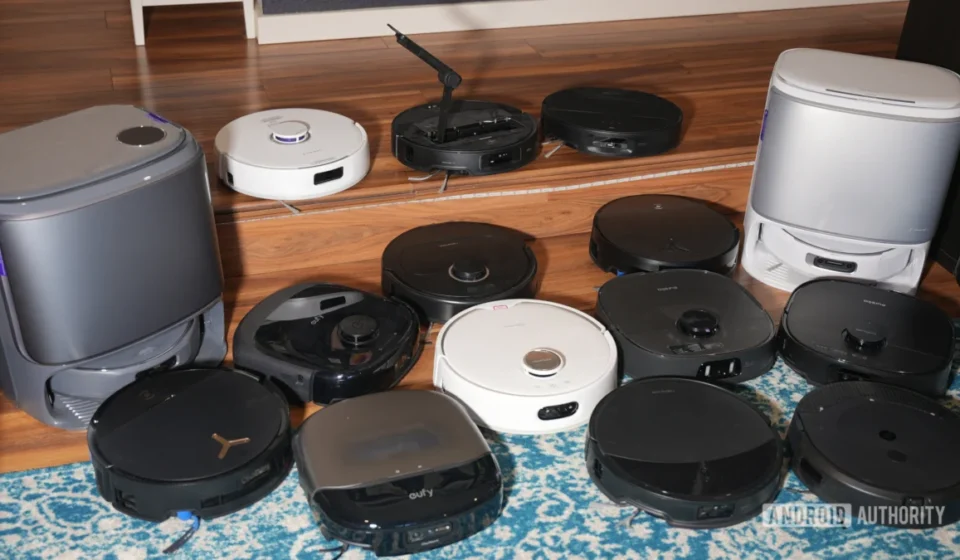
The ban on new Chinese-made robot vacuums entering the U.S. market has the potential to seriously disrupt an industry that has seen explosive growth. The global robot vacuum market was valued at approximately $12.5 billion in 2023 and is projected to reach over $20 billion by 2028, with a significant portion of that growth fueled by affordable and innovative products from Chinese manufacturers. Brands like Roborock, ECOVACS, Eufy (Anker), and Narwal have captured substantial market share in the U.S. due to their competitive pricing, advanced features, and robust performance.
For these companies, the ban represents a significant blow, potentially cutting off access to one of the world’s largest consumer markets. While existing robot vacuums already in U.S. homes are not affected, the inability to introduce new models will stifle competition and innovation, forcing these companies to either re-evaluate their U.S. market strategy, establish manufacturing outside China, or withdraw from the market entirely.
Roborock, a prominent China-based manufacturer, has been a key player in the U.S. market, offering a range of highly-rated robot vacuums. While the company has yet to issue an official statement regarding the ban, industry analysts anticipate that this development will necessitate a rapid strategic reassessment. Other Chinese brands will face similar pressures.
Conversely, non-Chinese manufacturers, such as iRobot (Roomba) and Samsung, could see a boost in their market positions due to reduced competition. However, even these companies often rely on global supply chains that include Chinese components or manufacturing facilities, meaning they too might face challenges in ensuring their products comply with the new regulations. The entire supply chain for robot vacuums, from component suppliers to assembly plants and distribution networks, will likely experience significant restructuring. This could lead to higher manufacturing costs, which would inevitably be passed on to consumers.
The Regulatory Framework and Its Reach
The FCC’s authority to enact such bans typically stems from its mandate to ensure the security and integrity of U.S. communications networks. Laws like the Secure and Trusted Communications Networks Act of 2019 empower the FCC to identify and prohibit equipment and services that pose a national security threat. While this act primarily focused on telecommunications equipment, the interpretation of "advanced robotic devices" as potentially compromising network security through data collection and transmission allows the FCC to extend its reach into new product categories.
The definition of a "foreign adversary" is also crucial here. The U.S. government has clearly designated China as such, providing the legal basis for targeting Chinese-made technologies. This framework allows for broad discretion in identifying and restricting products deemed to pose risks, even if direct evidence of malicious intent for every specific device is not publicly presented. The emphasis is often on the potential for exploitation given the nature of the technology and the origin of its manufacturer.
Consumer Implications: Choice, Price, and Innovation
For the average American consumer, this ban is likely to have several tangible effects.
- Reduced Choice: With several major Chinese brands potentially exiting or significantly reducing their presence in the U.S. market, consumers will have fewer options when purchasing robot vacuums. This could stifle competition and limit the diversity of features and price points available.
- Increased Prices: A reduction in competition, coupled with potential supply chain shifts and higher manufacturing costs for compliant products, is likely to drive up the prices of robot vacuums. Consumers may find themselves paying more for similar or even less advanced technology.
- Slower Innovation: Chinese manufacturers have been at the forefront of rapid innovation in the robot vacuum space, quickly integrating new technologies like improved navigation, self-emptying docks, and advanced mopping capabilities. If these companies are barred from the U.S. market, the pace of innovation for American consumers might slow, as remaining brands face less pressure to constantly upgrade their offerings.
- Data Security vs. Convenience: While the ban aims to enhance national security and data privacy, it forces consumers to weigh these abstract benefits against the immediate convenience and affordability offered by a diverse market. It also places the onus on consumers to trust that U.S.-approved products are inherently more secure, a claim that still requires ongoing vigilance.
Looking Ahead: The Future of Smart Home Technology
The FCC’s decision on robot vacuums sets a significant precedent for the broader smart home technology sector. Devices such as smart speakers, security cameras, smart thermostats, and even smart kitchen appliances, many of which are manufactured or have components sourced from China, could potentially come under similar scrutiny. Any connected device that collects data, particularly visual, auditory, or environmental information, could be re-evaluated for its national security implications.
This move signals a new phase in the U.S.’s tech decoupling strategy, extending beyond critical infrastructure and telecommunications to everyday consumer electronics. It will undoubtedly force global manufacturers to re-evaluate their supply chains, potentially leading to a more bifurcated global technology market where products designed for the U.S. market adhere to a specific set of security and supply chain requirements. The long-term implications for global technological integration, innovation, and consumer access to advanced smart home devices remain to be fully seen, but the immediate future suggests a period of significant adjustment and potential disruption.