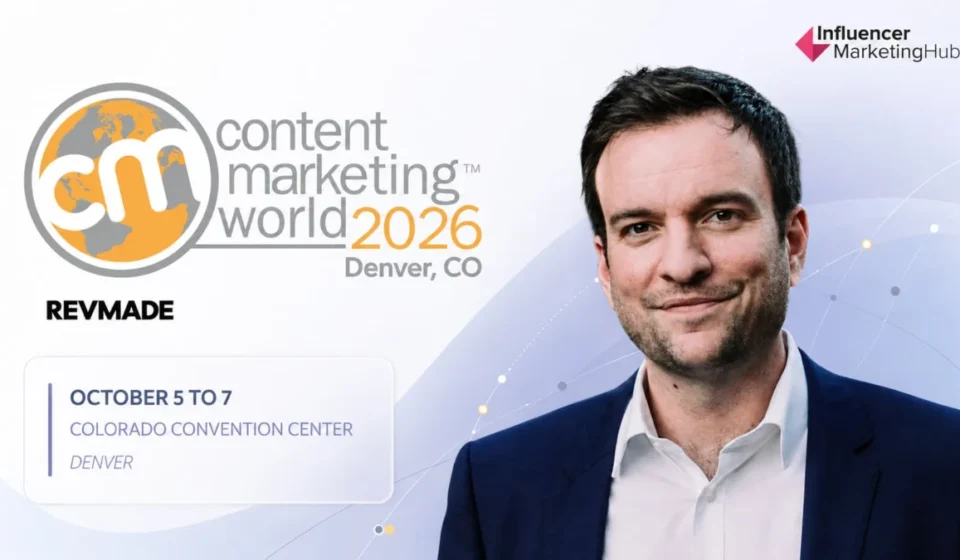
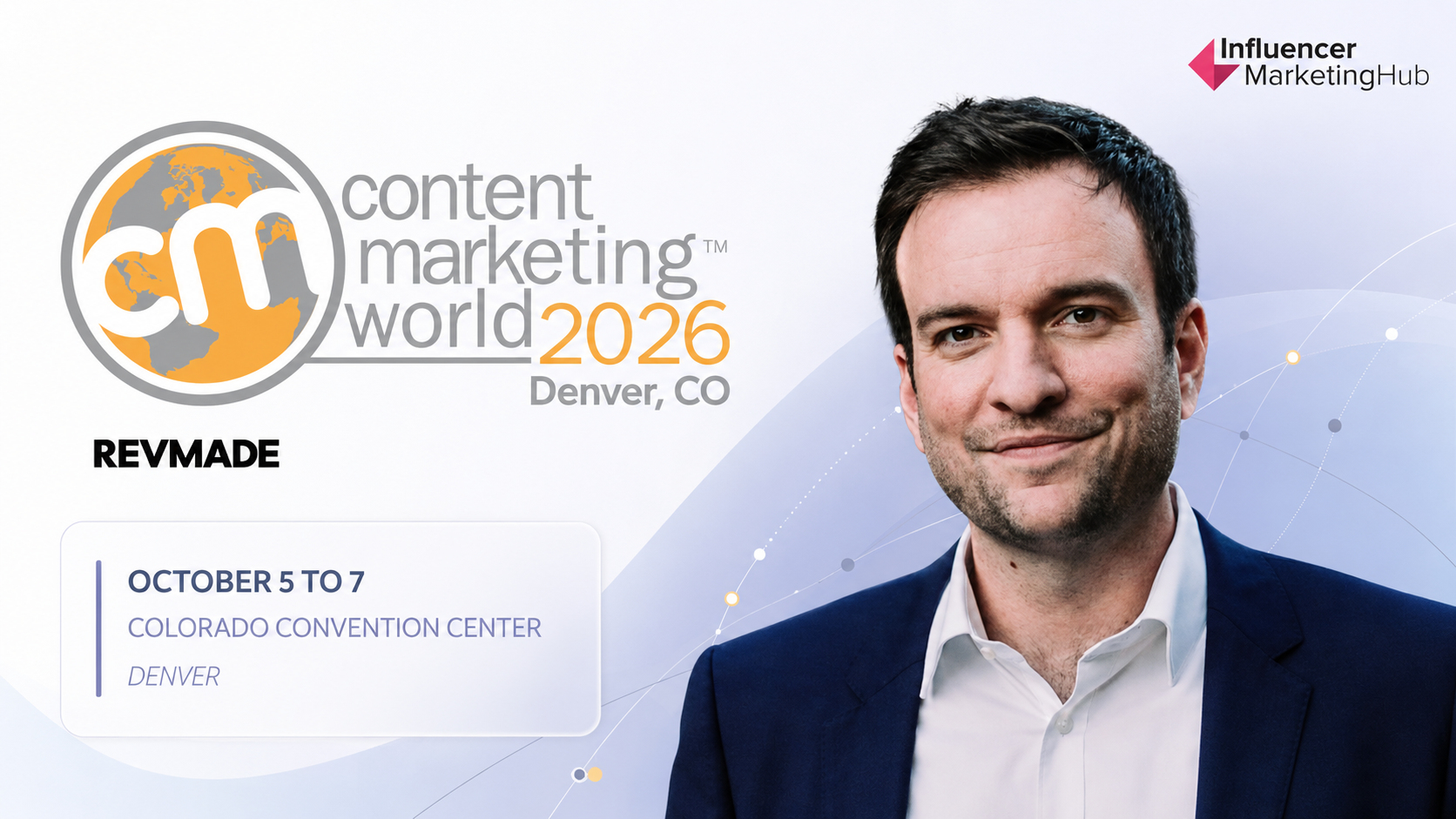
Navigating the Algorithmic Landscape Andrew Hanelly to Address Trust and Attention at Content Marketing World 2026

The intersection of human creativity and machine-led distribution has become the defining frontier for modern digital communication. As brands struggle to maintain visibility within increasingly crowded digital ecosystems, Andrew Hanelly, the Chief Strategy Officer at Revmade, is set to deliver a keynote-level exploration of these dynamics at Content Marketing World 2026. The session, titled “Trust Me, I’m an Algorithm: How to Earn Attention and Trust When Algorithms Rule Everything Around Us,” will provide a strategic roadmap for navigating the complex recommendation engines that now dictate the flow of information across the global web. Scheduled for October 6, 2026, at the Colorado Convention Center in Denver, the presentation arrives at a critical juncture for the marketing industry, as artificial intelligence and predictive modeling continue to reshape how audiences discover and consume content.
The Shift Toward Algorithmic Sovereignty
For over a decade, the primary challenge for content creators was the production of high-quality material. However, the contemporary landscape has shifted the bottleneck from production to distribution. Algorithms on platforms such as TikTok, YouTube, Instagram, and LinkedIn, along with AI-driven search generative experiences on Google and Bing, now act as the primary gatekeepers. These systems evaluate billions of data points to determine which content earns a place in a user’s feed. Consequently, a significant portion of professionally produced content fails not due to a lack of quality, but because it fails to trigger the specific signals required for algorithmic amplification.
Hanelly’s upcoming session addresses this "visibility gap." By examining how recommendation systems evaluate signals—including dwell time, completion rates, sentiment analysis, and social sharing—Hanelly intends to demystify the "black box" of modern distribution. His thesis suggests that the algorithm should not be viewed as an adversary to be manipulated, but rather as a sophisticated proxy for the audience’s own preferences and behaviors.
Chronology and Event Context: Content Marketing World 2026
Content Marketing World, produced by the Content Marketing Institute (CMI), has long served as the flagship gathering for the global content marketing community. The 2026 event in Denver represents a continued evolution of the conference’s mission to bridge the gap between creative storytelling and technical execution.
The event is scheduled to run from October 5 through October 7, 2026. Hanelly’s session is a cornerstone of the Content Strategy track, occurring on the second day of the conference from 11:00 AM to 11:30 AM. This timing is strategic, placing the discussion of algorithmic trust in the heart of the event’s programming, following the opening keynotes that traditionally set the industry’s annual agenda.
The 2026 iteration is notable for its co-location with The Market Research Event (TMRE). This partnership signals a broader industry trend: the merging of content strategy with deep-funnel data analytics and consumer insights. By hosting these events simultaneously, organizers are facilitating a cross-pollination of ideas between those who study audience behavior (researchers) and those who attempt to influence it (content marketers). Hanelly’s background in developing monetization and growth strategies for Fortune 500 companies and major nonprofits positions him as a bridge between these two disciplines.
Supporting Data: The Impact of Algorithmic Filtering on Brand Reach
Industry data underscores the urgency of Hanelly’s message. According to recent benchmarks in digital distribution, organic reach for brand pages on major social platforms has seen a steady decline, often hovering between 1% and 5% without paid supplementation or high algorithmic resonance. Furthermore, search engine optimization (SEO) has been disrupted by the rise of "zero-click" searches, where algorithms provide answers directly on the results page, reducing the traffic flow to original content sources.
Research indicates that 70% of YouTube views are driven by the platform’s recommendation algorithm rather than direct searches or subscriptions. Similarly, on platforms like TikTok, the "For You" feed—entirely controlled by algorithmic prediction—accounts for the vast majority of user engagement. These statistics highlight a fundamental reality: brands can no longer rely on legacy follower models. Success in 2026 requires an understanding of how to "feed the machine" while simultaneously building genuine trust with the human end-user.
The Four Pillars of Algorithmic Success: Hook, Hero, Help, and Hug
Central to Hanelly’s strategy is a proprietary framework developed at Revmade, designed to satisfy both the technical requirements of the algorithm and the psychological needs of the audience. This framework consists of four distinct elements: Hook, Hero, Help, and Hug.
1. The Hook: Capturing the First Moment
In a digital environment characterized by infinite scroll, the first three seconds of an interaction are the most critical. The "Hook" is designed to stop the scroll by communicating immediate relevance. Hanelly posits that an effective hook is often "specific and slightly unfinished," creating a curiosity gap that encourages the user to invest more time. From an algorithmic perspective, a successful hook reduces bounce rates and signals to the platform that the content is engaging, thereby increasing its likelihood of further distribution.
2. The Hero: Humanizing the Source
Trust is rarely placed in a faceless corporation; it is placed in people. The "Hero" element focuses on elevating internal subject matter experts and practitioners into visible communicators. By utilizing "creator-style" voices—executives, researchers, or product specialists—brands can build authority and relatability. This human presence provides a consistent anchor for the audience, transforming abstract brand expertise into a personal relationship.
3. The Help: Prioritizing Utility Over Promotion
The "Help" pillar shifts the focus from brand-centric messaging to audience-centric utility. This involves using data—such as search queries, community forum discussions, and customer support transcripts—to identify the actual problems an audience is trying to solve. Content that provides genuine help tends to earn higher "save" and "share" rates, which are high-value signals for recommendation engines. By solving a problem, the brand proves it is listening, which is the foundational step in building long-term trust.
4. The Hug: Fostering Community and Retention
While the first three pillars focus on acquisition and engagement, the "Hug" is centered on retention. It represents the transition from a one-off view to a recurring relationship. This is achieved through newsletters, memberships, recurring content formats, and community engagement. For the algorithm, repeat visitors and high subscriber retention are indicators of "high-intent" content, leading to more stable and predictable distribution over time.
Official Responses and Industry Implications
The announcement of Hanelly’s session has garnered attention from industry analysts who view the "Insight to Impact" theme of the 2026 conference as a necessary response to the volatility of the digital landscape. Marketing leaders from various sectors have noted that the reliance on "hacks" to beat the algorithm is a diminishing strategy. Instead, the consensus is moving toward the "algorithm-as-audience-proxy" model that Hanelly champions.
Analysts from organizations such as WARC and Effie, who are also contributing to the Content Marketing World 2026 programming, suggest that the integration of research and creative strategy is the only way to ensure measurable business impact. The implication is clear: content that does not align with the technical realities of distribution is essentially invisible, regardless of its creative merit.
Broader Impact: The Future of Content Strategy
The long-term impact of Hanelly’s framework extends beyond individual campaign performance. It suggests a fundamental reorganization of how marketing departments function. Rather than operating in silos, content teams must now work in lockstep with data analysts to understand algorithmic trends and with product experts to ensure the "Hero" and "Help" components remain authentic.
Furthermore, as AI continues to automate the production of "commodity content," the value of trust and human-centric storytelling will likely increase. Hanelly’s session at Content Marketing World 2026 is poised to argue that the brands that survive the algorithmic era will be those that use technology to enhance, rather than replace, the human connection.
By the time the doors open at the Colorado Convention Center in October 2026, the marketing world will likely be even more integrated with AI-driven distribution. Hanelly’s presentation will serve as a vital check-in for professionals seeking to balance the demands of the machine with the needs of the person. Through the Hook, Hero, Help, and Hug framework, he provides a scalable method for brands to not just survive the algorithm, but to thrive within it.