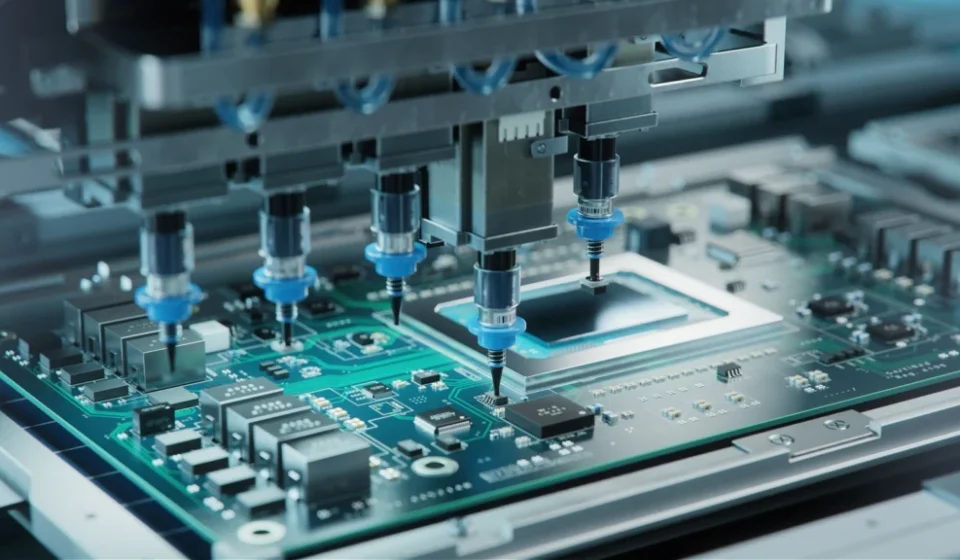

The global race for artificial intelligence supremacy has entered a transformative phase as Chinese technology firms demonstrate an unprecedented ability to develop high-performing AI models and critical semiconductor hardware at a fraction of the cost of their American counterparts. This shift is not merely a matter of regional competition but represents a fundamental change in the economics of the AI industry, moving away from a pursuit of absolute peak performance toward a strategy of "good enough" efficiency and domestic self-reliance. Recent developments in both software and hardware suggest that the technological moat once enjoyed by Western firms is narrowing, with significant implications for global supply chains and capital markets.
The Rise of High-Efficiency Chinese AI Models
In recent months, a series of product launches from Chinese startups and established tech giants has challenged the narrative of Western software dominance. The release of GLM 5.2 by the Chinese startup Z.ai has served as a pivotal moment for the industry. Unlike many proprietary models developed in the United States, GLM 5.2 was released as a free, open-source model. Despite its lack of a price tag, the model has demonstrated remarkable proficiency in executing complex, real-world business tasks. Artificial Analysis, an independent benchmarking organization, recently ranked GLM 5.2 as the fourth-best AI model globally, placing it ahead of many well-funded Western competitors.
The momentum continued with Moonshot AI’s release of Kimi K3. This model specifically targeted the coding and logical reasoning capabilities that have long been the stronghold of firms like Anthropic and OpenAI. In standardized benchmark tests, Kimi K3 outperformed Anthropic’s flagship models and OpenAI’s GPT-5.6 Sol in several specialized coding sequences. The success of Kimi K3 highlights a growing trend in Chinese AI development: the optimization of models to perform specific, high-value tasks with higher efficiency than general-purpose LLMs (Large Language Models).
Complementing these startup successes, Alibaba Group Holding Ltd. recently unveiled a preview of its latest iteration, Qwen3.8 Max. Alibaba, a titan in the e-commerce and cloud computing sectors, claims that Qwen3.8 Max is now among the most powerful AI models in existence. According to internal and third-party testing, the model trails only Anthropic’s Fable 5 in general reasoning capabilities. The rapid ascent of the Qwen series underscores the massive data advantages held by Chinese firms, which can leverage vast domestic ecosystems to train and refine their algorithms.
Breaking the Lithography Monopoly: China’s Hardware Breakthrough
While software advancements are significant, the most disruptive news for global markets has emerged from the hardware sector. On Monday, reports surfaced via The Information and various industry observers indicating that China has successfully begun manufacturing its own domestically developed deep ultraviolet (DUV) lithography machines. Lithography is widely considered the most difficult step in the semiconductor manufacturing process. These machines use high-intensity light to etch circuit patterns onto silicon wafers at the nanometer scale.
For decades, the Netherlands-based ASML Holding NV has maintained a near-monopoly on the high-end lithography market. ASML’s DUV and Extreme Ultraviolet (EUV) systems are the foundational tools used by the world’s leading foundries, including Taiwan Semiconductor Manufacturing Co. (TSMC), Samsung, and Intel. The complexity of these machines is so high that they contain hundreds of thousands of components sourced from a global network of specialized suppliers.
The news that China has successfully developed its own DUV systems for domestic use has sent shockwaves through the semiconductor industry. These machines are being delivered to major Chinese chipmakers, including Semiconductor Manufacturing International Corp. (SMIC), Hua Hong Grace Semiconductor Ltd., and ChangXi Memory Technologies (CXMT). While these domestic machines may not yet match the precision of ASML’s most advanced EUV systems—which are required for the 3nm and 2nm chips used in the latest smartphones—they are reportedly "good enough" to produce the 7nm and 14nm chips that power the vast majority of industrial, automotive, and mid-range AI applications.
Market Volatility and Investor Sentiment
The reaction from global equity markets was immediate and severe. Shares of ASML fell by more than 5% following the reports, as investors priced in the potential loss of the Chinese market, which has historically accounted for a significant portion of ASML’s revenue. The contagion spread to U.S. semiconductor giants as well. Nvidia Corp. (NVDA), the current leader in AI processing units, saw its shares drop 5%, while Micron Technology Inc. (MU) and Advanced Micro Devices Inc. (AMD) fell by 5% and 2% respectively.
The market’s concern stems from the realization that China’s drive for self-sufficiency is no longer a distant goal but a present reality. As China reduces its reliance on Western hardware, the total addressable market (TAM) for Western semiconductor firms could shrink significantly. Furthermore, if Chinese firms can produce AI hardware and software at lower costs, they may begin to export these "good enough" solutions to emerging markets, further challenging the global market share of U.S. and European firms.
Chronology of the Semiconductor Conflict
The current state of the AI race is the result of a multi-year geopolitical tug-of-war. The timeline of these events illustrates how export restrictions have inadvertently accelerated Chinese domestic innovation:
- October 2022: The U.S. Department of Commerce implements sweeping export controls designed to restrict China’s ability to purchase high-end AI chips and the equipment needed to manufacture them.
- Early 2023: The Netherlands and Japan join the U.S. in restricting the export of advanced lithography equipment to China, specifically targeting ASML’s high-end DUV and EUV systems.
- August 2023: Huawei shocks the industry by releasing the Mate 60 Pro, featuring a 7nm processor manufactured domestically by SMIC, proving that Chinese firms could bypass certain Western restrictions.
- Early 2024: China’s Ministry of Industry and Information Technology (MIIT) increases subsidies for domestic semiconductor equipment, leading to the breakthrough in DUV manufacturing reported this week.
- July 2024: Major Chinese AI models begin to top global leaderboards, shifting the competition from hardware access to algorithmic efficiency.
The "Good Enough" Economic Shift
A critical takeaway for industry analysts is the shift in the definition of technological "winning." For years, the U.S. strategy has focused on maintaining a "sliding scale" lead—ensuring that the U.S. is always several generations ahead of China in terms of raw processing power and transistor density. However, the recent progress from China suggests that for most commercial applications, being "the best" is less important than being "affordable and available."
Most enterprise AI tasks—such as customer service automation, document analysis, and basic coding—do not require the massive computational overhead of a GPT-5 or a H100-powered cluster. If Chinese firms can provide 90% of the performance at 30% of the cost using domestically produced hardware, they will likely capture the bulk of the global enterprise market. This "good enough" approach mirrors the strategy previously used by Chinese firms in the electric vehicle (EV) and solar panel industries, where they eventually dominated global markets through scale and cost-efficiency rather than purely through high-end luxury innovation.
Broader Implications and the Infrastructure Play
As the AI race broadens, the focus is shifting from the creators of the models to the providers of the underlying infrastructure. Regardless of whether a model is developed in Silicon Valley or Shanghai, the physical requirements for AI remain constant: massive amounts of electricity, high-speed data centers, and the raw materials required to build them.
Data from the International Energy Agency (IEA) suggests that data center energy consumption could double by 2026, driven largely by AI workloads. This has created a secondary investment thesis centered on "pick-and-shovel" plays. The construction of new data centers and the expansion of electrical grids require vast quantities of copper and aluminum. Copper, in particular, is essential for high-efficiency power transmission and cooling systems within AI server farms.
Furthermore, the volatility in the semiconductor sector is prompting a rotation into the energy sector. Renewable energy sources, such as solar and wind, are increasingly being paired with battery storage to provide the 24/7 power required by data centers. Investors are increasingly looking at exchange-traded funds (ETFs) that track critical minerals and energy infrastructure as a way to gain exposure to the AI revolution without the direct geopolitical risk associated with specific chipmakers or software firms.
Conclusion: A New Competitive Reality
The recent advancements in China’s AI ecosystem mark a point of no return in the global tech landscape. The emergence of high-ranking open-source models like GLM 5.2 and the domestic production of DUV lithography machines signal that the era of Western technological monopoly is ending. For global corporations, this necessitates a more nuanced approach to supply chain management and technology adoption. For investors, it requires a shift in perspective—moving away from a winner-take-all mentality toward an understanding of a bifurcated market where efficiency and resource availability are the new metrics of success. The AI race is no longer just a sprint for the fastest chip; it is a marathon of endurance, resource management, and economic adaptability.