Navigating the High-Stakes Selection of Shopify Plus Agencies A Comprehensive Framework for Enterprise E-commerce Success

The global e-commerce landscape has undergone a seismic shift over the last decade, transitioning from simple digital storefronts to complex, multi-channel ecosystems that demand high-level engineering and strategic foresight. As mid-market and enterprise brands seek to scale, many are gravitating toward Shopify Plus, the enterprise-grade version of the popular e-commerce platform. However, the transition to this high-tier service is fraught with operational risks. Industry data suggests that while Shopify Plus powers over 10,000 of the world’s most successful brands, a significant percentage of migrations are hampered by poor agency selection, leading to "half-finished" builds, checkout failures during peak traffic periods like Black Friday Cyber Monday (BFCM), and substantial financial losses.
The selection of a Shopify Plus agency is no longer merely a procurement task; it is a strategic decision that can dictate a brand’s growth trajectory for years. According to Jay Neyer, founder of the e-commerce agency Lantern Sol, the cost of a wrong choice extends far beyond the agency’s retainer. It encompasses the opportunity cost of stalled growth and the technical debt incurred during months of "cleaning up" a failed implementation. This report examines the critical vetting processes, technical requirements, and strategic benchmarks essential for brands looking to partner with a Shopify Plus agency.
The Strategic Threshold: Determining the Need for Shopify Plus
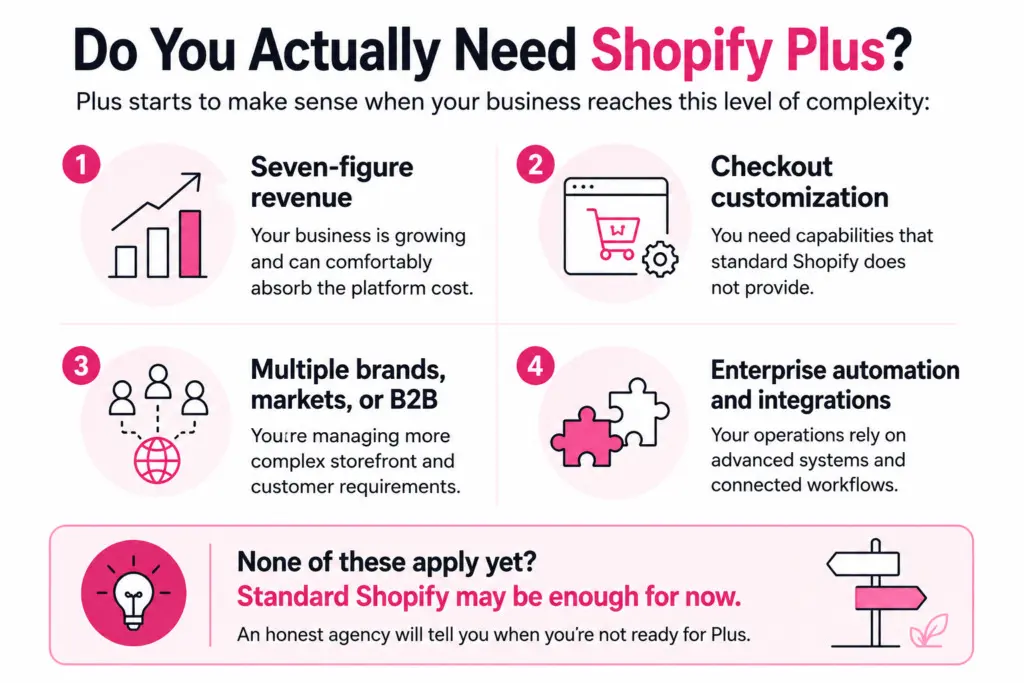
Before initiating the search for an agency, a brand must first conduct a rigorous internal audit to determine if the Shopify Plus tier is a justifiable investment. The platform represents a significant jump in overhead compared to standard Shopify plans. Shopify Plus typically starts at a base rate of $2,000 per month (or a percentage of revenue for high-volume merchants), a stark contrast to the standard plans that range from $39 to $399.
Market analysts and technical experts identify four primary signals that a business is ready for the move to Plus:
- Revenue Scale: Typically, brands surpassing $1 million in annual gross merchandise value (GMV) begin to see the return on investment (ROI) from the advanced features and lower transaction fees offered by Plus.
- High-Volume Traffic Spikes: For brands running large-scale flash sales or high-impact influencer campaigns, the "expansion stores" and specialized checkout capacity of Plus are vital for maintaining site stability.
- Wholesale and B2B Integration: The need to run a native B2B channel alongside a direct-to-consumer (DTC) store is a major driver for Plus adoption.
- Operational Automation: Brands requiring advanced automation through Shopify Flow or Launchpad—tools that manage everything from inventory restocks to scheduled site changes—find the standard platform insufficient.
Experts warn that paying for "headroom" that will not be utilized for several years is a common strategic error. An honest agency vetting process often begins with the agency itself advising a client whether they truly need the enterprise tier or if they can continue to scale on a standard plan.
The Evolution of the Shopify Ecosystem: A Chronology
To understand the current complexity of hiring an agency, one must look at the evolution of the platform itself.
- 2006–2013: Shopify establishes itself as the premier tool for small businesses and hobbyists, focusing on ease of use and "Liquid," its proprietary templating language.
- 2014: Shopify Plus is launched, signaling the company’s intent to compete with enterprise giants like Magento (now Adobe Commerce) and Salesforce Commerce Cloud.
- 2017–2020: The rise of the "DTC Revolution." Thousands of brands scale rapidly, necessitating a more robust agency ecosystem. The term "Shopify Expert" becomes a broad, often unregulated label.
- 2021–Present: The introduction of "Shopify Functions," "Hydrogen," and "Oxygen" marks a shift toward composable and headless commerce. This evolution has created a divide in the agency world between "theme-based" shops and "engineering-led" agencies.
This timeline highlights why a "generalist" agency is often ill-equipped for a Plus migration in the current market. The technical requirements have moved from simple CSS/HTML adjustments to complex API integrations and custom app development.
The Six Pillars of Agency Vetting
For a founder or a Chief Technology Officer (CTO), the vetting process must be clinical. Based on industry standards and the experiences of veteran developers, there are six non-negotiable checks required to validate an agency’s competence.
1. Plus-Specific Track Record
Standard Shopify and Shopify Plus are fundamentally different environments. A Plus-certified agency must demonstrate experience with Plus-only features, such as the specialized checkout.liquid (or the newer Checkout Extensibility), Shopify Functions, and the ability to manage multiple expansion stores for internationalization. Prospective clients should demand data on the scale of previous builds—specifically, how many migrations the agency has handled for brands doing $10 million to $50 million in annual revenue.
2. Verifiable Performance Metrics
A professional journalistic audit of an agency’s portfolio should look past aesthetic design. The true value of a migration is found in the metrics: conversion rate lift, reduction in page load times, and post-migration revenue growth. Reliable agencies will provide references from brands of a similar scale. Contacting these references is critical to uncovering the "friction points" of the project, such as whether the agency met its deadlines or if the final invoice aligned with the initial quote.
3. Technical Depth and Composable Expertise
The modern Shopify Plus agency must be capable of more than just "reskinning" a theme. They must possess the engineering depth to build custom integrations with Enterprise Resource Planning (ERP) systems (like NetSuite or SAP), Warehouse Management Systems (WMS), and complex Customer Relationship Management (CRM) tools. A key test is asking the agency how they handle "headless commerce" or "Shopify Functions." If the agency relies solely on third-party apps for core functionality, they may be creating a "brittle" store that will suffer from slow performance and high recurring costs.
4. Process Transparency and Personnel
A common grievance in the industry is the "bait and switch," where a senior partner pitches the deal, but the actual development is outsourced to junior staff or offshore contractors. Brands should require a written guarantee of who their day-to-day contact will be. Furthermore, the agency’s project management methodology—whether they use Agile, Waterfall, or a hybrid—should be clearly defined to ensure regular shipping cycles and feedback loops.
5. Clarity in Pricing Models
The financial structure of a Shopify Plus build can vary from fixed-fee projects to monthly retainers or hourly rates. The danger lies in "vague scoping," where an agency provides a low initial quote but uses "change orders" to inflate the final price. A professional agency provides a detailed Statement of Work (SOW) that clearly outlines what is included, what constitutes an out-of-scope request, and how technical support is handled post-launch.
6. Strategic Dissent and Judgment
The most valuable agencies act as consultants, not just order-takers. In the e-commerce sector, "feature creep" is a primary cause of project failure. An agency that agrees with every client request without analyzing the impact on conversion or site speed is a liability. High-performing partners are those who provide data-backed pushback, suggesting that a requested feature may not be worth the development cost or could negatively impact the user experience.
Identifying Red Flags in the Sales Process
Data from failed migrations suggests that certain "red flags" are almost always present during the initial sales calls. Understanding these signals can save a brand hundreds of thousands of dollars in recovery costs.
- Absence of a Robust Portfolio: If an agency cannot show live, high-volume stores they have built from the ground up, they are likely "learning on the client’s dime."
- Vague Timelines: A complex Shopify Plus migration typically requires one to three months. Agencies promising a two-week turnaround for a complex enterprise build are likely cutting corners on Quality Assurance (QA) testing or data migration.
- Lack of Post-Launch Support: E-commerce is not a "set it and forget it" industry. An agency that does not offer a clear support structure for the weeks following a launch is a significant risk, particularly if bugs emerge during a high-traffic event.
The Broader Impact: E-commerce as a Risk Mitigation Game
The shift to Shopify Plus is ultimately an exercise in risk mitigation. As the cost of customer acquisition (CAC) continues to rise across platforms like Meta and Google, the efficiency of the "bottom of the funnel"—the checkout and site experience—becomes the deciding factor in profitability.
A failed migration does more than just break a website; it erodes brand equity. In an era where social media can amplify a single technical glitch to millions of potential customers, the stability provided by a competent Shopify Plus agency is a form of brand insurance.
Industry analysts suggest that the next frontier for these agencies will be the integration of Artificial Intelligence (AI) for personalized shopping experiences and the expansion of "Sidekick," Shopify’s AI assistant. Agencies that are not already experimenting with these technologies will likely find themselves obsolete within the next 24 months.
Conclusion: The Path Forward for Founders
Choosing a Shopify Plus agency is a high-stakes decision that requires a balance of technical auditing and strategic alignment. The process should be slow, deliberate, and focused on long-term scalability rather than short-term cost savings. By adhering to the six pillars of vetting—track record, proof, technical depth, process, pricing, and judgment—founders can ensure that their move to Shopify Plus becomes a catalyst for growth rather than a costly technical hurdle.
In the words of industry veterans, the goal is to find a partner that protects revenue when the founder is not in the room. In the competitive world of enterprise e-commerce, that protection is the difference between a brand that scales to a nine-figure exit and one that spends its capital recovering from avoidable mistakes.