Strategic Chokepoints and the Rise of Rare Earth Magnets in the Physical AI Era

The global economy is currently navigating a period of structural transformation that bears a striking resemblance to the geopolitical shifts of the early 1970s. In October 1973, the United States and several other Western nations faced a transformative economic shock when members of the Organization of Arab Petroleum Exporting Countries (OAPEC) announced an oil embargo. The decision, rooted in the geopolitical tensions of the Yom Kippur War, fundamentally altered the trajectory of the 20th-century economy. Within months, the price of oil quadrupled, gas lines became a fixture of American life, and the federal government was forced to implement a national 55-mph speed limit to conserve fuel. This period of "stagflation" persisted for nearly a decade, leaving a permanent mark on global monetary policy and industrial strategy.
The enduring lesson of 1973 was that any critical economic input concentrated in the hands of a strategic rival functions as a latent weapon. Fifty years later, economists and national security experts warn that history is repeating itself. However, the modern chokepoint has shifted from fossil fuels to a group of 17 elements at the bottom of the periodic table: rare earth elements (REEs). Specifically, the focus has narrowed to the production of high-performance permanent magnets, which serve as the "industrial vitamins" of the 21st-century technological landscape.
The Geopolitics of Magnetism: China’s Dominant Position
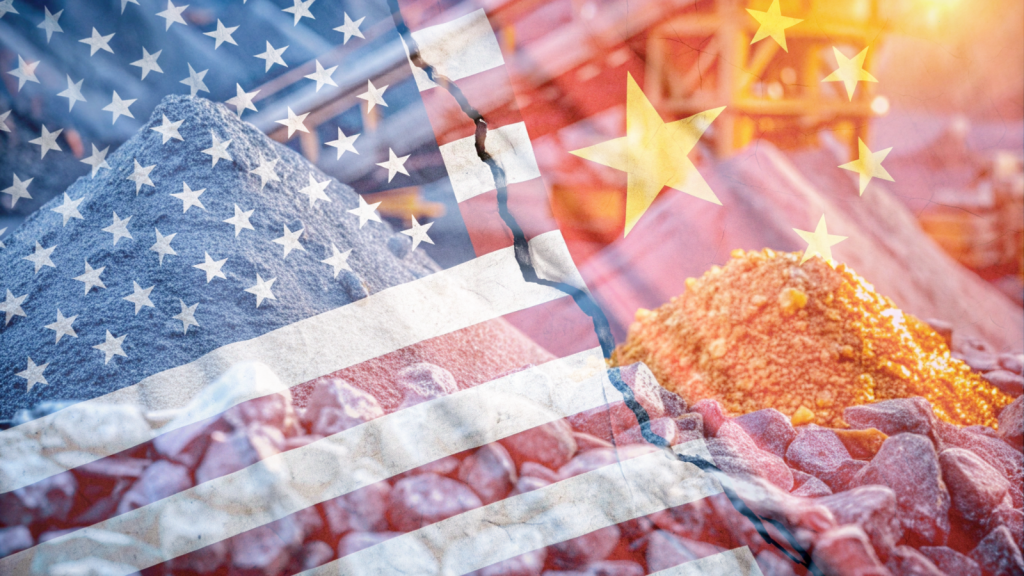
While the 1973 oil crisis involved a coalition of nations, the current dependency on rare earth magnets is concentrated primarily within a single state. The People’s Republic of China currently controls approximately 60% of global rare earth mining, nearly 90% of refining and processing, and an estimated 90% of the world’s finished rare earth magnet production.
The strategic utility of this dominance has become increasingly apparent. In June 2024, China’s Ministry of Commerce expanded its export-control and government-procurement blacklists to include several major U.S. defense and technology firms. This move was widely interpreted as a retaliatory measure against American efforts to subsidize domestic rare earth supply chains. It followed a pattern of escalating "rare earth diplomacy" that dates back to 2010, when China restricted exports to Japan during a territorial dispute, and more recently during the "Liberation Day" tariff standoffs.
For modern manufacturers, these restrictions are not theoretical risks. Tesla, for instance, reported multi-week production delays attributed to Chinese export licensing requirements for magnet-related materials. As the global economy transitions toward electrification and automation, the vulnerability of this single-source supply chain has become a primary concern for Western policymakers.
The Rise of Physical AI and the Demand Surge
The urgency of the rare earth crisis is being driven by the emergence of "Physical AI." While the first phase of the artificial intelligence boom focused on large language models and data centers, the second phase involves the integration of AI into the physical world through robotics and autonomous systems.
The hardware enabling this transition relies heavily on neodymium-iron-boron (NdFeB) magnets. These magnets are prized for their exceptional strength-to-weight ratio and their ability to maintain magnetic force under high temperatures—qualities essential for the precision motors used in humanoid robots. Tesla’s Optimus robot, for example, utilizes a network of dozens of small electric motors to mimic human movement in its joints, fingers, and limbs. Each humanoid unit is estimated to require between 2 and 4 kilograms of rare earth magnets, a volume that often exceeds the amount found in a standard electric vehicle (EV).
The demand for these materials is projected to grow exponentially across several sectors:
- Robotics: As humanoid robots move from prototypes to factory floors, the demand for precision servomotors will drive a massive increase in NdFeB consumption.
- Electric Vehicles: Permanent magnet motors remain the industry standard for EV efficiency and range.
- Aerospace and Defense: Rare earth magnets are critical components in guidance systems, radar, and satellite actuators.
- Energy Infrastructure: Wind turbines, particularly offshore models, require massive quantities of rare earths to operate generators efficiently.
Market analysts from institutions such as Goldman Sachs and McKinsey project that global demand for rare earth magnets could triple by 2040. This creates a structural deficit, as the development of new mines and refineries typically takes a decade or more to reach commercial scale.
Regulatory Response and the January 2027 Deadline
In response to these vulnerabilities, the United States has initiated a series of legislative and regulatory "hard clocks" designed to decouple critical supply chains from Chinese influence. The National Defense Authorization Act (NDAA) now includes provisions that require defense contractors to phase out the use of Chinese-origin rare earth magnets by January 2027.
This regulatory mandate has forced a scramble among Tier 1 suppliers and aerospace manufacturers to secure alternative sources of supply. To support this transition, the U.S. government has deployed billions of dollars through the Defense Production Act and Department of Energy grants. These funds are aimed at re-establishing a "mine-to-magnet" ecosystem within North America and allied nations.
MP Materials and the Domestic Alternative
At the center of the American effort to reclaim its rare earth independence is MP Materials (NYSE: MP), which owns and operates the Mountain Pass mine in California. Mountain Pass is the only scaled rare earth mining and processing site in the Western Hemisphere, currently accounting for roughly 10% of global rare earth concentrate production.
The trajectory of MP Materials reflects the broader national security trade currently unfolding in the markets. The company has moved beyond mere mining into refining and, crucially, the manufacturing of finished magnets. Several key developments highlight the company’s strategic importance:

- Government Partnership: The U.S. Department of Defense has invested significantly in MP Materials, with the government taking a 15% equity stake in the company. Furthermore, a 10-year offtake agreement ensures a guaranteed price floor for magnet materials, insulating the company from potential predatory pricing maneuvers by overseas competitors.
- Corporate Validation: Major industrial players have moved to secure their own supplies. Apple has signed a $500 million agreement with MP Materials for American-made magnets, which includes a recycling component at MP’s Fort Worth, Texas, facility. General Motors has also entered into a long-term supply agreement to secure magnets for its EV traction motors.
- Global Expansion: In a move to diversify beyond its domestic footprint, MP Materials has formed a joint venture with the Saudi Arabian state mining company, Ma’aden, to develop a rare earth refinery in the Kingdom, creating a secondary supply node outside of China.
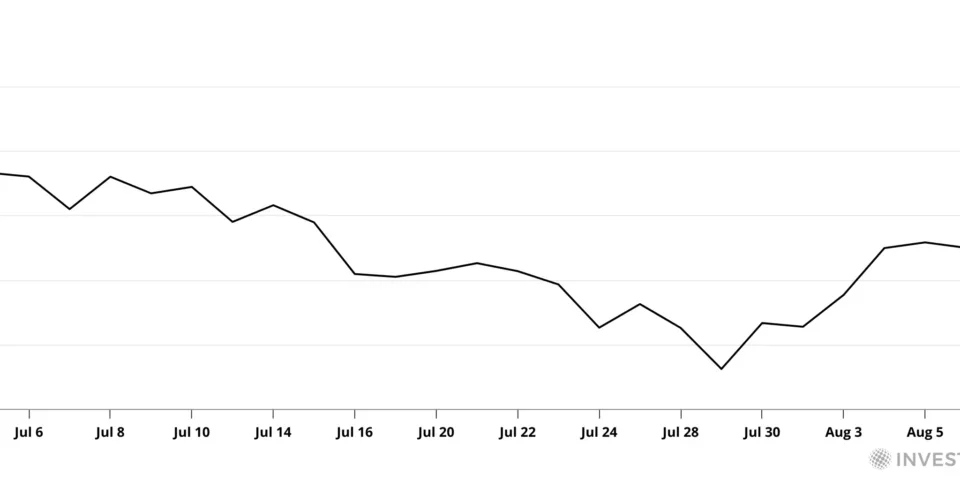
The company’s financial performance reflects this scaling effort. In the first quarter of 2026, MP Materials reported a 49% year-over-year revenue increase to $90.6 million, driven by the commencement of commercial magnet shipments. Despite being targeted by Chinese export-control blacklists—a move that initially caused a 30% dip in share price—the company has seen a recovery as investors increasingly view such sanctions as a confirmation of the company’s strategic value.
The Broader Impact: A New Era of Resource Competition
The transition from a fossil-fuel-based economy to one powered by electricity and silicon has not eliminated geopolitical risk; it has merely changed the map. The "Resource Nationalism" that defined the 1970s is returning in a more sophisticated form, where the control of processing and intellectual property is as important as the control of the raw ore.
The implications for the global economy are profound. If the 2027 deadline for defense decoupling is met, it will likely lead to a two-tiered pricing system: one for "clean" supply chains (non-Chinese) and another for the global commodity market. For investors, this shift represents a move toward "national-security trades," where companies are valued not just on their cash flows, but on their role in maintaining sovereign industrial capabilities.
The physical AI buildout—encompassing humanoid robots, EVs, and satellite constellations—is the most ambitious industrial project of the modern era. However, its success remains tethered to a handful of elements that were largely ignored by Western industry for decades. As the January 2027 regulatory clock ticks down, the race to secure these "invisible" inputs will likely define the next decade of industrial policy.
The lesson of 1973 remains clear: dependency is a vulnerability. Today, the world’s leading economies are finally acting on that lesson, attempting to build a resilient supply chain before the next strategic chokepoint is fully tightened. The transition from mining to magnetism is no longer just a technical challenge; it is a cornerstone of global stability and economic survival in the age of AI.