Apple Unveils Groundbreaking AirPods with Integrated Cameras, Ushering in a New Era of AI-Powered Wearables

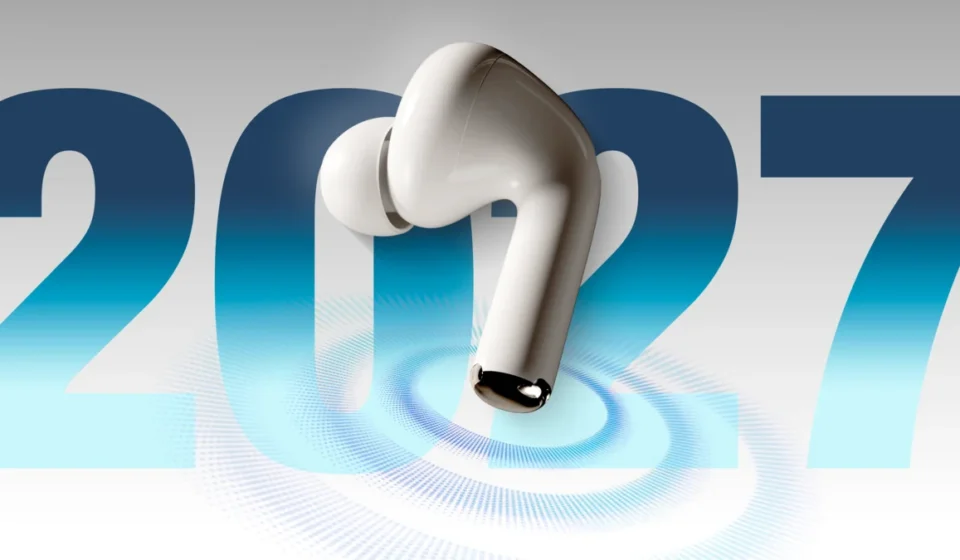
Apple is on the cusp of revolutionizing the wearable technology landscape with the upcoming release of its first-ever AirPods equipped with integrated cameras. These advanced earbuds, poised for a 2027 launch, are designed to serve as the cornerstone of Apple’s burgeoning "Visual Intelligence" initiative, empowering Siri with unprecedented contextual awareness and unlocking a suite of sophisticated AI-driven functionalities. The development marks a significant leap forward, transforming AirPods from premium audio devices into intelligent sensory extensions of the user’s environment.
The revelation of these camera-equipped AirPods, tentatively referred to as AirPods Pro 3 with cameras in internal documentation, surfaced through a significant leak from macOS Tahoe 26.7, discovered in mid-August 2026. A demo video, accidentally embedded within the operating system’s code, showcased the earbuds’ remarkable capabilities. The footage depicted a user holding up a book, with the AirPods’ cameras capturing the title. A clear voiceover then highlighted the "Visual Intelligence" feature: "With Visual Intelligence, your world becomes savable. See something you like? Just ask me to save it for later." This brief but impactful demonstration offered a tangible glimpse into how these devices will interpret and interact with the user’s visual surroundings.
This leak not only confirmed the existence of camera-equipped AirPods but also provided crucial insights into their intended functionality. The cameras are slated to feed visual data directly to Siri, enabling the virtual assistant to not only understand the wearer’s environment with a new level of detail but also to log and recall information based on visual cues. The system is designed to be intuitive, with alerts appearing if hair obstructs the cameras, ensuring optimal performance for accurate environmental analysis. "To get the most accurate information about things in your environment, make sure AirPods are not covered," the system reportedly advises, underscoring the importance of unobstructed visual input.
A Complex Development Timeline: Navigating Dual Product Paths
The journey toward camera-equipped AirPods has been marked by a degree of complexity, with internal development seemingly exploring multiple avenues simultaneously. For an extended period, rumors circulated about a product codenamed "B798," which was initially anticipated for a late 2026 release. However, Mark Gurman of Bloomberg reported in June 2026 that this particular model faced delays due to challenges in refining Siri’s AI capabilities, pushing its launch to September 2027, aligning with the anticipated 20th-anniversary iPhone release.
Adding another layer to the narrative, early August 2026 saw reports of a distinct, and potentially closer-to-market, version of camera AirPods, codenamed "B790." Gurman indicated that the B790 project had been progressing in parallel with B798, a common strategy for Apple to explore competing product designs internally. This B790 model was reportedly closer to launch. The subsequent discovery of multiple references to B790 within macOS Tahoe 26.7 further fueled speculation about an imminent release. Following this discovery, however, Gurman revised his assessment, stating that the B790 AirPods were no longer on Apple’s active release schedule and that no camera-equipped AirPods would be available before 2027. This intricate dance of development and reporting suggests a dynamic internal product strategy where early prototypes or competing designs may surface before a final product is greenlit. Gurman’s analysis further clarifies that B790 represents an iteration of the AirPods Pro 3 with cameras, while B798 signifies a future, more advanced AirPods Pro model also incorporating camera technology.
Design Evolution: Familiar Form Factor, Enhanced Capabilities
Visually, the upcoming camera-equipped AirPods are expected to maintain a design language largely consistent with the current AirPods Pro 3. The primary physical alteration will be the subtle integration of cameras into the stems of the earbuds. To enhance user awareness and address potential privacy concerns, Apple may incorporate an LED indicator that illuminates when visual data is being transmitted to the cloud. This subtle visual cue would serve to inform both the wearer and those around them that the cameras are actively in use, fostering transparency in the device’s operation. Beyond the incorporation of the camera modules, the overall dimensions, ergonomic design, and the charging case are anticipated to remain largely unchanged, ensuring a familiar and comfortable user experience.
Unlocking New Functionalities: Visual Intelligence in Action
The core innovation of these next-generation AirPods lies in their ability to imbue Siri with a heightened level of environmental understanding. By transmitting visual data, the AirPods will provide Siri with a richer context of the user’s surroundings, enabling a cascade of new features. Imagine receiving more precise, context-aware, turn-by-turn navigation instructions during walking tours, or receiving location-specific reminders that are triggered by the user’s visual environment. The potential for 3D mapping and augmented reality applications, powered by real-time visual input, is also significant.

This integration directly leverages and expands upon Apple’s existing "Visual Intelligence" capabilities, which are already present in iPhones. This AI-driven feature allows the iPhone to identify objects such as plants, animals, landmarks, artwork, and books. With camera-equipped AirPods, users will be able to access these identification services seamlessly through voice commands, eliminating the need to actively use the iPhone’s Camera app. This creates a more fluid and integrated user experience, where contextual information is readily available through spoken queries.
The Power Behind the Pixels: The H3 Chip and Technical Underpinnings
Powering these advanced functionalities will likely be a newly developed H3 chip, poised to make its debut in the camera-equipped AirPods. This next-generation silicon is anticipated to deliver substantial improvements in processing speed, reducing latency for both audio and visual data. Furthermore, the H3 chip is expected to enhance overall audio quality, potentially offering more sophisticated noise cancellation and spatial audio experiences.
Technical analysis of the macOS Tahoe 26.7 code has shed light on the specific hardware components of the camera AirPods. Notably, the code does not mention an infrared sensor, a feature that had been rumored in earlier reports. This suggests that the camera system will rely primarily on visible light spectrum imaging. While specific resolutions and field-of-view details are yet to be fully disclosed, the presence of dedicated camera hardware signifies a substantial engineering undertaking within the compact form factor of an earbud.
Navigating the Naming Convention: AirPods Pro or AirPods Ultra?
The naming convention for these revolutionary earbuds has been a subject of ongoing speculation. While initial rumors suggested the possibility of "AirPods Ultra," the discovered macOS Tahoe 26.7 file explicitly labels the new AirPods as "AirPods Pro." It is important to note that such internal labels can sometimes serve as placeholders. Therefore, the "AirPods Ultra" moniker is not entirely out of the question, especially considering Apple’s recent trend of expanding its "Ultra" product line. Mark Gurman had previously indicated in March 2026 that Apple was exploring "Ultra" branding for a range of devices, including a potential iPhone Ultra, AirPods Ultra, and a MacBook Ultra. Whether this branding will be applied to the camera-equipped AirPods remains to be seen, but the current evidence points towards an AirPods Pro designation. Apple may have also considered "AirPods Pro" for a version of the camera-equipped AirPods that ultimately did not make it to market.
Pricing and Compatibility: A Premium Offering
While official pricing remains unconfirmed, it is reasonable to anticipate a premium price point for these advanced earbuds. The current AirPods Pro 3 retail for $249, and the addition of sophisticated camera hardware and enhanced AI processing capabilities is likely to drive the cost higher.
Crucially, the full potential of these camera-equipped AirPods will be unlocked by their integration with Apple’s "Apple Intelligence" framework. This necessitates compatibility with iPhones that support this advanced AI ecosystem, which currently includes the iPhone 15 Pro and subsequent models. Users with older iPhone models may not be able to access the full range of visual intelligence features.
Anticipated Release: A 2027 Debut
Despite their presence in the macOS Tahoe 26.7 beta, the camera-equipped AirPods are firmly slated for a 2027 release. Their unveiling is widely expected to coincide with the launch of the 20th-anniversary iPhone, a significant event in Apple’s product calendar. This strategic timing suggests that these new AirPods will be positioned as a key component of Apple’s broader AI-driven hardware ecosystem, designed to work in concert with its latest iPhone offerings. The long development cycle, coupled with the groundbreaking nature of the technology, indicates a deliberate and carefully orchestrated introduction to the market. The industry will be closely watching to see how these camera-equipped AirPods reshape user interaction with wearable technology and further solidify Apple’s position at the forefront of AI innovation.