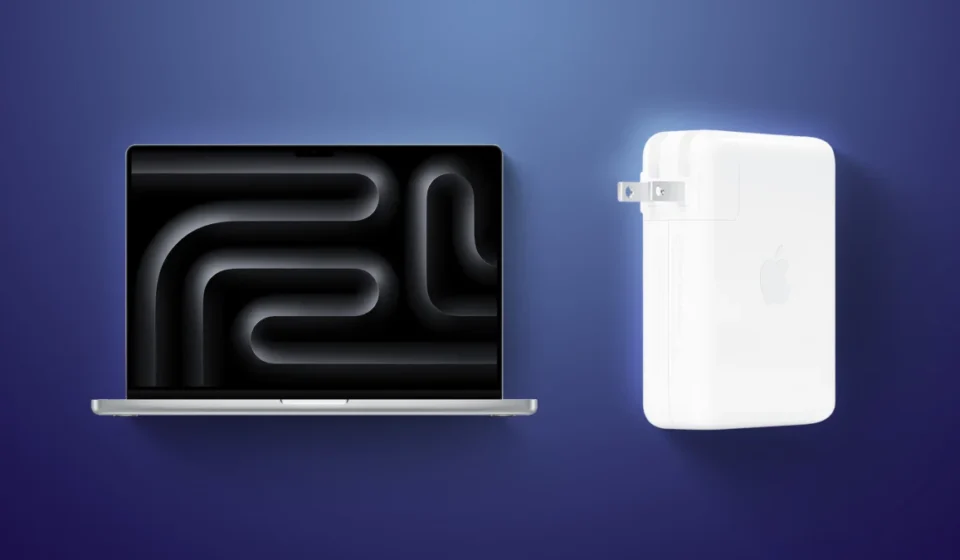

Apple has issued a firmware update, designated as version 1.4.90, for its high-power 140W USB-C Power Adapter. This update, released on Tuesday, September 8, 2026, at 1:34 PM PDT, is designed to enhance the functionality and potentially the performance of the adapter. As is customary with many of Apple’s accessory firmware updates, specific details regarding the changes included in this version have not been publicly disclosed. Apple typically refrains from publishing detailed release notes for such updates, leaving users to infer any tangible benefits through continued use.
The installation process for this firmware update is automated and occurs passively. Users will not be prompted to initiate the update, nor will there be an option to manually apply it. Instead, the firmware will be downloaded and installed by the power adapter itself over time, provided it is connected to a compatible device, such as a Mac or another USB-C enabled gadget, and has an active internet connection through that device. This approach is consistent with Apple’s strategy for managing firmware on its peripherals, aiming for a seamless user experience without requiring active user intervention.
Background and Context: The Evolution of Apple’s Power Adapters
The 140W USB-C Power Adapter was first introduced alongside the redesigned 16-inch MacBook Pro models in late 2021. This adapter represented a significant leap in charging capability for Apple’s portable computers, enabling faster charging speeds for the most power-hungry MacBook Pro configurations. Its introduction was driven by the increasing power demands of professional-grade laptops, particularly those featuring Apple’s M-series chips, which offer substantial processing power and thus require robust power delivery solutions.
Prior to the 140W adapter, Apple’s highest-wattage adapters for MacBooks typically topped out at 96W or 100W. The move to 140W was facilitated by the adoption of USB Power Delivery 3.1 Extended Power Range (EPR) technology. This standard allows for higher voltage and current outputs, significantly reducing the time required to charge devices with large batteries. For instance, the 16-inch MacBook Pro can achieve a 50% charge in approximately 30 minutes when using the 140W adapter.
The firmware within these power adapters plays a crucial role in managing power delivery, ensuring safety, and optimizing charging efficiency. It controls how the adapter communicates with the connected device, negotiating power levels and monitoring for any potential issues. Updates to this firmware can address subtle performance improvements, enhance compatibility with newer devices or operating system versions, or patch security vulnerabilities.
Chronology of Firmware Releases for the 140W Adapter
While specific release notes are scarce, this marks not the first firmware update for the 140W USB-C Power Adapter. Previous updates have been observed, though often without explicit user notification. The pattern suggests a proactive approach by Apple to maintain the optimal functioning of its charging hardware.
- Initial Release (Late 2021): The 140W USB-C Power Adapter is launched with its initial firmware.
- Subsequent Updates (2022-2025): Periodically, minor firmware updates are released, often identified by users through system logs or specific diagnostic tools. These updates are typically incremental, focusing on stability and compatibility.
- September 8, 2026: Version 1.4.90 is released, indicating ongoing refinement and maintenance of the adapter’s firmware.
The numbering scheme of these updates (e.g., 1.4.90) suggests a structured internal development process, where minor version bumps indicate iterative improvements rather than complete overhauls.
Supporting Data and Technical Considerations
The 140W USB-C Power Adapter utilizes GaN (Gallium Nitride) technology, a semiconductor material that allows for smaller, more efficient, and cooler-running power adapters compared to traditional silicon-based chargers. This technology is crucial for packing such high power output into a relatively compact form factor.
USB Power Delivery 3.1 EPR is a key enabler of the 140W capability. This standard supports programmable power supply (PPS) and Extended Power Range (EPR) capabilities, allowing for voltages beyond the standard 20V, up to 48V. This flexibility is essential for delivering the necessary wattage to demanding devices. The firmware is responsible for managing the negotiation of these power profiles between the adapter and the connected device, ensuring that the correct voltage and amperage are supplied safely and efficiently.
The automatic update mechanism is designed for user convenience. By eliminating the need for manual intervention, Apple ensures that a wider range of its adapters are running on the latest, most optimized firmware. This also helps to maintain a consistent level of performance and security across its product ecosystem.
Official Statements and Industry Practices
Apple’s official stance on accessory firmware updates is generally one of minimal communication, focusing on the outcome of improved user experience rather than the granular details of the technical changes. This practice is common across the tech industry, where companies often prioritize the seamless integration and functioning of their products without burdening consumers with technical specifications of background updates.
However, the lack of detailed release notes can sometimes lead to user curiosity and speculation. In the absence of official explanations, tech enthusiasts and news outlets often analyze the implications of such updates. For this particular update, the version number (1.4.90) suggests a refinement of existing functionality rather than a groundbreaking new feature. Potential improvements could include enhanced thermal management, more precise power delivery algorithms, or improved compatibility with future macOS or iOS releases.
Broader Impact and Implications
The continuous refinement of power adapter firmware underscores Apple’s commitment to the longevity and optimal performance of its products. While a firmware update for a power adapter might seem minor, it plays a vital role in the overall charging experience and the health of a device’s battery.
- Enhanced Charging Efficiency: Firmware updates can optimize the charging curve, ensuring that devices charge as quickly and efficiently as possible while minimizing heat generation, which can degrade battery health over time.
- Improved Device Compatibility: As Apple introduces new hardware and software features, firmware updates for accessories like power adapters ensure continued compatibility and optimal performance with the latest devices and operating systems.
- Security and Stability: Like any software, firmware can contain vulnerabilities. Updates are crucial for patching any security loopholes and ensuring the stability of the power adapter’s operation.
- Sustained Performance: For professional users who rely heavily on their MacBook Pros for demanding tasks, a reliable and efficient power supply is critical. Firmware updates contribute to the consistent delivery of power needed for sustained performance.
The 140W USB-C Power Adapter is a key component for users of high-performance MacBook Pro models. Its ability to deliver substantial power rapidly is a significant advantage. The ongoing firmware updates, though discreet, signify Apple’s dedication to ensuring this critical piece of hardware functions at its peak, contributing to the overall robust ecosystem of its professional-grade laptops. While users may not directly observe the changes, the update serves as a testament to Apple’s commitment to iterative improvement and maintaining the quality of its accessories.