The Future of Humanoid Robotics and the Industrial Supply Chain of Elon Musk’s Optimus Project

The global manufacturing sector is currently navigating a fundamental shift as the robotics industry moves from specialized, stationary machinery toward versatile humanoid forms capable of operating within environments designed for humans. This transition, accelerated by breakthroughs in artificial intelligence and sensor technology, has placed companies like Tesla Inc. at the center of a burgeoning industrial ecosystem. While much of the public discourse focuses on the capabilities of Tesla’s Optimus robot, industry analysts and economists are increasingly highlighting the vast supply chain of components, precision machinery, and specialized infrastructure required to facilitate the mass production of millions of humanoid units. This evolution represents a departure from the traditional industrial robotics model, which for over six decades relied on adapting the workplace to the machine rather than the machine to the workplace.
The Evolution of Industrial Automation: From Unimate to General-Purpose Robotics
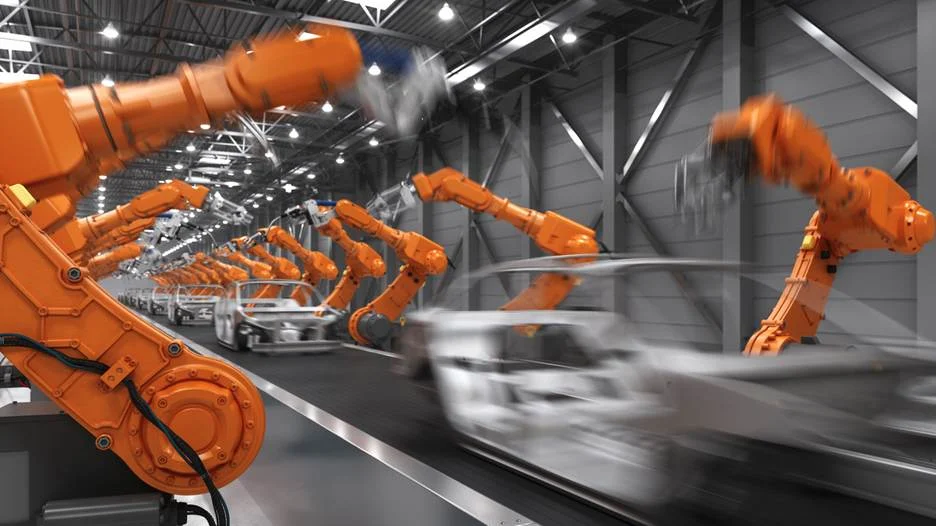
The history of robotic automation in manufacturing began in 1961 when General Motors installed the Unimate at its Ternstedt plant in Ewing Township, New Jersey. Developed by George Devol and Joseph Engelberger, Unimate was a 4,000-pound hydraulic arm that performed tasks deemed too dangerous or repetitive for human workers, such as transporting die-castings from an assembly line and welding them onto auto bodies. This installation set the precedent for the "specialized automation" era, where robots were bolted to factory floors and operated within highly controlled, fenced-off environments.
For the next 60 years, the robotics industry followed this blueprint. Global leaders such as FANUC, ABB, and Kuka developed increasingly precise arms that excelled at high-speed repetition but lacked the mobility or cognitive flexibility to navigate a dynamic workspace. These machines required factories to be designed around their specific range of motion. However, the current push toward humanoid robotics seeks to invert this relationship. By mimicking the human form—including bipedal locomotion and dexterous hands—engineers aim to deploy robots into existing infrastructure, utilizing the same stairs, doorways, and hand tools currently used by human personnel.
The Economic Crossover: Labor Costs and Productivity Metrics
The primary driver behind the sudden acceleration in humanoid development is the shifting economic landscape of global labor. Recent data from JPMorgan suggests that the cost of operating a humanoid robot in an industrial setting could eventually fall to between $10 and $12 per hour. This figure includes the amortized cost of the hardware, electricity, maintenance, and software updates. In contrast, the average hourly cost of a human manufacturing worker in the United States, including benefits and overhead, is approximately $30.
While a significant productivity gap currently exists—JPMorgan estimates that it takes roughly two humanoid robots to match the output of one human worker—the narrowing of this gap is expected to reach a "crossover point" by 2030. As AI models improve the speed and accuracy of robotic movements, the cost-benefit analysis for large-scale manufacturers is becoming increasingly favorable. Nvidia CEO Jensen Huang has characterized the potential market for manufacturing robotics as a $50 trillion industry, noting that the integration of "Physical AI" will allow robots to understand and interact with the world with unprecedented autonomy.
Tesla’s Optimus and the Mass Production Challenge
Elon Musk, CEO of Tesla, has positioned the Optimus project as a cornerstone of the company’s future value, suggesting that the demand for humanoid robots could eventually reach 10 to 20 billion units. Tesla’s strategy involves leveraging the company’s existing expertise in battery technology, power electronics, and autonomous driving software (Full Self-Driving) to create a robot that can be mass-produced at a target price of $20,000 to $30,000.
However, the transition from prototype to mass production presents significant technical hurdles. A humanoid robot requires an intricate array of actuators, sensors, and processors to function. For instance, the human hand is a marvel of biological engineering that requires a robot to use a combination of tactile sensors, high-torque motors, and sophisticated feedback loops to replicate. Musk’s "machine that makes the machine" philosophy implies that Tesla will need to develop new manufacturing processes to assemble these components at a scale never before seen in the robotics industry.
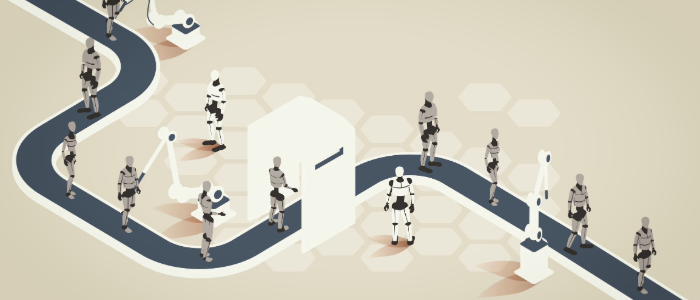
Industry experts point out that even a highly vertically integrated company like Tesla cannot produce every component in-house. The production of millions of robots will require a massive influx of specialized parts from third-party suppliers, including:
- Precision Actuators: The "muscles" of the robot that require high-density rare-earth magnets and specialized gearing.
- MEMS Sensors: Micro-electromechanical systems that provide the robot with a sense of balance and spatial awareness.
- Computer Vision Hardware: High-resolution cameras and LiDAR systems capable of processing environmental data in real-time.
- Edge Computing Chips: Dedicated processors designed to run complex neural networks with low power consumption.
Real-World Implementation: The BMW and Figure AI Case Study
The move toward humanoid integration is already being tested in real-world environments. In a notable 10-month pilot program at its Spartanburg, South Carolina, plant, BMW Group utilized a humanoid robot developed by Figure AI. During the trial, the robot successfully integrated into the production flow, moving more than 90,000 components and logging approximately 1,250 hours of operation.
The Spartanburg plant, which produces the BMW X3, served as a testing ground for how humanoids could support human workers in complex assembly tasks. According to BMW, the robot was tasked with placing sheet metal parts into specific fixtures, which were then welded as part of the chassis assembly. This pilot demonstrated that while humanoids are not yet ready for total floor replacement, they are becoming "economically useful" for specific logistics and pre-assembly roles. This successful trial has spurred other automotive giants, including Hyundai (via Boston Dynamics) and Mercedes-Benz (via Apptronik), to accelerate their own humanoid testing programs.
Chronology of Key Milestones in Humanoid Development
The path to the current humanoid "arms race" has been marked by several critical milestones over the past decade:
- 2013: Boston Dynamics debuts the first version of Atlas, a bipedal robot funded by DARPA, demonstrating advanced balance and mobility.
- 2021: Elon Musk announces the "Tesla Bot" (later Optimus) during Tesla’s AI Day, utilizing a human performer in a suit to illustrate the concept.
- 2022: Tesla showcases a deconstructed prototype of Optimus that walks and waves on stage without external support.
- 2023: Agility Robotics opens "RoboFab," a factory in Oregon designed to produce thousands of its "Digit" humanoid robots for warehouse applications.
- Early 2024: Figure AI announces a $675 million funding round from investors including Microsoft, Nvidia, and Jeff Bezos, signaling massive institutional confidence in the sector.
- Mid-2024: Tesla deploys two Optimus robots autonomously in one of its factories, performing basic battery cell handling tasks.
Broader Implications for Global Manufacturing and Labor
The implications of widespread humanoid adoption extend beyond corporate balance sheets. As the "Physical AI" boom mirrors the "Digital AI" boom led by companies like Nvidia, the manufacturing landscape is likely to undergo a period of "reshoring." By reducing the reliance on low-cost manual labor, developed economies may see a return of manufacturing facilities that were previously outsourced to regions with lower wage costs.
Furthermore, the rise of the humanoid supply chain is expected to create a secondary market for maintenance, software-as-a-service (SaaS) for robot fleet management, and specialized insurance products. However, this shift also raises significant questions regarding labor displacement. While proponents argue that robots will take over "dull, dirty, and dangerous" jobs, labor organizations have expressed concerns about the long-term impact on employment in the logistics and manufacturing sectors.
The response from the public sector has been varied. In China, the Ministry of Industry and Information Technology has released a roadmap to mass-produce humanoid robots by 2025, labeling them as a "disruptive technology" on par with smartphones and electric vehicles. In the United States, the focus has remained largely on private-sector innovation, though discussions regarding the regulatory framework for human-robot interaction in the workplace are intensifying.
Conclusion: The Emergence of a New Industrial Tier
As Tesla and its competitors move closer to mass production, the industrial world is bracing for the emergence of a new tier of suppliers. The "robotics boom" is not merely about the finished humanoid unit but the vast network of companies providing the underlying technology. From the rare-earth minerals required for high-performance motors to the sophisticated AI training clusters needed to teach robots how to navigate a warehouse, the economic ripples of the Optimus project and its peers are likely to be felt across every sector of the global economy.
The transition from the specialized mechanical arms of 1961 to the general-purpose humanoids of the 2030s represents a shift in how humanity views labor and automation. If the projections from firms like JPMorgan and leaders like Jensen Huang hold true, the next decade will be defined by the successful integration of machines that can finally work alongside humans, using human tools, in a human-centric world.