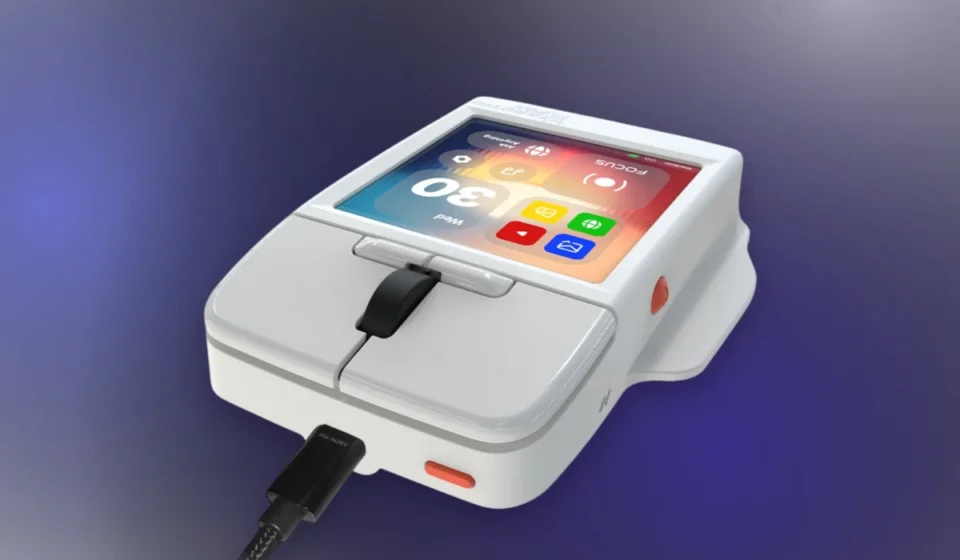
The Super Mouse packs a full keyboard, motion controls, and more shortcuts than anyone could reasonably ask for.

In a bold move that blurs the lines between traditional input devices and command centers, Arctic Fox Technologies has unveiled the "Super Mouse," a highly unconventional peripheral that integrates a full touchscreen keyboard, advanced motion controls, and an extensive array of customizable shortcuts. Launched on the crowdfunding platform Kickstarter, the Super Mouse aims to redefine user interaction with computing devices, offering a feature set that promises to elevate productivity for a wide range of professionals.
The concept of embedding a touchscreen onto a mouse is not entirely novel. Turtle Beach previously experimented with this idea with its Command Series MC7 gaming mouse, which featured a 2.25-inch control screen. However, Arctic Fox Technologies appears to have pushed the envelope considerably further with its Super Mouse, presenting a device that evokes a blend of retro design cues and futuristic functionality. The Super Mouse’s aesthetic, described as reminiscent of older, chunkier mouse designs but enhanced with modern display technology, has immediately captured attention and sparked debate within the tech community.
A Touchscreen Command Center in Your Hand

At the heart of the Super Mouse lies its most striking feature: a 3.1-inch touchscreen display with a sharp 720 x 720 resolution. This high-resolution screen is designed to be far more than a mere status indicator. It functions as a dynamic interface capable of launching applications, executing complex shortcuts, and even orchestrating entire workflows with a single tap. A key innovation highlighted by Arctic Fox is the dynamic adaptation of the touchscreen’s layout based on the user’s active application. This intelligent contextual awareness is particularly poised to benefit creative professionals who frequently navigate between resource-intensive software such as Adobe Photoshop, Figma, and other design or editing suites. The ability to have application-specific shortcuts readily accessible without diverting attention to a separate keyboard or menu system could significantly streamline creative processes.
The Super Mouse’s ambition doesn’t stop at contextual shortcuts. Arctic Fox has incorporated a full on-screen keyboard, complete with swipe typing capabilities, transforming the mouse into a self-contained input hub. This feature, coupled with voice dictation support for over 90 languages—processed locally for enhanced privacy and speed—further broadens its utility. The company claims this local processing capability addresses growing concerns about data security and user privacy in an increasingly connected world.
Beyond its keyboard and dictation functions, the touchscreen can also operate as a multi-touch trackpad. This offers an alternative to traditional mouse movements, potentially reducing wrist strain and providing a more fluid cursor control experience for certain tasks. Complementing the touchscreen are integrated motion sensors. These allow users to trigger commands by tilting or twisting the mouse, adding another layer of intuitive interaction. Furthermore, the Super Mouse includes physical "Hyper Keys" for assigning custom macros, ensuring that tactile feedback is still available for frequently used shortcuts. All of these customizable features are managed through a dedicated application called Flow, available for both Windows and macOS operating systems.
Ergonomics, Connectivity, and the Kickstarter Journey

While the Super Mouse boasts an impressive array of features, its design has also raised pertinent questions regarding ergonomics and practicality. The somewhat boxy form factor has led to discussions about long-term comfort during extended use. Arctic Fox has addressed these concerns by stating that the design intentionally keeps the user’s palm away from the screen, a measure intended to prevent accidental touches and maintain focus on the intended input.
One of the most notable omissions from this feature-packed peripheral is wireless connectivity. The Super Mouse relies on a USB-C cable for its connection to a computer. In an era where wireless peripherals are increasingly the norm, especially for high-end devices, this choice might be a point of contention for some users seeking a clutter-free desk setup. However, a wired connection can also offer advantages in terms of latency and reliability, which could be critical for demanding professional workflows.
The Super Mouse’s journey began on Kickstarter, a platform known for incubating innovative and often unconventional tech products. The crowdfunding campaign launched with an early-bird price of $199, with a projected retail price of $249. Deliveries are currently targeted for February 2027. As of the time of this report, the campaign had garnered significant traction, with 85 backers demonstrating a clear interest in this ambitious concept. The success of the Kickstarter campaign will be a crucial indicator of market reception and the potential for the Super Mouse to transition from a crowdfunding project to a mainstream product.
Market Context and Competitive Landscape

The Super Mouse enters a computing accessory market that is constantly evolving. While traditional mice and keyboards remain dominant, there has been a growing interest in specialized input devices that cater to specific professional needs. Devices like the Elgato Stream Deck, which offers a grid of customizable LCD keys for live streamers and content creators, have demonstrated the demand for programmable macro pads and shortcut controllers. The Super Mouse attempts to consolidate many of these functionalities into a single, albeit unconventional, device.
The concept of integrating touch interfaces into pointing devices also has precedents. Beyond Turtle Beach’s MC7, some early attempts at touchscreen mice existed in the early 2000s, though they often suffered from limited functionality and poor execution. Arctic Fox’s Super Mouse appears to be a more sophisticated iteration, leveraging advancements in touchscreen technology and processing power to offer a more robust and contextually aware experience.
The inclusion of local voice processing is also a significant differentiator. Many voice-enabled devices rely on cloud processing, which can introduce latency and privacy concerns. By processing voice data on the device itself, the Super Mouse positions itself as a more secure and responsive option for users who rely on dictation for their work.
Analysis of Implications and Future Potential

The Super Mouse represents a fascinating experiment in human-computer interaction. Its success will hinge on several factors. Firstly, the actual usability and intuitive nature of the dynamic touchscreen interface will be paramount. If users find themselves stopping to fiddle with the screen more than they would using traditional methods, its productivity claims will be undermined. The ergonomic design will also play a crucial role in its long-term adoption; comfort is a non-negotiable aspect of any peripheral intended for daily use.
The absence of wireless connectivity might limit its appeal to a segment of the market, particularly those who prioritize minimalist desk setups. However, for professionals where performance and reliability are key, a wired connection might be a welcome feature.
The Super Mouse’s potential impact extends beyond individual productivity. If successful, it could inspire further innovation in input device design, encouraging other manufacturers to explore integrated touchscreen functionalities and advanced motion controls. It also highlights a growing trend towards personalized computing experiences, where users can tailor their tools to precisely match their workflows.
The early success of its Kickstarter campaign suggests that there is a segment of the user base eager for more advanced and versatile input solutions. The coming months and years will reveal whether the Super Mouse can live up to its ambitious promises and carve out a significant niche in the competitive landscape of computer peripherals. Its journey from concept to potential market reality will be closely watched by tech enthusiasts and industry observers alike. The device stands as a testament to the ongoing quest for more efficient, intuitive, and powerful ways to interact with our digital world.