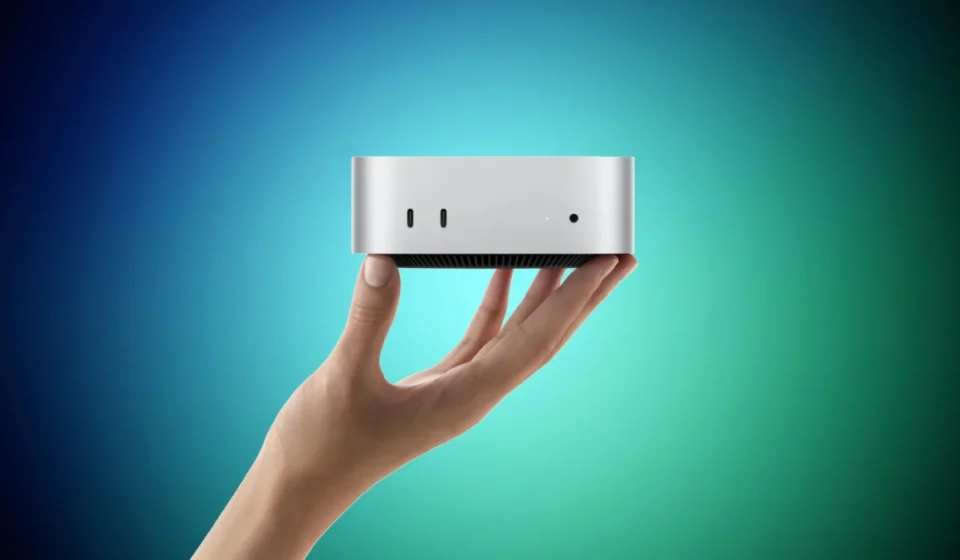

Apple last week announced two significant additions to its compact desktop lineup: the all-new Mac mini powered by the cutting-edge M6 chip and a more potent variant equipped with the M5 Pro chip, which first debuted in higher-end MacBook Pro models earlier this year. This strategic rollout signals Apple’s continued commitment to offering versatile computing solutions across its product spectrum, with the Mac mini now positioned to cater to a broader range of user needs, from everyday productivity to demanding professional workflows. The announcement, made via Apple’s official newsroom, has generated considerable interest within the technology community, particularly regarding the distinct performance profiles and pricing structures of these two new Mac mini configurations.
A Tale of Two Chips: M6 vs. M5 Pro in the Mac mini
The unveiling of the new Mac mini models presents a nuanced approach to silicon integration, mirroring a strategy previously observed with MacBook Pro releases. Apple has placed its most advanced, albeit entry-level, chip – the M6 – in the base configuration, while the more powerful M5 Pro chip, a generation older but still robust, finds its place in the premium offering. This decision means the higher-priced Mac mini is not simply a faster iteration of its less expensive counterpart but rather a distinct machine designed for more specialized tasks.
The Mac mini with the M6 chip begins its journey at a price point of $899. This configuration features a 12-core CPU, a substantial 16GB of unified memory, and 256GB of internal storage. In contrast, the M5 Pro-equipped Mac mini commands a starting price of $1,699, offering a more substantial foundation with a 15-core CPU, 24GB of unified memory, and 512GB of storage. For users requiring even greater computational power, the M5 Pro model can be further configured with up to an 18-core CPU and a 20-core GPU.
These pricing strategies establish the highest starting prices Apple has ever set for the Mac mini. Consequently, the $800 price differential between the two models carries a more significant weight for potential buyers, demanding careful consideration of individual needs and budget constraints. This guide aims to dissect the capabilities of each model, empowering users to make an informed decision about which Mac mini best aligns with their specific computing requirements.
Pre-Orders Open, Launch Imminent: Identical Chassis, Divergent Power
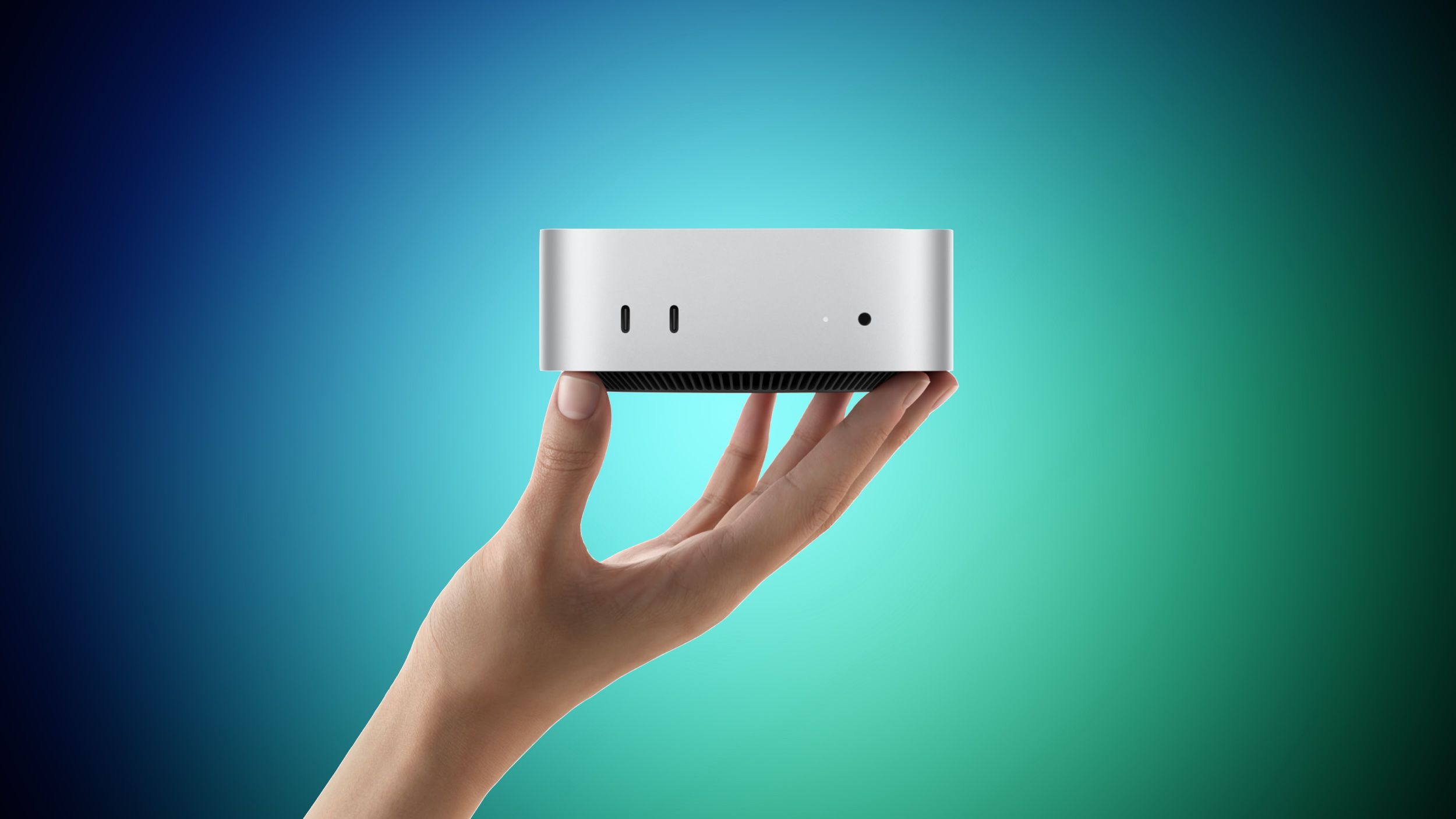
Both the M6 and M5 Pro Mac mini models are currently available for pre-order, with their official launch scheduled for Tuesday, September 22. A notable aspect of this release is that both machines share an identical physical design and the vast majority of their internal hardware components. This uniformity in form factor ensures that users can expect the same compact footprint and aesthetic appeal, regardless of the silicon powering their device.
Shared features across both models include:
- Connectivity: A comprehensive array of ports designed for versatility.
- Wi-Fi 6E and Bluetooth 5.3: Ensuring fast and reliable wireless connectivity for seamless integration into modern networks.
- Gigabit Ethernet Port: Providing a stable wired network connection for demanding applications.
- HDMI 2.1 Output: Supporting high-resolution displays and advanced audio features.
- Headphone Jack: Offering a traditional audio output option.
- Two USB-A Ports: For legacy device compatibility.
- Built-in Speaker: Providing integrated audio output.
- Support for up to Two Displays: Enabling expanded desktop real estate for increased productivity.
Deconstructing the Differences: A Comparative Technical Deep Dive
The true divergence between the M6 and M5 Pro Mac mini models lies beneath the surface, within their respective silicon architectures and performance capabilities. A detailed breakdown highlights the specific advantages and limitations of each chip.
| Feature | Mac mini (M6) | Mac mini (M5 Pro) |
|---|---|---|
| Core Processor | M6 chip | M5 Pro chip |
| Manufacturing Process | Built with TSMC’s 2nm (N2) process | Built with TSMC’s 3nm (N3P) process |
| CPU Cores | 12-core CPU | 15-core or 18-core CPU |
| CPU Core Breakdown | Two super cores, four performance cores, and six efficiency cores | Up to six super cores and 12 performance cores |
| Single-Threaded Performance | World’s fastest single-threaded performance, according to Apple | N/A |
| GPU Cores | 12-core GPU | 16-core or 20-core GPU |
| GPU Architecture | Updated shader core architecture, Dynamic Caching, and hardware-accelerated ray tracing, with 50% higher geometry rates | Enhanced shader core with third-generation ray tracing |
| Neural Engine | Dual 16-core Neural Engine, with up to 2x the peak compute of previous generations | 16-core Neural Engine |
| Memory Bandwidth | Up to 170GB/s | 307GB/s |
| Unified Memory | 16GB, 24GB, or 32GB | 24GB, 48GB, or 64GB |
| Storage Options | 256GB, 512GB, 1TB, or 2TB | 512GB, 1TB, 2TB, 4TB, or 8TB |
| Thunderbolt Ports | Three Thunderbolt 4 ports | Three Thunderbolt 5 ports |
| Advanced Connectivity | N/A | Clustering of multiple Mac mini systems over Thunderbolt 5 |
| Weight | 1.5 pounds (0.67 kg) | 1.6 pounds (0.73 kg) |
| Starting Price | $899 | $1,699 |
Navigating the Choice: Who Should Buy Which Mac mini?
For the vast majority of consumers, the Mac mini equipped with the M6 chip emerges as the most logical and compelling choice. This assertion is not solely predicated on its $800 lower price tag. The M6 represents Apple’s latest silicon innovation, manufactured on TSMC’s advanced 2nm process node. Apple has asserted that the M6 chip boasts the world’s fastest CPU core, a significant claim that underscores its potential for swift and responsive performance.
Furthermore, the M6 Mac mini is distinguished by its Dual 16-core Neural Engine, a feature exclusive to this model. Apple states that this dual-engine configuration delivers up to twice the peak compute power compared to the single Neural Engine found in the M5 Pro. This enhanced AI processing capability is particularly beneficial for workloads that heavily rely on on-device machine learning tasks, such as advanced photo editing, complex coding environments, and emerging AI-driven applications. For individuals whose daily computing tasks involve standard productivity software, web browsing, photo manipulation, software development, or light AI processing, the M6 Mac mini is expected to provide a marginally faster and more future-proof experience, especially in single-core intensive operations.
The M5 Pro: Power for Professionals and Demanding Workloads
Opting for the more expensive Mac mini model means embracing a previous generation of silicon, but in exchange, users gain access to a broader spectrum of performance and capacity. The M5 Pro chip’s advantage lies not necessarily in raw per-core speed but in its sheer scale. It offers up to 18 CPU cores compared to the M6’s 12, and up to 20 GPU cores against the M6’s 12. Crucially, it provides a substantial 307GB/s of memory bandwidth, dwarfing the 170GB/s offered by the M6.
These performance uplifts are most pronounced in sustained, heavily parallelized tasks. Professionals engaged in demanding workflows such as video rendering, 3D modeling and visual effects (VFX) production, the compilation of extensive codebases, and complex scientific simulations will find the M5 Pro model to be a significantly more capable machine.
Memory and Storage: Defining the Upper Limits
A clear demarcation between the two models lies in their memory and storage ceilings. The M6 Mac mini is capped at 32GB of unified memory, whereas the M5 Pro model can be configured with up to a capacious 64GB. This distinction is critical for users planning to run large language models locally, work with intricate 3D scenes, or maintain substantial datasets within active memory. For these power users, the M6 configuration, regardless of cost, simply cannot meet the required memory demands. The storage capacity also follows a similar tiered approach, with the M6 limited to 2TB and the M5 Pro extending to a substantial 8TB.
Thunderbolt 5: A Gateway to Advanced Connectivity and Scalability
The inclusion of Thunderbolt 5 ports on the M5 Pro model represents another significant differentiator. These ports offer double the bandwidth of the Thunderbolt 4 ports found on the M6 model. This increased bandwidth is not merely about faster data transfer; it enables advanced functionalities such as clustering multiple Mac mini systems together. This capability is particularly relevant for users looking to build small-scale local compute clusters for training large AI models entirely on-device or for those requiring high-speed connections to external storage arrays for demanding video editing workflows.
Strategic Configuration and Long-Term Investment
A cautionary note arises when considering upgrading the M6 model. Equipping the base M6 Mac mini with 32GB of memory and 2TB of storage significantly escalates its price, narrowing the cost gap to the M5 Pro. At this point, for individuals performing professional work, the entry-level configuration of the M5 Pro becomes a more prudent investment. The additional expenditure on the M5 Pro yields substantially more CPU and GPU power, faster memory bandwidth, and the advanced capabilities of Thunderbolt 5, rather than simply incremental upgrades to the M6’s existing architecture.
An additional factor for prospective buyers to consider is the projected longevity of Apple’s chip families. Reports suggest that Apple has no immediate plans to release an M6 Pro chip. This means that the M5 Pro will likely remain the pinnacle of Mac mini performance until the next generation of Apple Silicon, potentially the M7 family, arrives in 2027. Consequently, users who prioritize having the absolute latest Apple silicon within Apple’s most compact desktop form factor will find their options limited to the $899 M6 model, ensuring its appeal for early adopters and those prioritizing cutting-edge technology.
Broader Market Implications and Apple’s Strategic Positioning
The introduction of these two distinct Mac mini models reflects Apple’s refined strategy to segment its product offerings and cater to a wider array of user profiles. By placing its newest, albeit mainstream, chip in the entry-level model and a proven, high-performance chip in the premium tier, Apple is effectively providing clear upgrade paths and justified price differentials. This approach allows the company to capture both budget-conscious consumers seeking excellent everyday performance and professionals requiring specialized, high-throughput computing power.
The decision to equip the M5 Pro model with Thunderbolt 5 also signals Apple’s intent to support more advanced, interconnected computing paradigms. The ability to cluster multiple Mac minis for distributed computing tasks, particularly in the realm of AI and machine learning, positions these devices as viable components for small-scale, on-premises data centers or advanced research environments.
Furthermore, the continued emphasis on Apple’s in-house silicon, with the M6 chip built on a 2nm process, underscores the company’s commitment to pushing the boundaries of performance and efficiency. The claimed "world’s fastest single-threaded performance" for the M6 core is a significant marketing and technical achievement that will likely resonate with users who prioritize responsiveness and speed in their day-to-day operations.
The updated Mac mini lineup, with its clear distinctions in performance, memory, storage, and connectivity, offers consumers a well-defined set of choices. Whether a user requires the cutting-edge efficiency and AI capabilities of the M6 or the raw, scalable power of the M5 Pro, Apple’s latest Mac mini offerings are poised to meet a broad spectrum of computing needs within its compact and iconic form factor.